The moon and Hindi film songs have shared a long and fascinating relationship. Whether it is chaand, chanda, chandrama or chandamama, the moon has played many roles in our songs. Chandamama door ke, Chanda re meri patiya le ja, Woh chaand khila, Aadha hai chandrama, Chaand aahe bharega, Dheere dheere chal chaand gagan mein – there are so many songs dedicated to the moon. It can be a companion, a silent witness, or someone to whom you can pour your heart out, share your state of mind, or even complain! It has inspired romantic, dreamy and sad songs, and how often have we heard the beloved compared to the moon?
There is something rather amusing about this comparison, though. The moon, with its craters and barren landscape, is hardly the picture of beauty we imagine it to be! Yet, in the world of Hindi film songs, it remains the epitome of beauty, romance and longing.
The reason for remembering this celestial icon is Kojagiri Purnima (which is being celebrated today). Also known as Sharad Purnima, The festival marks the end of the monsoon season and transition to a cooler climate. Another festival just around the corner and depicted in movies is Karwa Chauth, when women eagerly await the sighting of the moon to break their fasts, praying for the longevity, health, safety and prosperity of their husbands. The Eid kaa chaand is another favorite representation in our movies.
Festivals or otherwise, the moon has inspired us with some truly memorable Hindi film songs. Today’s post explores songs from the 1990s onwards that present the moon in its many forms—as a confidant, a symbol of romance, an object of longing, and much more.
Which moon songs come to your mind?
1) Song: Chaand Aur Piya
Film: Aashik Aawara (1993)
Credits: Anand Bakshi | Laxmikant-Pyarelal | Sadhana Sargam
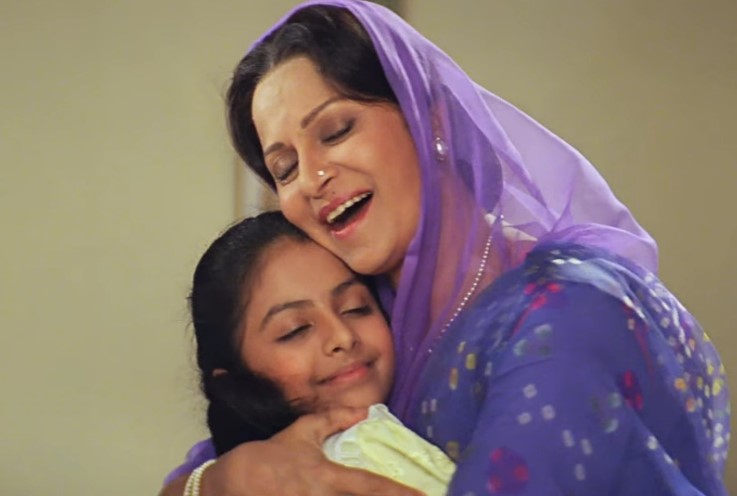
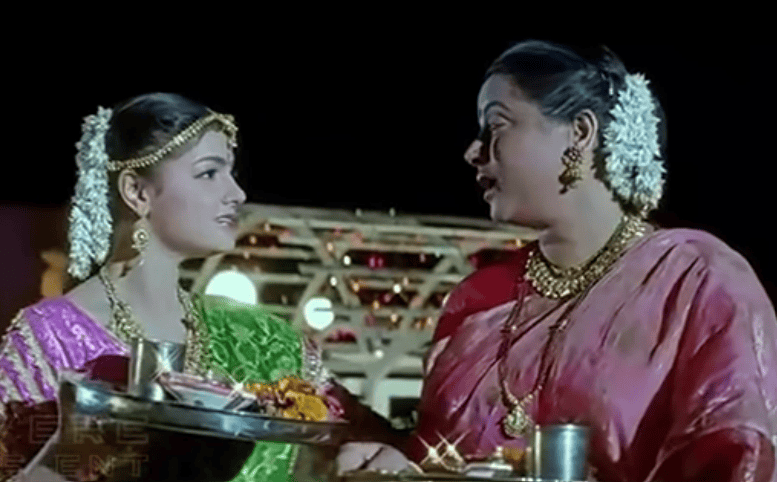
Aashik Aawara starred Saif Ali Khan and Mamta Kulkarni in the lead roles. The situational song is set against the backdrop of Karwa Chauth, when the heroine observes a fast for the hero. It is primarily picturised on Mamta Kulkarni and her mother, played by Rita Bhaduri.
While the heroine is praying happily for the hero, the mother, in a sad mood, hopes to see her husband, despite knowing that he is having an affair and made it clear that he will not return home that night. For her, the occasion becomes a test of faith and trust of their marital relationship. While the song may not be particularly remarkable musically, it highlights the significance of the moon and the Karwa Chauth ritual in a married woman’s life, symbolising her hopes and faith in her husband’s well-being and their relationship.
2) Song: Chaand Se Parda Kijiye
Film: Aao Pyaar Karen (1994)
Credits: Shyam Raj | Aadesh Shrivastava | Kumar Sanu
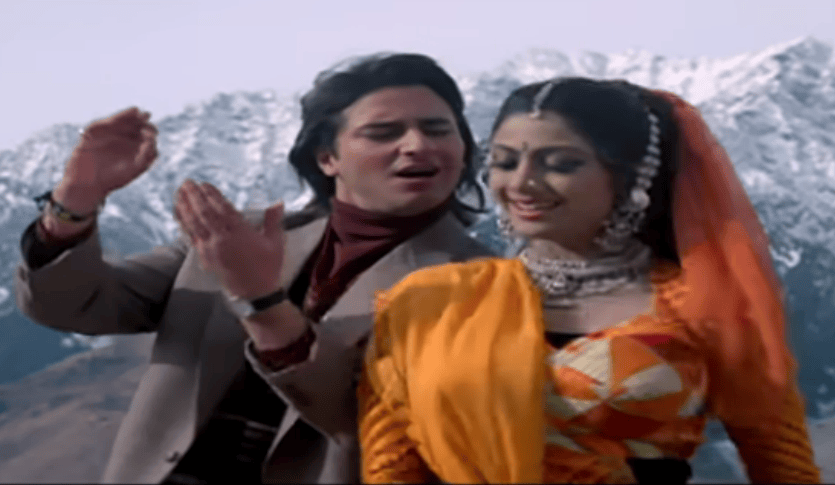
Aao Pyaar Karen may have flopped at the box office, but its songs were popular at the time of release. This song is set during a birthday celebration, with Somy Ali playing the birthday girl. Saif Ali Khan, however, sings the song thinking of his love (Shilpa Shetty), even as Somy Ali mistakenly assumes that his words are meant for her.
The song is essentially a paean to the heroine’s beauty. The hero playfully asks her to keep her distance lest the moon catch sight of her and attempt to steal her beauty. The underlying thought is reminiscent of the classic Sasural (1961) song Teri pyari pyari surat ko kisi ki nazar na lage, which similarly celebrates the beloved’s beauty while expressing the wish to protect her from the evil eye.
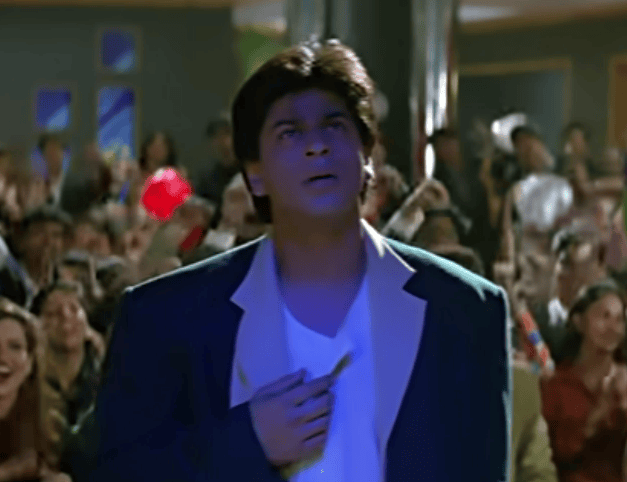
3) Song: Chaand Ne Kuch Kaha
Film: Dil To Paagal Hai (1997)
Credits: Uttam Singh | Udit Narayan, Lata Mangeshkar and Chorus
Set at a Valentine’s Day party, the melodious song carries a message of love. The moon has urged the night to fall in love, and the same message, “Pyaar Kar,” is extended to human beings. Three characters express their individual perspectives on love, with Shah Rukh Khan, Madhuri Dixit and Karisma Kapoor singing the three stanzas. Karisma’s portion is particularly moving, as it captures the pain of unrequited love and the longing of a woman whose beloved remains unaware of her feelings.
4) Song: Gali Mein Aaj Chaand Nikla
Film: Zakhm (1998)
Credits: Anand Bakshi | M.M. Kreem | Alka Yagnik
Zakhm was a serious offering from Mahesh Bhatt. In the film, Pooja Bhatt and Nagarjuna are a married couple but in a complex relationship because they are from different faiths. Their relationship is not accepted by the hero’s family. Although he continues to support her, he visits her only occasionally, leaving her to raise their son largely on her own.
The song plays in the background when Nagarjuna finally visits the home of the woman who has been waiting for him. Poetically, his arrival is compared to the moon who has finally risen and its brilliance has illuminated the whole area.

5) Song: Mera Chaand Mujhe Aaya Hai Nazar
Film: Yeh Hai Mumbai Meri Jaan (1999)
Credits: Indeevar | Jatin-Lalit | Kumar Sanu
There is an interesting story behind the song. The film was originally conceived as Mr Aashiq in 1996, starring Saif Ali Khan and Twinkle Khanna. After the initial version was abandoned, Mahesh Bhatt reworked the project into Yeh Hai Mumbai Meri Jaan. According to records, some songs filmed for the earlier version were retained in the eventual release.
This is a soft romantic composition. The song expresses the hero’s excitement as he imagines being with the woman he loves. He compares her to the moon and asks the night to pass slowly, as he wants to savour the moment and prolong the romantic meeting. The lyrics also suggest that their romantic relationship has not yet reached its fulfilment: he longs for their love to blossom. There is a mix of excitement and anticipation.
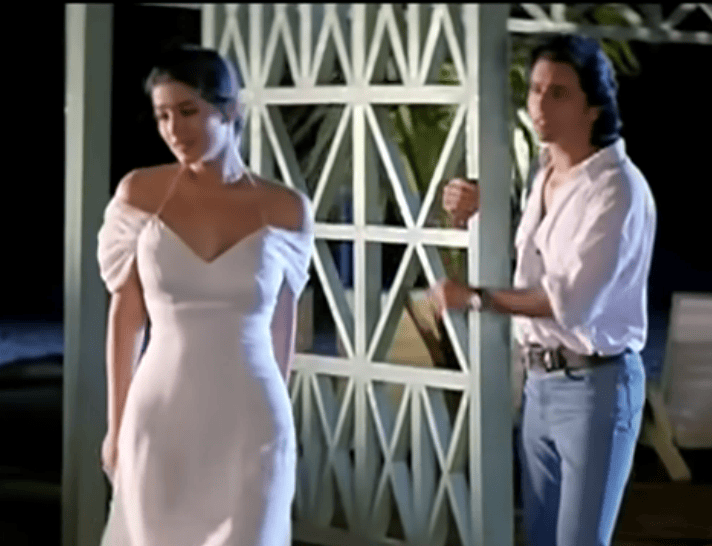
6) Song: Chaand Chhupa Badal Mein
Film: Hum Dil De Chuke Sanam (1999)
Credits: Mehboob | Ismail Durbar | Udit Narayan, Alka Yagnik and Chorus
This is a multilayered song with the moon playing a key part. Aishwarya Rai celebrates Karwa Chauth at her in-laws’ home, although the circumstances make the celebration more of an obligation than a choice, given her forced union with her husband. As she participates in the rituals, she recalls the festival at her parents’ house. That was the time when she had shared a romantic interlude with the hero, played by Salman Khan, the man she truly loves.
The song thus captures both the festive traditions of Karwa Chauth and the underlying romance between the principal characters. And the moon is perceived differently – the hero wants to take advantage(!) of its absence; on the other hand, the woman are pleading the moon to appear soon, so they can celebrate its arrival.
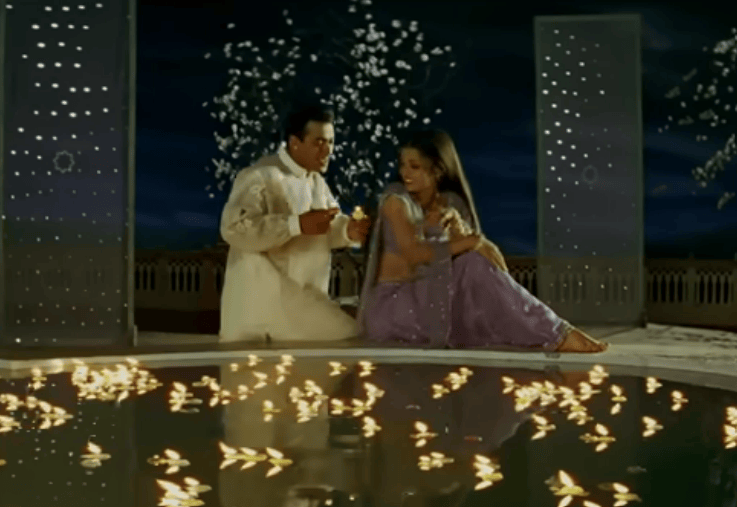
7) Song: Chaand Aaya Hai
Film: Dil Hi Dil Mein (1999)
Credits: Mehboob | A.R. Rahman | Udit Narayan, Kavita Krishnamurthy
This is a kind of obscure remake film starring Kunal Singh and Sonali Bendre. The song is set during a Garba / Dandiya night, when the community gathers for traditional dancing during Navratri. The festive setting provides an opportunity for the lovers to express their attraction in a public celebration.
The moon is used as a metaphor for the heroine, describing how it has appeared on the earth in the form of a beautiful person. The actors communicate through their expressions and give a hint of romance. The lyrics also encourage them to seize the moment. A celebration like this offers a chance to speak, listen and reveal feelings that might otherwise remain unspoken.
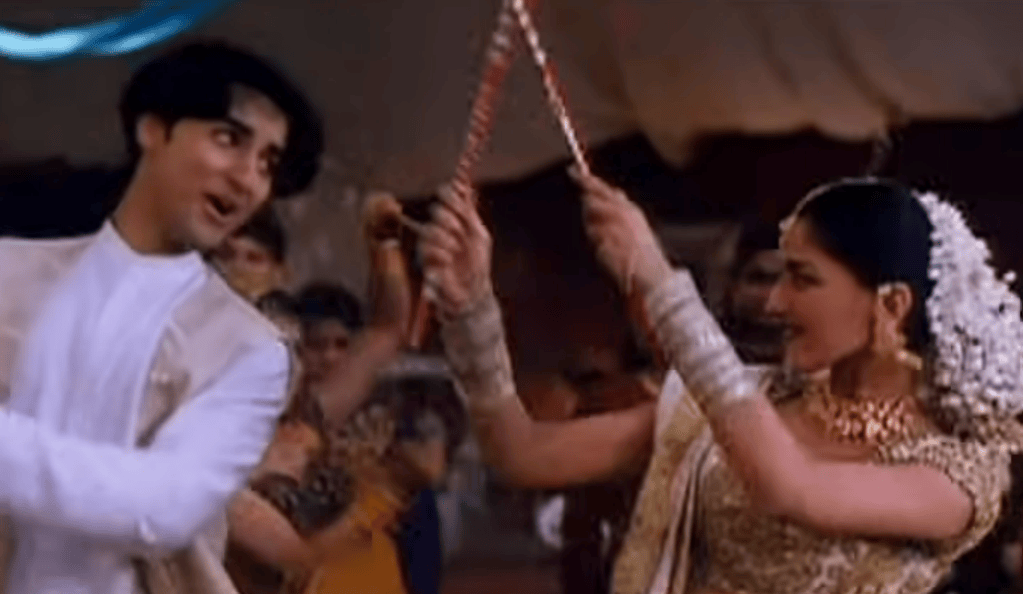
8) Song: Yeh Chaand Koi Deewana Hai
Film: Chhupa Rustam (2001)
Credits: Anand Bakshi | Anand–Milind | Kumar Sanu, Alka Yagnik
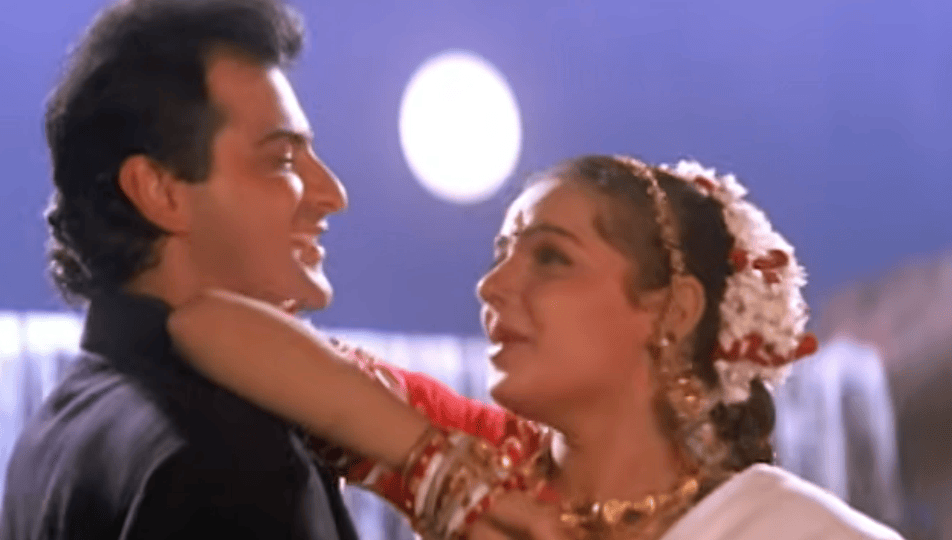
Mamta Kulkarni and Sanjay Kapoor feature in this famous and catchy song centered around the moon. This song uses the moon as a metaphor for a hopelessly lovestruck admirer. The opening thought conveys that the moon itself is a long-time lover. The lyrics imagine the moon as a deewana, wandering about and staying awake all night in pursuit of someone.
9) Song: Chaand Sifarish
Film: Fanaa (2006)
Credits: Prasoon Joshi | Jatin-Lalit | Shaan and Kailash Kher
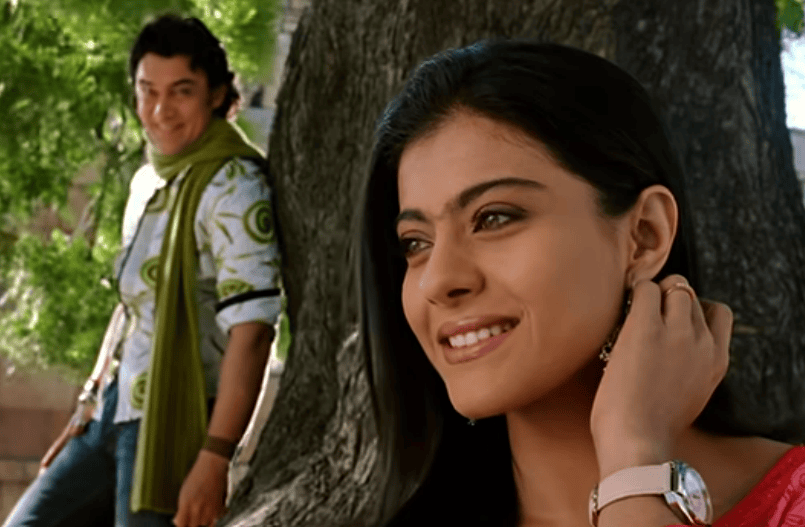
Aamir Khan expresses his feelings for Kajol in this superhit song. The moon is personified as a messenger who will put in a word for the hero and convey the intensity of his love, including his willingness to lose himself completely in it. An unusual thought, perhaps, but one that is presented as deeply romantic! The hero is quite bold to express his feelings in a flirting manner. The song is wonderfully melodious, and its distinctive whistling has become one of its most recognisable and memorable features.
10) Song: Chaand Ki Katori
Film: Guzaarish (2008)
Credits: Vibhu Puri | Sanjay Leela Bhansali | Harshdeep Kaur
And finally, an abstract and offbeat song. This song uses the moon as a metaphor, describing it as a little bowl in the night sky. Sung beautifully, it has a distinctive, almost whimsical quality, though the lyrics carry a deeper meaning. Beneath the playful imagery lies a reflection on life’s struggles, fragile relationships, unfulfilled dreams and the hardships faced by the less fortunate. The contrast between the charming imagery of the moon and the underlying sadness gives the song a unique character. Sanjay Leela Bhansali’s composition complements the unconventional lyrics, making this an interesting departure from the usual romantic songs that celebrate the moon.