Amar Bhoopali (loosely translated as The Immortal Song) is regarded as one of the best movies of V Shantaram. V Shantaram was a pioneer filmmaker in Hindi and Marathi cinema, leaving his impression with movies covering socially relevant and offbeat subjects.
In Amar Bhoopali, he presents the story of Honaji Sayaji Shilarkhane, popularly known as Kavi Honaji, a poet in Maharashtra circa late 18th and early 19th century. Honaji performed his compositions (lavanis and powadas) with his friend Bala Karanjikar and they became famous as the Honaji Bala duo.
The film is set in the period of Peshwa Bajirao II and includes events surrounding the eventual decline of the Maratha Empire or Confederacy. It stars Pandit Rao Nagarkar in the title role along with Sandhya, who passed away recently.

The Plot
Honaji (Pandit Rao Nagarkar) is a cow herder (gawali) staying in Saswad with his wife, mother Vithabai (Lalita Pawar) and friend Bala (Bhalchandra Pendharkar).
Honaji is a poet at heart. One day, in the temple, Shastribua is narrating the story of Lord Krishna and the gopis, engaged in Ras Leela. Honaji is nearby tending the cattle. He is moved by the narration and visualizes the gopis dancing in front of Krishna. Its as if the scene is happening in front of him. As Krishna leaves, all the gopis have the same question “Sanga Mukund kuni haa pahila?” meaning, has anyone seen Lord Krishna? An inspired Honaji presents his poem in front of Shastribua, who is highly impressed by its spontaneity and content.

When Vithabai arrives, Shastribua asks her to bless her talented son. Vithabai agrees but she is not in a good mood. Honaji has forgotten to bring the cows home (this seems to be a frequent occurrence given Honaji’s tendency to roam around and immerse in poetry).
Honaji’s uncle is also angry with his actions. The neighbours are complaining about the cows entering their fields and feasting on the crop. His uncle orders him to leave Saswad immediately and go to his house in Poona (now Pune). Left with no choice, the family proceeds towards Pune the same night.
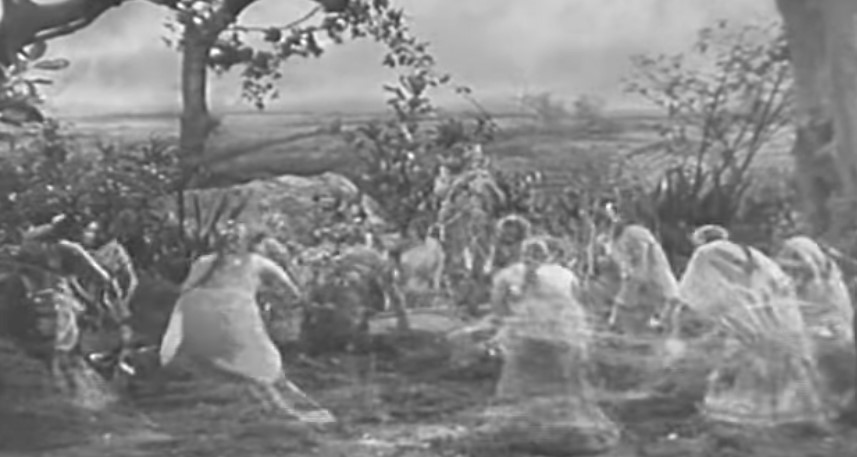
The approaching dawn inspires Honaji to sing another song describing the sunrise. This is the all time great “Ghanshyam sundara” which appears multiple times in the movie.
The scene moves to Pune. Vithabai’s family is assigned the prestigious task of delivering milk to the Peshwa’s residence.

Honaji’s uncle Bala Bhairu is a “Shahir” and a tamasha (a traditional form of Marathi theatre, comprising of singing and dancing) artist. His uncle has received invitation from none other than the Peshwa Bajirao (chief minister of the Maratha empire) and wants Honaji to accompany him. Vithabai makes it clear that Honaji is to stay away from tamasha. There are happy with their cows and their profession. Honaji agrees.
In the meantime Honaji’s friend Bala arrives. Bala is a tailor by profession but is more focused on being a tamasha artist and start his own tamasha company (phad). He is scheming to make Honaji join him.

Next day, Bala visits Gunawati, a classical singer. But there are hardly any patrons who come to listen to her pure (and seemingly heavy) classical singing. Bala has told her multiple times to sing lavanis going with the current trend (Lavani is a traditional folk art form of Maharashtra, India, that combines song, dance, and theatrical expression). Gunawati is contemplating the suggestion but doesn’t want to sing cheap numbers.
At the same time, Vithabai and Honaji are going towards the “wada” (Peshwa’s residence) to deliver milk. They have to pass through a street lined with houses of tamasha performers. Vithabai is aghast to hear the lavanis falling on their ears. She asks Honaji to sing Ghanshyam sundara, the same composition he was singing on their way to Pune. He obliges. Gunawati hears him when they are passing below her house. She is mesmerized by the lyrics, pitch and melody. She would be more than happy if she can sing a lavani which has a raagdari or classical base.

Bala tells her about Honaji. He is a talented poet but is unspoiled and unadulterated, a simple man. She needs to meet him, impress him and inspire him to bring out his talent and compose lavanis befitting his stature. She agrees to meet Honaji. Her mother agrees too.

Gunawati poses as a respectable woman on her way to perform a pooja. By chance, she is about to meet with an accident and Honaji rushes to save her. She skillfully drives the conversation to music and poetry. He is absorbed by her looks and singing. He recites a new song Ghadi ghadi are Manmohana.
They meet multiple times. She keeps learning new songs from him and performs them for her patrons, who throng her house in greater numbers. The credit of course goes to Honaji, who is unaware of the reality.
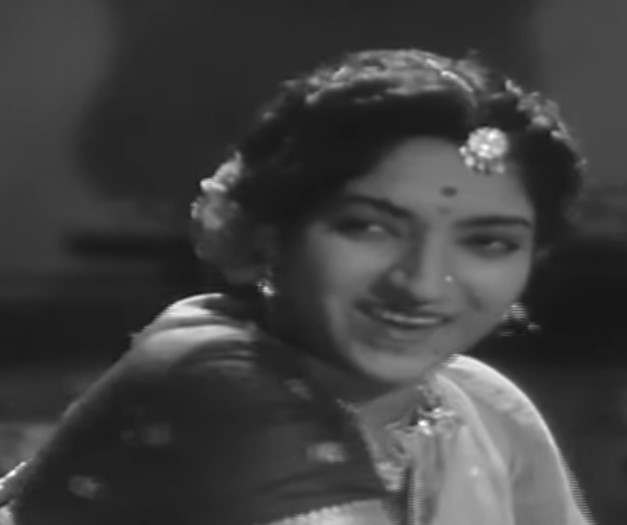
Meanwhile, the Peshwa’s wife is impressed by Honaji’s singing. She gifts him a piece of pasture land hoping he will maintain the purity of his compositions and stay away from other influences (implying lavanis).
At this stage there is a bit of information shared on the political happenings in Pune. At Shaniwar Wada (the fortress of the Peshwas), the secretive discussions around the next offensive on the Moghuls have been replaced by a continuing presence of tamasha dancers entertaining the rulers. The royal treasury is being utilised to shower gifts on the dancers. The British are keeping a watch on the happenings in Pune, waiting for an opportunity to strike as the Peshwa’s hold weakens.
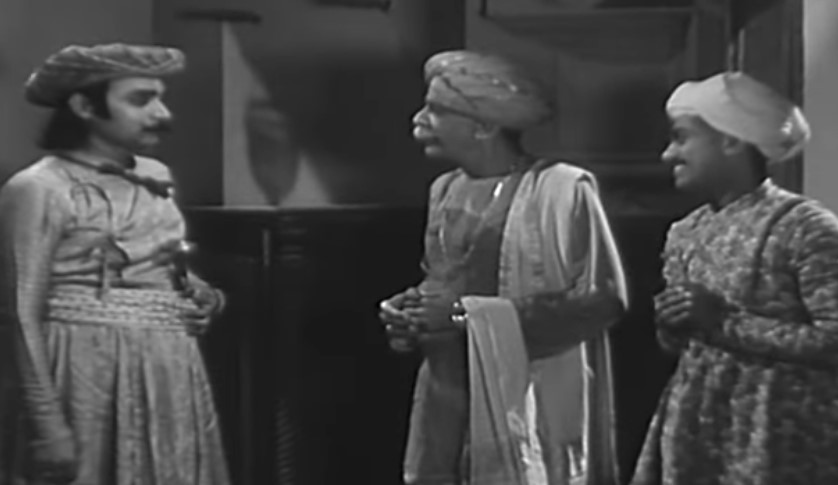
Sardar Yeshwant Holkar is itching to revenge his brother’s death who was killed on the Peshwa’s orders. He has deputed his Subhedar (Vikas) to meet Ramaji Naik (Bandopant Sohoni), the moneylender to seek his funds and support. He is aware that all is not well in the Pune durbar which is under the grip of music and tamasha. The Holkars are planning to attack Shaniwar Wada and loot Pune. They also need the support of the tamasha troupes to achieve their mission.
Subhedar goes to meet Gunawati. She presents Latapat latapat, a catchy lavani in his honour. Honaji, who is passing by hears the singing and is shocked to see Gunawati.

He was thinking of her as a respectable lady but she is a lowly dancer. And top of this, she is singing his songs in public. How can she stoop so low? Gunawati tries to explain but he is no mood to listen. Her mother insults him. Honaji, in a fit of rage, decides to visit all the tamasha performers in Pune and make them sing his poems. He and Bala join forces and perform all over the city and are hugely successful.
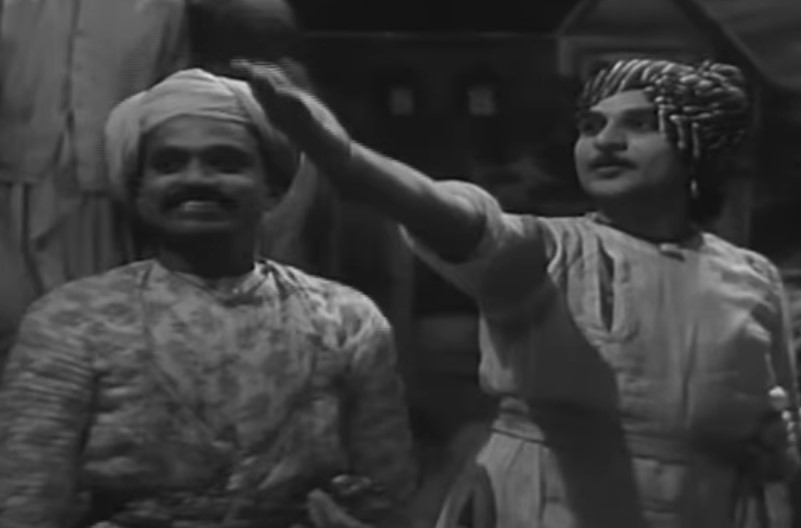
Soon, the whole city is indulged in the performances of Honaji and Bala. This makes it easier for the Holkars to execute their plan. Will they be successful? Will Honaji realize what his anger has unleashed and can he remediate the situation? Will Honaji and Gunawati reconcile?
The Music
The music is the clear winner. Honaji’s lyrics are set to tune by Vasant Desai and is easily one of his best works. Each composition is a gem starting with the Bhoopali tuned Ghanshyam sundara. Pandit Rao Nagarkar, Lata Mangeshkar and Asha Bhosle lend their voices to Sanga Mukund kuni haa pahila?, Ghadi ghadi are Manmohana, Tujhya preetiche dukkha mala, Latapat latapat, Nako door deshi jaoo sajana, Tuzi mazi preet, Sundara mhane dilbara, Tu Pak Surat Kamina and Phadakto Bhagwa Zenda.
My Thoughts

The film is a biopic. The inclusion of events covering the historical references of the time and their influence, make it more interesting to watch. The acting can seem theatrical and dialogues a bit old fashioned. The V Shantaram touch is evident throughout the movie. The attention to detail, song picturization, dash of humour in some scenes is satisfying.
Lalita Pawar is effective in her supporting role. Pandit Rao Nagarkar looks more comfortable singing than acting. This was Sandhya’s debut movie. She is expressive and holds the audiences attention especially in the song sequences.
 Cine Gaurav
Beautifully written and reviewed.
I didn’t know Honaji and Bala were two. I used to think that like Madanmohan , they were a single entity.
It’s a good plot. The immortal song is always that which has a touch of Divine and sadly Lavani doesn’t match the frequency. Personally though I’ve loved 4 or 5 Lavanis for the rendering and dance, anything that is performed to lure the male audience ( Lavani, mujra , cabaret ) is objectification of women I feel.
Sandhya played a similar role I guess in Pinjra years later.
And yes, Ghanshyam Sundaram is a beautiful song. Is it in raag Bhoop ? After all it’s Amar Bhoopali.
LikeLiked by 1 person