All posts by GGaurav

Unknown's avatar

About GGaurav

I am passionate about old movies, songs and trivia.

Shammi Kapoor – “Transport Mode” Songs

Shammi Kapoor – the name is enough! He is the star, the performer who created his own style and became a bankable hero in the late 50s and 60s. Of course, this was not easy. After initial failures, he tasted success with Tumsa Nahi Dekha (1957) and followed up with more.

This was the era of Dilip Kumar, Dev Anand and (his own brother) Raj Kapoor. While it may have been difficult to match the fame of the trio, he managed to carve a special place for himself. His fans would vouch for that. His screen presence was entertainment guaranteed. Typical of his on screen persona, he would stalk the heroine, trouble her, revel in comedy and dance. His natural sense of rhythm was adequately reflected in the song picturization. And with Mohammed Rafi providing playback, the songs were bound to be a winner.

Shammi Kapoor passed away on 14th August 2011 and today’s post is dedicated to his memory. One noticeable thing about him was that it was difficult to see him sitting down and staying calm. He would always be on the move. In this context, today’s theme covers 10 songs where Shammi Kapoor is in transport mode. Land, water, air – he avails it all. Enjoy the post and which similar songs do you remember?


1) Song: Tumsa Nahi Dekha
Film: Tumsa Nahi Dekha (1957)
Credits: Majrooh Sultanpuri | O. P. Nayyar | Mohammed Rafi

Tumsa Nahi Dekha was the turning point in Shammi Kapoor’s career. After a string of flops, he tasted success that led to emergence of the “Shammi Kapoor” phenomenon. He developed his own style. In this song, he “hijacks”a tonga before the heroine (Ameeta) can engage it. As both are travelling to the same destination, she reluctantly boards the tonga. After that, the hero is in his full element. He teases and flirts with her. She is of course, not impressed. He would go on to do many such songs throughout this career. While the song is picturised in a tonga, there are hardly any outdoor shots. Seems it was all shot in a studio!


2) Song: Dekho Ji Ek Bala Jogi Matwala
Film: Chinatown (1962)
Credits: Majrooh Sultanpuri | Ravi | Mohammed Rafi and Meenu Purushottam

A train journey, a disguised Shammi Kapoor. And you know the rest. The heroine Shakila’s father is taking her back to Calcutta. He doesn’t approve of his daughter meeting the “good for nothing” hero. But Shammi Kapoor is not one to back off easily. He disguises himself as a sadhu and boards the train. What follows is a devotional song where he makes attempts to impress her father. She recognizes him and joins him in the singing. Shammi Kapoor played a double role in this film convincingly.


3) Song: Yahaan Ke Hum Hain Rajkumar
Film: Rajkumar (1964)
Credits: Shailendra | Shankar Jaikishan | Mohammed Rafi

Shammi Kapoor plays the prince who is returning home after spending time abroad. This is his “welcome” home song involving a long procession. He is in truly transport mode here! The song starts in a car, then he rides an elephant, a horse and finally starts walking. He is making people aware that the prince is back. And he enjoys drawing attention to himself.


4) Song: Ye Chand Sa Roshan Chehra
Film: Kashmir Ki Kali (1964)
Credits: S.H. Bihari | O.P. Nayyar | Mohammed Rafi

It’s time to get in a water mode. Shammi Kapoor woos Sharmila Tagore in a shikara, a wooden boat used in Kashmir. The water and shaking of the boat has no effect on our hero. He is in full form – bending, dancing, jumping all over, and finally, falling in to the water!


5) Song: Subhan Allah Haseen Chehra
Film: Kashmir Ki Kali (1964)
Credits: S.H. Bihari | O.P. Nayyar | Mohammed Rafi

Another song from the same movie. Sharmila Tagore is travelling on a truck with her friends and the villain (Pran, who else!). Shammi Kapoor joins disguised as a pathan’s wife and performs this delightful song. The singing, the catchy rhythm and performance make it memorable.


6) Song: Jaane Mera Dil Kise
Film: Latt Saheb (1967)
Credits: Hasrat Jaipuri | Shankar Jaikishan | Mohammed Rafi

This is one of those “searching for love” songs. This is also an introduction of the hero song. The movie was forgettable but the songs were good. Shammi Kapoor enters the frame riding a horse. He sings, wondering when and where he will meet his beloved.


7) Song: Asmaan Se Aaya Farishta
Film: An Evening In Paris (1967)
Credits: Hasrat Jaipuri | Shankar Jaikishan | Mohammed Rafi, Sharmila Tagore(?) and Chorus

This is truly one of the unique songs in Hindi cinema and probably first of its kind. Shammi Kapoor dangles from a helicopter as he sings to Sharmila Tagore (who is water skiing). Later he hops on a boat. The song stands out for its picturization because shooting in foreign locations was not so common then. Water skiing, as a sport was also probably new for the audience.


8) Song: Hoga Tumse Kal Bhi Saamna
Film: An Evening In Paris (1967)
Credits: Shailendra | Shankar Jaikishan | Mohammed Rafi

Back on land on a two wheeler in a picnic situation. Shammi Kapoor disguises himself as an Arab called Hukku Pasha and follows Sharmila Tagore on a scooter (a Vespa?). The song may not be well known as other gems from the movie. But it does show Shammi Kapoor utilizing the scooter to perform his antics and get closer to the heroine. And she doesn’t seem to mind the attention.


9) Song: Chakke Mein Chakka
Film: Brahmachari (1968)
Credits: Shailendra | Shankar Jaikishan | Mohammed Rafi and Chorus

Shammi Kapoor with a bunch of kids in Brahmachari. In the song it’s the kids’ day out. They all get in the vintage car and visit an amusement park which is filled with thrilling rides. Later they visit a garden and take a ride in the toy train. Shammi Kapoor was nominated and won the Filmfare award for Best Actor Filmfare award for this performance.


10) Song: Re Mamma Re Mamma
Film: Andaz (1971)
Credits: Hasrat Jaipuri | Shankar Jaikishan | Mohammed Rafi

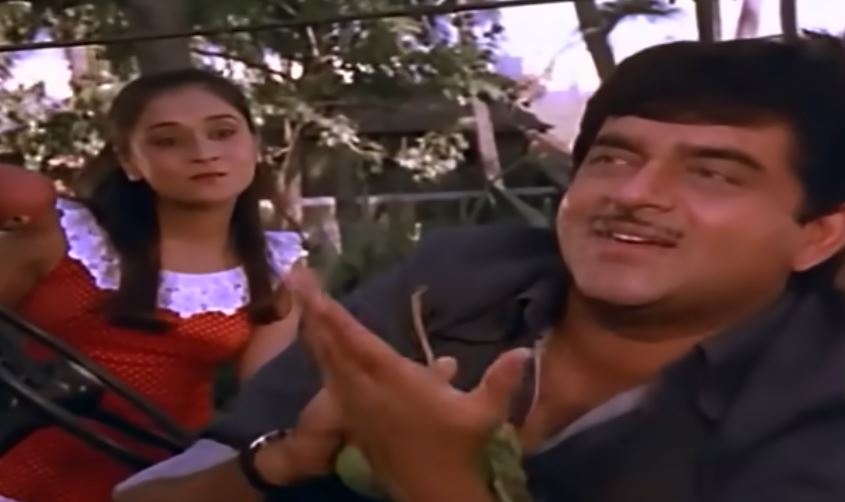
And finally a song from Andaz, probably his last film as a leading man. Shammi Kapoor plays a widowed father. His daughter (played by Baby Gauree) is miffed at him. He follows her in a jeep and sings this song to calm her down and take her home.

Dhakti Bahin (1970)

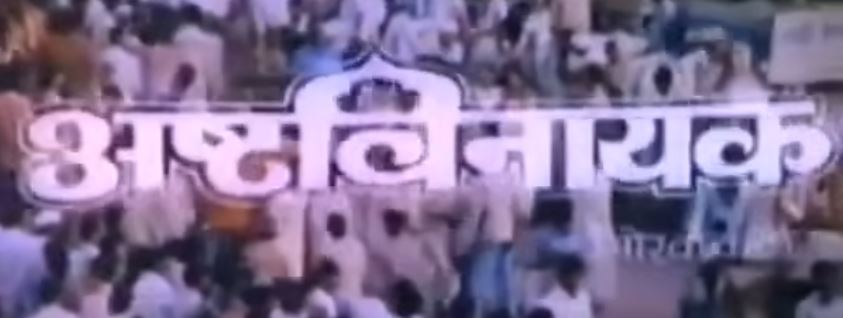
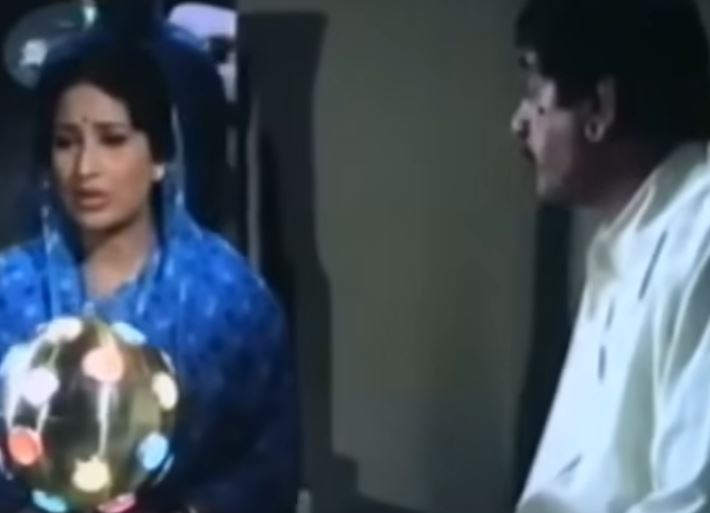
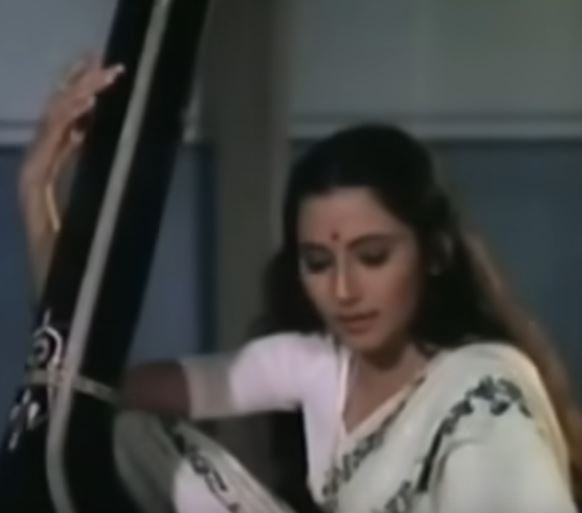
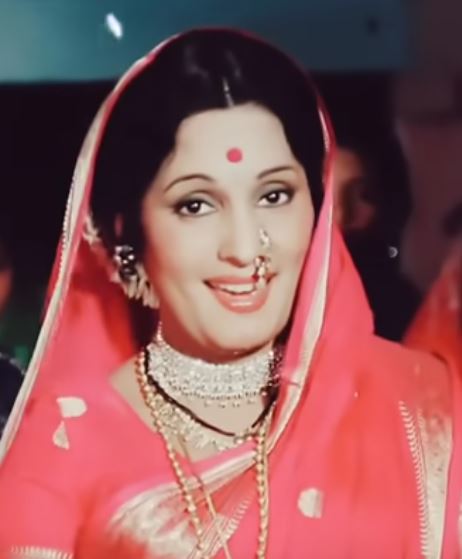
It’s Raksha bandhan this week which celebrates the bond between a brother and sister. So it was time to cover a film which focuses on this relationship. Today’s Marathi film Dhakti Bahin (meaning younger sister) actually begins and ends with the theme of Raksha Bandhan. Based on the novel Agnidivya by Chandrakant Kakodkar, the story is quite predictable. We have seen the plot in many movies. But the performances, direction and music leave an impression.


The Plot

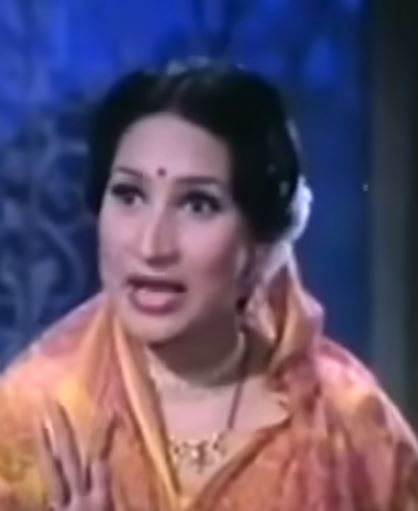
The film begins with a domestic scene in the Deshmukh household. It’s morning time. Meena (Surekha) is cooking. Her sister in law (Gulab Korgaonkar) asks her to move faster and pack the tiffins. Apparently, she doesn’t treat Meena too well. Meena’s father Appa Deshmukh (Ramchandra Warde) works in the mill. He will be retiring in a few months. Meena’s brother Ganesh is the typical henpecked husband. He has a school going son.

It is Raksha Bandhan that weekend. Ganesh and his wife will be travelling to Pune to visit his sister. Ganesh wants to buy new sarees for Meena and the other sister. But his wife warns him not to purchase anything for Meena. We come to know that Meena is the step daughter of the family. Further, Appa will be retiring in a few months and will be entitled to a hefty provident fund amount. Ganesh’s wife plans to utilise the money for herself and their son’s future. Ganesh reminds her that Meena’s marriage is being arranged in a good family and they will be expected to pay dowry. But she is insistent to have her way. Ganesh agrees meekly. He and his wife leave for work, while their son goes to school.

Meena is alone in the house when an old man comes visiting. He is Athalye guruji, a school teacher. He wants to meet Meena’s brother. She informs that Ganesh has gone to office. He says he wants to meet Madhav, who is her real brother. Meena is puzzled at this revelation as she is only aware of her one (step) brother.

It is further revealed that Meena’s father had disowned Madhav and thrown him out of the house when he was a boy. At that time, Meena was a toddler. Meena’s father had been caught in a fraud when Madhav was born and had to lose his job. Madhav was accused of stealing the school teacher’s watch. This led to his removal from the Deshmukh family’s house (and life). Athalye guruji tells that it was the school peon who had stolen the watch. He came to know the truth recently and hence came to share the news with Madhav. Meena is surprised but happy to hear all this. She has a real brother and coincidentally, Raksha Bandhan is around the corner. She looks forward to meet Madhav.

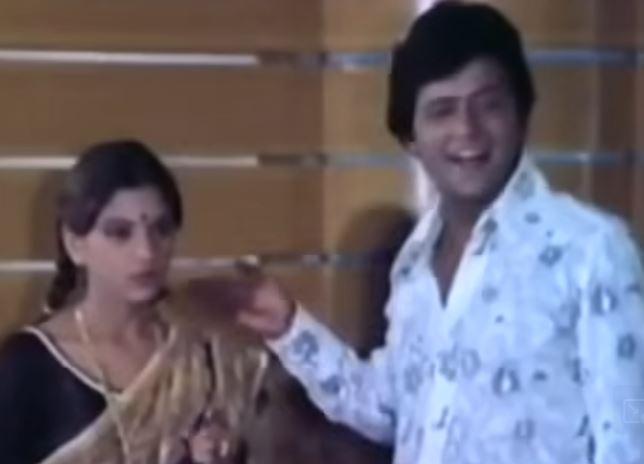
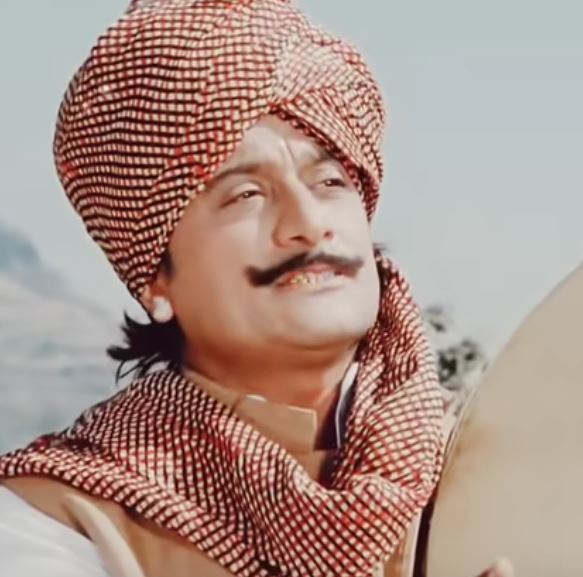
But what happened to Madhav? The school authorities were going to hand him to the police but he managed to run away. As he grew up, he entered the world of crime. He is now involved in gambling, smuggling and other vices. The grown up Madhav is played by Arun Sarnaik.

After completing an assignment, he arrives in style at a hotel/ club, where he is welcomed by the dancer. We see Helen in one of her few Marathi performances. She sings…Ooi sajan aala ha. After the song, he settles down to gamble with cards.

Through his actions we come to know that he is a bad man but with a golden heart. He has suffered a lot due to his father but doesn’t want the same fate to fall upon others. He purposely loses at gambling because the other person (about to lose) is in dire need of the money. He also bashes the hotel manager when he abuses the waiter Narayan. After a filmy fight involving the manager and his goons, Madhav asks Narayan (an orphan) to come with him.

He arrives at the basti (slum) where he lives. Apparently, he is famous as Madhav dada who takes care of the basti’s residents and ensures there is no injustice. They treat him with respect. Staying with him are Abdul (Raja Mayekar) and D’Souza, who seem to have no family like Narayan. Their profession is black marketing of cinema tickets.

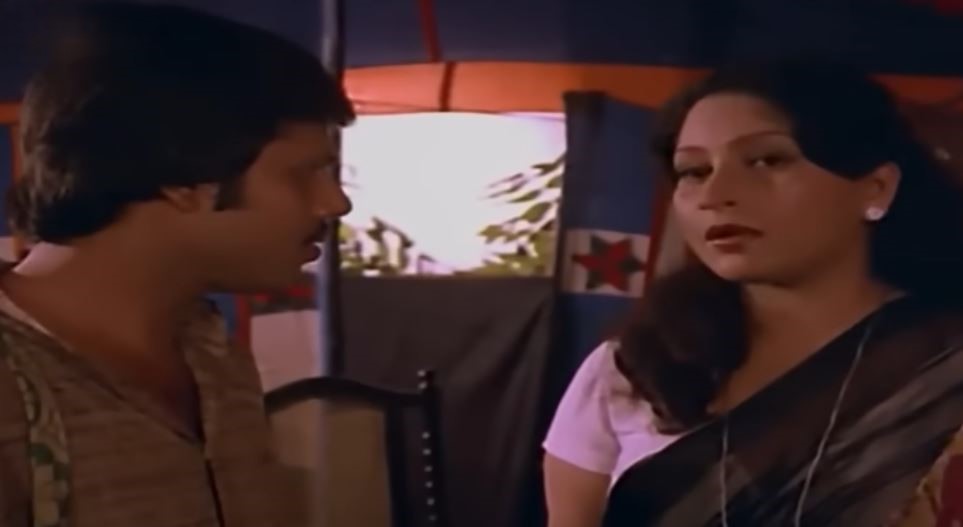
Next day, Meena comes to meet Madhav. He recognizes her. He refuses to have anything to do with her or his so called family. She tells him that tomorrow is Raksha Bandhan and invites him to her house. But he asks her to leave. On the next day, there is a festive atmosphere in the basti. Narayan, Abdul and D’souza casually mention they wish they had a sister who would tie rakhis on their wrists. This leads Madhav to rethink his decision and behavior towards Meena. After all, she is his real sister.

Meena is waiting expectantly as she sings Dhaaga julala, jeev phulala, vedya bahinila bhau milala. But things don’t happen as expected. Madhav arrives but is insulted by Appa. Appa admonishes him that he better stay away from Meena. She is going to get married. What will happen if her in-laws come to know about Madhav and his reputation? Madhav silently agrees. He cannot be an obstacle in his sister’s well being.

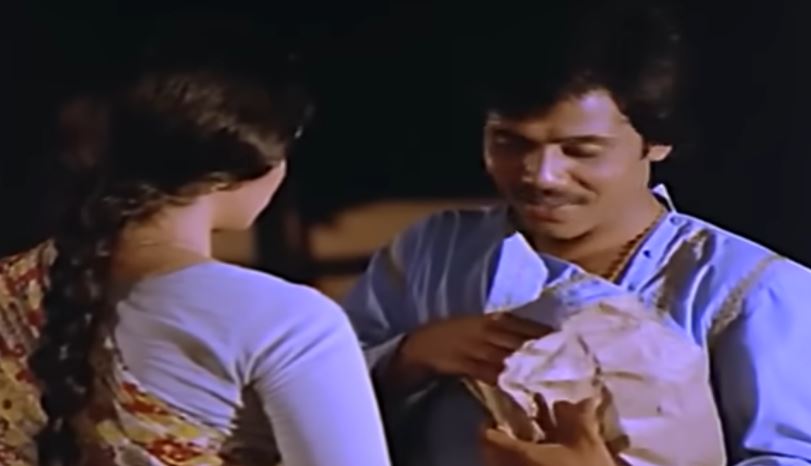
To drown his sadness, Madhav goes to a mujra performance (Hataa madhye mogryacha gajra bandhte) but his mind is still on Meena and the insult thrown at him by Appa. He goes home, drinks and collapses in sorrow. It’s quite late but Meena comes to his house and is shocked to see his drunken state. She ties the rakhi on a barely conscious Madhav and is about to leave. Narayan, Abdul and D’souza request her to be their sister too. Meena is moved and tears her saree border and willingly ties the pieces on the wrists of her new “brothers.” In the morning, Madhav wakes up and realises what has happened.

Later, a young man called Vasant comes to meet him. He will be becoming a lawyer soon. Madhav has been helping him financially since his school days. Madhav could not complete his own education but is happy he was able to support Vasant and ensure his progress.

The relationship between the brother and sister improve as the days go by. Meena comes to meet Madhav regularly. She informs him that her marriage has been fixed. He offers support in any way possible. The only hurdle being he cannot attend the marriage in person and bless her openly. She promises she will explain everything to her husband after marriage and her brother will be invited with respect.

Madhav is sent on a smuggling mission. He joins a group of college students going for a picnic on a launch in the sea. His mission is to collect the bag of smuggled goods and return. He collects the bag but sees a college student being abducted and carried off in a boat. He chases the boat and manages to rescue the girl. Unfortunately, the police see the boat chase and reach the spot. Madhav cannot risk being caught with the bag. He is forced to fling the bag in to the water to evade arrest.

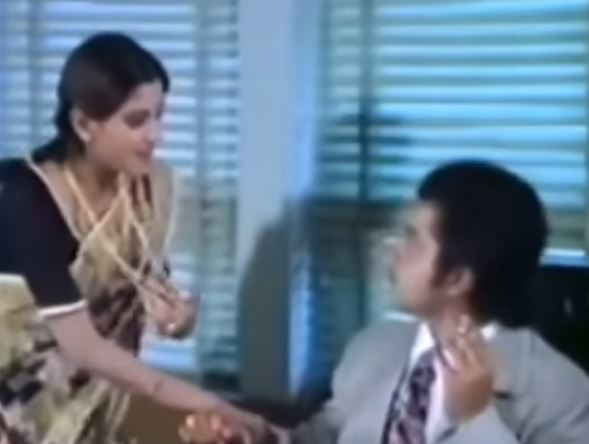
The girl he saves is Lalita Prabhudesai (Anupama). She is impressed by his humanity and bravery displayed. She wants to get acquainted with him but he would rather stay away due to his reputation. But she is insistent. She tracks his address, comes to meet him and eventually falls in love.

Under the influence of the two women in his life, Madhav decides to leave the world of crime and be a decent man. But it is easier said than done. There are twists in the tale including a murder in which Madhav is the prime accused. Will there be a happy ending for all concerned?

The Music

Jagdish Khebudkar (lyricist) teams with Sudhir Phadke. Dhundi kalyanna (set in raag Yaman) is one of the classic romantic duets (sung by Sudhir Phadke and Asha Bhosle). Suman Kalyanpur sings Dhaaga julala in her trademark style.

The Helen song by Asha Bhosle is probably one of its kind in Marathi cinema. Sudhir Phadke gives this cabaret number a distinctive touch which showcases his mastery. Unfortunately, the mujra number (also by Asha Bhosle) doesn’t work that way. It has a bit of a lavani feel. 

There is also a koli geet (fisherman song), by Manna Dey and Asha Bhosle. And finally a hilarious parody song by Jaywant Kulkarni which revisits three of Sudhir Phadke’s famous songs – Mazha hoshil kaa (as Bhaji gheshil kaa), Zaalaa mahaar Pandharinath (Aala aala ho ganderiwala) and Dehachi tijori (Mast bhel kha ho).

My Thoughts

While the story line is predictable, the director Rajdutt manages to mix the right amount of drama, melodrama, romantic and thriller elements to make an engaging film. Overall, the brother-sister plot is presented satisfactorily without following the weepy, sacrificing pattern normally depicted.

The part of step parents and children is not explained properly. The fact that Meena is a grown up girl of marriageable age but doesn’t know about her real brother is not convincing. Arun Sarnaik’s dashing personality suits the character. Surekha is also good. Anupama looks like a doll and talks in a soft voice.

Mohammed Rafi – Teasing the Heroine songs

It has been a year already. Last year I had posted Describing the heroine songs remembering the great Mohammed Rafi, whose death anniversary falls on 31st July. Our heroes describe the beauty of the heroine in happier times but they also get into a naughty mood sometimes. This leads to some situations involving teasing or flirting with the heroine. While the heroine will be annoyed, the annoyance doesn’t stay that long. The hero is soon forgiven and romance walks in to take the story ahead.

The teasing / flirting can be expressed in different ways as evident from the songs in today’s post. Mohammed Rafi, being the versatile artist could mould his voice to fit any situation and leave his impact. So, here are 10 songs, all on different heroes. Which songs do you remember?


1) Song: Apni To Har Aah Ek Toofan Hai
Film: Kala Bazar (1960)
Credits: Shailendra | S. D. Burman | Mohammed Rafi

This is an unusual song set in a train compartment. Waheeda Rehman is travelling to Ooty with her parents. She and her mother have occupied the top berths while her father is sitting in the lower berth. Dev Anand is the fourth passenger, a stranger. He suddenly starts singing this song. The lyrics portray as if he is singing a devotional song to the uparwala (the almighty!) but that is not so. He is actually addressing the song to the heroine whom he wants to impress. (Unknown to her, he has been following her and wants to get close, as in fall in love).

This is a soft song with an undertone of teasing. The heroine keeps wondering the meaning and intention of the lyrics. Mohammed Rafi impresses by singing with an extra soft tone.

Apni toh har aah ek toofan hain,
Kya kare woh jaan kar anjaan hain,
Uparwala jaan kar anjaan hain,
Apni toh har aah ek toofan hain


2) Song: Aji Qibla Mohtarma
Film: Phir Wohi Dil Laya Hoon (1963)
Credits: Majrooh Sultanpuri | O. P. Nayyar | Mohammed Rafi

Joy Mukherjee was one of the those 60s heroes who was blessed to have Mohammed Rafi as his playback voice in majority of the songs. This is a playful song in Nasir Hussain’s movie. Joy Mukherjee and Asha Parekh are out in the countryside when the heroine’s friends arrive unexpectedly. She doesn’t know how to tackle the situation. And the hero embarrasses her further by singing this teasing number.

Aji qibla, mohtarma, kabhi shola, kabhi naghma,
Iss aap ke andaaz ka haaye kya kehna


3) Song: Hum Hi Se Mohabbat
Film: Leader (1964)
Credits: Shakeel Badayuni | Naushad | Mohammed Rafi

It is rare to see Dilip Kumar in a teasing and flirtatious mood and Mohammed Rafi adds an extra dimension with his singing. There is a long scene which culminates into the song. Dilip Kumar annoys Vyjanthimala to the fullest extent with his irritating antics. Her reactions are worth noticing too.

Hum hi se mohabbat hum hi se ladaai,
Are maar daalaa duhaai duhaai,
Abhi naasamajh ho uthaao na khhanjar,
Kahi mud na jaaye tumhaari kalaai


4) Song: April Fool Banaya
Film: April Fool (1964)
Credits: Hasrat Jaipuri | Shankar Jaikishan | Mohammed Rafi and Saira Banu

Biswajeet was another hero who immensely benefited by Mohammed Rafi singing for him. There are many romantic songs of this combination. Based on the April Fool’s Day concept, this is a typical song where the hero tricks and “fools” the heroine (Saira Banu). She is angry with him and he doesn’t miss the chance to irritate her further.

April fool banaya toh unko gussa aaya,
To mera kya kasoor, zamane ka kasoor,
Jisne dastoor banaya


5) Song: Lal Chhadi Maidaan Khadi
Film: Janwar (1965)
Credits: Shailendra | Shankar Jaikishan | Mohammed Rafi

How can a Mohammed Rafi list be complete without a Shammi Kapoor song? He probably sang the most number of teasing numbers for Shammi Kapoor. What a perfectly matching voice! In this song he refers to the heroine (Rajshri) as a red stick and bothers her as only Shammi Kapoor can.

Laal chhadi maidaan khadi,
Kya khub ladi kya khub ladi,
Ham dil se gaye ham jaan se gaye,
Bas aankh mili aur baat badhi


6) Song: Ae Nargis-E-Mastaana
Film: Arzoo (1965)
Credits: Hasrat Jaipuri | Shankar Jaikishan | Mohammed Rafi

This is a bit different song but with a teasing tone. The heroine (Sadhana) has some misconceptions about the hero (Rajendra Kumar). But they have been almost resolved. The hero voices his feelings by taunting her and listing down his “complaints.” She readily accepts them and this is the beginning of romance between the two characters. This was a period when Rajendra Kumar could do no wrong. His consecutive films were turning hits. Not the forget the contribution of Mohammed Rafi in achieving this success.

Ae nargis-e-mastaana,
Bas itni shikayat hai,
Bas itni shikayat hai

Samjha humein begaana,
Bas itni shikayat hai,
Bas itni shikayat hai


7) Song: O Dilbar Janiye
Film: Haseena Maan Jayegi (1968)
Credits: Prakash Mehra | Kalyanj Anandji | Mohammed Rafi

Compared to his brother Shammi Kapoor, Shashi Kapoor had a mild personality and you would normally not imagine him in such flirting with the heroine songs. But here he attempts to do that (and succeeds). He goes all out in chasing Babita and being a nuisance. Once again, Mohammed Rafi complements the onscreen happenings with his impressive rendition.

O dilbar jaaniye tere hain hum tere,
Chhupa lenge in aankhon mein,
Sanam hum gham tere


8) Song: Rukh Se Zara Naqaab Hata Do
Film: Mere Huzoor (1968)
Credits: Hasrat Jaipuri | Shankar Jaikishan | Mohammed Rafi

Like the first song, this has a soft and subtle tone. The film is set in Lucknow with all the tehzeeb and etiquette. So the flirting has to match, right? Mohammed Rafi sings for Jeetendra who flirts/ woos a burqa clad Mala Sinha. Jeetendra plays a poet (shaayar). There is no much moving around as the characters are travelling in a train. But the desired effect is achieved by the lyrics, composition and, of course the vocals.

Apne Rukh Per Nigaah Karane Do,
Khubsurat Gunaah Karane Do,
Rukh Se Pardaa Hataao Jaan-E-Hayaa,
Aaj Dil Ko Tabaah Karane Do,
Rukh Se Zaraa Naqaab Uthaa Do Mere Huzoor
Jalwaa Phir Ek Baar Dikhaa Do Mere Huzoor


9) Song: Chup Chup Chup Kyo Baithi Ho
Film: Hamrahi (1974)
Credits: Jan Nisar Akhtar | Kalyanji Anandji | Mohammed Rafi

And here is another train song with Mohammed Rafi in a mischievous mood. Actually Randhir Kapoor in a flirty mood with his co-passenger Tanuja. Travelling together on a long journey, will our hero miss the opportunity?

Chup chup chup kyu baithi ho,
Main bhi akela or tum bhi akeli ho,
Tumsa haseen dekha nahi mujhsa jawaan hoga kaha,
Khatre bade hai in raho mein, ho aaja aaja meri baho mein,
Chup chup chup kyu baithi ho…


10) Song: O Meri Mehbooba
Film: Dharam Veer (1977)
Credits: Anand Bakshi | Laxmikant Pyarelal | Mohammed Rafi

And to end the list, a Dharmendra – Zeenat Aman song. He, a blacksmith and she a princess. Actually things have got sorted between the two but our hero has fun troubling her and plays a prank one last time. She detests him as he sings the song but that is temporary. By the end of the song all is forgiven and the romance is on track.

O meri mehbooba mehbooba mehbooba,
Tujhey jaana hai toh jaa teri marzi mera kya,
Par dekh jo tu ruth kar chali jayegi,
Tere saath hi mere marne ki khabar aayegi,
O meri mehbooba