All posts by GGaurav

Unknown's avatar

About GGaurav

I am passionate about old movies, songs and trivia.

Naunihal (1967)

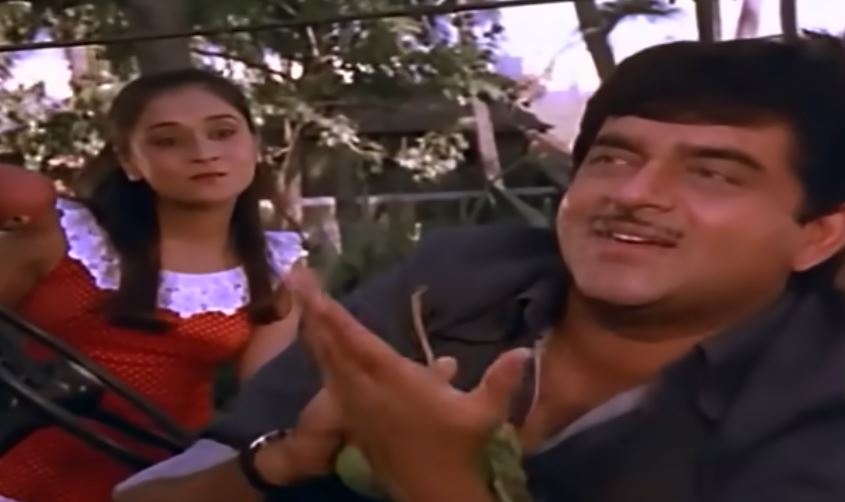
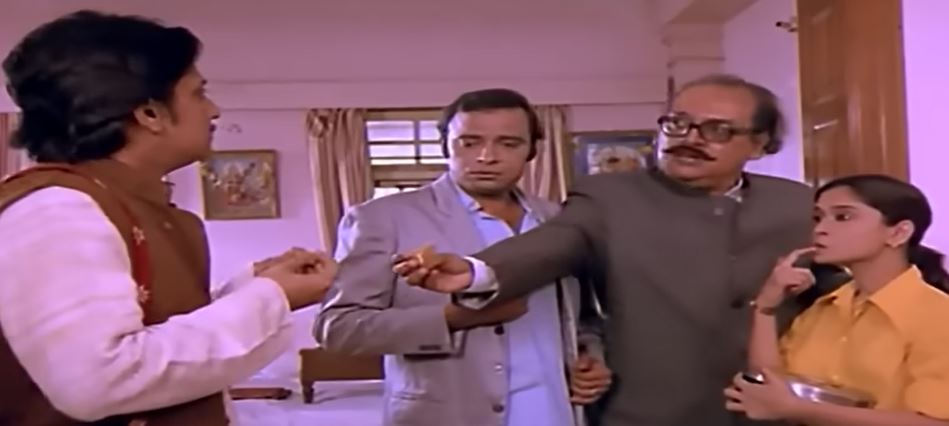
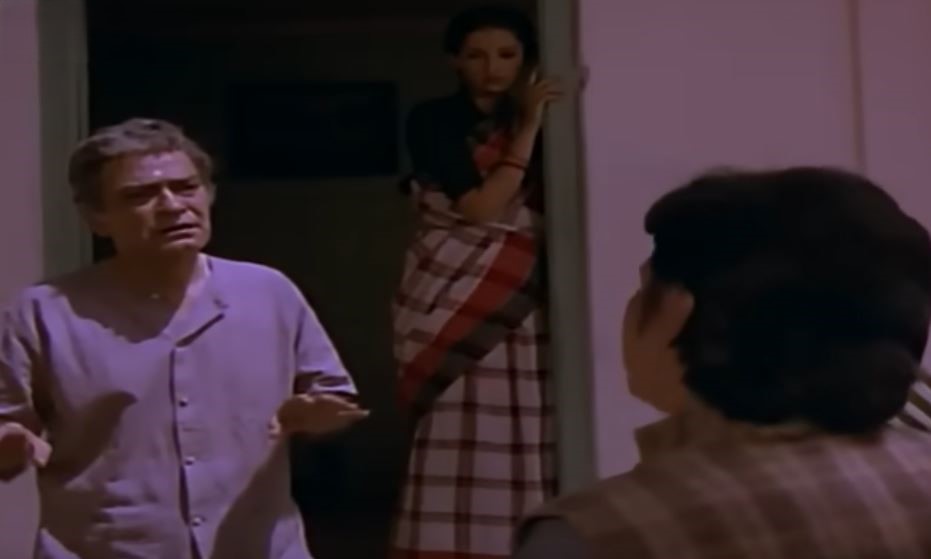
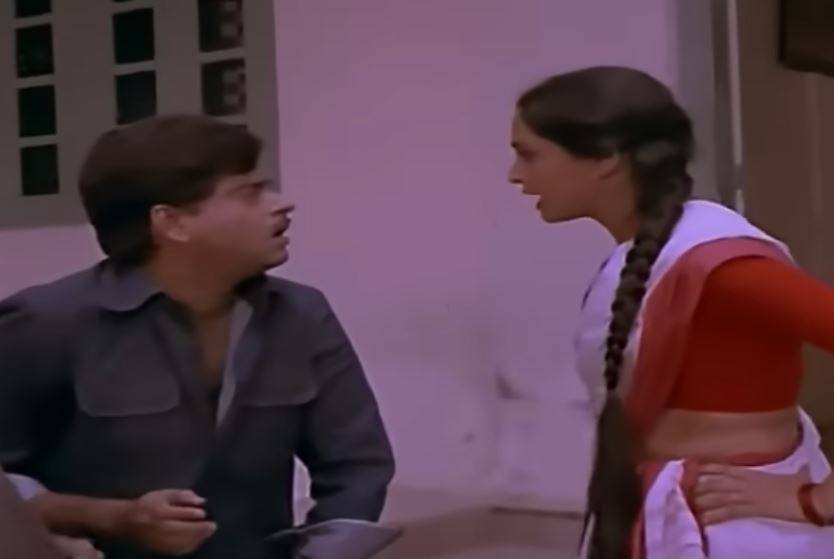
Naunihal is a story of a young boy Raju who sets on a mission to meet Pandit Jawaharlal Nehru who was then the Prime Minister of India. This is definitely a different subject to attempt. The movie manages to stay focused on its core theme and engage the viewer as Raju moves closer to meet his esteemed Chacha Nehru. This was Saawan Kumar Tak’s first movie as a producer (he also wrote the story). The director is Raj Marbros.


The Plot

The film begins with a meeting scene in a school in Panchgani. The school’s Principal (Balraj Sahni) is talking to the board of directors when they hear a commotion outside. The Principal, teachers and students as well as the board rush to the library to find that a student Raju (Master Babloo) has been throwing books and smashing objects in anger. Raju has had a fight with his classmates and was punished and locked in the library. The board is not impressed with his behaviour and inform the Principal to claim the damages from Raju’s parents and send him back to them.

A patient Principal informs them about Raju’s background through a flashback. The Principal was an orphan who grew up to be a successful man. He was married and had children. His family had been pestering him to take them to Panchgani, so they all can stay together. He finally agrees and goes to his home town in happy anticipation but there he comes face to face with a horrifying reality. An epidemic (mahamaari) has hit the town and there is death and illness everywhere. He has even lost his own family. Wandering around, he finds a boy crying. Apparently, he is alone having lost his family. This boy is Raju, now an orphan. The Principal believes that even an orphan has the right to live, be cared for and become successful. It reminds him of his own childhood. So the Principal brings Raju to Panchgani and enrolls him in his school. He does not adopt him but ensures he is well looked after.

Raju is constantly reminded he has no parents or relatives. Especially when the other students’ parents visit them and he sees their warm bonding. Apart from the Principal, there is a teacher Uma (Indrani Mukherjee) who dotes upon Raju. He accidentally keeps calls her “didi” (meaning elder sister) instead of teacher but she doesn’t mind.

Among the other students is Billo (Junior Mehmood) who keeps having a fight with Raju. Billoo’s brother is Rakesh (Sanjeev Kumar) who is an ex-student and a favorite of the Principal. Rakesh visits the school occasionally. Unknown to the Principal, Rakesh is in love with Uma. He informs his parents (Brahm Bharadwaj and Shaukat Kaifi) of his relationship and they are supportive of the match.

Back to Raju. Its report day. He sees the other boys spending time with their parents who have got gifts for them and are showering affection. Raju is once gain reminded he is alone. He is crying when students taunt him of being “anaath.” He gets into a fight and Uma and the Principal need to intervene. The Principal takes him inside and shows him Pandit Nehru’s photo fondly referred as Chacha (uncle) Nehru by children. The Principal says this is your uncle and don’t consider yourself alone.

Surprisingly Raju behaves as if he doesn’t know who Pandit Nehru is and his position as the country’s Prime Minister. He asks the Principal why doesn’t his uncle come to Panchgani to meet him. The Principal tells him its because Raju is a bad boy who keeps fighting. Raju promises to Pandit Nehru’s photo that he will be a good boy going forward. Further, the Principal asks Raju to write a letter to Pandit Nehru, which he does. Raju is happy about this new “relationship.” He steals the PM’s photo and keeps it in his hostel room, along with a red rose (plucked from the school garden).

One day, the Principal is having a heated discussion with the board of directors. He is not willing to raise the school fees. Raju rushes in to tell him that he has got a response from Pandit Nehru. The Principal is overjoyed, picks up Raju and suddenly collapses (apparently due to a heart attack). He is forced to leave for treatment in a nursing home. Strangely, the other teachers refuse to conduct classes until he is back and the school holidays are declared. (Wonder how the board agrees to this!). The students rejoice when they hear about the holidays.

The parents arrive to take the children home. Meanwhile Raju hears that his Chacha Nehru will be going to Mumbai (Bombay) and giving a speech near Chowpatty. With the Principal being away, he rushes to inform Uma but she is busy talking to the students’ parents and shouts at him to leave her alone. Raju hears that one of his fellow students is leaving for Mumbai. Unable to make his mind, he suddenly decides to hide in the boot of the car and lands in Mumbai.

Here the film enters a dark zone. He first meets a deranged old man (Harindranath Chattopadhyay) who looks after him for some time. He takes him to Chowpatty but they realise that the rally is over and Pandit Nehru has gone back to New Delhi. Later, Raju finds himself in the company of some child beggars who are after his money (he had carried Rs. 10 with him from Panchgani).

He ultimately gets kidnapped and lands in the slum where Mansaram (Manmohan) runs his training school. His profession? – training young boys and girls to make them beg in Mumbai. We are introduced to the grim reality of the begging profession. Very young children are made to lose their sight (made blind forcibly) or break their hands or legs to ensure they make effective beggars. The only sound people here are a poet Kavi (Jagdeep) and a blind young woman Kavita (Madhavi) who show concern for Raju.

In spite of all the hurdles, Raju manages to catch a train and reach New Delhi. A kind man (Abhi Bhattacharya) gives him shelter and informs Uma and the Principal (the Principal has recovered and is back in the school). Both of them rush to join Raju in New Delhi. Will they be successful in fulfilling Raju’s mission?


The Music

Technically, this subject does not have much scope for songs and there are too many (8 songs!), most of the seem wasted. This, in spite of having Kaifi Azmi as the lyricist and Madan Mohan as the music director.

Mohammed Rafi steals the show with 2 highly memorable numbers. It also brings out his versatility. The first is the soft romantic number Tumhari zulf ki saaye mein shaam kar doonga picturized on Sanjeev Kumar. And he sings the very moving “Meri awaaz suno.” [SPOILER AHEAD] – this song appears at the end of the movie and has some historic footage of Pandit Nehru’s funeral. The song is effective in capturing the mood of the sorrowful scenes.


My Thoughts

As stated, the movie’s theme is different from normal movies. And thankfully, its focus is on Raju and his mission. It does not spend much time on other sub plots or the romantic track. Also, the main plot moves smoothly from the innocence of the school life in the hill station to the metro city with its harsh reality. Master Babloo is convincing as Raju and his bond with the Principal and Uma is brought out naturally. Balraj Sahni is as usual impressive. This was Sanjeev Kumar’s initial movies and he doesn’t have much to do other than meet his love interest (Uma) and then keep hunting for Raju in Mumbai. The characters in the latter half – Manmohan, Jagdeep and Madhavi are good. Jagdeep plays a serious role, very different from his later comedic avatar.

Unfortunately, the film has some loopholes which don’t make the story believable (like Raju being able to run away from school easily). But I think those can be ignored as we join Raju in his journey to New Delhi and see how the story moves to its poignant and unexpected climax.

Miss Mary (1957)

It been a year since I started my blog on 31st March 2024. So Happy Anniversary! The first post was dedicated to Meena Kumari’s songs whose death anniversary falls on 31st March. So I thought of writing about a movie in which she starred – Miss Mary. Produced by AVM, directed by Prasad, this is a remake of a Telugu/Tamil movie called Missamma/Missiamma. The movie was successful in all versions.


The Plot

Miss Mary is a lost and found story. Shri Laxmi Vidyalaya has been founded by Laxmi’s father Rai Sahib (Jagdish Sethi) in the memory of his lost daughter. Laxmi had got lost some 16 years back and he has been making efforts to trace her with no success. He announces the primary school will be made a middle school. For this, he will be soon hiring a B.A. pass married couple who will be responsible for running the school. He has placed an ad in the newspaper.

His wife is Achla Sachdev and they have another daughter Sita (Jamuna). They are looking at Laxmi’s photo and remembering her appearance, habits etc. Its obvious they have had this conversation many times before and is repeated for the sake of the audience!

Another family member is Raju (Kishore Kumar), who is a friend’s son and a self proclaimed detective. Raju is Sita’s fiancee. He has declared himself as India’s no. 1 detective whose sole purpose is to find his uncle’s missing daughter. Apparently he doesn’t do anything else all day. His assistant is Chandragupta (Karunanidhi).

Raju has come with a man and his daughter. The man claims his daughter is the lost girl Laxmi. But Raju’s aunt (Achla Sachdev) rejects the claim. She explains that Laxmi had been wearing a leaf shaped locket and there is mark on her right foot. This is the only way of identifying the real Laxmi. Raju is motivated to double his efforts, advertise in the newspaper and and search for the missing daughter.

The scene shifts to Mumbai. Meena Kumari (Miss Mary) is teaching a song to a young girl Kiran, who is the daughter of a Government officer. Kiran’s father informs Miss Mary that he is getting transferred and she needs to look for a new job. Mary is taken aback with the sudden news. Another employee with the same fate is Arun (Gemini Ganeshan). Mary and Arun are suddenly jobless. They get a reference letter from the officer but is not that useful.

Mary lives with her parents. Her father (Shivraj) is a Christian priest. A villainous character is John (Randhir) who had given a loan of Rs. 400 to Mary’s father. He keeps reminding the family and pesters them to return the money. But his real purpose is to marry Mary and is willing to forget the money. Mary is furious. She has no intention of marrying John.

In frustration, she brings a weird leaf shaped locket which has photos of Hindu gods to her father. Its been lying in the family cupboard for many years. After all, what is a Hindu locket doing in a Christian family? She asks her father to sell the locket and repay the loan. But her father gives a lecture on religious unity. He considers the locket lucky. Of course the audience can guess that this is Laxmi’s locket and Mary is none other than Laxmi.

Meanwhile, Arun has been acquainted with a good for nothing character Nakadu (Om Prakash). He is a fraud, a beggar whose job is to con people and earn easy money. Arun spends most of his time in the public garden as he searches for job vacancies in the newspaper. Coincidentally, Mary visits the same garden. She too, has had no success job hunting. Arun comes across the ad concerning the B.A. pass married couple teaching job. He manages to explain the situation to Mary. If she is willing, they can pose as a married couple and apply for the job. Mary is enraged at the suggestion and leaves in a huff. But Arun tells Nakadu that she will be back soon with good news.

And that’s what happens. Mary is agreeable to Arun’s plan for the sake of the money. She will work for a couple of months until John’s loan can be repaid and return home. Arun is supportive. They submit the joint application and Laxmi’s father appoints them as the new teachers (cum headmasters!) of the middle school. Only Raju has some concerns. The couple appear to be very young and not too experienced. His uncle admonishes him and asks him to make arrangements to welcome the new appointees.

So Arun, Mary and Nakadu arrive and are welcomed wholeheartedly by Laxmi’s family. Achla Sachdev immediately looks upon her as her daughter. Mary’s resemblance to Laxmi it seems is obvious. The new couple settle down in their own bungalow with Nakadu for company. They are successful in their job and Laxmi’s father is satisfied.

The elderly duo keep calling Mary and Arun to their house for different reasons. One day its Laxmi’s birthday, next is dinner followed by Sita’s dance performance, another some rituals are to be performed and so on. (They obviously do not know that Mary is a Christian, and strangely her Hindu name is never revealed!).

Mary is not impressed with the interference and uncomfortable with the Hindu customs. She blames Arun for her plight. He is helpless but cannot do anything. They both need the job and need to sustain for 2 months before Mary can leave.

We also have a “love” triangle angle in the form of Sita. She wants to learn music from Arun but Mary is jealous of the arrangement. And then we have Raju who is hell bent in finding Laxmi and keeps “investigating” the couple. Nakadu manages to keep him at bay by demanding money (bribe) and give him roundabout answers to keep the couple’s secret intact.

In general, this plot continues for rest of the movie until it reaches its predictable end and the truth coming out.

The Music

The songs are good, voiced by Mohammed Rafi, Kishore Kumar, Lata Mangeshkar, Asha Bhosle and Geeta Dutt. Rajinder Krishan (lyrics) and Hemant Kumar (music) share the credits. The popular songs are Sakhi ri sun bole papeeha, O Raat Ke Musafir and Brindaban Ka Kishan Kanhaiya.

My Thoughts

Miss Mary is a simple and sweet movie. There are no twists and turns and things move at a lethargic pace. The movie could have been shorter and more entertaining if some dramatic moments were included.

For once, Meena Kumari’s character is not weepy. She alternates between the irritated character only to mellow down a bit and return to her original form effectively. Gemini Ganeshan is credited as Ganesh and plays the role adequately. Strangely, there is no romantic track shown between the supposedly married characters. They are always bickering and playing the blame game which becomes repetitive. And joining them is Om Prakash’s character which becomes predictable as the film progresses. Kishore Kumar is impressive and plays a character that does not want to do anything with music. He even sings a song Gaana naa aayaa, bajaanaa naa aayaa. Again, there is no romantic involvement shown with Jamuna’s character though they are supposed to get married.

Raat – Duets

Raat (night) – appears in so many forms in cinema. It can be a frightening aspect. A night of separation, longing. One that brings negativity. On the other hand, it can be a night of togetherness and romance. It makes way for the positive tomorrow. Hindi cinema has made use of raat in many songs. Ye hawa ye raat ye chandni, Suhani raat dhal chuki, Raat ka sama, Raat bhi hai kuch bheegi bheegi, Ye raat ye chandni phir kahan, Raat akeli hai, Raat bhar ka hai mehmaan are some of the interpretations resulting into great songs. They make use of the night and its accompanying elements like the moon, moonlight, the sky, the stars to bring out the emotions of the onscreen character.

Today’s post is about duet songs all talking about “raat.” All from different music directors. Which songs would you add here?


1) Song: Ye Raat Bheegi Bheegi
Film: Chori Chori (1956)
Credits: Shailendra | Shankar Jaikishan | Manna Dey and Lata Mangeshkar

A rich heiress (Nargis) and a reporter (Raj Kapoor) become fellow travelers and are forced to spend the night together. Its about to rain. He starts singing describing the moist atmosphere and she joins in. The lyrics are suggestive, is love in the air….or the weather?

Ithlati hawa nilam sa gagan, kaliyo pe ye behoshi ki nami,
Aise me bhi kyun bechain hai dil, jivan mein na jane kya hai kami,
Kyun aag si laga ke gumsum hai chandani,
Sone bhi nahi deta mausam ka ye ishara,
Ye raat bheegi bheegi ye mast fizaye,
Utha dheere dheere wo chaand pyara pyara


2) Song: O Raat Ke Musafir
Film: Miss Mary (1957)
Credits: Rajendra Krishan | Hemant Kumar | Mohammed Rafi and Lata Mangeshkar

Miss Mary is a story of 2 people who are forced to behave as a married couple in order to get a job. They keep bickering a lot. One night, after another fight, the hero Gemini Ganeshan steps out and addresses the moon to help him out. The heroine Meena Kumari mellows down and joins him with her perspective.

O chaand aasman ke dam bhar zameen pe aaja,
Bhula huaa hai raahi tu raasta dikha jaa,
Bhataki hui hai naiyaa saahil ise dikha de
Mera qusur kya hai, tu faisla suna de


3) Song: Ye Raatein Ye Mausam
Film: Dilli Ka Thug (1958)
Credits: Shailendra | Ravi | Kishore Kumar and Asha Bhosle

This is one of the softer songs of Kishore Kumar. Here he romances with Nutan as they describe the night and their romantic feelings.

Ye kya baat hai aaj ki chaandni mein,
Ke ham kho gaye pyaar ki raagini mein,
Ye baahon mein baahen, ye behaki nigaahen,
Lo aane laga zindagi ka maza,
Ye raatein ye mausam nadi ka kinaara ye chanchal hawa


4) Song: Aadha Hai Chandrama Raat Aadhi
Film: Navrang (1959)
Credits: Bharat Vyas | C. Ramchandra | Mahendra Kapoor and Asha Bhosle

This is a dream song sequence set in the night. Halfway in the night, the film’s protagonist poet (Mahipal) meets his imaginative muse Mohini (Sandhya). The overall song talks about incompleteness and parting. This is probably one of the most difficult choreographed songs with the heroine balancing multiple pots on her head, singing and dancing in sync.

Piyaa aadhi hai pyaar ki bhaashaa,
Aadhi rahne do man ki abhilaashaa,
Aadhe chhalke nayan aadhe dhalke nayan,
Aadhi palkon ki bhi hai barsaat aadhi,
Aadhaa hai chandramaa


5) Song: Do Sitaron Ka Zameen Par Hai Milan Aaj Ki Raat
Film: Kohinoor (1960)
Credits: Shakeel Badayuni | Naushad | Mohammed Rafi and Lata Mangeshkar

The two stars (sitaare) here are Dilip Kumar and Meena Kumari who are converging together slowly towards their meeting place. The heavenly night setting and the feeling of anticipation is beautifully described and enacted here.

Husnwale teri duniya mein koi aaya hain,
Tere deedar ki hasarat bhi koi laya hain,
Tod de tod de parde ka chalan aaj ki raat,
Muskurata hain ummeedo ka chaman aaj ki raat,
Do sitaron ka zameen…


6) Song: Zindagi Bhar Nahi Bhoolegi Woh Barsaat Ki Raat
Film: Barsaat Ki Raat (1960)
Credits: Sahir | Roshan | Mohammed Rafi and Lata Mangeshkar

The solo version is more famous but the duet has its own charm too. Madhubala has run away from her home to meet Bharat Bhushan. He asks her to return home. She starts singing the song, he completes the duet and they agree to stay together come what may. This is one of those songs where it is difficult to decide whether its the lyrics, music or the singing that outshine each other. And Madhubala (!)

Haay jis raat mere dil ne dhadakna seekha,
Shokh jazbaat ne seene mein bhadakna seekha,
Meri taqdeer se nikli wahi sadmaat ki raat,
Zindagi bhar nahin bhoolegi


7) Song: Dhalti Jaaye Raat
Film: Razia Sultana (1961)
Credits: Anand Bakshi | Lachchiram | Mohammed Rafi and Asha Bhosle

Jairaj and Nirupa Roy are the lovers in this song but two unknown(?) singers are singing the song and bringing out the emotions of the lead pair. Definitely, a musical gem from one of the lesser known composers.


8) Song: Aaj Ko Junili Raat Maa
Film: Talash (1969)
Credits: Majrooh Sultanpuri | S. D. Burman | Mohammed Rafi and Lata Mangeshkar

This melodious song is set in a village. Junli raat means the night of the full moon. This is a celebratory song. The lead pair Rajendra Kumar and Sharmila Tagore have decided to get married and voice out their joy together.


9) Song: Raat Suhani Jaag Rahi Hai
Film: Jigri Dost (1970)
Credits: Anand Bakshi | Laxmikant Pyarelal | Mohammed Rafi and Suman Kalyanpur

Jeetendra and Mumtaz get romantically involved in a fantasy song. The song is a weird combination of set pieces, dance steps and costumes considering it is meant to be a romantic song!


10) Song: Hum Tum Gumsum Raat Milan Ki
Film: Humshakal (1974)
Credits: Anand Bakshi | R. D. Burman | Kishore Kumar and Asha Bhosle

And to end the list, a romantic song with a haunting quality. Newly weds Rajesh Khanna and Moushumi are in a fishermen’s colony, they sing the duet and come closer.

Jhoke pawan ke khidki se jhake chedo na tum balma,
Sunle na koi zalima, zalima re,
Bajne lage hai mere kangna jhun jhun,
Jhumna Jhumna Jhumna Jhumna….
Hum tum gumsum raat milan ki…