
A few months ago I had read about the popularity of the Hindi film Disco Dancer (DD) in Russia (then Soviet Union). The film met with unprecedented success and became the highest grossing Indian film in the Soviet Union (replacing Awara (1951), which held the honour till then). That got me curious and the result is today’s post.
Mithun Chakraborty stars as the main character in this B Subhash produced and directed movie. Bappi Lahiri gave some extremely popular numbers like I am a Disco Dancer, Koi yahaan naache naache, Jimmy Jimmy Jimmy aaja aaja, possibly starting the disco music trend in Hindi film music. So, over to the film!

The Plot
DD is the story of a poor boy Anil. Anil is a singer cum dancer who performs on the streets of Mumbai with his uncle (father’s friend) Master Raju (Rajesh Khanna in a special appearance). They play a variety of instruments and sing songs like Goron ki na kalon ki. At the end of the day, he goes home. His widowed mother Radha (Geeta Siddharth) is waiting for him. Anil informs her that Raju uncle had to go to his village as his mother is seriously ill. Anil’s father used to perform with Raju and wished that his son will be a successful artiste. No details are given how his father passed away. Also, we don’t know if Anil attends school and seems his mother relies on his earnings to run the house.
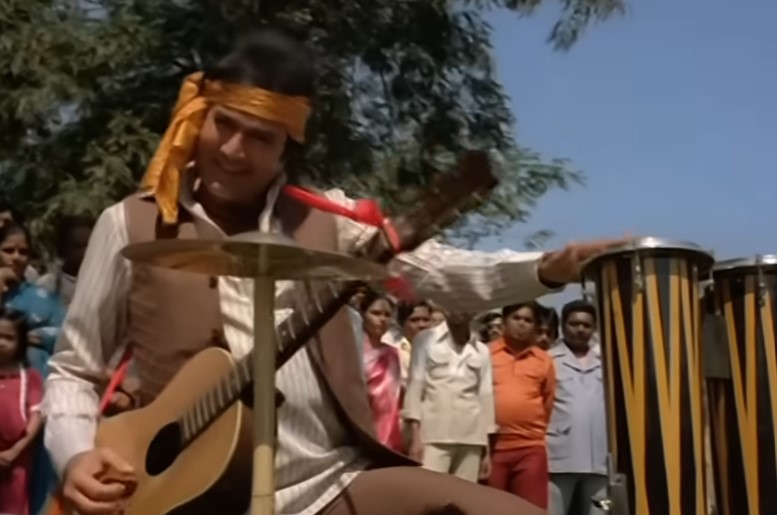
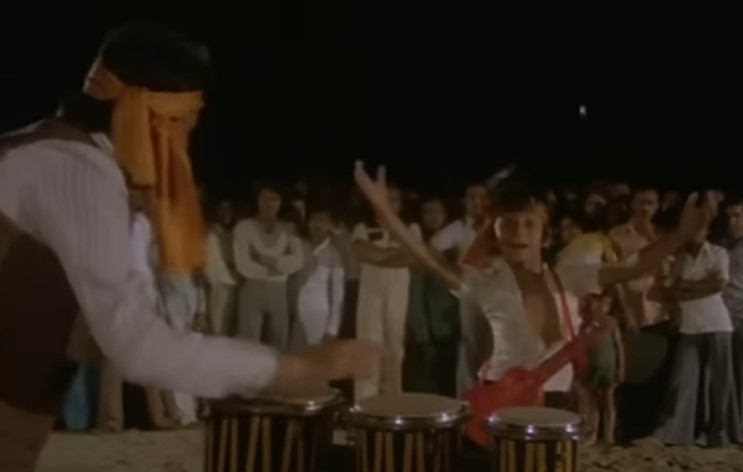
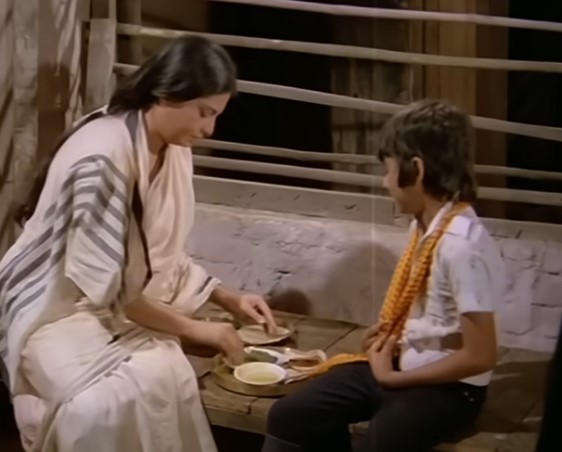
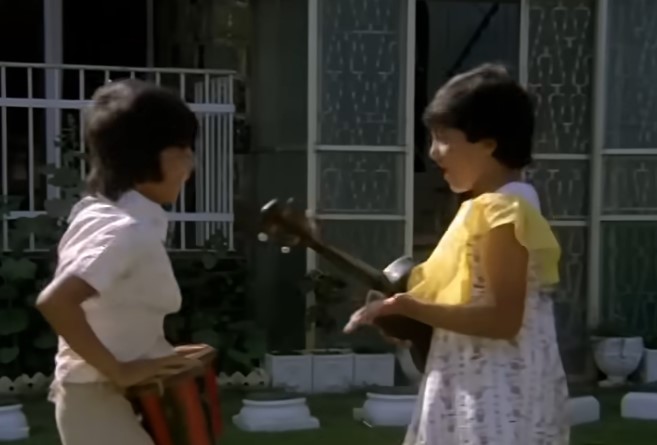
Anil has a (bad) habit. He will not eat until his mother feeds him with her hands. This is a daily ritual. Next day, Anil goes to perform with his mother. A small girl invites him inside her bungalow. She has been watching him perform everyday and likes his singing. She even knows the song by heart and has a guitar. Soon the children start singing and enjoying until the girl’s father arrives – Mr. P N Oberoi (Om Shivpuri).
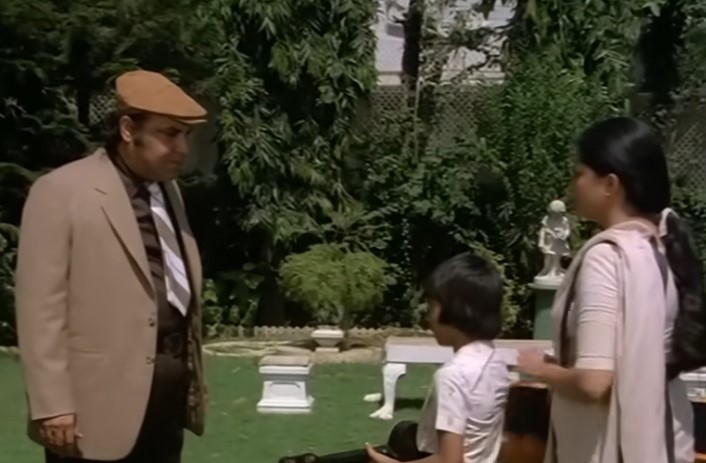
He sees people watching the kids’ performance by climbing the compound wall of the bungalow. He shoos them away angrily. He is in an extremely foul mood and barges inside. He slaps his daughter and orders her to go in. He slaps Anil and pushes Radha when she comes to protect him. Radha gets injured. Anil tries to hit him with the girl’s guitar when the police arrive. Oberoi cooks up a story. He sees his daughter’s guitar in Anil’s hand. He accuses him of stealing the guitar. Radha claims she is the culprit and is sent to jail.
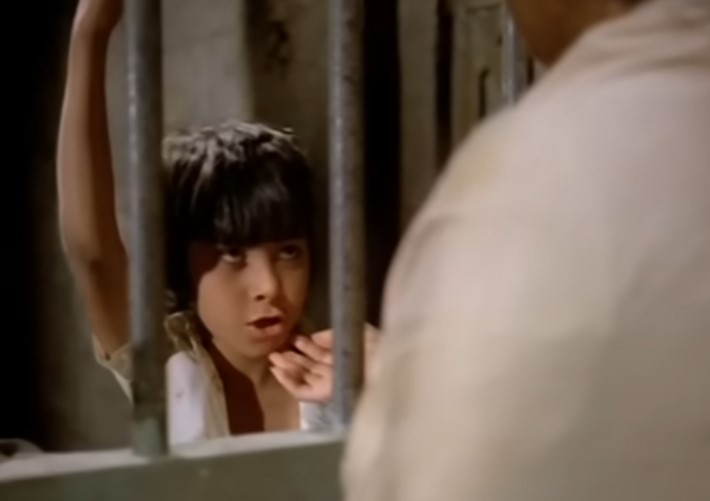
Anil comes to meet her and promises he will grow up soon and teach the “Seth” owning the bungalow a lesson. After she is released from jail, Radha goes with Anil to their house in a basti (settlement). The neighbours keep harassing Radha, calling her a thief. The taunting continues even though Radha is innocent. Anil threatens to cut their tongues. Radha pacifies him and decides to leave Mumbai. They move to Goa.
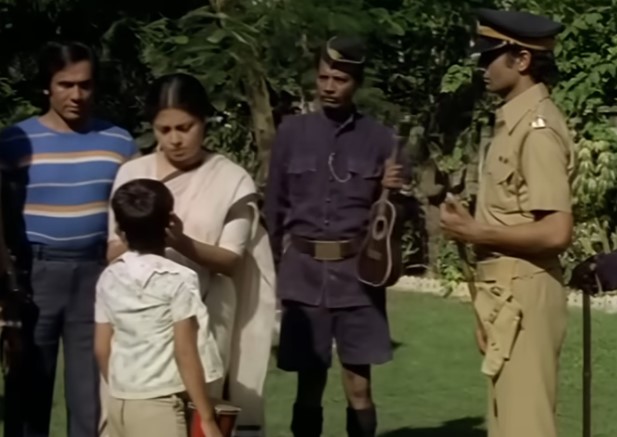
18 years pass and Anil is now a young man (Mithun Chakraborty). We see him performing at a wedding in Goa (Tuntun is the bride). She pays him 100 rupees which he distributes amongst his friends cum musicians. They are not pleased by the paltry amount. He mollifies them saying at least they got something. He is waiting for the day when he will be a successful musician and will reward them in a better way.
Anil comes home. He still insists his mother to feed him with her hands else he won’t eat. Being the Hindi film mother, she obliges. He promises her that when he will be a big man, there will be a big party in his honour and she will have to feed him with her hands in front of the guests. He is still bitter about their experience in Mumbai and waiting for the day when the same city will welcome his mother with respect. He will sharpen his musical talent like a sword and stab the city (what a dialogue!).
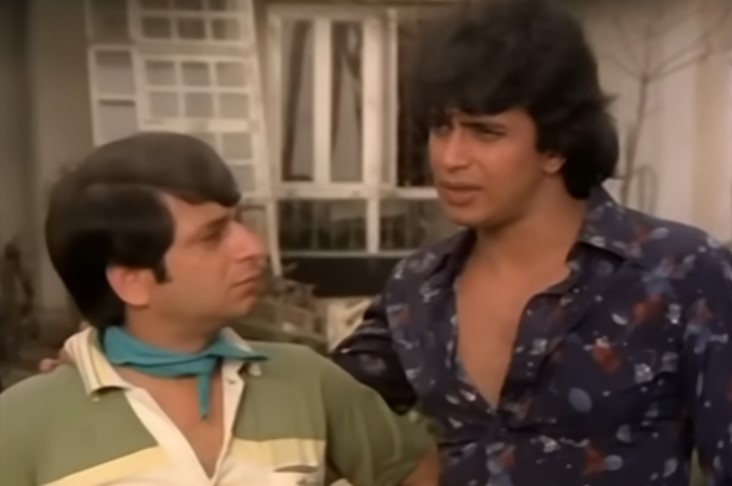

In Mumbai, Oberoi is still staying in the same bungalow. His son Sam (Karan Razdan) is a famous disco dancer. He is traveling to Goa for a show. He performs one of the many hit songs of the movie Koi yahaan naache naache, with his partner/lover Nikki Brown (Kalpana Iyer). She is the daughter of his manager David Brown (Om Puri).
After the show, Sam is enjoying some romantic moments with Nikki in the Green Room. David enters the Green Room to talk about their next show, and Sam doesn’t like the intrusion. Sam is arrogant like his father. He insults David badly. David is hurt by this behavior. He is not a servant or secretary and demands respect but Sam is no mood to listen. Apparently, this has happened many times but this time David takes a tougher stand. He decides to leave Sam and teach him a lesson. He vows to create a new superstar in the disco universe, and Sam will drown in his brilliance (wow!). Nikki cares for Sam and doesn’t know how to react.
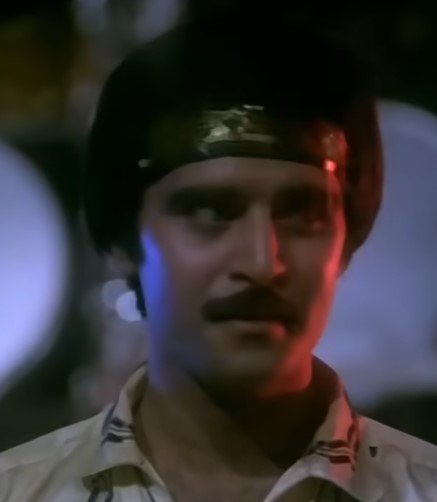
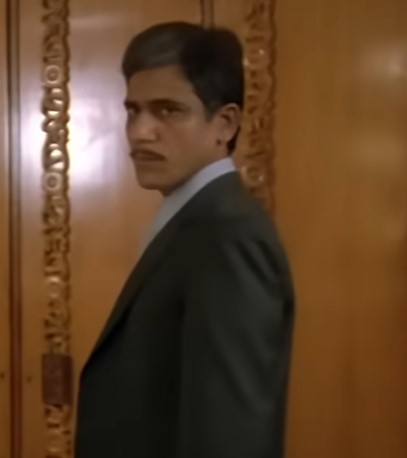
Very conveniently, Sam’s replacement is readily available in Goa. David sees Anil dance walking on a bridge in the night. He is impressed and approaches him. Anil is overwhelmed by the opportunity, that to from Sam’s manager. He agrees to perform in the show. Anil assumes a new name Jimmy.

Sam is not sitting quiet. He has sent his sister Rita (Kim) and her friends to disrupt the performance. David introduces Jimmy. As expected, the audience is not very receptive of Sam’s replacement. Rita mocks him, calling him sadak chhap many times but Jimmy maintains his calm and concentrates on his performance. He performs the song Ae Oh Ah…zara mudke mila ankhen, which wins over the crowd. He doesn’t leave the opportunity to mock Rita, who is not amused. The show is successful and David is relieved.
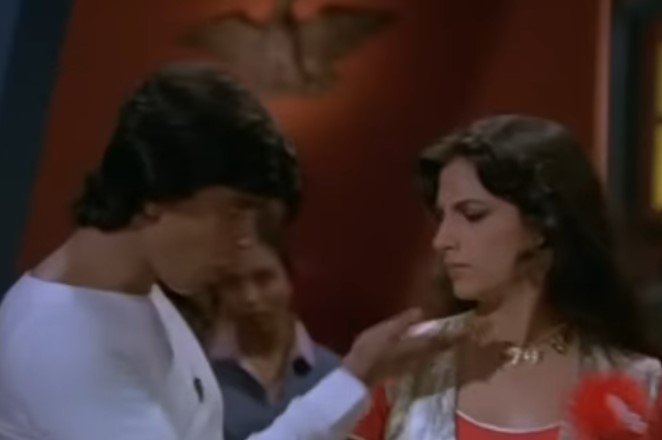
Next day, Anil/Jimmy meets Rita. It seems Jimmy knows Rita is Oberoi’s daughter i.e the daughter of his old enemy. But is she still the small, kind girl who had invited him to her house? Doesn’t seem so. She behaves like a typical rich man’s haughty daughter. He agrees he is a sadak chhap singer cum dancer, risen from the streets. But he is confident the day will come when he will be successful enough to compel her to ask for his autograph.
Fresh from their successful collaboration, David is arranging more shows. He plans to take Jimmy to Mumbai, the place for fame and riches. Radha is reluctant to go but Jimmy convinces her. They arrive in Mumbai and pass by Oberoi’s bungalow. David mentions that it is their common enemy’s residence.
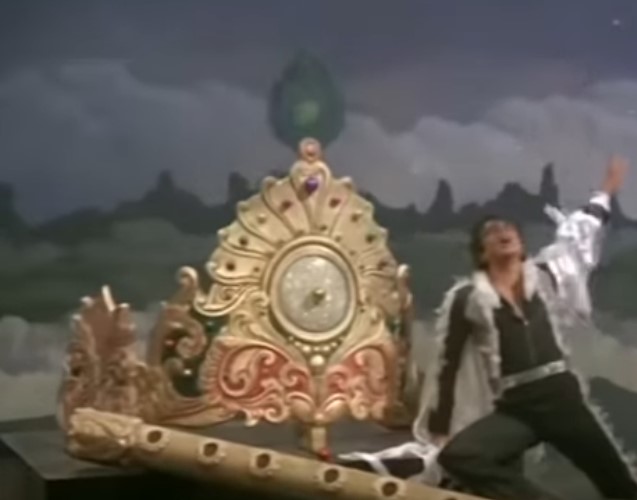
David calls Sam and informs him that he has been replaced by Jimmy in all future shows, making him agitated. Sam’s father Oberoi hears this and is angry too. He calls Basco/ Bosco (Yusuf Khan) to take care of Jimmy and ensure he does not reach the show venue. Bosco and his gang meet Jimmy. While initially helpless, Anil gathers courage (like a Hindi film hero) and tackles all the men single handedly. Jimmy rushes and manages to reach the auditorium and performs Krishna, dharti pe aaja tu.
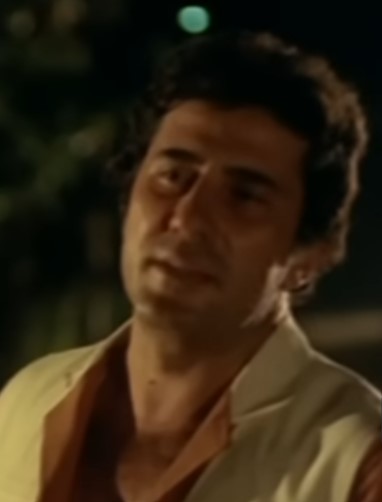
The show is a success and Jimmy becomes a star. He is all over the media. Fans follow him everywhere. His merchandise floods the markets – Jimmy T-shirts, fabrics, perfumes, and so on. But at heart, he is the same person who cares for his mother.
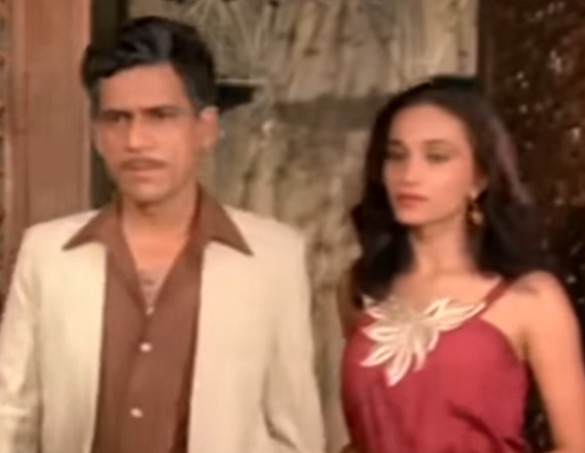
Sam has sunk into depression and spends the whole time in Nikki’s house. He is unable to accept his downfall. He drinks all day. David is aware of this. He asks Nikki to join Jimmy’s troupe but she refuses politely.

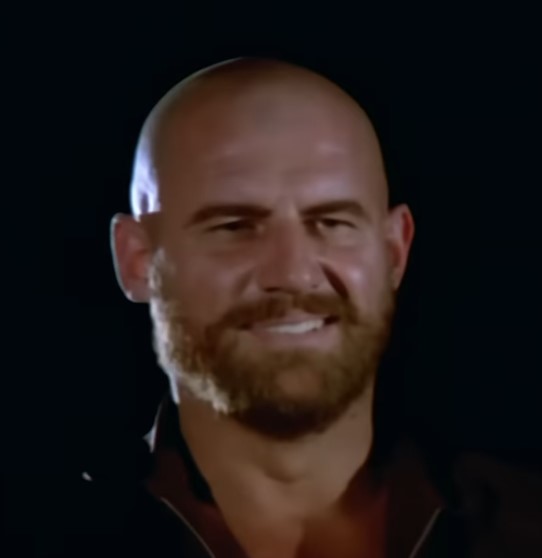
One day, Jimmy meets his old friends from Goa. He also visits the basti where the residents had taunted his mother. There is a sub-plot where Oberoi is trying to grab the basti land and develop it for immense profits. Oberoi engages a foreign goon (Bob Christo) with Bosco’s help to threaten the dwellers and make them vacate the land forcefully. Jimmy helps in thwarting these plans by tackling all the goons. He comes to know that Oberoi is behind all this.
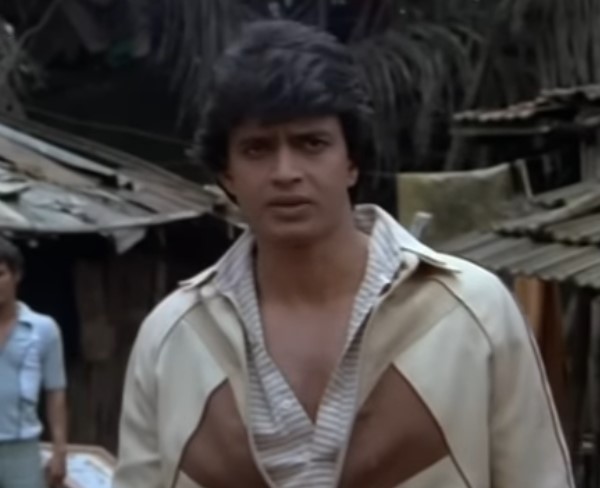
The city mayor Khandelwal (Khandelwal) invites Jimmy for a party (it’s his daughter’s 18th birthday). It is the big party Jimmy had been waiting for. The VIPs and notable personalities from the city will be attending the function. The big names gather around Jimmy. Even Sam feels insulted when his fans rush to meet Jimmy on his arrival. The mayor welcomes Jimmy and Radha with respect. Oberoi and his daughter Rita are among the guests.
Jimmy has tears in his eyes as he describes the past events of his life and talks about the sacrifices by his mother. (Yes, and his mother feeds him lovingly with her hands, as expected.) The mayor introduces Oberoi to Jimmy who refuses to shake hands and insults him openly, reminding how he had behaved 18 years back, beaten him etc. Rita realizes Jimmy is the same boy who used to sing in front of her house.
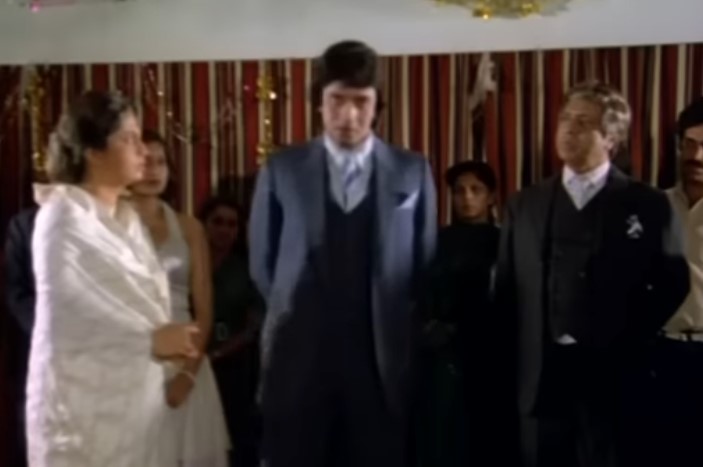
Next day, Rita comes to meet Jimmy and gifts him the same guitar that he had been accused of stealing 18 years earlier. She apologizes for what has happened. Love blossoms. Oberoi is angry when he sees Rita with Jimmy. Rita is adamant and leaves her house and comes to live with Jimmy.
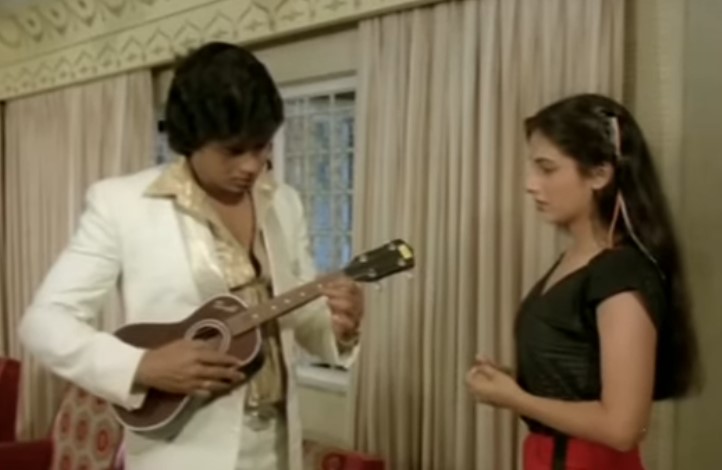
A revenge game between Jimmy and Oberoi begins. Sam has started taking drugs and Oberoi cannot bear to see his condition. Rita has already revolted against him. Oberoi plots to destroy Jimmy. There are many plans. One plan is to electrocute him when he picks up an electric guitar at a party. Nikki informs Radha about this. Radha rushes to the party and picks the guitar before Jimmy can do so. She gets killed due to an electric shock. Later, Jimmy is beaten up and his legs are broken. He spends a lot of time recovering with Rita assisting him to walk.

All this has impacted Jimmy. He develops guitar phobia (if that is a term). He imagines his mother whenever he sees a guitar. He is reminded of the shocking incident. He doesn’t have the courage to pick the guitar and perform. Nothing motivates him to sing and dance.
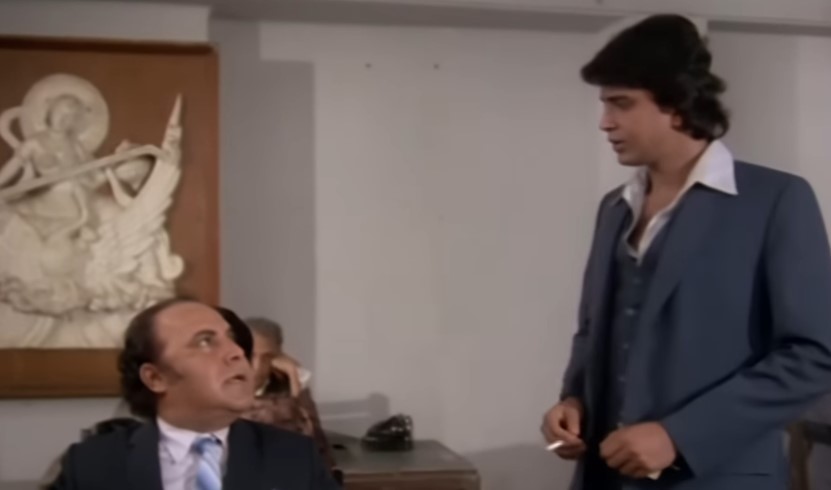
David and Rita try to bring him out of this state but are not too successful. Will Jimmy overcome his demons and perform again? Music is his life, how will he carry on? And what happens to Oberoi? All is answered at the end after few more songs and even Master Raju reappears in the climax.
The Music
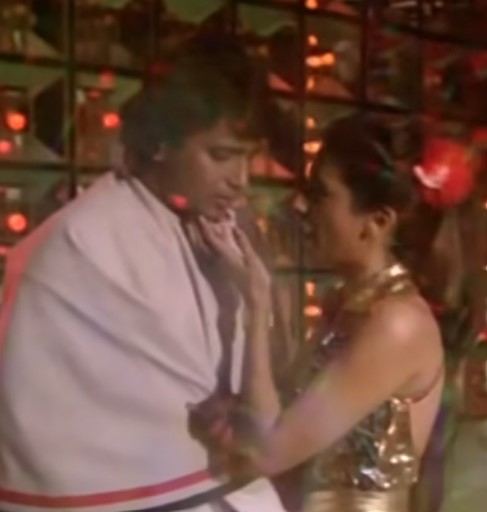
Bappi Lahiri shot to fame with his disco themed music and it attained popularity outside India as well. While not of a classic quality, all songs are catchy and hummable.
“Goron ki na kalon ki” (Suresh Wadkar and Usha Mangeshkar), “Ae Oh Ah…zara mudke mila ankhen” (Kishore Kumar), “Koi yahaan naache naache” (Bappi Lahiri, Usha Uthup) and “Yaad aa raha hai” (Bappi Lahiri) feature famous names.
There are some new names who sing popular numbers like “Jimmy Jimmy Aaja” (Parvati Khan), the title song “I Am A Disco Dancer” (Vijay Benedict), and “Krishna, dharti pe aaja” (Nandu Bhende).
My Thoughts
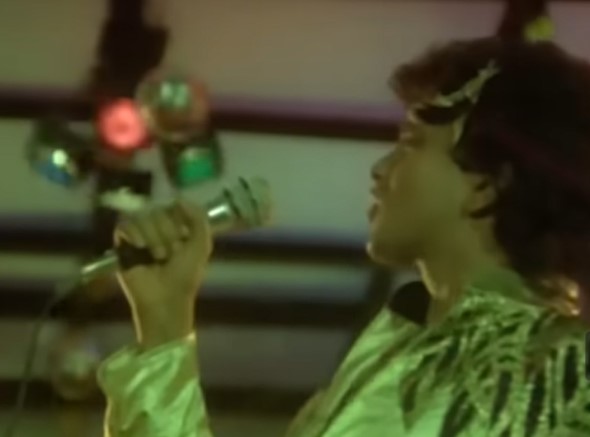
I am confused about the reason for the huge success of the movie. It’s not a mediocre movie but the execution could have been better. I cannot comment about the quality of Mithun’s dance or technicalities, but yes, he has the moves. (He outperforms Karan Razdan who just couldn’t dance). But Mithun outshines all others in the acting department. He has a raw and natural presence, the emotional scenes are particularly impactful. In comparison, the action scenes are tedious to watch. But Mithun convinces the audience that his character has learnt to sing and dance on the streets. He has also learnt to fight and defend himself on the streets. So, it works in his favour!
The romantic track between Mithun and Kim seems forced and they lack the chemistry. Kim is memorable in the iconic song Jimmy Jimmy Jimmy aaja aaja. Om Puri is good but doesn’t have much of a role. The villains are uninteresting and ham all the way. Om Shivpuri and Karan Razdan are irritating. Yusuf Khan and Bob Christo have strong screen presence but their characters lose steam when the hero tackles them easily!
At the core of DD is the revenge theme. The wronged hero, who returns to claim his place. He is down many times but rises each time to take on his enemies and move ahead. Maybe that thought resonated with the audience. And the music, which was “different” and something the audience was fine to accept. And credit to Mithun Chakraborty, who connects the character with the audience successfully.






 Cine Gaurav