Category Archives: My Reviews

Pedgaonche Shahane (1952)

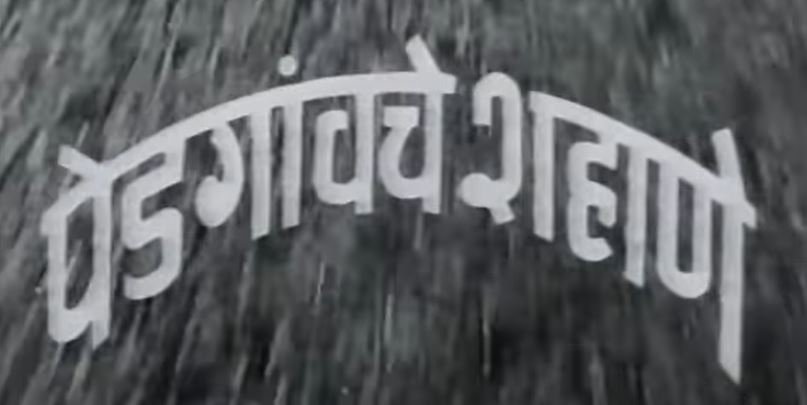
Pedgaonche Shahane (The Shahanes of Pedgaon) is a Marathi comedy movie produced and directed by Raja Paranjape. He also plays the main role(s). The movie is based on a theme very common in cinema – long lost siblings, twins in this case. A mix of well written dialogues, general goofiness and some serious situations deliver a satisfying movie. There are some drawbacks but those can be ignored considering the era when the film was made.

Trivia – Pedgaonche Shahane is a Marathi phrase attributed to a historical incident which took place in Pedgaon in the 17th century. The Moghuls were tricked and looted by the Maratha army without a battle or bloodshed. The defeated Moghul Sardar was deemed as aati-shahana (i.e. oversmart or foolish) and hence the term Pedgaonche Shahane. In the movie, it refers to the family named Shahane and the events occur in Pedgaon.

The Plot

The movie starts with a scene in the mental asylum/hospital in Pedgaon. An aged Dr Shahane (Raja Paranjape) moves around and meets the patients. He enters Dr Manohar’s room in the hospital premises. Soon, Dr. Manohar enters with a nurse.

We come to know that Dr Shahane is a patient at the hospital. He was a well known surgeon. One day he was asked to operate on a close relative named Malati. Dr Shahane was not willing to operate, but she insisted and he had to agree. As fate would have it, he loses concentration during the operation when he picks the surgical scissors. There is darkness in front of his eyes. He is unable to complete the operation and Malati dies. Dr Shahane blames himself for the incident and is mentally impacted. Ever since, he has been living in the mental hospital. He is otherwise normal but reacts whenever he sees a pair of scissors. One night, he manages to run away from the hospital.
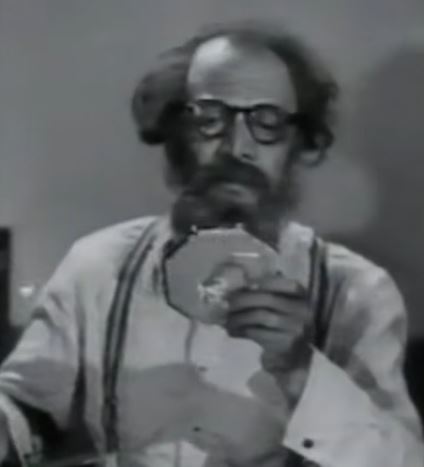
The scene moves to a bungalow. This is the house of Balwantrao Shahane (G.D. Madgulkar) who works in a bank. His wife is Sarla (Nalini?). Sarla is keen to learn music. She aims to make their family modern as in “America.” They have 3 children. The elder son Ranga (Chittaranjan Kolhatkar) has completed his studies and is employed. Their daughter is Prema alias Baby (Nayana?). Prema takes daily dance lessons from Chandrabhushan (Prasad Sawkar). The younger son is school going Babu alias Bob (Master Dwarkanath). Another house member is a singer from the South – Sarang Bua/Mama (Dhumal), he is Sarla’s music teacher.
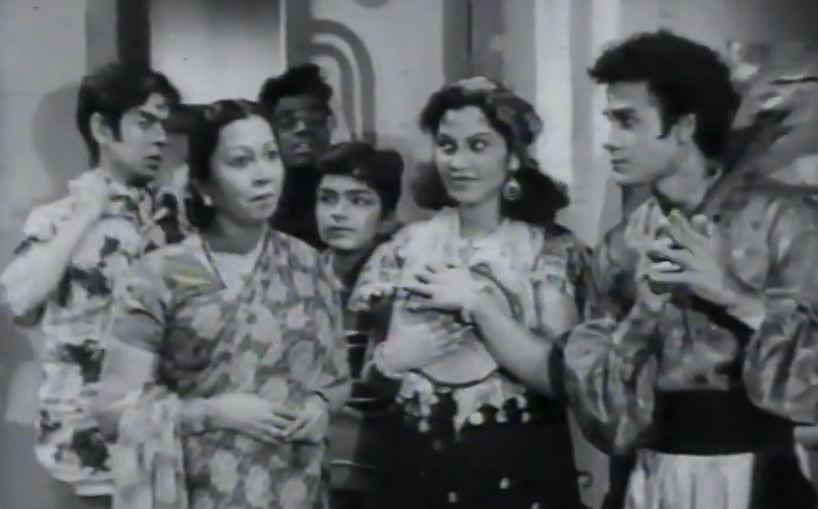
The opening scene is entertaining as we get introduced to the characters. Sarla, Ranga and Sarang are chatting on the breakfast table. Sarla is reading the newspaper and mentions the patient who has escaped from the mental hospital. But Ranga is more interested in the coverage of the horse races. He spends his time betting on horses and playing rummy on Sundays.

Suddenly there is a loud sound from the kitchen and all of them rush in to find Babu meddling with the stove. He is a mischievous boy and a keen experimenter, who has the habit of “exploring” and “fixing” things like a stove, radio and so on.
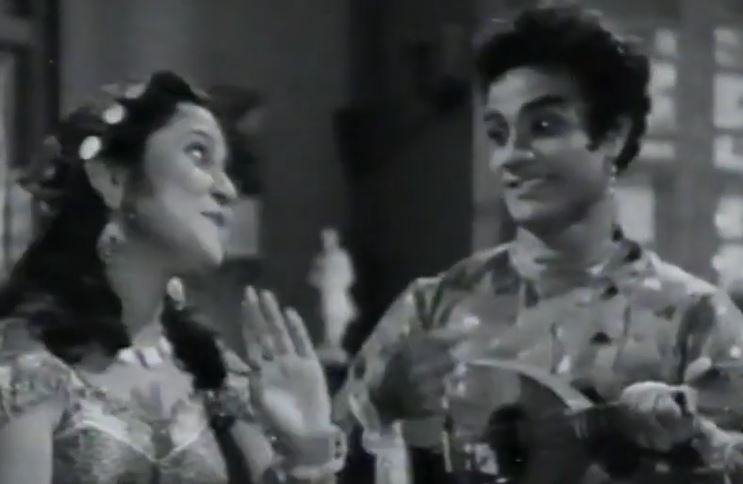
And then we have the young couple Prema and Chandrabhushan. They are upstairs singing and dancing on a Hindi song Muze dejaa rumaal.

Balwantrao is ready to leave for the bank. He asks his wife timidly if he can get a cup of tea if their (implying his family’s) “cinema” routine is over. Sarla lectures him that she is struggling to make their family modern and he is not appreciative at all. She will do as she wants. Just then the bell rings and all members (except Balwantrao) rush to open the door. A telegram has arrived confirming that Kakasaheb (uncle) will be arriving today as informed in his letter.
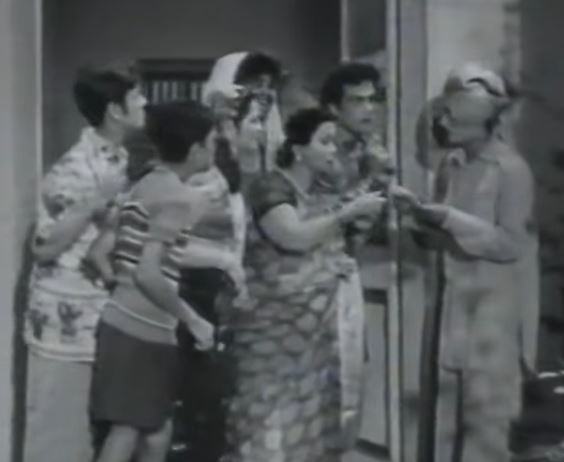
Balwantrao is confused and asks if any letter had come. Babu says yes, a letter had come from Africa and he has added the foreign stamp to his collection. A meek Balwantrao requests to hand over the letter. After deliberation by the members, it is discovered that the letter has been kept in a locked drawer. But the key is missing as all family members are “busy” in their activities.
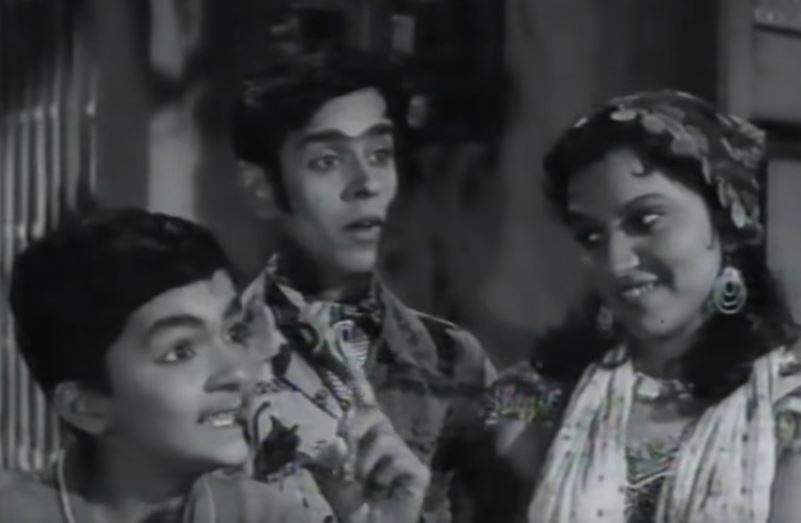
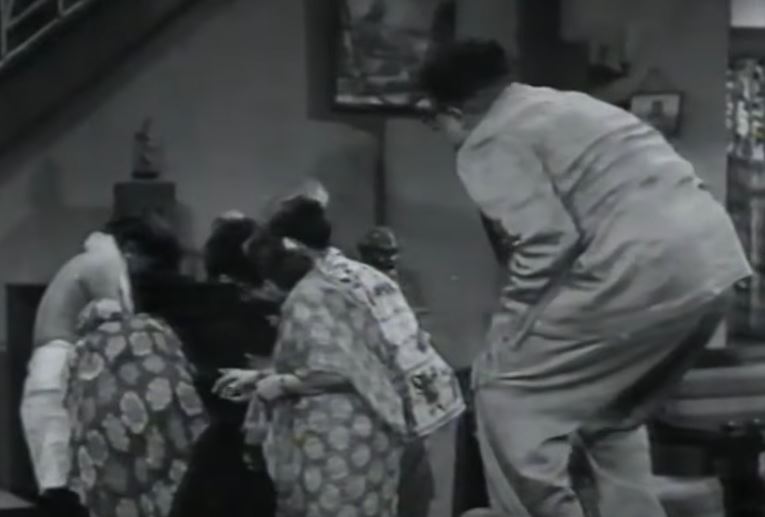
Babu takes the lead in opening the drawer with a screw driver. Again there is a hilarious scene as the family gathers to open the drawer and retrieve the letter. Finally, the letter reaches Balwantrao who utters a sigh of relief. The letter is from his step uncle Kakasaheb Shahane who is returning from Africa. Apparently, he is a rich businessman with lakhs of rupees. He plans to spend the rest of his life with Balwantrao’s family. The family is excited to have a rich relative staying with them. Balwantrao instructs Sarla to go to the railway station and receive the relative.

Meanwhile Dr Shahane (after escaping from the mental hospital) has reached the railway station to catch a train and run away from Pedgaon. The police are also on the station to foil his plans and take him back to the mental hospital. The train arrives with Kakasaheb Shahane (also Raja Paranjape) and a comedy of errors follows. The police mistake the Africa returned Kakasaheb as Dr. Shahane and take him forcibly to the mental hospital. (Here, Kakasaheb mentions in passing that he had a twin brother who had gone missing many years back. But the police are in no mood to listen to his imaginary stories!).
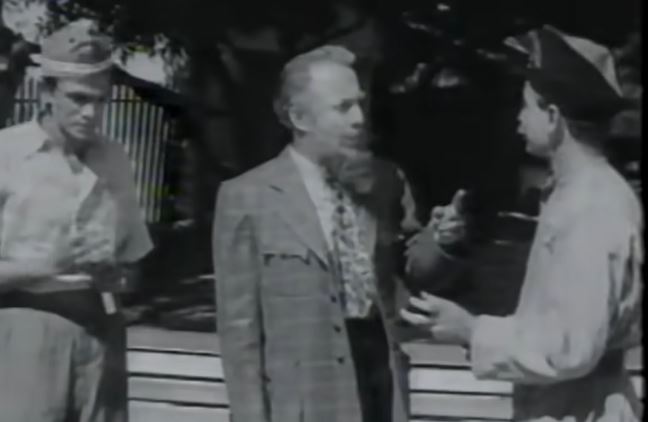
Sarla meets Dr Shahane, assumes he is Kakasaheb and requests him to come home. He is puzzled at the woman’s behaviour and mention of his nephew. He reluctantly agrees and they arrive at the bungalow. He is introduced to the children, Sarang Mama and Chandrabhushan. Needless to say, their first impression is not very remarkable on the old man.
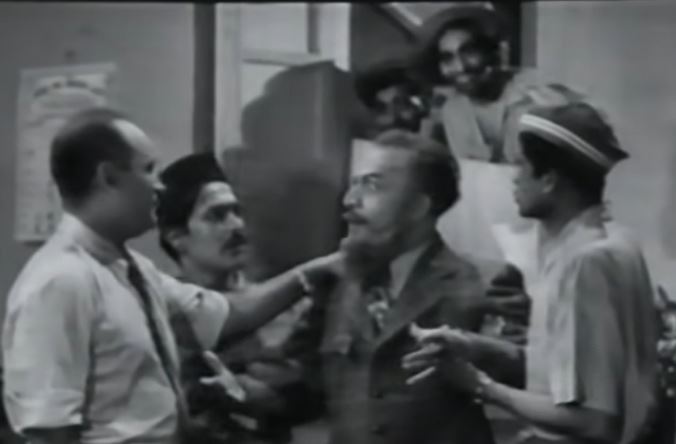
At the hospital, Dr. Manohar is relieved to have his patient back. Kakasaheb keeps insisting they have made a mistake, he is a businessman from “Zanzibar.” The word Zanzibar catches the fancy of the other patients who keep repeating it.

That evening, Balwantrao returns from the bank and meets Kakasaheb. He has an open chat with his uncle. Apparently its only Balwantrao who is the bread earner in the family. Ranga has lost his job. There are unnecessary expenses in the form of the music teacher, dance teacher, Ranga’s hobbies, special food demands by every member etc. He is finding it difficult to satisfy everyone and even taken a loan. He is glad that an elderly relative has arrived at his house and looks upon Dr Shahane as his saviour.

Dr Shahane agrees to put things in order. He is a disciplinarian and gets on to the task immediately. He starts taking harsh decisions much to the discomfort of the family members and to Balwantrao’s delight. Restrictions are imposed. The music teacher and cook are sacked. Sarla will manage the cooking everyday. Food will be brought from the ration shop only and so on.

The family accepts his decisions grudgingly. But gradually, he endears himself to them, and earns their genuine respect.

And what about the real Kakasaheb in the hospital? He is surrounded by entertaining specimens around him. The patients sing a delightful song – Duniya vedyancha bazaar….Zanzibar.
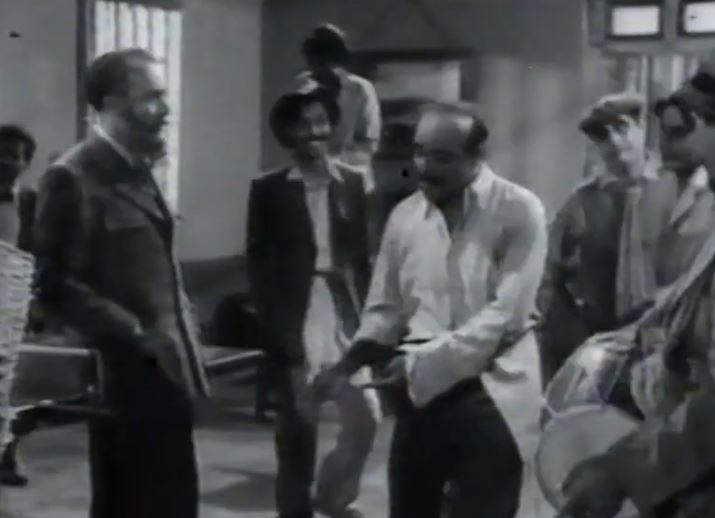
We know where all this will lead to. The twin brothers are destined to meet one day. Which they do, leading to a happy reunion and a sad farewell at the end.

The Music

Raja Paranjape’s movies are generally associated with great or rather all time hit music tracks. The music of this film is not bad. G. D. Madgulkar (Ga Di Ma) is the lyricist. Datta Dawjekar composes the tunes in line with the times. The problem is the story line does not offer much scope for songs especially the romantic tracks. They come and go, boring the viewer. The mental hospital song Zanzibar is the all time hit song. The lyrics are as rubbish as they can be and Vasantrao Deshpande’s singing is awesome.

My Thoughts
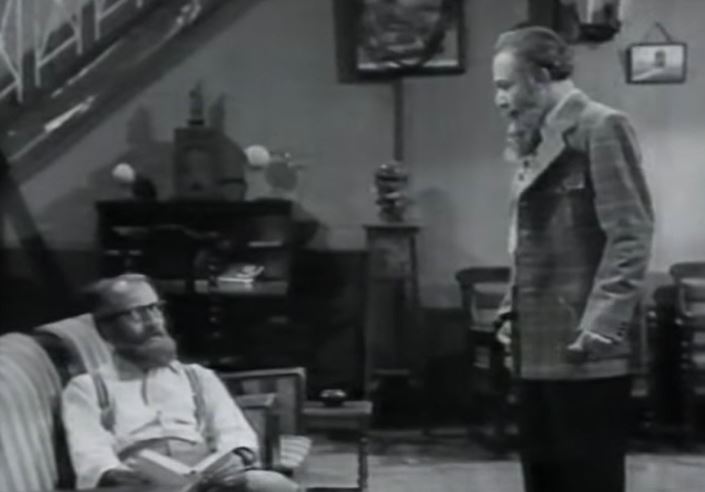
Movies depicting long lost siblings who meet after many years is not a novelty in cinema. But it would have been a fairly new concept when Pedgaonche Shahane was made. And also the fact that the look alike siblings are older in age (65+ ?), make it different from the usual lost and found plots.

Raja Paranjape is comfortable in both the roles. Rest of the cast are adequate. We see some veteran actors who are very young in this movie such as Sharad Talwalkar, Chittaranjan Kolhatkar, Prasad Sawkar and Madhu Apte and are difficult to recognize if you are not very observant! Special mention is G. D. Madgulkar who plays the helpless owner and has no say in his house. He is also the story, dialogues and song writer. His collaboration with Raja Paranjape is legendary and shines in this movie.

The initial part is funny as the family is introduced and the fake uncle settles down in his new residence. The solutions he offers may not seem very convincing today but that can be ignored. The later scenes in the mental hospital could have been funnier depicting the discomfort of the real uncle in those unexpected surroundings. Also, it seems very easy to run away from the hospital, so much for security. Nevertheless, the film is entertainment guaranteed. Raja Paranjape remade it in Hindi as Chacha Chowdhury (1953) and he played the role of the chacha.

Janam Janam Ke Phere (1957)

Manmohan Desai (born 26 February 1937) was one of the most renowned directors of Hindi Cinema. His early 70s films like Sachaa Jhutha, Raampur Kaa Lakshman, Roti, Aa Gale Lag Jaa were successful. But he achieved greater recognition with muti-starrer masala entertainers like Amar Akbar Anthony, Parvarish, Dharamveer, Chacha Bhatija, Naseeb, Desh Premee and Coolie. With megastar Amitabh Bachchan featuring in almost all of them. The plot was not always great on logic but it was entertainment guaranteed.

His filmography reveals he has been a director since the late 1950s with films like Chhalia, Bluffmaster, Budtameez and Kismat to his credit. His debut was at the age of 20 with the 1957 release “Janam Janam Ke Phere” (JJKP) where he is credited as Manoo Desai for some reason. It was his home production as the film was produced by his brother Subhash Desai and dedicated to their father Kiku Bhai Desai. So over to JJKP.


The Plot

JJKP’s beginning explains its context. Lord Vishnu (Mahipal) is conversing with goddess Lakshmi. He points to the earth and talks about human birth. A baby grows up to an adult man. And man is surrounded by vices or enemies of the mind like Kaam (Desire or lust), Krodh (Anger), Lobh (Greed), Mada (Ego) etc. In short, he has to face them throughout his life and find a way around them.

We are introduced to a middle aged couple Mahapatra and Kamala. They are childless but soon blessed with a boy thanks to their devotion to God. However they are warned that the boy may grow up to be fully astik (i.e. theist or a believer in God) or nastik (atheist/non-believer). 15 years pass and the boy Raghu grows up, fully devoted to God. But things are about to change. The enemies of the mind line up to enter his body (or soul) and introduce negativity.

They do so and Raghu starts questioning the existence of God, the need to worship and so on. The three Gods in the home mandir converse with each other and know that disaster is around the corner. Raghu visits the local Shiv temple. He asks a sadhu, where is God? The sadhu gives a sermon explaining God is everywhere; in the earth, water, sky, wind and fire. But Raghu is not convinced.

A frustrated Raghu prohibits anyone to perform pooja in the temple going forward. The villagers including a boy Kishan attack him. Raghu’s friend Annapurna steps in and saves him. She brings an injured Raghu to his parents.

This is exactly what the parents had been fearing and Raghu may change for the worse. Annapurna pledges she will do her best to bring a transformation in Raghu’s beliefs and make him astik.

A decade passes. Raghu (Manhar Desai) is now a young man of 25 and still a nastik. Annapurna (Nirupa Roy) and Kishan (B.M. Vyas) have grown up too and Kishan hopes to marry Annapurna. Annapurna is as astik as one can be. She worships many gods including the Naag devta (snake God) in the local temple.

Kishan kills a snake on a tree near the temple. Immediately, the temple and its surroundings start experiencing tremors and a deadly storm engulfs the village. Kishan tries to put the blame on Raghu but Annapurna intervenes and tells the truth about Kishan being responsible for the snake’s death. She begs the Naag devta to restore calm. The storm subsides. During the storm, Raghu saves a child trapped in a building but the child does not survive. Raghu mocks Annapurna that her God did not do anything, else the child would have been alive. And there is no point in her faith and devotion in the almighty. But Annapurna sticks to her faith.

Later, Raghu proposes to Annapurna but Kishan is one step ahead. He has bribed her uncle Gangadhar. Gangadhar declares that Annapurna will marry Kishan. A woman Radha appears claiming Kishan is her husband but runs away. Annapurna smells a rat and threatens to expose Kishan in front of the village. He backs away and Raghu and Annapurna are free to get married. On the day of the marriage, Annapurna leaves the house to perform Naag dev pooja. Kishan’s men kidnap her. She seeks divine intervention from the Naag devta. Miracle! The snake not only unlocks the door but speaks to her and guides her back to the wedding venue on time.

But even after marriage and a closer influence of Annapurna, there is no change in Raghu’s attitude. He tries to uproot the tulsi (basil) plant in their courtyard. On Vat pournima, Annapurna is not allowed to perform pooja. She prays to the goddess, who arrives and blesses her. In spite of all this, she remains a devoted wife and promises her husband she will always follow all his wishes.

Meanwhile Raghu will go to any means to insult God and “disprove” his existence. He invites two brahmins (sadhus), treats them with honour and gives them two pots of wealth. But there are snakes in the pot and the sadhus die a painful death. His father Mahapatra can’t bear this and soon passes away.

Raghu’s mother is unwell too. Raghu is disturbed by the developments and sees the dead sadhus in his dream. Annapurna tells him he needs to perform pitru pooja with bhojan so that his ancestors including his father will be happy and things will be back to normal. But Raghu is not ready to bend. His father appears as a hallucination, pleading to set him free by chanting the name of the almighty. Drama ensues, he sees his father’s soul(?) burning and he finally chants Govind Hare Murari... The contented father’s soul disappears. There is calm and a transformed Raghu meets Annapurna. He is now an astik, on the path of devotion.

Ideally, the story should end here with a happily ever after ending. Sadly that is not the case. Raghu seeks permission from Annapurna to become a sanyasi. She reluctantly agrees as she had promised to be his ever supporting (& sacrificing) better half. Their sorrowful journey continues. There are further hardships planned by Kishan, Gangadhar and other characters to ensure the husband and wife remain separated.

Annapurna is termed a widow by Kishan so that he is free to marry her. He seeks the approval from the King (S.N. Tripathi). The king is an able administrator but the enemies of the mind attack him too and he develops an attraction for Annapurna. He is ready to marry her by bypassing Kishan and killing Raghu (if he was indeed alive).

Phew! And responsible for all this mess are the vices surrounding the human beings on earth. If that were not enough, the Gods too conspire to ensure life is not smooth for all those involved.

The Music

Bharat Vyas and S.N. Tripathi have given some memorable scores. In JJKP, we see a weaker result of their collaboration. The title song by Mohammed Rafi appears multiple times. But one song that has gained all time hit status is Zara saamne to aao chhaliye in the evergreen voices of Mohammed Rafi and Lata Mangeshkar. Set in raga Shivaranjani, this was the surprise top song (sartaj geet) in that year’s Binaca Geetmala countdown hosted by Ameen Sayani.

My Thoughts

The full name of the film is Janam Janam Ke Phere alias Sati Anapurna. It was one of those B-grade mythological movies with special effects made during the period. The film could have been an interesting take on astik v/s nastik but falters badly. There are too many obstacles in the path of the couple and it becomes a tiring watch with the plot going haywire. The only saving grace in the second half is the much awaited song “Zara saamne to aao chhaliye” but the rest is a mess. There are hardly any known faces in the cast and the acting barely leaves any impact.

Perhaps this was the starting point for Manmohan Desai and offered a learning experience. He moved to more commercial cinema and worked with established actors and gave a string of successful movies. His legacy remains but surely JJKP is best to be forgotten expect for that one song which continues to be timeless!

Johar Mehmood in Goa (1965)

Today, lets talk about I. S. Johar whose birth anniversary falls on 16 February (born: 1920). I was familiar with his roles as a character actor in films like Goonj Uthi Shehnai, Shagird, Safar, Johnny Mera Naam and Pavitra Paapi to name a few. He used to have a scowl on his face and normally played comedy/ villainous characters with sarcasm filled dialogues. But that is a limited introduction. He was an educated man (M.A., LLB) who was an actor, writer, producer and a director. He was also one of the first Hindi actors to work in international productions, notable being Lawrence of Arabia (1962). The movies he produced and directed carried his distinctive stamp. Apparently he had an eccentric personality in his personal life which reflected in the movies he made. One of his famous movies as an actor/producer/director was Johar Mehmood in Goa (JMIG), where he teams up with ace comedian Mehmood.


The Plot

The plot of JMIG as the name implies happens in Goa. It occurs during the time when the Portuguese ruled Goa even after India gained its independence in 1947. The movie opens with a church scene. Mary (Sulochana) is crying and sharing her thoughts with Father (Chaman Puri). Mary, a Catholic was staying in Burma during the 2nd World War. She had secretly married an army contractor (who was a Protestant). Her father opposed the relationship.

One day, she is informed that her husband has been killed in the enemy bombing. A pregnant and desperate Mary walks all the way from Burma to Goa (really?). She has given birth to 2 boys but decides to abandon them considering her hopeless situation. She leaves the babies on the steps of 2 different houses so as not to burden one family with 2 babies (how considerate!) and walks away. She lives in Daman for 12 years before returning to Goa.

The boys are readily accepted by two couples, one a Hindu (played by Ulhas and Leela Chitnis) and other a Muslim (played by Murad and Mumtaz Begum). Conveniently, both couples are childless and are happy to bring up the boys as if they were their own offsprings. The boys are named Ram and Rahim, their fathers being respectively a Pandit and a Maulvi. The boys are fast friends. They hate the Portuguese and openly shout slogans like “Portuguese murdabad” in school mildly angering their teacher Mr. Pinto (Mukri). Mr Pinto serves the Portuguese Government but is their critic in private.

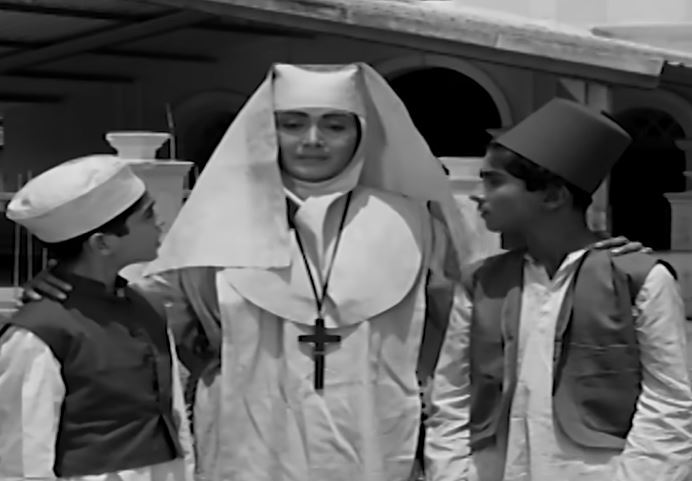
One day the boys are shouting slogans on the road when the police start chasing them. Mary (now the Mother Superior in the Goan church) sees the police and shields the boys. She reminds them of her own children who would be of the same age today. This scene reminds us of Amar Akbar Anthony. Did Manmohan Desai seek inspiration from this movie? I wonder…

The police manage to catch the boys and bring them to the police station. And guess what, we are introduced to their father! Yes, Mary’s husband Peter (Surendra) who had supposedly died in Burma is actually alive. He was caught by the enemy and later released. He is now in the Goan police, serving the Portuguese. So we know the parents and children are in Goa but their connection will not be revealed till, well the movie’s climax.

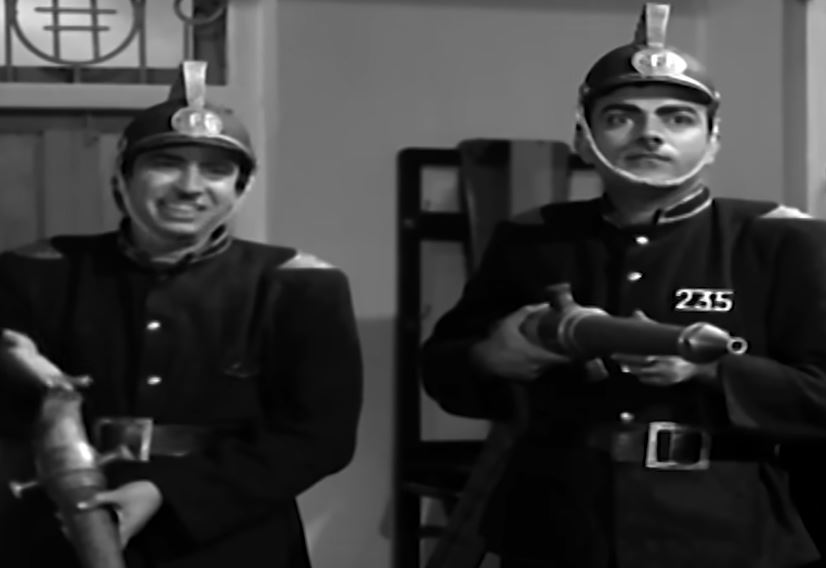
12 years pass and the Portuguese oppressive rule continues. The Superintendent of Police (SP) Albuquerque (played by Kamal Kapoor) ensures that freedom fighters are punished by putting them in jail. He is on the trail of Ram (I.S. Johar) and Rahim (Mehmood), who are now young men. Ram and Rahim have started an underground movement for opposing the the Portuguese and their (often hilarious) schemes seem to be successful. These include robbing the bank, setting the house of the SP on fire (posing as firefighters) and so on. These comedy scenes turns out really good. Helping them to gain inside knowledge of the Portuguese authorities’ plans is Mr Pinto, who is now the school principal.

The city’s new chief i.e. Hakim (Sapru) is arriving with his daughter Rita (Soniya Sahani) in Goa. A big welcome procession is being planned. The DSP Peter informs the SP that Ram and Rahim are sure to target the procession. Just then news arrive that Ram and Rahim have been arrested and are being taken to the jail. The duo sing the delightful song “Ye do deewane dil ke, chale hai dekho milke” in the police van. Both manage to escape making the SP furious. He tells DSP Peter that the procession will go ahead as planned. But there will be a fake Hakim in it. The real Hakim and his daughter will be transferred by motorboat to their residence. Pinto shares these details with Ram and Rahim.

Ram is entrusted to “take care” of the Hakim and Rita while Rahim will look after the procession. Ram impersonates Peter and meets the Hakim. Hakim asks him to to take Rita to the official bungalow safely. Ram fools Rita easily and takes her to the forest. He makes her sing an “inquilabi” freedom song with him (Na koi raha hai na koi rahega, mera desh azaad hoke rahega) which is directed against the Portuguese. The real police reach their hiding place and Ram is forced to flee. Rita is furious that she has been fooled by Ram and seeks revenge. The SP Albuquerque cajoles her; he is also her fiancee.

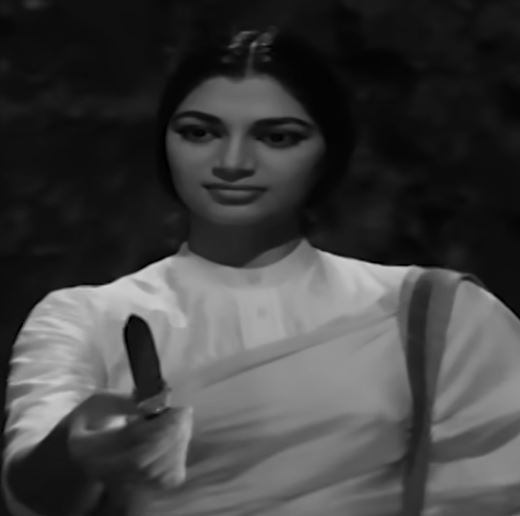
Ram reaches the underground hideout to meet Rahim and their freedom party members. Pinto brings with a new recruit, a young lady Simmi (Simi Garewal). Being a woman, her inclusion is opposed. She has a fiery temperament and is an excellent knife thrower. She gives a demonstration to showcase her skill and is accepted as a party member.

There are celebrations for the Hakim’s arrival and the freedom party plans to kill him by participating in a dance performance. Ram and Rahim pose as female dancers singing “Mar gayi allah, chhod de palla” while Simmi attacks the Hakim. But the SP is alert and foils their plans.

Ram and Rahim are chased by DSP Peter and they enter the church. Mary and Peter come face to face and are shocked to see each other. But Mary behaves in an aloof manner and asks him to leave as this is a place of worship. Ram and Rahim are thankful to her for saving them. Meanwhile the SP chases Simmi, and Rahim arrives in time to save her.

Rita plots with the SP to capture Ram by calling him to meet her in a secluded area away from the city. But the plan fails. Ram outwits the police and holds Rita captive in the forest. She is forced to spend time with him waiting to be rescued.

Rahim’s father is staying in the mosque, he is seriously ill. The police lay siege to the mosque to capture Rahim. Rahim hatches a weird plan (again!). There is a famous plastic surgeon in the mosque. He performs plastic surgery on 4 men and makes them look identical to Rahim. So we have 5 Rahims coming out of the mosque and the police are forced to arrest all of them. They sing a merry song in the jail “Aji aisi nazar ko kya kahiye.”

The madness continues! Rita is stuck with Ram in the forest. It is the perfect time to get impressed by him and fall in love. Ram sings “Dheere re chalo mori baanki hiraniya” and she sings a dream song “Ankhiyon ka noor hai tu.”

Rahim is freed from jail by Simmi and there is another song in disguise “Kuch bhi kahe duniyawale hum hai abhi jawaan” as they are on the run from the police and enter a club.

We have more plotting and entertaining twists before the Portuguese are vanquished, and there is a happy ending.

The Music

Kalyanji Anandji are the music directors. There are multiple singers including Mohammed Rafi, Manna Dey, Kishore Kumar, Mukesh, Shamshad Begum, Kamal Barot, Suman Kalyanpur and Usha Khanna. Ye do deewane dilke, chale hai dekho milke (Mohammed Rafi and Manna Dey), Dheere re chalo mori baanki hiraniya (Mukesh) and Ankhiyon ka noor hai tu (Suman K and Mukesh) stand out.

My Thoughts

Overall, I.S. Johar succeeds in making an entertaining film. While meant to be a comedy, it has a serious undertone which increases its impact. He manages to balance the fast moving story line and multiple characters, churning out a successful narrative. Mehmood appears subdued compared to his other comedy roles. The female characters are shown to be fiesty and decisive which is a welcome change. There is a scene where Ram’s and Rahim’s mothers run away by operating a train engine! This is Soniya Sahani’s debut movie. She appeared in multiple movies with I.S. Johar and also married him later.

So, it was a revelation to watch a movie where I.S. Johar is the hero who acts and entertains in a fun way. A final bit of trivia – I.S. Johar is the uncle of Karan Johar.