Category Archives: My Reviews

Sur Sangam (1985)

Sur Sangam (literally the confluence of musical notes) is a Hindi movie which can be best described as a celebration of Indian classical music. This is a remake of the Telugu classic Sankarabharanam (1980) directed by K. Viswanath. Through his deft handling of the story, human emotions, accompanied by great music, the movie manages to leaves its impact.


The Plot

Sur Sangam is the story of 2 individuals, Pandit Shivshankar Shastri (Girish Karnad) and Tulsi (Jaya Prada) who are bound by the common thread of music. Pandit Shastri is an accomplished classical singer, a purist. He is highly principled and fully dedicated to his art. Whatever be the reason, he will not compromise his principles.

The movie begins with Tulsi and her son Shankar alias Bittu (Akash Singh) travelling in a steamer. They have a marriage party for company. Bittu moves around the steamer and creates rhythmic sounds and the others join him making use of pots, utensils, jewellery, sticks etc. All this is complemented by the steamer’s puffing sound. This is a wonderful musical start to the movie as the title credits start rolling.

Tulsi and Bittu reach their destination. A thoughtful Tulsi stops near the river bank. She is waiting for someone. After some hours, she sees Pandit Shastri and her mind goes in to a flashback.

There is a grand musical program. The renowned Pandit Shastri is performing raag Malkans. Tulsi is sitting in the audience with her mother Ratnabai (Tabassum). Tulsi is a follower of art and is a dedicated dancer and singer. She is mesmerized by Panditji’s singing and imagines herself dancing in response to his expressive singing.

Ratnabai, on the other hand has no interest in the performance. She is awaiting the arrival of the local zamindar (Bhushan Tiwari). Panditji’s singing has reached the crescendo when he is distracted by the zamindar’s sudden appearance. The zamindar pulls up a chair and starts chatting with Ratnabai.  A miffed Pandit Shastri leaves the stage.

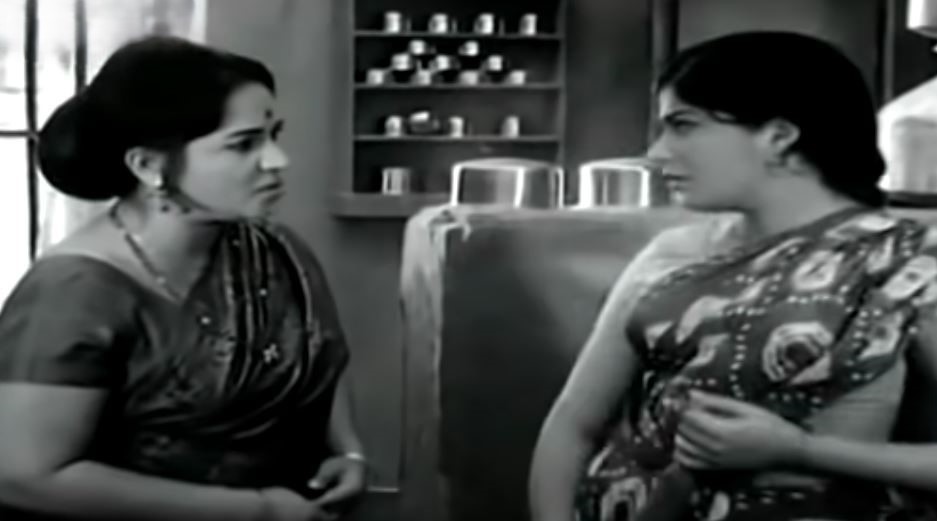
At home, his tabla accompanist Gopal (Paintal) tells the cook (Sulbha Deshpande) about the incident. She says he is so committed to music that he once delayed attending his ailing wife after his daughter’s birth. Unfortunately, the wife had passed away by the time he completed his recital and was made aware of her condition.

The next morning Pandit Shastri and his daughter Sharda (Baby Mamta) are rehearsing on the river bank. Tulsi is nearby and attracted by the sheer power of Panditji’s music. She is unable to control herself and joins with some unrestrained singing and dancing. Pandit Shastri is impressed. They part without a word said.

Back home, there is a visitor who invites Pandit Shastri to Karnataka, where he will be felicitated and gifted a toda (anklet). Facilitating the conversation is Pandit Shastri’s lawyer friend Madhav (Deven Verma). He is a friend and well-wisher of the family. Pandit Shastri accepts the invite and prepares to leave by train. And guess who joins him? Tulsi!

Tulsi is a prostitute’s daughter and her mother wants to offer her to the zamindar. Tulsi overhears the plan and runs away to the railway station. She boards the train compartment to find Pandit Shastri seated. Again, no dialogue is shown between the two. After reaching the destination, the organizers and Gopal are surprised to see Pandit Shastri and Tulsi together. The felicitation takes place followed by Pandit Shastri’s performance. But Ratnabai and her brother reach the venue and take back Tulsi forcibly.

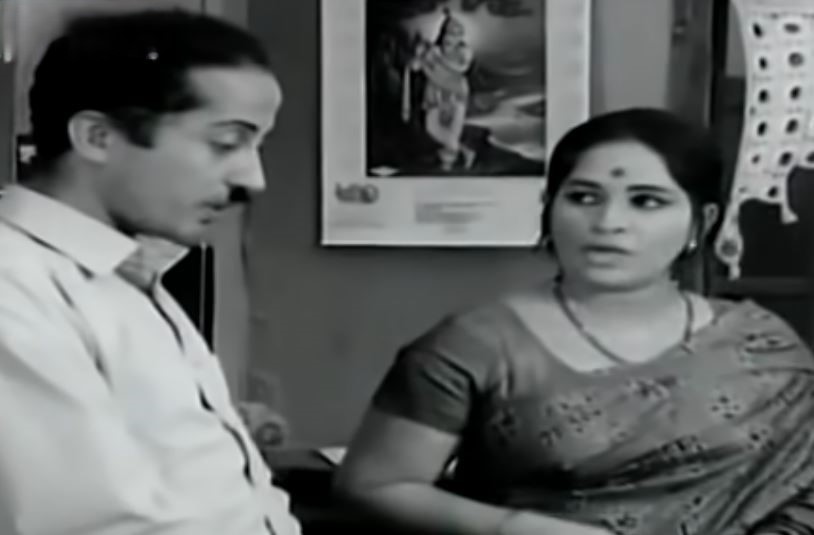
Madhav’s wife (Bharati Acharekar) highlights to him that people in the village have started talking about Pandit Shastri’s relationship with Tulsi. He is a high class brahmin, she a prostitute. Madhav counters they have a strict teacher – student relationship. Both respect each other and there is no point in speculating anything. He is fully supportive of Pandit Shastri’s actions.

Tulsi is in a delightful mood. She practices at home listening to Pandit Shastri’s records. But the bliss is short lived. The zamindar arrives to “claim” her. He rapes her. She manages to attack him in revenge and runs away to Pandit Shastri’s house.

There is a court case. Madhav argues in favour of Tulsi and wins the case. Ratnabai is taken to jail. Outside the court, Tulsi’s uncle attempts to grab her but Pandit Shastri steps in and gestures her to come with him. And Tulsi enters his house officially.

But the entry is not very welcoming. The cook leaves the house immediately. Poor Sharda has to manage everything. When Pandit Shastri performs at the local temple, Tulsi sits down to accompany him on the tanpura. But Gopal, the other musicians and the audience boycott the performance. Pandit Shastri addresses Lord Shiva venting out his frustration. He sings and dances in the torrential rain. Tulsi has had enough. She does not want Pandit Shastri to suffer on her account and leaves the house and the village.

There are more hardships in store for her. She finds out she is pregnant (courtesy the zamindar). She gives birth to Bittu and raises him single-handedly. Thankfully, he is blessed with her musical talent. Tulsi’s aim is to take him back to the village and hand him over to Pandit Shastri, who can be his mentor and sharpen his talent. Hopefully, the son will achieve what the mother could not.

And what about Pandit Shastri? He suffers too. There is dwindling interest in classical music. People are influenced by western music. He has to vacate his palatial house and settle in a lesser accommodation. Money is hard to come by, he is forced to take loans.

His grown up daughter Sharda (Sadhana Singh) worships him. He is worried about her future. Madhav makes attempts to find a suitable match for Sharda but Pandit Shastri rejects every proposal citing some reason. One of the potential grooms is Kanneshwar (Sachin) who comes with his grandmother (Dina Pathak) to visit Pandit Shastri and Sharda.

Will Panditji accept Bittu as his disciple? Will he and Tulsi meet again? Will he make any compromise?

The Music

The music is the soul of the movie. Vasant Dev (lyrics) and Laxmikant Pyarelal (music) do a commendable job to belt out some delightful classical fare using varied ragas. Each composition is a gem. Aaye sur ke panchhi aaye (Malkans), Jaaoon tore charan kamal par waari (Bhoopali), Aayo prabhat sab mil gaao (Bhatiyaar), Mai ka piya bulave apne mandirwaa (Kalavati), He Shiv Shankar (Sohani), Saadh re Man Sur Ko (Kirwani), Dhanya Bhaag Seva Ka (Bhairavi) are some of the standout compositions. The voices are lent by Pt Rajan Sajan Mishra, Lata Mangeshkar, S. Janaki, Kavita Krishnamurthy, Anuradha Paudwal and Suresh Wadkar.

My Thoughts

Sur Sangam could not achieve the success that its Telugu original did in spite of the good story, music, direction and acting standards. This is not a typical hero-heroine-villain-song and dance Hindi movie! One can see some commercial compulsions creeping in the song picturization keeping in mind the Hindi audience. Unfortunately these do not work out in the film’s favour. Music wise, this was the disco and ghazal era of the 1980s. And the heavy classical music compositions were not accepted by the audience.

Performance wise, Jaya Prada steals the show. There is no direct interaction shown between her and Pandit Shastri. Its always through facial gestures and body language. Her expressions and not to forget her classical dancing skills leave a lasting impact. On the other hand, Girish Karnad is effective as the perfectionist, devoted artiste. His arguments in favour of classical music and its purity are convincing. However, as an actor he maintains the same stern expression throughout the movie. It would have been interesting to show different dimensions of his personality when he is dealing with different people like his daughter, friend, disciple etc. Sadly that does not happen. And there is no reason provided why he avoids a direct interaction with Tulsi.

Deven Verma, Dina Pathak, Sachin, Sadhana Singh, Paintal are all good in their supporting roles. Asrani and Urmila Matondkar appear in a funny special appearance.

Pedgaonche Shahane (1952)

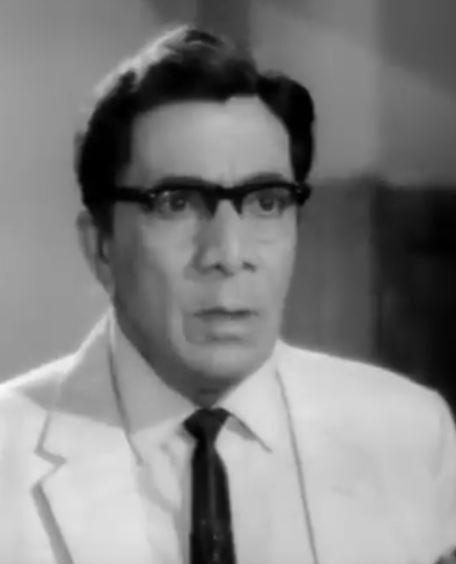
Pedgaonche Shahane (The Shahanes of Pedgaon) is a Marathi comedy movie produced and directed by Raja Paranjape. He also plays the main role(s). The movie is based on a theme very common in cinema – long lost siblings, twins in this case. A mix of well written dialogues, general goofiness and some serious situations deliver a satisfying movie. There are some drawbacks but those can be ignored considering the era when the film was made.

Trivia – Pedgaonche Shahane is a Marathi phrase attributed to a historical incident which took place in Pedgaon in the 17th century. The Moghuls were tricked and looted by the Maratha army without a battle or bloodshed. The defeated Moghul Sardar was deemed as aati-shahana (i.e. oversmart or foolish) and hence the term Pedgaonche Shahane. In the movie, it refers to the family named Shahane and the events occur in Pedgaon.


The Plot

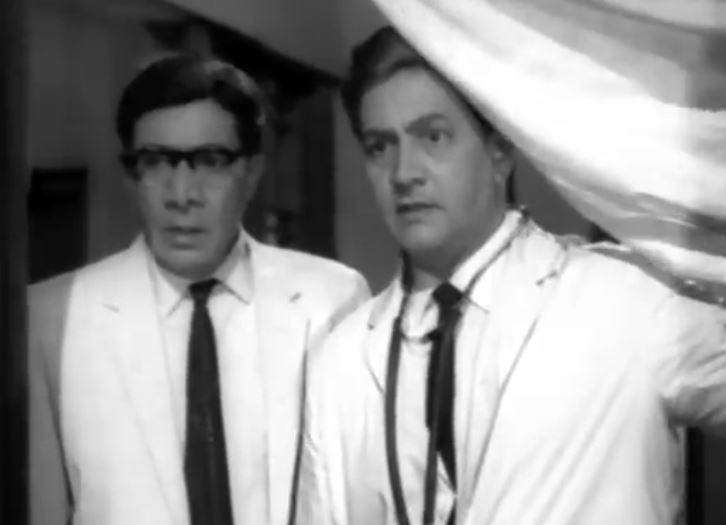
The movie starts with a scene in the mental asylum/hospital in Pedgaon. An aged Dr Shahane (Raja Paranjape) moves around and meets the patients. He enters Dr Manohar’s room in the hospital premises. Soon, Dr. Manohar enters with a nurse.

We come to know that Dr Shahane is a patient at the hospital. He was a well known surgeon. One day he was asked to operate on a close relative named Malati. Dr Shahane was not willing to operate, but she insisted and he had to agree. As fate would have it, he loses concentration during the operation when he picks the surgical scissors. There is darkness in front of his eyes. He is unable to complete the operation and Malati dies. Dr Shahane blames himself for the incident and is mentally impacted. Ever since, he has been living in the mental hospital. He is otherwise normal but reacts whenever he sees a pair of scissors. One night, he manages to run away from the hospital.

The scene moves to a bungalow. This is the house of Balwantrao Shahane (G.D. Madgulkar) who works in a bank. His wife is Sarla (Nalini?). Sarla is keen to learn music. She aims to make their family modern as in “America.” They have 3 children. The elder son Ranga (Chittaranjan Kolhatkar) has completed his studies and is employed. Their daughter is Prema alias Baby (Nayana?). Prema takes daily dance lessons from Chandrabhushan (Prasad Sawkar). The younger son is school going Babu alias Bob (Master Dwarkanath). Another house member is a singer from the South – Sarang Bua/Mama (Dhumal), he is Sarla’s music teacher.

The opening scene is entertaining as we get introduced to the characters. Sarla, Ranga and Sarang are chatting on the breakfast table. Sarla is reading the newspaper and mentions the patient who has escaped from the mental hospital. But Ranga is more interested in the coverage of the horse races. He spends his time betting on horses and playing rummy on Sundays.

Suddenly there is a loud sound from the kitchen and all of them rush in to find Babu meddling with the stove. He is a mischievous boy and a keen experimenter, who has the habit of “exploring” and “fixing” things like a stove, radio and so on.

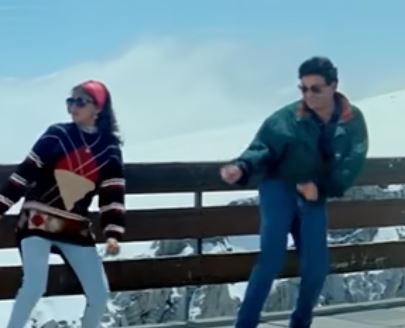
And then we have the young couple Prema and Chandrabhushan. They are upstairs singing and dancing on a Hindi song Muze dejaa rumaal.

Balwantrao is ready to leave for the bank. He asks his wife timidly if he can get a cup of tea if their (implying his family’s) “cinema” routine is over. Sarla lectures him that she is struggling to make their family modern and he is not appreciative at all. She will do as she wants. Just then the bell rings and all members (except Balwantrao) rush to open the door. A telegram has arrived confirming that Kakasaheb (uncle) will be arriving today as informed in his letter.

Balwantrao is confused and asks if any letter had come. Babu says yes, a letter had come from Africa and he has added the foreign stamp to his collection. A meek Balwantrao requests to hand over the letter. After deliberation by the members, it is discovered that the letter has been kept in a locked drawer. But the key is missing as all family members are “busy” in their activities.

Babu takes the lead in opening the drawer with a screw driver. Again there is a hilarious scene as the family gathers to open the drawer and retrieve the letter. Finally, the letter reaches Balwantrao who utters a sigh of relief. The letter is from his step uncle Kakasaheb Shahane who is returning from Africa. Apparently, he is a rich businessman with lakhs of rupees. He plans to spend the rest of his life with Balwantrao’s family. The family is excited to have a rich relative staying with them. Balwantrao instructs Sarla to go to the railway station and receive the relative.

Meanwhile Dr Shahane (after escaping from the mental hospital) has reached the railway station to catch a train and run away from Pedgaon. The police are also on the station to foil his plans and take him back to the mental hospital. The train arrives with Kakasaheb Shahane (also Raja Paranjape) and a comedy of errors follows. The police mistake the Africa returned Kakasaheb as Dr. Shahane and take him forcibly to the mental hospital. (Here, Kakasaheb mentions in passing that he had a twin brother who had gone missing many years back. But the police are in no mood to listen to his imaginary stories!).

Sarla meets Dr Shahane, assumes he is Kakasaheb and requests him to come home. He is puzzled at the woman’s behaviour and mention of his nephew. He reluctantly agrees and they arrive at the bungalow. He is introduced to the children, Sarang Mama and Chandrabhushan. Needless to say, their first impression is not very remarkable on the old man.

At the hospital, Dr. Manohar is relieved to have his patient back. Kakasaheb keeps insisting they have made a mistake, he is a businessman from “Zanzibar.” The word Zanzibar catches the fancy of the other patients who keep repeating it.

That evening, Balwantrao returns from the bank and meets Kakasaheb. He has an open chat with his uncle. Apparently its only Balwantrao who is the bread earner in the family. Ranga has lost his job. There are unnecessary expenses in the form of the music teacher, dance teacher, Ranga’s hobbies, special food demands by every member etc. He is finding it difficult to satisfy everyone and even taken a loan. He is glad that an elderly relative has arrived at his house and looks upon Dr Shahane as his saviour.

Dr Shahane agrees to put things in order. He is a disciplinarian and gets on to the task immediately. He starts taking harsh decisions much to the discomfort of the family members and to Balwantrao’s delight. Restrictions are imposed. The music teacher and cook are sacked. Sarla will manage the cooking everyday. Food will be brought from the ration shop only and so on.

The family accepts his decisions grudgingly. But gradually, he endears himself to them, and earns their genuine respect.

And what about the real Kakasaheb in the hospital? He is surrounded by entertaining specimens around him. The patients sing a delightful song – Duniya vedyancha bazaar….Zanzibar.

We know where all this will lead to. The twin brothers are destined to meet one day. Which they do, leading to a happy reunion and a sad farewell at the end.

The Music

Raja Paranjape’s movies are generally associated with great or rather all time hit music tracks. The music of this film is not bad. G. D. Madgulkar (Ga Di Ma) is the lyricist. Datta Dawjekar composes the tunes in line with the times. The problem is the story line does not offer much scope for songs especially the romantic tracks. They come and go, boring the viewer. The mental hospital song Zanzibar is the all time hit song. The lyrics are as rubbish as they can be and Vasantrao Deshpande’s singing is awesome.

My Thoughts

Movies depicting long lost siblings who meet after many years is not a novelty in cinema. But it would have been a fairly new concept when Pedgaonche Shahane was made. And also the fact that the look alike siblings are older in age (65+ ?), make it different from the usual lost and found plots.

Raja Paranjape is comfortable in both the roles. Rest of the cast are adequate. We see some veteran actors who are very young in this movie such as Sharad Talwalkar, Chittaranjan Kolhatkar, Prasad Sawkar and Madhu Apte and are difficult to recognize if you are not very observant! Special mention is G. D. Madgulkar who plays the helpless owner and has no say in his house. He is also the story, dialogues and song writer. His collaboration with Raja Paranjape is legendary and shines in this movie.

The initial part is funny as the family is introduced and the fake uncle settles down in his new residence. The solutions he offers may not seem very convincing today but that can be ignored. The later scenes in the mental hospital could have been funnier depicting the discomfort of the real uncle in those unexpected surroundings. Also, it seems very easy to run away from the hospital, so much for security. Nevertheless, the film is entertainment guaranteed. Raja Paranjape remade it in Hindi as Chacha Chowdhury (1953) and he played the role of the chacha.

Janam Janam Ke Phere (1957)

Manmohan Desai (born 26 February 1937) was one of the most renowned directors of Hindi Cinema. His early 70s films like Sachaa Jhutha, Raampur Kaa Lakshman, Roti, Aa Gale Lag Jaa were successful. But he achieved greater recognition with muti-starrer masala entertainers like Amar Akbar Anthony, Parvarish, Dharamveer, Chacha Bhatija, Naseeb, Desh Premee and Coolie. With megastar Amitabh Bachchan featuring in almost all of them. The plot was not always great on logic but it was entertainment guaranteed.

His filmography reveals he has been a director since the late 1950s with films like Chhalia, Bluffmaster, Budtameez and Kismat to his credit. His debut was at the age of 20 with the 1957 release “Janam Janam Ke Phere” (JJKP) where he is credited as Manoo Desai for some reason. It was his home production as the film was produced by his brother Subhash Desai and dedicated to their father Kiku Bhai Desai. So over to JJKP.


The Plot

JJKP’s beginning explains its context. Lord Vishnu (Mahipal) is conversing with goddess Lakshmi. He points to the earth and talks about human birth. A baby grows up to an adult man. And man is surrounded by vices or enemies of the mind like Kaam (Desire or lust), Krodh (Anger), Lobh (Greed), Mada (Ego) etc. In short, he has to face them throughout his life and find a way around them.

We are introduced to a middle aged couple Mahapatra and Kamala. They are childless but soon blessed with a boy thanks to their devotion to God. However they are warned that the boy may grow up to be fully astik (i.e. theist or a believer in God) or nastik (atheist/non-believer). 15 years pass and the boy Raghu grows up, fully devoted to God. But things are about to change. The enemies of the mind line up to enter his body (or soul) and introduce negativity.

They do so and Raghu starts questioning the existence of God, the need to worship and so on. The three Gods in the home mandir converse with each other and know that disaster is around the corner. Raghu visits the local Shiv temple. He asks a sadhu, where is God? The sadhu gives a sermon explaining God is everywhere; in the earth, water, sky, wind and fire. But Raghu is not convinced.

A frustrated Raghu prohibits anyone to perform pooja in the temple going forward. The villagers including a boy Kishan attack him. Raghu’s friend Annapurna steps in and saves him. She brings an injured Raghu to his parents.

This is exactly what the parents had been fearing and Raghu may change for the worse. Annapurna pledges she will do her best to bring a transformation in Raghu’s beliefs and make him astik.

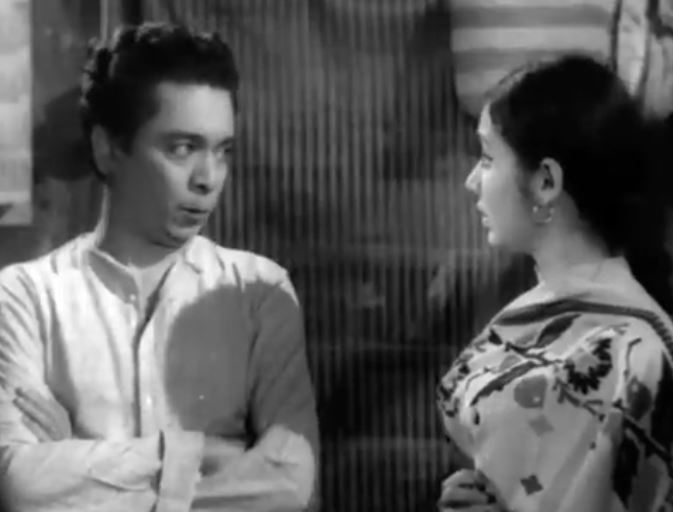
A decade passes. Raghu (Manhar Desai) is now a young man of 25 and still a nastik. Annapurna (Nirupa Roy) and Kishan (B.M. Vyas) have grown up too and Kishan hopes to marry Annapurna. Annapurna is as astik as one can be. She worships many gods including the Naag devta (snake God) in the local temple.

Kishan kills a snake on a tree near the temple. Immediately, the temple and its surroundings start experiencing tremors and a deadly storm engulfs the village. Kishan tries to put the blame on Raghu but Annapurna intervenes and tells the truth about Kishan being responsible for the snake’s death. She begs the Naag devta to restore calm. The storm subsides. During the storm, Raghu saves a child trapped in a building but the child does not survive. Raghu mocks Annapurna that her God did not do anything, else the child would have been alive. And there is no point in her faith and devotion in the almighty. But Annapurna sticks to her faith.

Later, Raghu proposes to Annapurna but Kishan is one step ahead. He has bribed her uncle Gangadhar. Gangadhar declares that Annapurna will marry Kishan. A woman Radha appears claiming Kishan is her husband but runs away. Annapurna smells a rat and threatens to expose Kishan in front of the village. He backs away and Raghu and Annapurna are free to get married. On the day of the marriage, Annapurna leaves the house to perform Naag dev pooja. Kishan’s men kidnap her. She seeks divine intervention from the Naag devta. Miracle! The snake not only unlocks the door but speaks to her and guides her back to the wedding venue on time.

But even after marriage and a closer influence of Annapurna, there is no change in Raghu’s attitude. He tries to uproot the tulsi (basil) plant in their courtyard. On Vat pournima, Annapurna is not allowed to perform pooja. She prays to the goddess, who arrives and blesses her. In spite of all this, she remains a devoted wife and promises her husband she will always follow all his wishes.

Meanwhile Raghu will go to any means to insult God and “disprove” his existence. He invites two brahmins (sadhus), treats them with honour and gives them two pots of wealth. But there are snakes in the pot and the sadhus die a painful death. His father Mahapatra can’t bear this and soon passes away.

Raghu’s mother is unwell too. Raghu is disturbed by the developments and sees the dead sadhus in his dream. Annapurna tells him he needs to perform pitru pooja with bhojan so that his ancestors including his father will be happy and things will be back to normal. But Raghu is not ready to bend. His father appears as a hallucination, pleading to set him free by chanting the name of the almighty. Drama ensues, he sees his father’s soul(?) burning and he finally chants Govind Hare Murari... The contented father’s soul disappears. There is calm and a transformed Raghu meets Annapurna. He is now an astik, on the path of devotion.

Ideally, the story should end here with a happily ever after ending. Sadly that is not the case. Raghu seeks permission from Annapurna to become a sanyasi. She reluctantly agrees as she had promised to be his ever supporting (& sacrificing) better half. Their sorrowful journey continues. There are further hardships planned by Kishan, Gangadhar and other characters to ensure the husband and wife remain separated.

Annapurna is termed a widow by Kishan so that he is free to marry her. He seeks the approval from the King (S.N. Tripathi). The king is an able administrator but the enemies of the mind attack him too and he develops an attraction for Annapurna. He is ready to marry her by bypassing Kishan and killing Raghu (if he was indeed alive).

Phew! And responsible for all this mess are the vices surrounding the human beings on earth. If that were not enough, the Gods too conspire to ensure life is not smooth for all those involved.

The Music

Bharat Vyas and S.N. Tripathi have given some memorable scores. In JJKP, we see a weaker result of their collaboration. The title song by Mohammed Rafi appears multiple times. But one song that has gained all time hit status is Zara saamne to aao chhaliye in the evergreen voices of Mohammed Rafi and Lata Mangeshkar. Set in raga Shivaranjani, this was the surprise top song (sartaj geet) in that year’s Binaca Geetmala countdown hosted by Ameen Sayani.

My Thoughts

The full name of the film is Janam Janam Ke Phere alias Sati Anapurna. It was one of those B-grade mythological movies with special effects made during the period. The film could have been an interesting take on astik v/s nastik but falters badly. There are too many obstacles in the path of the couple and it becomes a tiring watch with the plot going haywire. The only saving grace in the second half is the much awaited song “Zara saamne to aao chhaliye” but the rest is a mess. There are hardly any known faces in the cast and the acting barely leaves any impact.

Perhaps this was the starting point for Manmohan Desai and offered a learning experience. He moved to more commercial cinema and worked with established actors and gave a string of successful movies. His legacy remains but surely JJKP is best to be forgotten expect for that one song which continues to be timeless!