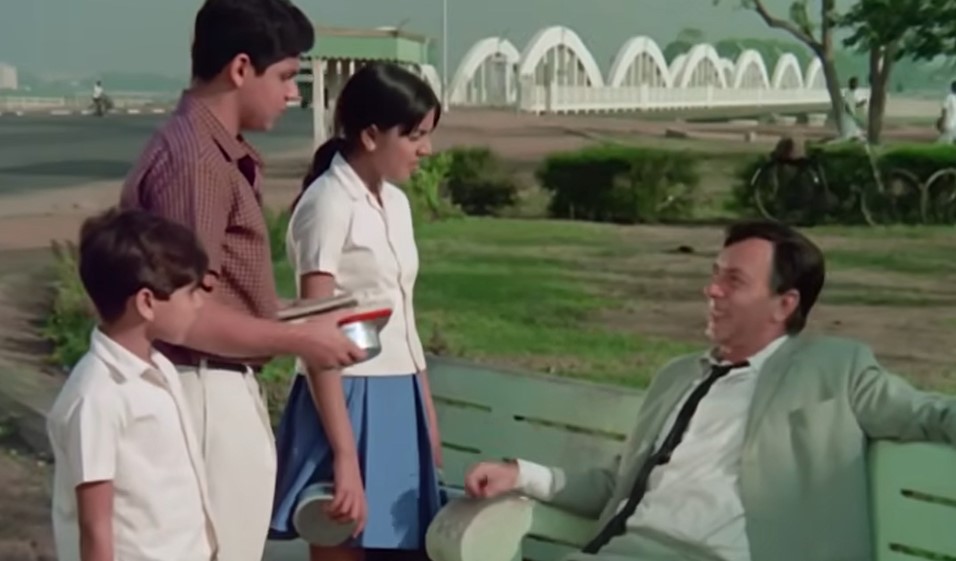
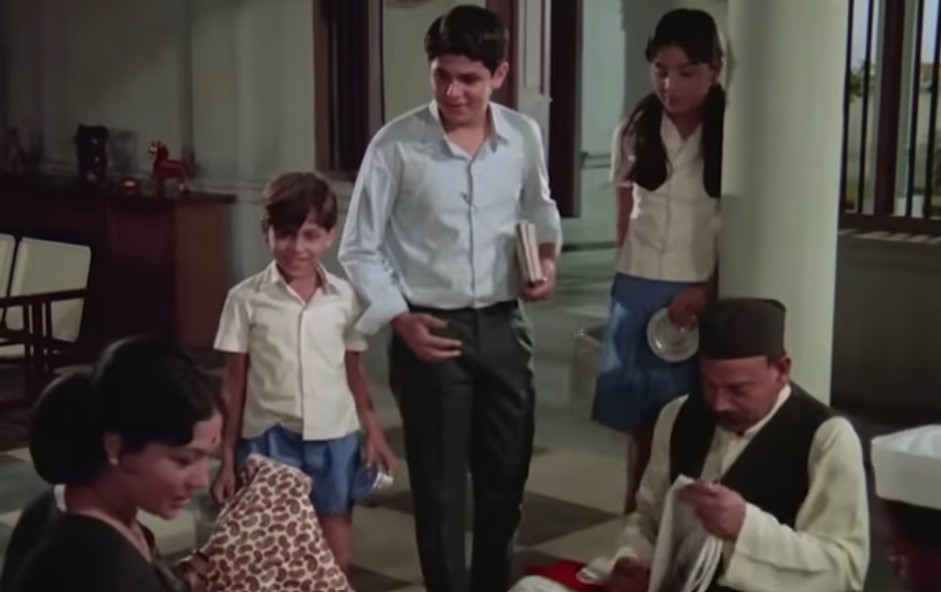
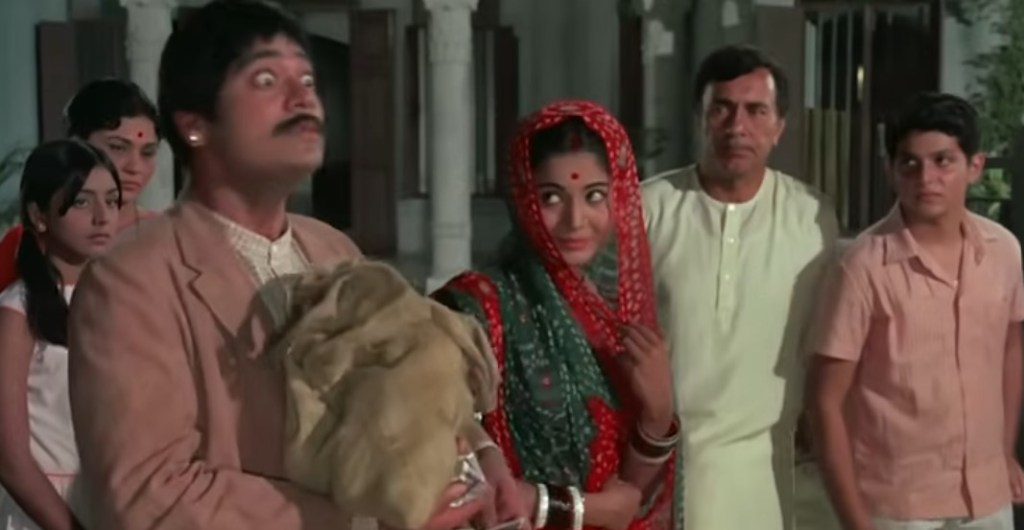
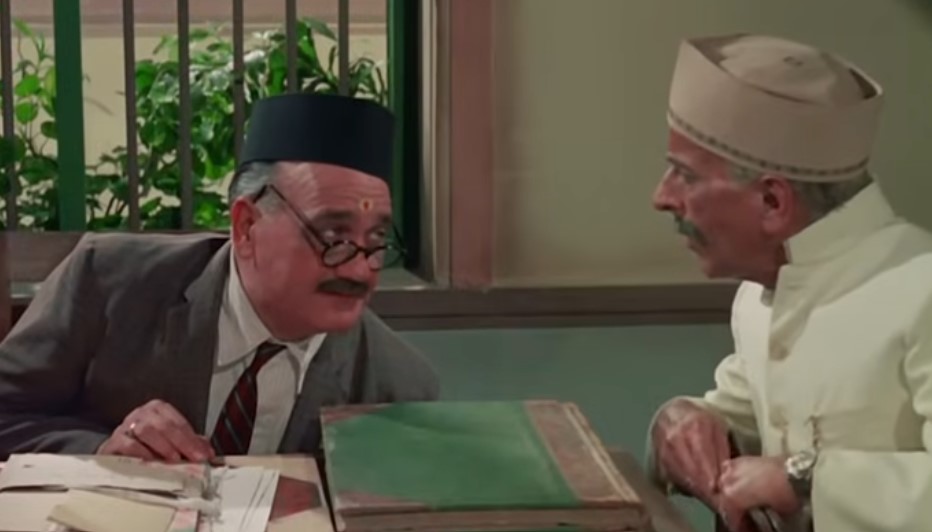
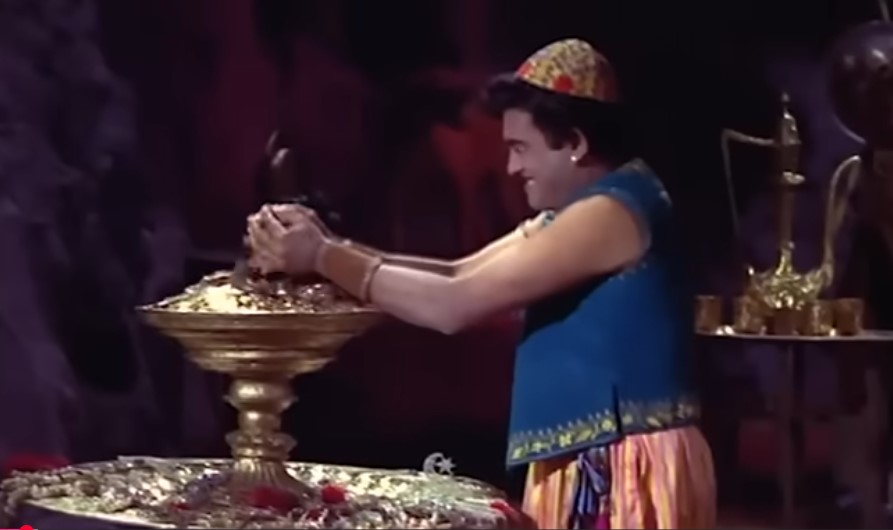
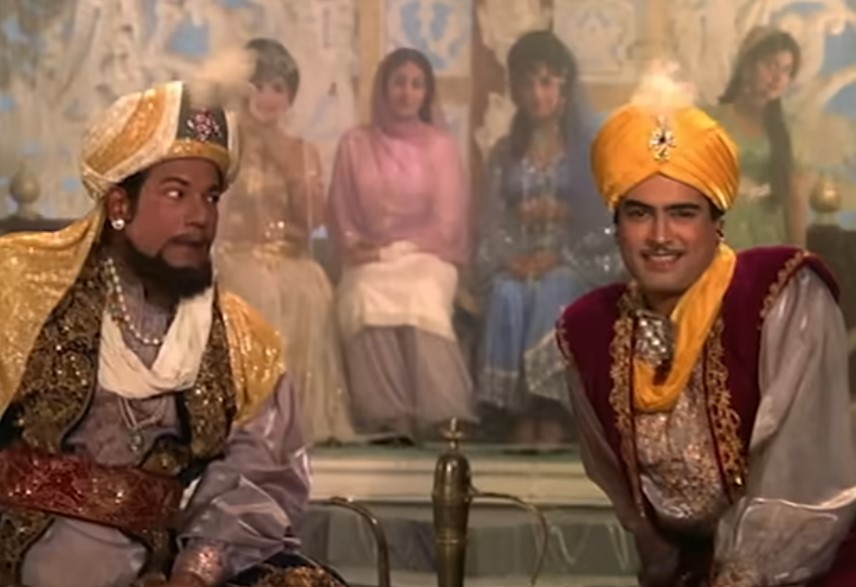
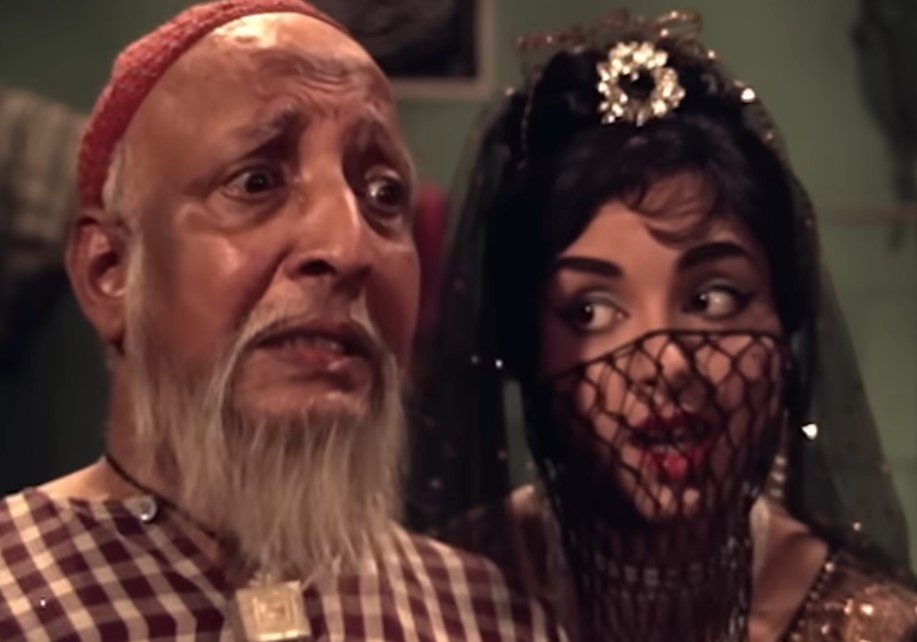
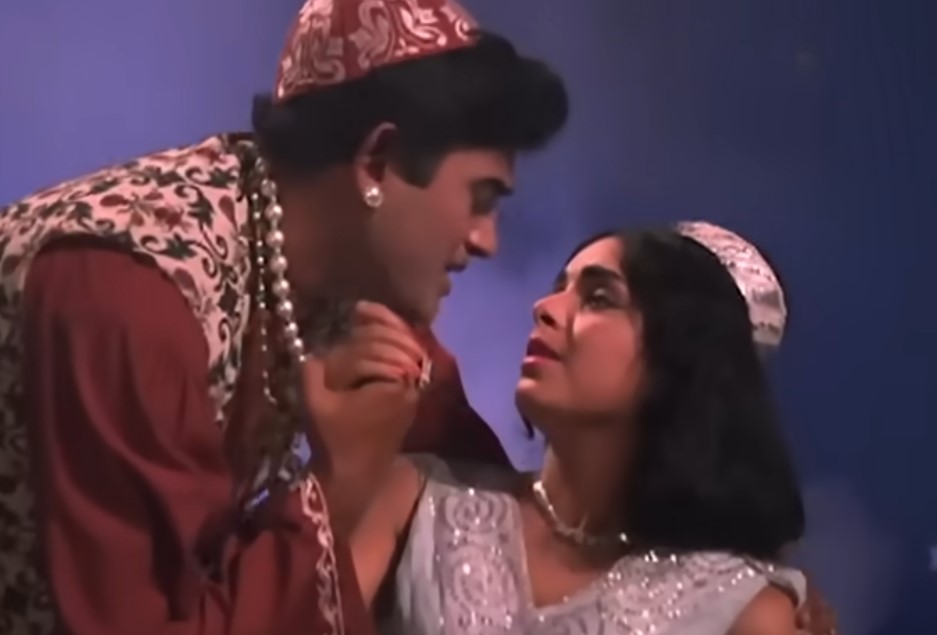
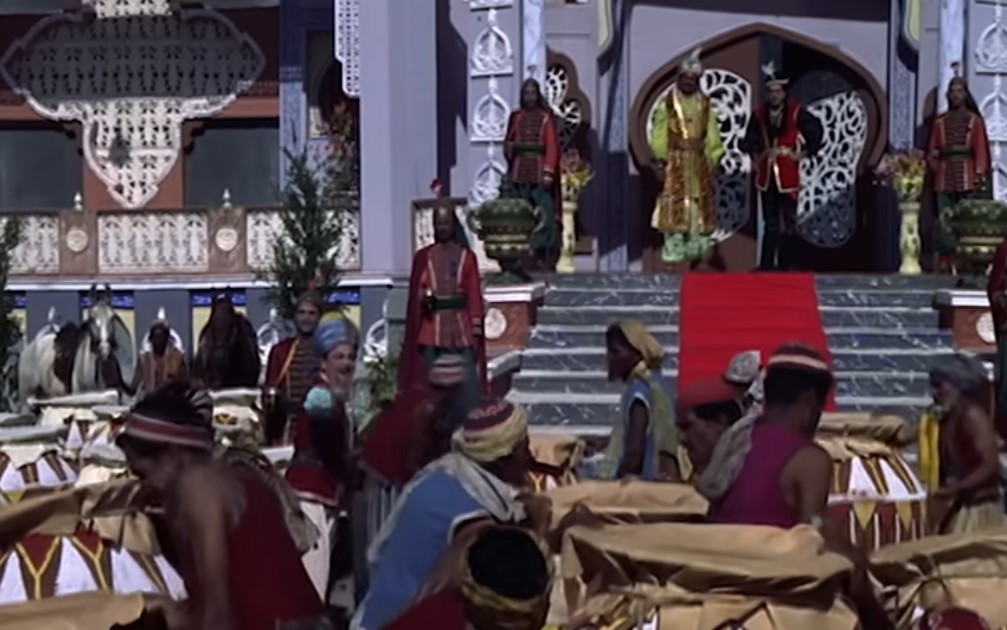
I would term some movies as deceptive. The packaging is good but the product is not. That is the case with Ek Dil Sao Afsane (EDSA). When you see Raj Kapoor, Waheeda Rehman and Lalita Pawar’s names in the acting department, and Shankar Jaikishan as the music directors, your expectations increase. EDSA is a decent film but could have been better. Today. the film is remembered only for some of its songs if not more.
The Plot
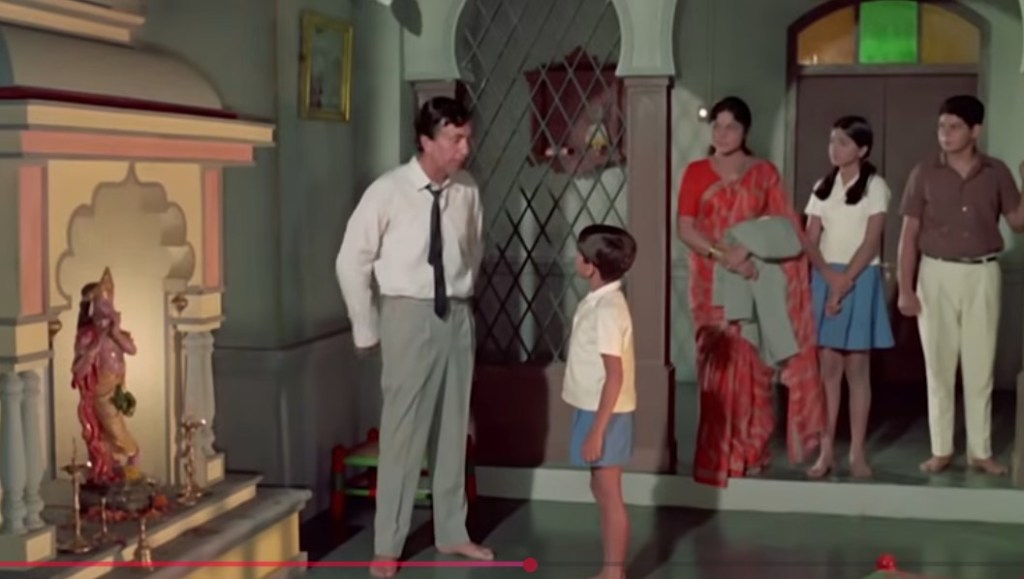
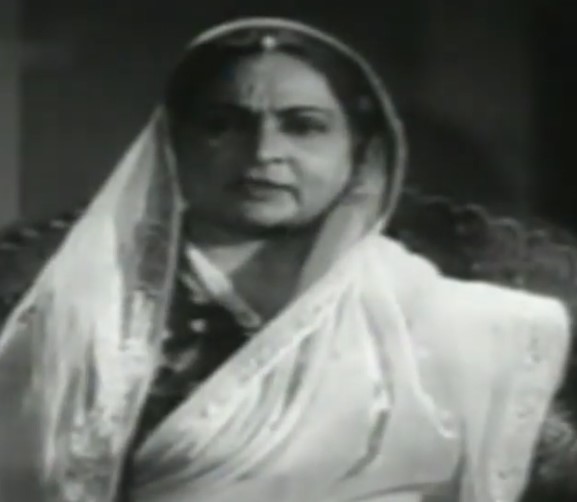
EDSA is the story of 2 lovers. Shekhar (Raj Kapoor) is an eligible bachelor. He is also very rich. His naani (maternal grandmother) played by Lalita Pawar dotes on him. Apparently, his parents have passed away and naani is his only close relation. Naani has one mission in life. Shekhar has to marry and “produce” a son at the earliest. The family needs to have a male heir. For this, she insists on matching the horoscope of every prospective bride with that of Shekhar’s. If there is no possibility of a son’s arrival, the proposal is immediately rejected.
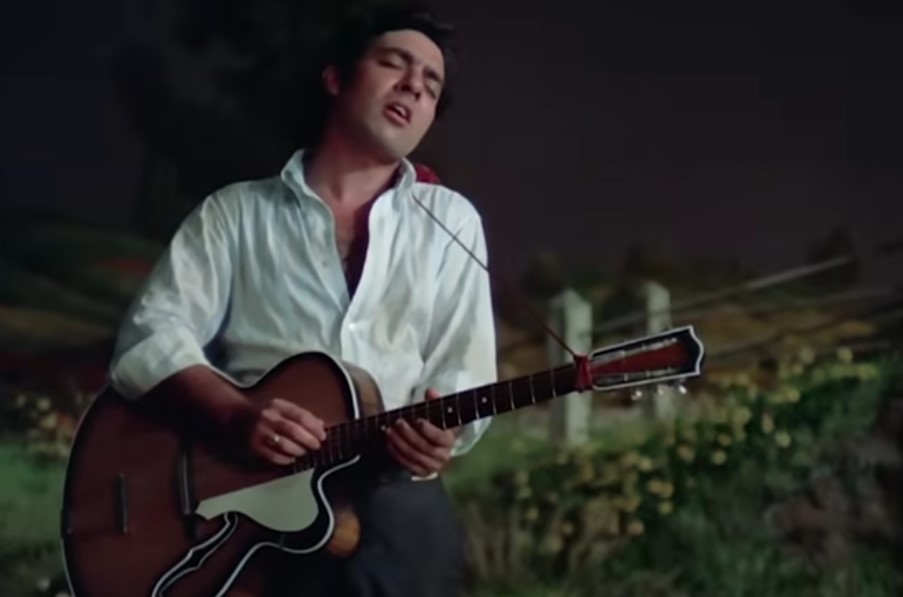
Shekhar doesn’t seem to do anything apart from attending parties and enjoying his bachelor status. He sings Mast nazar dekh idhar in a party. The party is full of women looking for eligible bachelors for their daughters. Seems the market is quite competitive. They approach Shekhar with a list of all that they will offer him as dowry. Shekhar informs them about his Naani’s precondition for marriage. The girl needs to deliver a male child else the marriage is off!
After the party, he goes with one of the girls in her car. While reversing, the car hits a girl riding a bicycle. This is Sunita (Waheeda Rehman). She is a salesgirl who works for Navbahar Cosmetics. The girl insults Sunita who slaps her in return. Shekhar is super impressed by the salesgirl – he has found his match. He tries to flirt with her but she shoos him off and leaves.
Shekhar and Sunita meet again on a train journey. Sunita is going for her friend Neelu’s wedding. Shekhar boards the same train compartment. He is surprised to see her and makes some poetic talk about separation and uniting. She responds to him sarcastically.
Upon reaching home, his Naani tells him he has to get married soon and gift her a toy – i.e. his son. There is no dearth of proposals and she is consulting astrologers to match the horoscopes and move ahead. Shekhar’s aunt (mausi) Sulochana (Sulochana Chatterjee) comes to visit them. Her daughter Neelu (Uma) is getting married. Shekhar and Neelu are very close and he gets heavily involved in the marriage activities.
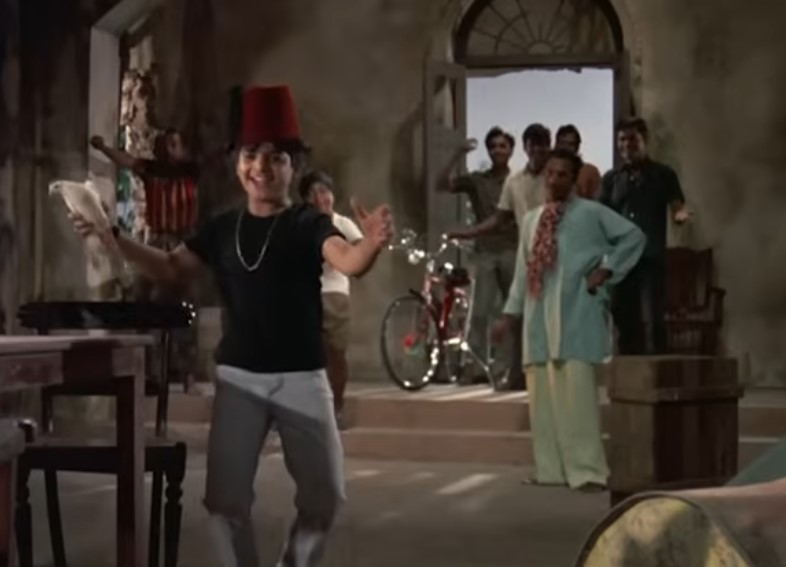
He is surprised to find Sunita attending the marriage. He tries to impress her with his irritating (but endearing(?)) antics. During the sangeet, she performs a dance as he sings Sunoji suno hamari bhi suno. Later, Shekhar has a direct talk with Sunita about their marriage. She has started liking him too and they agree to get married. Its time for a dreamy romantic song O jaadugar pyar ke ye bata.
The only hurdle is Naani and her precondition for marriage. Naani meets Sunita. Sunita tells her she is an orphan. Naani is ready to accept her wholeheartedly. But she is in for a shock. The astrologer informs her that the couple will never be able to bear a child. Naani is appalled and tells Shekhar that he cannot marry Sunita. Shekhar pleads with her but she does not agree. He rebels against her and goes to meet Sunita.
Sunita sings the title song. They get married and settle down happily in his friend’s house, who has 4 children. Shekhar sings a romantic song Kuchh Sher Sunata Hoon Main. With no access to naani’s money, the couple is finding it hard to make ends meet.
By coincidence, Shekhar and Sunita get a job in the same law firm. Happily, they sing a romantic duet Tum hi tum ho. Sunita’s boss is Jagdish Raj, who falls for when she lies that she is not married.
Back home, Naani is not keeping well. She has no plan to reconcile with Shekhar and has decided to donate all her property and head for Kashi. She sends a family friend cum well wisher Chintamani to Mumbai to get her will prepared. As expected it is the same law firm where Shekhar is working. Shekhar brings Chintamani to his house. He sees Sunita holding a child. This is the son of Shekhar’s friend. Chintamani wrongly assumes this is Shekhar’s son and informs the same to Naani upon his return. Naani is overjoyed to hear the news. She rushes to Mumbai to see her great grandson. She also decides to make a new will with Shekhar as the beneficiary.
Naani arrives as planned. Shekhar continues with the deception and presents his friend’s baby as his own. His mind is on the money he will be entitled to.
Coincidentally, Shekhar’s friend has been transferred to New Delhi. He is leaving for New Delhi on the same day with his family. Shekhar is in a dilemma. He arranges for a “baby on rent” and brings the baby to his house. The baby’s mother also comes with him pretending to be a servant.
The drama, deception and confusion continues. Naani extends her stay unexpectedly. The baby’s mother makes extreme demands for keeping her mouth shut. Sunita begs Shekhar to tell Naani the truth. Will Shekhar agree? Will Naani figure out the truth? All is sorted with a twist in the climax.
The Music
Shankar Jaikishan deliver some nice tunes. Sunoji suno and the title song is famous. The surprise song is Tum hi tum ho as it has Rafi singing for Raj Kapoor when Mukesh had become his regular voice. Overall, the music is not that memorable when compared with other offerings from Shankar Jaikishan.
My Thoughts
Raj Kapoor and Waheeda Rehman are great actors, sadly their chemistry is not very effective in this film. Lalita Pawar appears in a predictable role. The film appears to be a comedy but falters in between. The hero’s character only cares about money and goes all out to deceive his grandmother. The heroine doesn’t have much of a say. The solution offered in the climax is not convincing. Overall, the high expectations are unfortunately not fulfilled.
Happy New Year! This is the first post of 2026 and it is dedicated to R.D. Burman, who passed away on 04 January 1994. 1942: A Love Story was one of his last films as a composer.
R D was passing through the worst phase of his career by the late 80s and was not a sought after composer during that period. But the producer and director Vidhu Vinod Chopra insisted on his name for the music of 1942. The decision was justified. R. D. delivered one of the best scores of his distinguished career. Unfortunately, he passed away before the film’s release and was unable to bask in the success of his efforts. He won the Filmfare Award for Best Music Director in spite of tough competition from films like Mohra, Main Khiladi Tu Anari and Hum Aapke Hain Kaun.
As a film, 1942 is an audio and visual treat. Binod Pradhan’s cinematography was widely appreciated. Sanjay Leela Bhansali is credited as the song director and leaves a lasting impact. The sets by Nitin Desai are impressive.
The Plot
As its name implies, the plot is set in 1942 when the Quit India movement was launched against the British with the famous “Do or Die” (karenge ya marenge) slogan. There are 2 parallel tracks in the movie. One of the freedom movement and one of romance.
In the very first scene, Anil Kapoor’s character is being led to the scaffold. Apparently, he has been supporting the krantikaris (revolutionaries or freedom fighters) and is set to be hanged for this crime. The flashback begins.
Raghuvir Pathak (Anupam Kher) is a krantikari. He is talking to his colleagues Ashutosh (Ashish Vidyarthi) and Raj Singh (Kamal Chopra). Ashutosh is reading the newspaper describing the atrocities performed by General Douglas (Brian Glover). Douglas is a savage character. Its normal for him to hang or kill a revolutionary as per his will. Ashutosh is itching to teach him a lesson. The news report mentions that Douglas is being promoted and he will be leaving for England on the 25th. Before that, he will be attending a farewell parade in Kasauni from his regiment on the 22nd.
Raghuvir realises this can be an opportunity to assassinate Douglas. His associates Govind (Pramod Moutho) and Abid Ali Baig (Pran) live in Kasauni and will help in this cause. Such an opportunity cannot be missed. Ashutosh volunteers to kill Douglas but Pathak stops him. He has identified Shubhankar for the job. Ashutosh is to start for Kasauni and help with the preparations. Pathak will also go to Kasauni posing as a TB patient undergoing treatment and oversee the planning which includes building of the bomb that will kill Douglas.
The scene shifts to Kasauni. Preparations are in full swing to welcome General Douglas and so are the protests by the opposition. Diwan Hari Singh (Manohar Singh) is a respected and wealthy man sympathetic to the British Government and totally against the Indian freedom movement. He is desperately trying for the Rai Bahadur title which has been his lifelong ambition. His wife is Gayatri Singh (Sushma Seth). They have a son Naren Singh (Anil Kapoor). Diwan Hari Singh is fed up with all the talk about the Quit India movement. The Commanding Officer Major Bisht (Danny Denzongpa) assures him that no revolutionary can enter Kasauni as long as he is the CO.
In the very next scene, Raghuvir Pathak arrives in Kasauni with his daughter Rajeshwari (Manisha Koirala) in a bus. The driver is Raj Singh. The bus enters the town square where a group of people have gathered to protest against General Douglas’s visit. Major Bisht notices the Indian revolutionary flag on the bus and orders his men to remove it immediately. The crowd starts protesting and the British soldiers start beating them to crush the protest.
Naren is sitting in his car nearby with his driver Manohar/Munna (Raghubir Yadav). Naren notices a boy picking up the fallen flag and getting attacked by the soldiers. Naren rushes to rescue the boy. Someone throws a stone on the soldiers which hits the bus and breaks the window. Rajeshwari’s face appears at the window and she finds Naren staring at her. A very poetic scene. For Naren, this is love at first sight. The face disappears and Munna pulls Naren inside the car. Naren finds his father Diwan Hari Singh sitting there. His father has witnessed his “rescue” act and scolds him for getting involved with the protestors. They head towards their house called Kasauni Palace.
Diwan Hari Singh tells his wife Gayatri about the incident involving Naren and the boy. Gayatri rushes outside to check if Naren is fine but sees him leaving on his horse. Naren goes back to the bus stand to look for the girl. The driver tells him she has already left. But she has dropped her earring in the bus. Naren takes the earring and shares what has happened with Munna. They behave like close friends rather than master and servant. Naren can’t get Rajeshwari out of his mind. Its time for one of the best songs of the movie Ek ladki ko dekha to aisa laga.
Next morning, Naren goes to Munna’s house. Their mission for the day is to find the girl in the bus on priority. By coincidence, Naren sees the girl on a swing in the neighbouring house. This is the house of Govind, who works for Hari Singh. He doesn’t know yet but Rajeshwari is staying in Govind’s house where her father Raghuvir is secretly working on the assassination of Douglas.
So, Naren finally meets Rajeshwari. For the next hour, we see him wooing her and they get closer, assisted by some lovely songs. There is the teasing song Rooth na jaana. Rajeshwari’s realisation of love is reflected in Pyar hua chupke se. This is followed by a rainy duet Rimjhim rimjhim and the evergreen Kuch na kaho. Some more characters are introduced like Major Bisht’s daughter Chanda (Chandni) who fancies Naren.
Naren and Chanda are acting in a play Romeo and Juliet, which will be performed in front of Douglas. (Interestingly, it is in Hindi and Douglas doesn’t understand a word of that language!). Rajeshwari joins the play rehearsals as a prompter. Naren is more than happy to have her close by.
Raghuvir and his team are planning to kill Douglas by throwing a bomb at him when he is sitting in the audience watching the play. Baig is supplying the raw materials for the bomb to Raghuvir. Then Shubhankar will execute the task.
The first 90 minutes are spent on the romantic track and the assassination planning. Interestingly, Major Bisht and the police are aware that something is being planned against Douglas. How they know about it is not revealed properly. They track Ashutosh and shoot him. Ashutosh manages to reach Raghuvir’s (i.e. Govind’s house) before he dies. The police come searching and Raghuvir and Rajeshwari act swiftly and bury the body before their involvement is discovered.
Rajeshwari shares her father’s background with Naren. But Naren is only concerned about his love life. He tells his mother about Rajeshwari and his intention to marry her. She is supportive and gives him “sindoor” and asks him to go ahead. He rushes to meet Raghuvir and Rajeshwari and make it official. But his pro British father Diwan Hari Singh calls the police to inform them about Raghuvir. Raghuvir is the traitor they are looking for.
The police rush to arrest Raghuvir immediately. The police and Naren arrive at almost the same time. Raghuvir and Rajeshwari feel that Naren has betrayed them by bringing the police with him. Raghuvir asks Rajeshwari to flee and hide in the mountains.
Raghuvir goes to his room, ready to detonate the bomb before the police can arrest him. The bomb explodes killing Raghuvir and some policemen. Rajeshwari witnesses the blast from her hiding place and rushes towards the house but a man stops her. This is Shubhankar (Jackie Shroff), the man assigned to kill Douglas. He comforts her and asks her to remain strong to face the situation. Apparently, he loves her but hasn’t told her about it.
Shubhankar and Rajeshwari hide in the forest as he plans the next steps. It is assumed that both father and daughter died in the blast. Naren refuses to believe that Rajeshwari is no more. He has an altercation with his father and leaves the house. He searches for Rajeshwari and finds she is alive. Baig seems to be involved in hiding and protecting her. Baig accuses Naren of being just like his father and siding with the British. Naren does his best to convince them of his innocence. He is ready to go against his father and help in making the mission successful.
But is it so easy? General Douglas arrives in Kasauni and unleashes his cruelty. After a series of events including the deaths of some key characters, Naren is accused by the British of helping the revolutionaries. Douglas orders his execution by hanging in public. Diwan Hari Singh is torn to choose between his son and the British but is not ready to bend before his son. (Incidentally, he has finally received the Rai Bahadur title (his life’s achievement) by staying loyal to the British.) He pleads with Naren to tell the names of the real culprits and he can go free. Naren retorts that he only knows one traitor and that is Diwan Hari Singh.
Will Naren be executed? What happens to Douglas? And what is Rajeshwari’s future? What is Shubhankar’s role? The questions are answered in the long climax.
The Music
The music is easily the best thing about 1942. R. D. Burman shows his class. Javed Akhtar has penned the songs. It sounds different from the music prevalent in the 90s era. Rarely do you see a combination of great lyrics, music and a satisfying picturization. Ek ladki ko dekha which does not follow the standard pattern of a song (mukhada and antara) and is more of a free flowing poetry. Javed Akhtar won his first Filmfare award for best lyricist. And Kumar Sanu won the Best Playback (Male) award for the same song. Kavita Krishnamurthy won her first Filmfare award for Best Playback (Female) for Pyar hua chupke se. Kuch Na Kaho appears twice in the film. Kumar Sanu had sung the male version while Kavita K the female. But the female version was later recorded in Lata Mangeshkar’s voice, which was retained in the movie. Rooth na jaana carries the flavour of the 1950s and 60s songs with a distinct Bengali touch. Rimjhim rimjhim is easily one of the best rain duets. One song Yeh safar bahut hai kathin magar, picturised on Jackie Shroff is sung by Shivaji Chattopadhyay.
My Thoughts
1942 is a “good looking” film. Binod Pradhan’s cinematography captures the beauty of Dalhousie and other locations making the scenes look like a painting. Add to it the good looking actors! The directorial treatment is poetic which works well in the romantic track. The evergreen music and poetry enrich the film. Sanjay Leela Bhansali is credited as the song director and makes his presence felt. Nitin Desai was the art director (this was only his second film). The sets of the movie were appreciated and brought him recognition.
But the story and its treatment falters. The film is slow and nothing worthwhile happens for a long time. In one scene, Raghuvir Pathak talks about letting the whole of Kasauni know that he has arrived in the town. Isn’t that a foolish step if he is on a secret mission? Why advertise your presence unnecessarily? What could have been a gripping track involving the freedom movement turns out to be disappointing until the character of Shubhankar arrives.
The romantic track works well. Anil Kapoor and Manisha Koirala are convincing. Anil Kapoor is good in the romantic scenes and later as the angry young man who defies his father and supports the freedom fighters in their mission. Jackie Shroff’s dashing entry finally brings some spunk and liveliness to the plot. His presence makes it worth watching. He won the Filmfare award for Best Supporting Actor. Other actors like Anupam Kher, Danny Denzongpa and Pran are fine in their limited roles.
Overall, 1942 is one of those films which did not perform well at the box office but is fondly remembered today, the main reason being its timeless musical score. Hats off to Pancham Da!
There was a time when many South Indian studios or production houses were active in producing Hindi films. AVM, Gemini and Prasad Productions were some of the big and established names. They primarily remade southern language movies into Hindi and met with success.
Gharana, made under the Gemini banner was one of such successful productions. Directed by S S Vasan, it was a typical family drama involving a joint family, romance, misunderstanding and sacrifices. It had some big names from the Hindi film industry and lovely music.
The Plot
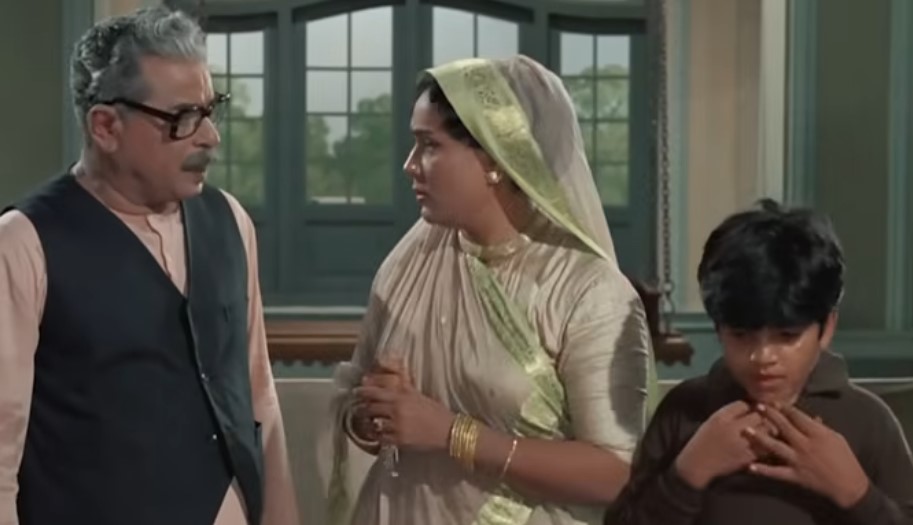
Gharana tells the story of a wealthy family. The head of the family is Rai Bahadur Ramdas (Bipin Gupta) who doesn’t have any say in the running of the house. His favorite phrase is “Ichcha bhagwan ki” meaning “it is the god’s will” and basically admitting he is helpless. The real controller is his wife Shanta (Lalita Pawar), who doesn’t stay or let others stay peaceful for a moment. You can call her a dictator, a terror. Shanta’s typical day begins by calling out loudly to her daughters in law and make them slog the whole day. No one including her husband dare to defy her. They just let the things be as they are.
Ramdas and Shanta have 3 sons and a daughter. The eldest son has passed away. His wife is Gauri (Vijayalaxmi) who has 2 sons Gappu and Pappu (played by Moppet Raja and Master Randeep). The second son is Kailash (Raaj Kumar). He looks after the family business and travels to Mumbai frequently. His wife is Sita (Devika). Sita worships her husband and even has his photo in the temple in her room. Kailash is tired of the constant interference and dominating nature of his mother and talks about moving to a different residence with Sita. But she talks sentimentally about the importance of a family staying together. It doesn’t take much time for cracks to develop in a house when people start leaving.
The youngest son is Kamal (Rajendra Kumar), a college student. Through a silly scene, he meets Usha Gupta (Asha Parekh) and they eventually fall in love. Usha’s father is a lawyer Shyam Lal Gupta (Kanhaiyalal). She has a stepmother Sheela (Krishna Kumari) who behaves like a filmy stepmother. But Usha has a caring father who is always concerned about her well being in spite of his wife’s pressure.
And there is a daughter called Bhairavi (Shubha Khote) married to Sarang (Agha). Bhairavi stays with her parents because her father-in-law is a classical singer and she can’t stand his singing. (May be ironic but Bhairavi and Sarang are the names of 2 classical ragas!). Sarang keeps coming to meet Bhairavi and persuade her to come home but she refuses and her mother is fully supportive in this decision. So Bhairavi stays in the house and she spends her time backbiting about the other family members to her mother.
Kailash is returning home from Mumbai in a train. He meets his friend Madan’s sister Ragini (Minu Mumtaz). Ragini’s would be husband, a pilot officer had died in air crash just prior to the marriage.
Apparently, Madan had considered Kailash as a potential groom for Ragini but Kailash’s father had already selected a girl for him. Ragini had liked his photo too but life had other plans. They joke about it. Ragini is a spinster. She, along with her sister have started a dance school. She is devoted to dance and happy to serve the society.
Kailash reaches home, he has brought presents for everyone. He gifts a camera to Sarang, This is to ensure a bit of comedy and play an important part later in the movie.
He gifts a diamond necklace to Sita making Bhairavi jealous. Bhairavi is not happy as he has not got anything for her. Kailash tells her he had assumed she would be in her husband’s house. Sita offers to give the necklace to Bhairavi but Kailash stops her. He advises Bhairavi to behave maturely and go and stay with her husband. But she is in no mood to relent and leaves the room angrily.
Sita starts unpacking Kailash’s suitcase and is amused to find women’s clothing in it. Kailash realizes his luggage has got switched with Ragini’s. Next moment, Ragini arrives with Kailash’s suitcase. In their conversation, Kailash mentions that his wife is a goddess and it is her love that draws him to this house. Thanks to his mother, there is a persistent stormy atmosphere in the house and it is Sita who helps in calming him down.
Later, Sita reveals to Kailash she is pregnant. The elder daughter in law Gauri informs the happy news to Shanta. Shanta is overjoyed at the news. Bhairavi tries to poison her mother’s ears stating Sita or Kailash did not consider it important to let her know first. This is an insult to her. Shanta is quick to reprimand both and create a scene.
Through a coincidence, Kamal’s marriage gets fixed to Usha. Her father is obliging and Shanta has him agreeing to all her terms and conditions, meaning a fat dowry etc. The marriage takes place. There is a celebration song with Bhairavi and Sheela singing praises of the groom and bride respectively.
During the song, Kamal notices that his bhabhi Sita is not around and goes to meet her. She is not feeling well. He insists that she come down and makes her wear the necklace gifted by Kailash. Kailash sees the intimacy between Kamal and Sita and suspects they are having an affair. (Bhairavi is partly responsible as she had hinted this to Kailash indirectly when he had returned from Mumbai). But that is far from the truth. Kamal treats Sita like his mother. This is understandable considering Shanta’s character; displaying love or compassion is not in her nature.
Kailash is hurt. He leaves the house abruptly in his car. He attempts suicide but is saved by (who else?) Ragini. She takes him to her house and calms him down. He refuses to go back and prevents her from informing his family about his whereabouts.
Ragini helps Kailash to come out of his depressive state. Kailash recovers but refuses to go back and stay with Sita. Ragini goes to meet Sita and inform that she knows where Kailash is staying etc. He is planning to marry a second time though the law does not permit this. Sita says her husband is her God and she is ready to do anything for him. She talks about sanskriti, the duty of an ideal wife and so on. She blames herself for this situation and is ready to give consent for his marriage. How ridiculous!
Kailash comes home to collect his belongings. Sita begs her pati parmeshwar to stay for their child’s sake. But he doesn’t care and leaves.
In a random scene, Shanta is beating the 2 boys (who were mimicking her and Bhairavi!), when Gauri stops her. She raises her voice and lectures Shanta about her behaviour for the first time. She has been suffering after her husband’s death and being treated like a servant but she will not let her children suffer. Shanta orders her to leave the house with her children. Usha steps in and supports Gauri.
Kamal lectures his father to raise his voice and not leave everything to the will of God. Ramdas finally acts and goes to the extent of beating Shanta. Going forward, he will take charge of the house. Gauri will not be a servant of the house and new staff will be engaged immediately. Bhairavi goes with Sarang to their home and reconciles with her father in law. Ramdas also takes charge of the office and bars Kaliash from coming there or borrowing money.
Sita delivers a boy but Kailash doesn’t care. Kailash comes to know its Ragini’s birthday but he doesn’t have money to buy her an expensive present. He goes to Sita and demands the necklace he had gifted her. Sita hands him the box but but it is empty. (Unknown to them it had been “borrowed” by Bhairavi). This leads to further frustration for Kailash and he blames Sita and her character. His father, mother, brother – everyone makes an attempt to make him see reason. Sita tries to commit suicide but Kamal saves her.
All the melodrama continues until the misunderstanding is cleared at the end.
The Music
Gharana had some good songs by Shakeel Badayuni (lyrics) and Ravi (music). The ones that stand out are Mohammed Rafi’s Husnawale tera jawaab nahin, which has some weird choreography. Then there are 2 duets by Mohammed Rafi and Asha Bhosle – the romantic Jabse tumhein dekha hai ankhon mein tum hi tum ho, and the devotional duet Jai Raghunandan Jai Siya Ram. And finally, the delightful Dadi amma dadi amma maan jaao, sung by Asha Bhosle and Kamal Barot.
My Thoughts
Gharana could have been a fun film if not for all the melodrama. I was expecting Asha Parekh and Rajendra Kumar’s characters to team up and rebel against their tyrannical mother. That would brought some drama to the proceedings. But this hardly happens and the plot remains monotonous. Shanta is an extremely hard nut to crack.
The misunderstanding between Kailash and his wife is not convincing. If only he had talked to his “goddess” wife and brother it would have sorted matters and saved the audience from the agony. The Sita character is unbearable and she keeps preaching about the devotion of a wife, respecting one’s parents and so on. (Thankfully) Rajini’s character is not of a filmy vamp. She genuinely wants to help Kailash and make him see sense but fails like the others.
The film drags on but it seems the audience was happy with the result and made it a hit.