Category Archives: My Reviews

Pran Jaye Par Vachan Na Jaye (1974)

O.P. Nayyar (full name Omkar Prasad Nayyar), was a class apart from his peers in the music industry. His distinct compositions helped him to carve a separate identity. And the biggest distinguishing factor was his non-utilization of Lata Mangeshkar. This was a time when not only music directors but producers, directors and even actresses would insist to have their songs graced by this incomparable voice. But not O.P. Nayyar. He made use of the talents of Shamshad Begum, Geeta Dutt and Asha Bhosle’s to enhance his musical offering. And success did not elude him. The reason for remembering O.P is his birth and death anniversaries fall in January (16th January, 1926 and 28 January, 2007 respectively).

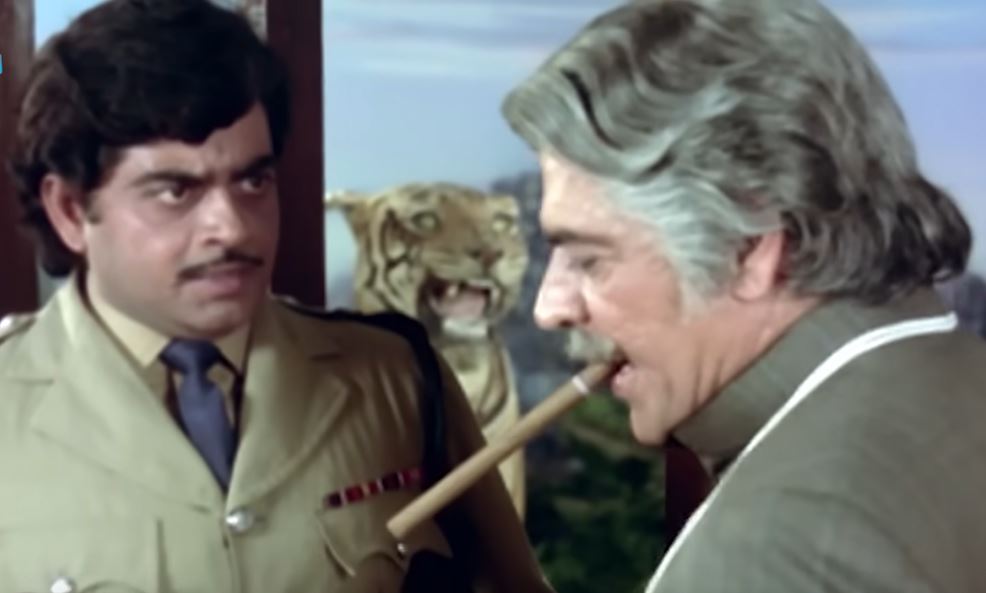
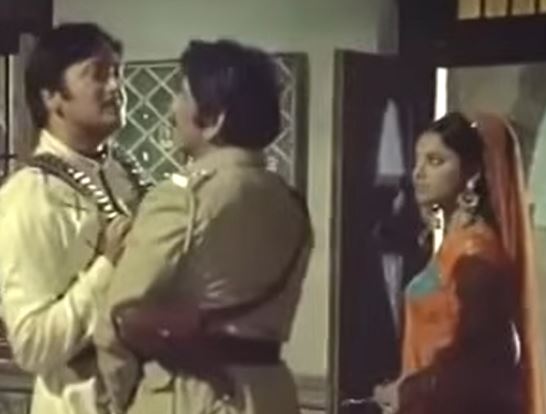
Today’s theme is not a song list but a movie whose music was contributed by O.P Nayyar. Pran Jaye Par Vachan Na Jaye, a dacoit drama and otherwise forgettable movie. The movie is significant because it marked the end of the long association between O.P. Nayyar and Asha Bhosle. Yes, this was the last time this voice was heard under the O.P. baton.

Another bit of trivia. Asha Bhosle was awarded the best playback singer for the song Chain Se Humko Kabhi, but it did not feature in the movie! Strange are the ways of cinema!


The Plot

Where there is a dacoit drama, there is a dacoit (daaku). Raja Thakur (Sunil Dutt) is a daaku revered by the villagers and hated by the wealthy. The movie starts with Raja Thakur arriving at Thakur Bhanwar Singh’s (Rajan Haskar’s) house. Bhanwar Singh has exploited a Harijan girl and her helpless parents have approached Raja Thakur for justice. Raja Thakur threatens Bhanwar Singh and makes him marry the girl forcibly. He warns his own men not to loot the house as it is now the house of his “sister.”

Also introduced is Janniya (Rekha), a dancer. She had come to entertain Bhanwar Singh but ends up entertaining the daaku with a mujra item. Raja Thakur is impressed and asks her to demand anything (he is in a good mood!). She insults him saying he doesn’t earn a decent dime, what can he give her? He is further impressed by her attitude and states that she has pure blood and should leave dancing and get married soon.

Later, he meets his mother (Veena) and informs her of the good deed he has performed that day. She is happy and hopes he will marry soon as well. He tells her that is not possible and reminds her of the injustice done to their family. There is a flashback. The local zamindar (Tiwari) was exploiting Raja Thakur’s family for the loan taken by his ancestors. He comes to take away the family’s cattle as repayment. There is a fight and Raja Thakur’s father gets killed. It was Raja Thakur’s dream to study and become a big man but his dreams are shattered. The pen in his hand is replaced by a rifle.

The local police are making plans to catch Raja Thakur. They plan to nab him during the annual fair when Raja Thakur will be making his customary visit to the temple. There is a song sequence involving policemen posing as dancers. They surround Raja Thakur but he outwits them and manages to escape.

Another shady character is Dharamdas (Jeevan). He helps Raja Thakur by supplying him resources including ammunition in return of gold. This is win-win situation for both, so the barter arrangement continues successfully. Dharamdas tells him about Janniya. Their is gossip in the village about the relationship between Raja Thakur and Janniya.

The police put Janniya in lock up in order to make Raja Thakur come and rescue her. We come to know that Janniya is actually the abducted daughter of a crorepati Seth Dhanraj (Iftekhar). His brother in law Jagmohan (Madan Puri) had done a deal with Mangal Singh (Premnath) to abduct /kill her when she was a child. But she ends up with Chandabai (Indira Bansal) and becomes a dancer. Jagmohan is after Dhanraj’s money.

Through clever planning, Raja Thakur attacks the police station and rescues Janniya. He takes her to his hideout. He declares Janniya should get married soon to end all speculation regarding their alleged relationship.

He wants to ensure a decent future for Janniya and “arranges” 3 prospective grooms (Keshto Mukherjee, Birbal and Polson). They try to add a comedic touch to the proceedings. Janniya needs to select one of them as her husband.

Meanwhile the police have contacted Dhanraj. He reaches the police station and identifies that Janniya is indeed his long lost daughter Sheetal. (The police show him the dress that Sheetal was wearing at the time of her abduction). Dhanraj and Jagmohan meet Raja Thakur’s mother requesting her to intervene and ensure his daughter’s safe return. Money is offered, which she refuses. She promises to pass on the message to Raja Thakur. She does so and Raja Thakur agrees with his mother’s wishes.

Its marriage day and Janniya is all decked to marry one of her 3 suitors. In her mind, she is secretly fancying Raja Thakur. Unfortunately he is strictly professional and miles away from any romantic overtures. The police reach and attack the hideout before the marriage celebrations can begin. Raja Thakur manages to get hold of Janniya and run away. He leaves her with his mother, who will hand her over to her father. But hardly has he turned his back that Janniya is kidnapped by Mangal Singh’s men. His mother falls down and dies.

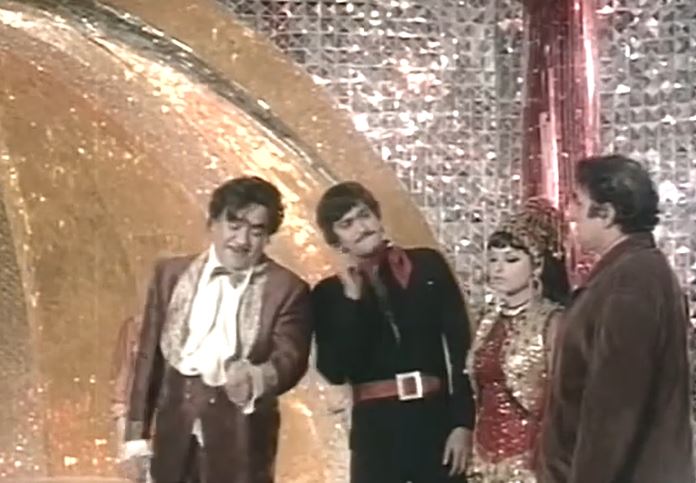
This is just the first half. The rest of the movie is all about Raja Thakur v/s Mangal Singh. Mangal Singh is a sadistic type of villain. He sits on a throne like chair playing a harp in a very flashy den. He is surrounded by a bevy of foreign looking (firangi) girls.

Mangal Singh demands Rs 25 lakhs as ransom from Janniya’s father. In parallel, Raja Thakur makes the decision to leave the village and come to the city to face Mangal Singh and rescue Janniya. He teams up with Seth Dhanraj and hatches the rescue plan, eventually taking the movie towards closure.

The Music

All songs carry the O.P. Nayyar trademark. However it is true that his music had starting sounding repetitive and jaded by now. The staleness of the musical arrangement and rhythm is evident. The songs appear randomly and seem a wasted effort.

There is no male singer and all songs are sung by Asha Bhosle. While the dropped song Chain Se Humko Kabhi is easily the best song, others like Bikaner Ki Chunari (picturised on Jayshree T) and Aake Dard Jawan Hai (on Bindu) are not bad too.

My Thoughts

I would say times had changed by 1974 when the movie was released. The subject may be more relevant in the 1960s. Sunil Dutt has played the daaku role in a number of movies and appears confident. This was one of Rekha’s earlier movies but she acts really well. Unfortunately, there is no chemistry between the two leads and they make an odd pair. Normally, a romantic angle will be expected but that doesn’t happen.

The movie goes downhill in the 2nd half where the focus is more on Premnath’s character. The character is too loud (similar to his den and the flashy set we get to see) and highly irritable. And the actor plays it in that way, irritating the audience. Same for Jeevan, who plays a predictable role. We get to see many familiar supporting actors but sadly, they do not leave much impact.

Swarg (1990)

Rajesh Khanna, fondly known as the first superstar of Hindi cinema was born on 29 December 1942. He saw unprecedented success followed by an unfortunate bad phase, accompanied with fading stardom. But he continued to act in movies irrespective of their fate at the box office. Today’s movie is perhaps his last hit where he plays a central character. Swarg is directed by David Dhawan This was before his entry into the comedy genre for which he is more famously known.


The Plot

Swarg means heaven and here it is the name of a mansion like house owned by Kumar (Rajesh Khanna). Kumar lives with his wife Janki (Madhavi). The other occupants are his 3 step siblings – Ravi (Dilip Dhawan), Vicky (Raja Bundela), and Jyoti (Juhi Chawla). Ravi’s wife is Naina (Neena Gupta). Kumar had promised his dying stepmother (Shammi) that he and Janki will shower all their love and care on the 3 siblings. In order to avoid complications(!), they decide not to have children. Kumar sells the old house they were living in and sets up a garment business with the money. He achieves success through his hard work and becomes a rich and respected businessman.

Their is one more occupant in Swarg – Krishna (Govinda), an orphan. Kumar had met the young boy Krishna is a temple and brought him home. Krishna grows up as a servant in the house but he is a servant only in name. He worships Kumar and can go to any extent to ensure his happiness and well being. Krishna also has some light hearted moments with the college going Jyoti. Krishna is a movie buff and crazy about acting. He likes to sing songs and mimic well known actors. His dream is to become a successful hero.

Kumar has received a substantial business order and needs a loan of Rs 50 lakhs. He has approached Chowdhary (Vikas Anand) for the loan. It is agreed that Swarg will be kept as mortgage and the loan is sanctioned. All is going well.

But where there is heaven, there is bound to be hell. In the Mill Owners Association’s election, Kumar defeats his rival Dhanraj (Paresh Rawal), who was the president for many years. Dhanraj is the opposite of Kumar. He is a corrupt businessman and is afraid that his misdeeds in running the association will be exposed by Kumar. He tries to bribe Kumar, who slaps him in public, warning him not to try such antics.

Kumar and Janki arrange Jyoti’s engagement with Choudhary’s son. The engagement day arrives, celebrations are in full swing. Then disaster strikes. Kumar gets a call that his factory has caught fire. The whole factory is gutted and life takes a turn for all.

Money lenders arrive at Kumar’s house requesting him to pay their debts. Kumar seeks money to rebuild his business and requests his siblings to act as guarantors. Apparently, they have their own businesses. They blatantly refuse his request. Kumar manages to use his savings and satisfy the debtors. Jyoti’s engagement is broken.

Ravi, Vicky and Naina start showing their true colours. Kumar asks them to not indulge in avoidable expenditures like arranging a grand party for Naina’s birthday but he gets insulted. Vicky goes to the extent of stealing Jyoti’s wedding jewellery and put the blame on Krishna. Surprisingly, Kumar believes Krishna is the culprit and asks him to leave the house. Krishna is shocked and has no option but to leave.

Janki admonishes Kumar, who explains to her that he did not want Krishna to live in this polluted atmosphere and had to send him away with a heavy heart.

Krishna heads to Mumbai. After a dramatic encounter with a local goonda, he befriends a film production manager with a funny name Airport/ Adda (Satish Kaushik). Airport offers him accommodation and the job of a spot boy in the film studio. Krishna is a hard worker and one day luck shines upon him unexpectedly. He gets a chance to perform a movie scene when the actor performing it keeps on bumbling leading to multiple retakes. Krishna accepts the challenge and performs the scene brilliantly. He gets cast in the role. He gradually becomes a celebrated actor.

And Kumar? Life is hell. His step brothers are against him. Dhanraj arranges for Swarg to be auctioned to further humiliate Kumar. Janki can’t bear this and commits suicide. Ultimately Kumar leaves with Jyoti and start leading a poverty driven life.

A rich and successful Krishna arrives in Swarg to find it locked. He comes to know the shocking events and changes that have taken place since he left and plots revenge from Dhanraj, Ravi and Vicky. He hatches a plan with Airport to destroy them financially and teach them a lesson. Will he succeed? Will he be able to reunite with Kumar and take him back to his “Swarg”?

The Music

The lyrics are by Sameer and music by Anand Milind. The songs have the typical late 1980s and early 90s vibes. Govinda gets to dance in most of them like Filmon ke saare hero, Bam bam bam bam Bambai, Tum sajana ke ghar and the love duet Kaise kate din. One song is a sad song Ae Mere Dost picturised on Rajesh Khanna after Govinda leaves the house.

My Thoughts

Swarg’s plot is stale and can be seen in many multi starrer movies made during this period. A well to do family falling on bad times, there is separation, sacrifice and ultimately time for reunion. Rajesh Khanna hams at times but performs well in the emotional scenes. Govinda shows his acting mettle in the initial scenes where there are light hearted moments and later when he becomes a star and starts planning revenge. There is the inevitable love angle between Krishna and Jyoti which thankfully is very short and portrayed through a song. Paresh Rawal is effective as the scheming Dhanraj. So is Satish Kaushik as Krishna’s friend and co-plotter.

Overall, though predictable, David Dhawan succeeds in weaving a cohesive and entertaining story. Its strange he stopped making such movies eventually and stuck to the comedy genre.

Satyakam (1969)

Lets’s begin with some trivia today. What’s special about 8 December? Its Dharmendra’s birthday. Its also Sharmila Tagore’s birthday. Frequent co-stars, they have starred together in multiple movies such as Anupama, Devar, Mere Humdum Mere Dost and Chupke Chupke. And Satyakam, on which today’s post is based upon. Satyakam is regarded as a masterpiece of director Hrishikesh Mukherjee.


The Plot

The movie begins with a voiceover by Narendra/Naren Sharma (Sanjeev Kumar). He is narrating the mythological story of Jabala and her son Satyakam. Satyakam goes to Gautam. He requests Gautam to accept him as his disciple. Gautam asks him what’s his “gotra“. When Satyakaam asks his mother, she replies he was born after she serviced several men and she cannot confirm who was his father. But her name is Jabala and his name is Jabal Satyakam. When Gautam hears this from Satyakam, he proclaims Satyakam is a real brahmin as he had the guts to speak the truth. Naren then then starts narrating the story of the modern Satyakam.

It is pre-independence time. Naren and his best friend Satyapriya (Sath) Acharya (Dharmendra) are engineering students, awaiting their results. Satyapriya, true to his name is a stickler for honesty. The results are out and both are now engineers having cleared the exams successfully. The college students are traveling back home. Unfortunately, the bus meets an accident and they lose one of their friends in the tragedy. Sath and Naren escape with minor injuries.

Sath clears an interview with United Paper Mills in Mumbai. The managing director Shyam Sunder (Rajan Haskar) interviews him. Ananto Chatterjee (Rabi Ghosh), the overseer is his colleague. Sath comes to know from Chatterjee that there is no work in the office. He has joined a couple of months back and waiting for work to be allotted. Sath is uncomfortable hearing this. Being the “principled” employee, he cannot earn money by sitting idle.

There is a board meeting and he is introduced to the company’s owner Kunwar Vikram Singh (Manmohan) of Bhawanigarh, a princely state in central India. Sath openly questions him about the commencement of his work. Kunwar informs that Sath’s work is to survey land in his state as they are planning to open a new mill there. The next day, Kunwar & Shyam Sunder along with Sath and Chatterjee leave for Bhawanigarh.

Its June, 1947. At this point, through a radio announcement, the movie incorporates the topic of the annexation of princely states in the soon to be independent India. Kunwar is listening to the radio and is not happy as he awaits his own fate and that of Bhawanigarh.

Sath, Chatterjee and Shyam Sunder are staying at the guest house. The caretaker is Rustom (David). They are served by a young girl Ranjana (Sharmila Tagore). Ranjana’s mother had run away with a driver. Apparently, Ranjana is the driver’s daughter. Kunwar has his sights on her and she entertains him with a song when he is alone in his suite.

Next day onwards, Sath and Chatterjee begin the land survey. They are waiting to be provided with important equipment like theodolite but only get assurances. Sath is restless as he believes in the output and value of his work. Its July, 1947 and Chatterjee tells Sath that they should run away because the future of Kunwar and Bhawanigarh is unclear. Sath convinces him to stay and continue their work. But other circumstances are going to interfere soon and change Sath’s life forever.

One night, Rustom pushes Ranjana and forces her to spend the night in Sath’s room. Sath maintains his distance from her. The next morning, Rustom tells Ranjana’s story to Sath. Due to the unpleasant reputation and deeds of her mother, Ranjan’s fate is bleak. Who will marry such a girl? Her life will be spent entertaining characters like Kunwar. Sath comments generally that anyone will be happy to marry such a beautiful girl. Rustom challenges him if he will do it. Sath realises he cannot. It is easier to talk than commit.

Further, Rustom tells him to take care of Ranjana for a few days as he will be going to Bhopal. She starts accompanying Sath to the survey site and spends time with him. She begs him to take him away from this place; she is ready to serve him as a servant but he tells her it is not possible. A situation arises after Ranjana is raped by Kunwar. It is further revealed she is pregnant and there are questions around the father’s identity. Sath makes the hard decision to marry her in spite of knowing all the background.

Kunwar’s true intentions in employing Sath also get disclosed. He wanted an engineer urgently to sign the land survey document for submitting to the registrar. Seems he wants to exploit the land for other reasons. But Sath is not ready to be bribed.

Sath and Ranjana marry and settle down. They have a son called Kabul (Sarika). Dadaji refuses to accept Ranjana because of her questionable past and Kabul, as he is not Sath’s son.

Due to Sath’s principled nature, he is not able to hold on to a job for long. He encounters corruption at every stage that demands him to make compromises in some form, which are not acceptable to him. Thus they keep moving around. Ranjana accepts this meekly.

A time comes when Naren and Sath meet again. But this time Naren is Sath’s boss. Naren is taken aback by Sath’s attitude towards honesty and inability to bend for practical reasons. There is a corrupt contractor Mr Ladia (Tarun Bose) who wants Sath’s signature on some documents which will benefit Ladia hugely. As expected, Sath refuses. Naren asks him to be realistic but Sath sticks to his stand.

Thus Sath’s life continues with more hardships on the way. One day, Naren comes to know Sath is in the hospital and being treated for last stage cancer. Mr Ladia is supporting the family. Sath is worried about Ranjana and Kabul’s future. Ladia is willing to help to seal the family’s future by giving Rs 25,000 only if Sath agrees to forget his principles and sign the pending documents that Ladia was chasing him for. He shares this proposition with Ranjana and requests her to convince Sath and get his signature.

Ranjana contemplates Ladia’s offer and lectures Sath that he never thought about them before. What will they do once he is dead? Will he be happy if she becomes a prostitute like her mother and what about Kabul’s future, where will the money come from? This leaves Sath in a dilemma. His one and only compromise will secure his family’s future but will he do it?

The Music

There are only 3 songs which are forgettable. Lyrics by Kaifi Azmi and music by Laxmikant Pyarelal.

My Thoughts

While an unconventional subject, Hrishikesh Mukherjee handles it deftly. The movie avoids being preachy. Mukherjee resolves Sath’s dilemma effectively and ties up the climax with the original story of Jabala and Satyakam. There are some lighter touches which are a trademark of Mukherjee’s direction. Sath’s unwavering stand on principles may seem a bit far fetched but he has a position that one has to start somewhere for honesty to prevail in the society. Even the independence of the country did not help to change things and that’s his regret. The dialogues by Rajinder Singh Bedi are impactful (he won the Filmfare award for this movie).

This is definitely one of Dharmendra’s finest performances. Too bad, he did very few of such characters in his long career. Sharmila Tagore, Sanjeev Kumar and Ashok Kumar are all good in their roles. Interestingly, Sanjeev Kumar is credited as “and Sanjeev Kumar” in the titles.