Category Archives: My Reviews

Swami (1977)

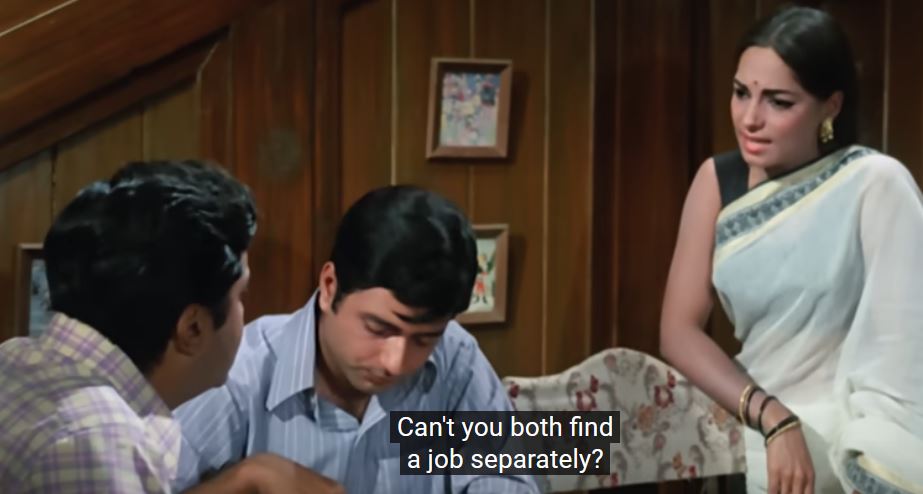
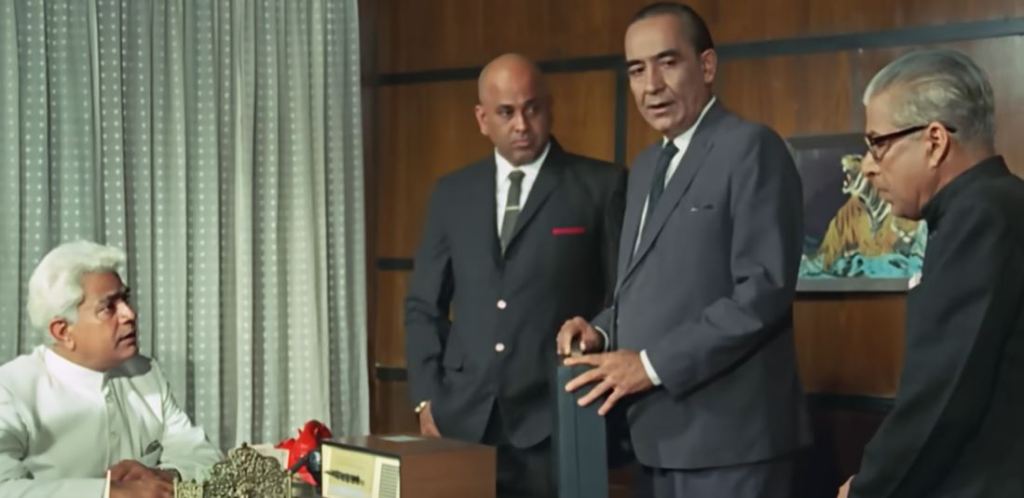
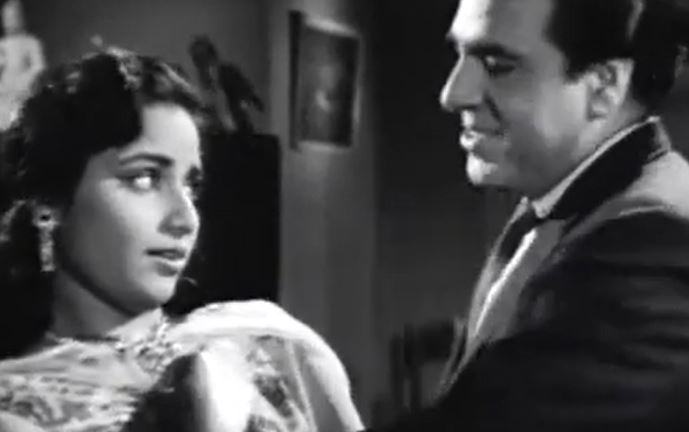
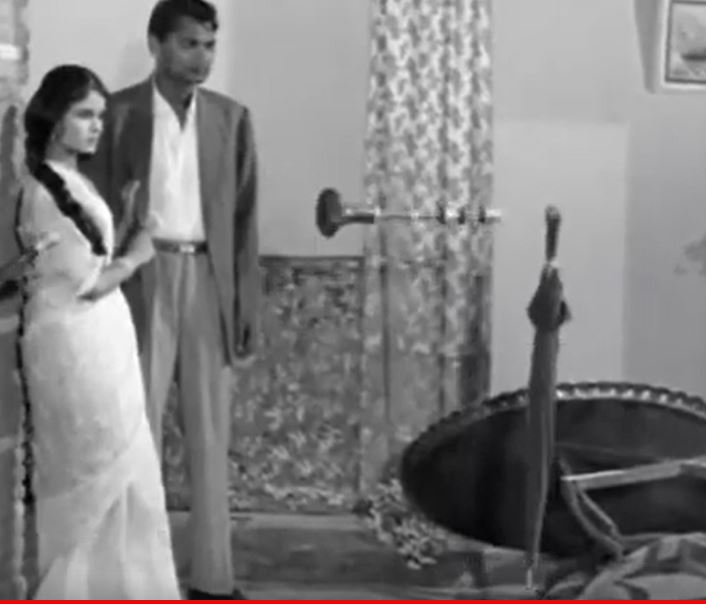
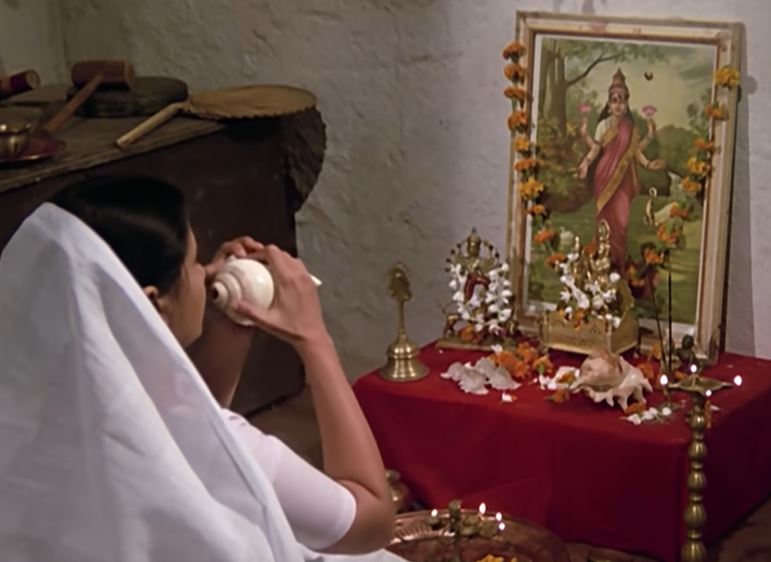
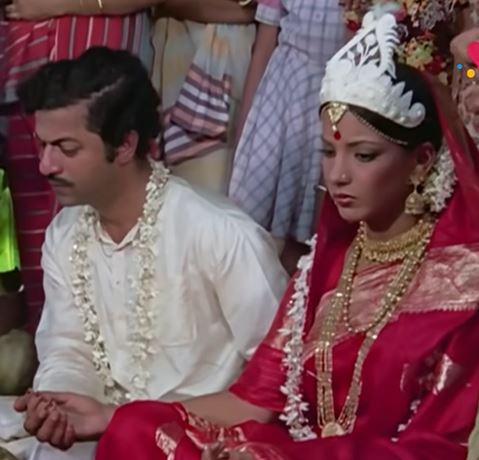
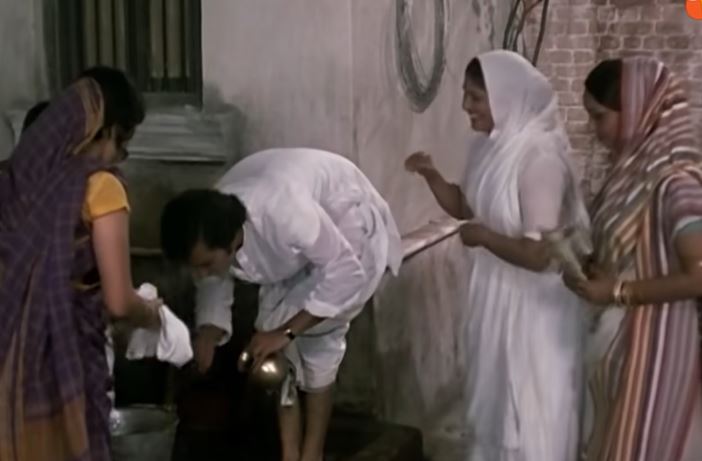
Swami is a Hindi language movie based on an adaptation of Bengali novelist Sarat Chandra Chatterjee’s story by the same name. The movie’s producer is Hema Malini’s mother Jaya Chakravarthy and directed by Basu Chatterjee.  The movie brings out an interesting theme whether a man or woman can be independent after marriage and the obligations they have towards each other, their families etc.

The Plot

The movie, in a Bengali setting, begins with Saudamini “Mini”(Shabana Azmi) narrating her story. It’s been 6 months since she got married. She was one year old when her father passed away. After which, she and her mother (Sudha Shivpuri) went to stay with her uncle (Mamaji) (Utpal Dutt). Later Mamaji’s wife also passed away. Mamaji treated her like his own daughter, educated her, and wants her to complete her B.A. (graduation).

Brought up as a progressive and educated girl, Mini indulges in literature induced chats with her uncle. Joining them is the local zamindar’s son and neighbour Naren (Vikram). Mamaji is aware that Vikram’s frequent visits are not for the purpose of chatting and bringing books, but Mini is part of his agenda! Mini too falls for Naren and are hoping to get married.

Mamaji himself is progressive and stays away from orthodox beliefs and rituals. He wants Mini to complete her graduation before getting married. Mini’s mother on the other hand is an orthodox lady, and wants Mini to get married soon and settle down as a normal housewife.  

Fed up with his sister’s pestering, mamaji visits Madhupur for a proposed match. Mamaji assures Mini he will reject the match as he knows about her and Naren.

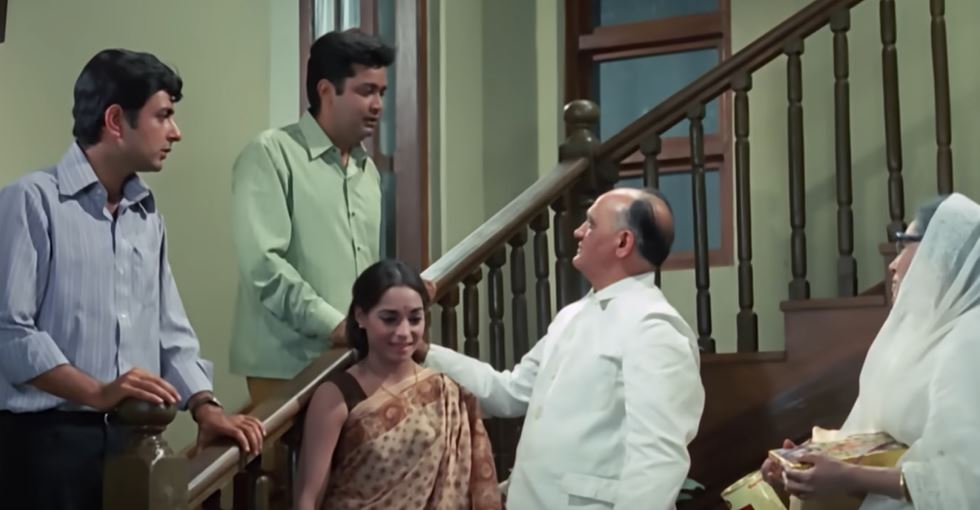
The proposed groom Ghanshyam (Girish Karnad) is a food grain trader and less educated than Mini. This is his second marriage. He is the eldest son of the house staying with his step mother (Shashikala), who has a married son (Dheeraj Kumar) and a daughter Charu (Preeti Ganguli).

Unfortunately, mamaji suffers a heart attack while returning from Madhupur. On his death bed, he tells Mini that Ghanshyam is the right match for her. He advises her “Naren can provide her love but Ghanshyam can carry on the responsibility brought by marriage.” Mamaji passes away leaving Mini shattered.

Her marriage to Ghanshyam is a forced marriage and she needs time to adjust in her in-laws’ home and more importantly accept Ghanshyam as her husband. Her husband is the major bread earner of the house who slogs throughout the day. But its his stepbrother Nikhil who gets all the attention. Ghanshyam accepts everything patiently.

While she slowly accepts the situation, Naren comes visiting as Nikhil’s friend to complicate matters. Things reach a point when Mini decides to leave the house with Naren while Ghanshyam is away. And this leads us to the movie’s climax where a lifelong decision awaits Mini.

The Music

Rajesh Roshan is the composer with lyrics by Amit Khanna.

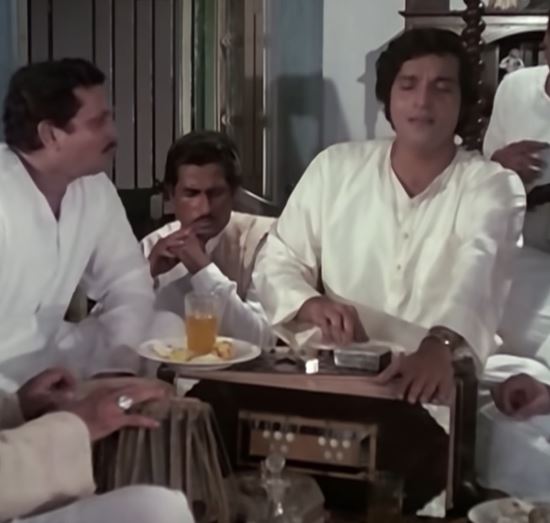
2 songs that stand out are Pal bhar me ye kya ho gaya by Lata Mangeshkar and the classical music thumri “remake” “Kaa karoon sajani aaye na balam, passionately sung by K.J. Yesudas.

My Thoughts

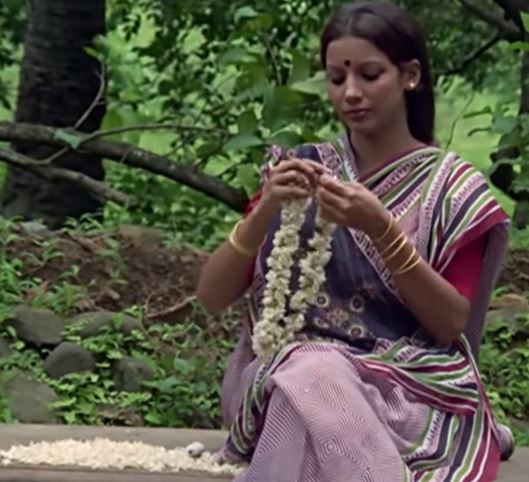
The film belongs to Shabana Azmi. What a performer she is! She starts off as the impressive and chirpy Mini but has to mellow down after the sudden forced marriage. She is ready to tackle her mother-in-law when required and live on her terms. Gradually, she is impressed by her husband’s nature and his progressive views especially on how women need to be treated. This leads to the first thaw in their strained relationship. And we see a more mature Mini blossoming. But things take a turn for the worse when Naren arrives and she takes a stand against the whole house.

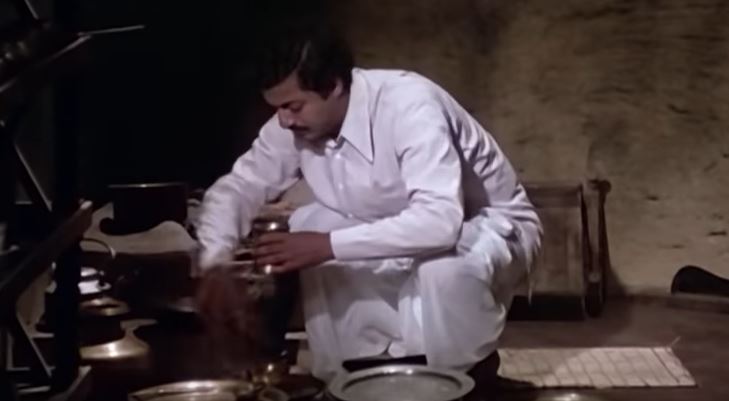
Girish Karnad appears too down to earth in the beginning but gives space to his new wife to settle down amicably. He is clear on what is right or wrong and doesn’t back away from expressing his stand to Mini or other members of the family. He brings out the balanced character nicely.

Other cast members including Utpal Dutt and Shashikala are good. 

Overall, this is an entertaining movie from Basu Chatterjee. It somehow reminds me of his another movie Apne Paraye (1980), also based on a novel by Sarat Chandra Chatterjee.

Trivia Shot – Dharmendra & Hema Malini appear in cameos in a song. They had played cameos in another Basu Chatterjee movie Chhoti Si Baat (1976) and can be seen in the song Jaaneman jaaneman tere do nayan.

Ha Khel Savlyancha (1976)

Ha Khel Savlyancha (1976) is a Marathi language movie and the title means “Game of Shadows.” I had heard about this movie for many years and finally had the chance to watch it recently. The Marathi movie falls in the thriller/mystery/haunting movie genres which were not explored much in the era when the movie was released. So kudos to Vasant Joglekar, the director for making this attempt. The movie was made under his own banner.

Yes, we have a haunted haveli (mansion), a haunting song, a terrified heroine, a stepmother, a sensible hero, and lots of fun on the menu!

The Plot

Indumati “Indu” (Asha Kale) is a rich heiress but aware of the responsibility brought along by wealth and status. She likes to spend time with the villagers, working in the fields and sharing meals with them. Her widowed step mother played by Lalan Sarang admonishes her but Indu has her answers ready. Diwanji Moropant (Dhumal), a tenured employee is the other major character in the house.

Lalan is worried that Indu has come of age and is now the rightful owner of the property. She will not be able to continue enjoying the financial freedom she has been used to since Indu’s father’s death. Can this be fixed in any way?

It is time to find a suitable match for Indu. Dr Shekhar (Kashinath Ghanekar) comes to visit along with his parents (Ashok Kumar and Sumati Gupte in cameos). Coincidentally, Shekhar has come across Indu earlier in the village. Indu had met him as a simple village girl called “Gomu” (with attire and accent to match!). The impersonation is soon sorted out and the lovebirds Shekhar and Indu agree to get married. 

Meanwhile, Lalan’s brother Ganu (Raja Gosavi) has also come to stay uninvited in his rich relative’s mansion. The unemployed Ganu has been an actor in Marathi musical dramas and keeps reciting dialogues and songs from old musical plays. Indu likes him because of his funny nature and he provides comic relief.

All is well when tragedy strikes. The ghost of a servant who had died, apparently returns to haunt Indu. Time for a flashback.

We come to know that many years back as a child, Indu was stubbornly requesting for fresh coconut water during a rainstorm. One of the servants Narsu agrees to climb the tree in spite of the storm and pick the coconut. He succeeds but loses his life falling off the tree and hitting a stone. This leaves his wife (Sanjivani Bidkar?) crushed. It is believed his ghost resides in the same tree and his wife keeps singing a haunting song “Kaajal raatin” from time to time. To pacify the ghost, the household offers daily bhog (prasad).

In the coming days, Indu keeps seeing Narsu’s apparition in front of her window and gets terrorized. Has the ghost arrived to seek revenge? Somewhere deep down, she blames herself for Narsu’s death. Her condition deteriorates rapidly and things may soon go out of control.

Her mother and diwanji would like to continue with traditional cures (meaning calling an exorcist to exorcise the ghost). On the other hand, Dr Shekhar wants to employ scientific medical methods and cure Indu permanently.

What happens next? Is the ghost exorcised, will Indu ever be normal? or a mental asylum will be the best option for her? And what about Dr Shekhar?

The Music

Sudhir Moghe (lyricist) and Hridaynath Mangeshkar (music director) share the honours.

The film begins with a beautiful song in the rice fields “Aala aala wara” by Asha Bhosle and Anuradha Paudwal.

Gomu sangatin is a catchy song by Hemant Kumar and Asha Bhosle. The only jarring note is Kashinath Ghanekar in a gaudy costume accompanied by weird choreography.

The title song comes later in the movie and is ably used in the context of the scene and condition of the heroine at the time. Mahendra Kapoor sings the song.

And finally the haunting song “Kaajal raatin” (singer: Asha Bhosle). The song comes at regular intervals and achieves its intention – to scare the audience and leaves a lasting impression.

My Thoughts

Firstly, as mentioned this genre was not much explored in Marathi cinema when the movie was released. I am not sure if the movie has been inspired from a Hindi or other language movie. Well known writer Madhusudan Kalelkar and Sumati Gupte (who was also the producer) share the writing credits. Vasant Joglekar’s direction succeeds in keeping the viewer hooked till the end when the suspense gets revealed. The film is taut and engaging. The songs are too good and complement the story.

Asha Kale is widely known for her self-sacrificing sobby roles image in Marathi movies. This movie is a revelation. From the practical, happy go lucky rich heiress to the desperate haunted girl, she is most impressive. She brings out the transition of the character and its vulnerability very well. And she dances well in a couple of songs (she was a trained dancer), something which she rarely gets to do in her other movies.

Dr Kashinath Ghanekar was a superstar on Marathi stage. While the initial scenes seems a bit awkward including the dancing part, he performs effortlessly as the doctor supporting and treating his would be wife.

The supporting cast is good including veterans Dhumal and Madhu Apte. Lalan Sarang is impressive as the stepmother torn between the love for her step child and greed for the estate and comfort. But thankfully she is not shown as an evil stepmother which is the norm in movies. Raja Gosavi offers comic relief and excels as the out of job actor wanting a comfortable life in his sister’s house.

Ashok Kumar and Sumati Gupte offer entertaining cameos. Same for Deven Verma who plays an exorcist Bhoot Papeshwar. Jairam Kulkarni appears in one scene as a tonga driver (tangewala) and this marked his debut in movies.

Singapore (1960)

Singapore is a 1960 Hindi movie. It is an Indo Malaya production directed by Shakti Samanta. One of the first movies shot extensively outside India, the story is based totally in Singapore.

The Plot

Shyam (Shammi Kapoor) lives in India and is planning to sell his rubber estate in Singapore. His estate manager Ramesh (Gautam Mukherjee) is working on the details. Ramesh has found out that there is an old treasure hidden somewhere in the estate. He has written multiple times to Shyam but not received a response. He finally manages to speak to him and is about to share the information when he sees someone outside his cabin. The call is cut. Ramesh disappears and Shyam decides to visit Singapore to sort the matter himself.

We are introduced to Shobha (Shashikala) who was Ramesh’s friend and her cousin sister Lata (Padmini). Both are dancers in New India club owned by Lata’s uncle Shivdas (K.N. Singh). Shivdas seems to be a shady character and has an interest in Shyam’s rubber estate and the treasure. Cha Choo (Agha) who is working in Shyam’s Singapore office as secretary becomes his able(!) sidekick in the investigation.

Shyam also meets Maria, played by Malay actress Maria Menado who had sat beside him during the flight and later helps him in Singapore.

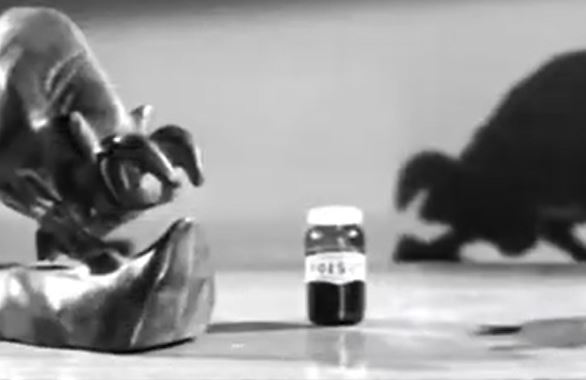
The first half is interesting. Shyam, along with Cha Choo hunt for the treasure map, cleverly hidden in a cigarette holder cum Vat 69 bottle by Ramesh. He befriends Lata and gets romantically involved with her. Shivdas arranges a picnic to the rubber estate hoping to find the treasure. But the story takes a twist here with Shivdas getting murdered and Shobha getting abducted by the gang who is after the treasure. It is revealed Ramesh is alive and held hostage by the same gang.

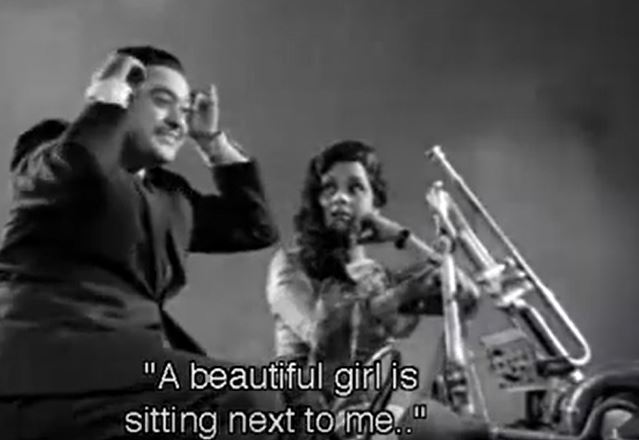
So, who is behind all this? The latter half of the movie gives the answers but not without Hindi movie staples including too many songs, disguises, car chases and a long-winded climax involving helicopters, a ship, boats, police jeeps and the unmasking of the villain.

The Music

Singapore had 8 songs composed by Shankar Jaikishan who were in their prime during this period with lyrics penned by Hasrat Jaipuri & Shailendra. But three of them are more memorable.

The title song by Mukesh is quite famous (Ye shehar bada albela) but somehow lacks the vibes of later songs like Love In Tokyo and An Evening in Paris. This seems a bit subdued in comparison.

Another song that stands out is Lata Mangeshkar singing for Maria Menado. The lyrics can be a catchline for Singapore tourism!!

 Dekho ji dekho sun lo ye baat, jeevan mein ek baar aana Singapore…

Its difficult to believe its Lata Mangeshkar singing, she sounds so different and the music is equally delightful.

And the third song is Rasa Sayang re picturised on Shammi Kapor and Helen, with both actors having lot of fun here. “Rasa Sayang He” is a well known traditional Malay song talking about the feeling of love.

My Thoughts

Shakti Samanta has given some all time great movies and this offering pales a bit in comparison. The film starts on a promising note but somehow falters. There are suspense elements like  the discovery of the map, Shivdas’s body’s disappearing and reappearing, entry of the masked villain. But somehow the plot points don’t add up seamlessly making the movie a tedious watch. The chemistry between Shammi Kapoor and Padmini is strikingly lacking and the romantic songs offer little help. Shammi Kapoor is most entertaining as he gets to be in various modes – romantic hero, investigator, disguised dancer and comedian. Wish the other characters too were used to their full potential.

Nevertheless, Singapore will be remembered for its outside India location and effort. Do watch if you need a glimpse of old, old Singapore!