There was a time when many South Indian studios or production houses were active in producing Hindi films. AVM, Gemini and Prasad Productions were some of the big and established names. They primarily remade southern language movies into Hindi and met with success.
Gharana, made under the Gemini banner was one of such successful productions. Directed by S S Vasan, it was a typical family drama involving a joint family, romance, misunderstanding and sacrifices. It had some big names from the Hindi film industry and lovely music.

The Plot
Gharana tells the story of a wealthy family. The head of the family is Rai Bahadur Ramdas (Bipin Gupta) who doesn’t have any say in the running of the house. His favorite phrase is “Ichcha bhagwan ki” meaning “it is the god’s will” and basically admitting he is helpless. The real controller is his wife Shanta (Lalita Pawar), who doesn’t stay or let others stay peaceful for a moment. You can call her a dictator, a terror. Shanta’s typical day begins by calling out loudly to her daughters in law and make them slog the whole day. No one including her husband dare to defy her. They just let the things be as they are.
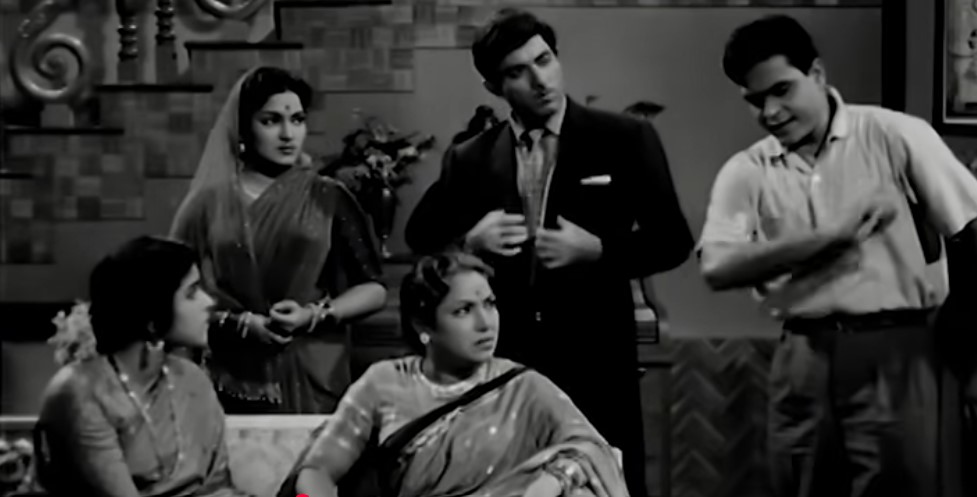
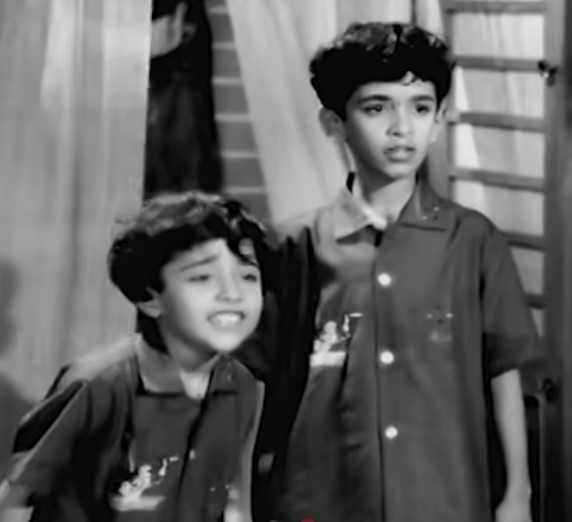
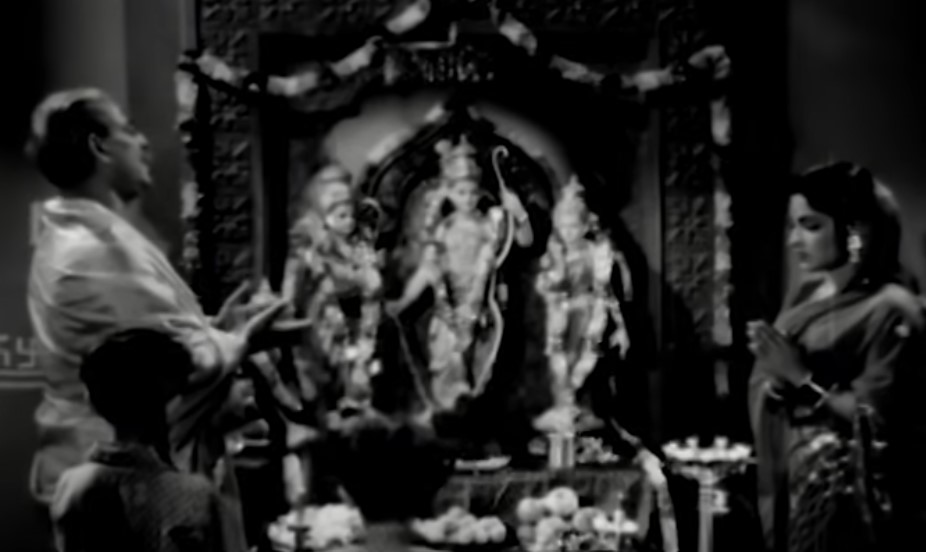
Ramdas and Shanta have 3 sons and a daughter. The eldest son has passed away. His wife is Gauri (Vijayalaxmi) who has 2 sons Gappu and Pappu (played by Moppet Raja and Master Randeep). The second son is Kailash (Raaj Kumar). He looks after the family business and travels to Mumbai frequently. His wife is Sita (Devika). Sita worships her husband and even has his photo in the temple in her room. Kailash is tired of the constant interference and dominating nature of his mother and talks about moving to a different residence with Sita. But she talks sentimentally about the importance of a family staying together. It doesn’t take much time for cracks to develop in a house when people start leaving.

The youngest son is Kamal (Rajendra Kumar), a college student. Through a silly scene, he meets Usha Gupta (Asha Parekh) and they eventually fall in love. Usha’s father is a lawyer Shyam Lal Gupta (Kanhaiyalal). She has a stepmother Sheela (Krishna Kumari) who behaves like a filmy stepmother. But Usha has a caring father who is always concerned about her well being in spite of his wife’s pressure.


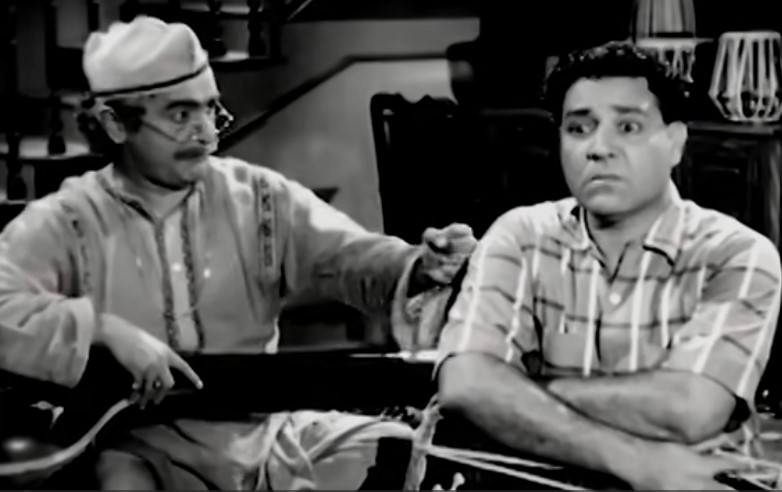
And there is a daughter called Bhairavi (Shubha Khote) married to Sarang (Agha). Bhairavi stays with her parents because her father-in-law is a classical singer and she can’t stand his singing. (May be ironic but Bhairavi and Sarang are the names of 2 classical ragas!). Sarang keeps coming to meet Bhairavi and persuade her to come home but she refuses and her mother is fully supportive in this decision. So Bhairavi stays in the house and she spends her time backbiting about the other family members to her mother.

Kailash is returning home from Mumbai in a train. He meets his friend Madan’s sister Ragini (Minu Mumtaz). Ragini’s would be husband, a pilot officer had died in air crash just prior to the marriage.
Apparently, Madan had considered Kailash as a potential groom for Ragini but Kailash’s father had already selected a girl for him. Ragini had liked his photo too but life had other plans. They joke about it. Ragini is a spinster. She, along with her sister have started a dance school. She is devoted to dance and happy to serve the society.

Kailash reaches home, he has brought presents for everyone. He gifts a camera to Sarang, This is to ensure a bit of comedy and play an important part later in the movie.
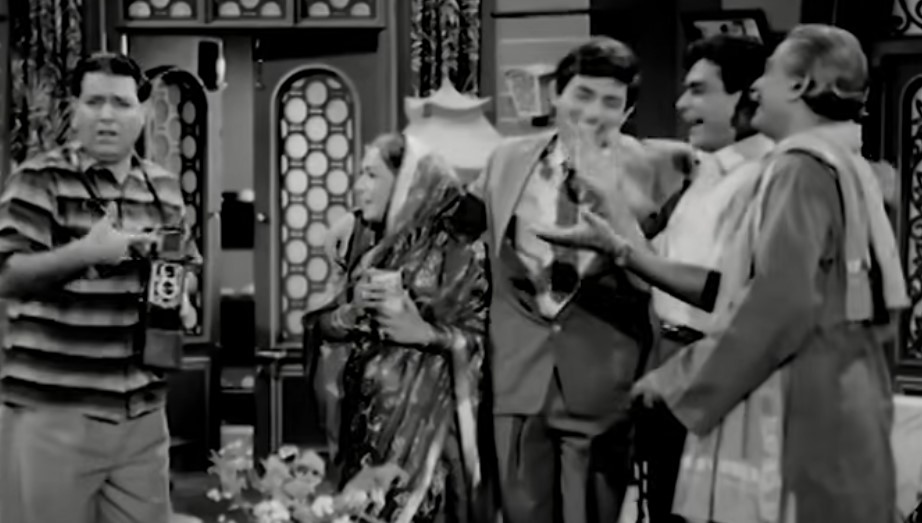

He gifts a diamond necklace to Sita making Bhairavi jealous. Bhairavi is not happy as he has not got anything for her. Kailash tells her he had assumed she would be in her husband’s house. Sita offers to give the necklace to Bhairavi but Kailash stops her. He advises Bhairavi to behave maturely and go and stay with her husband. But she is in no mood to relent and leaves the room angrily.

Sita starts unpacking Kailash’s suitcase and is amused to find women’s clothing in it. Kailash realizes his luggage has got switched with Ragini’s. Next moment, Ragini arrives with Kailash’s suitcase. In their conversation, Kailash mentions that his wife is a goddess and it is her love that draws him to this house. Thanks to his mother, there is a persistent stormy atmosphere in the house and it is Sita who helps in calming him down.
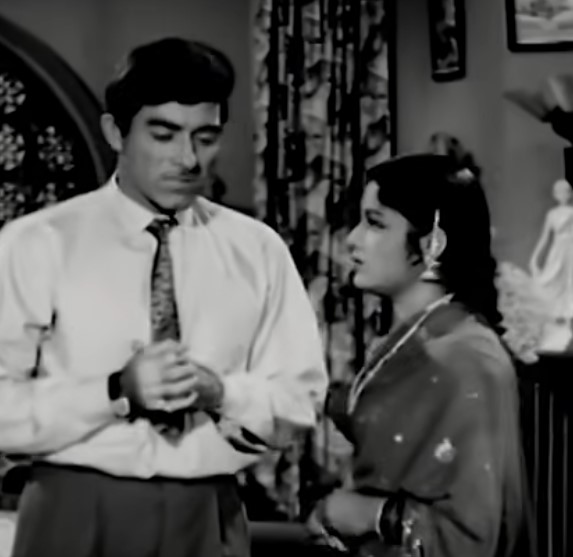
Later, Sita reveals to Kailash she is pregnant. The elder daughter in law Gauri informs the happy news to Shanta. Shanta is overjoyed at the news. Bhairavi tries to poison her mother’s ears stating Sita or Kailash did not consider it important to let her know first. This is an insult to her. Shanta is quick to reprimand both and create a scene.

Through a coincidence, Kamal’s marriage gets fixed to Usha. Her father is obliging and Shanta has him agreeing to all her terms and conditions, meaning a fat dowry etc. The marriage takes place. There is a celebration song with Bhairavi and Sheela singing praises of the groom and bride respectively.
During the song, Kamal notices that his bhabhi Sita is not around and goes to meet her. She is not feeling well. He insists that she come down and makes her wear the necklace gifted by Kailash. Kailash sees the intimacy between Kamal and Sita and suspects they are having an affair. (Bhairavi is partly responsible as she had hinted this to Kailash indirectly when he had returned from Mumbai). But that is far from the truth. Kamal treats Sita like his mother. This is understandable considering Shanta’s character; displaying love or compassion is not in her nature.


Kailash is hurt. He leaves the house abruptly in his car. He attempts suicide but is saved by (who else?) Ragini. She takes him to her house and calms him down. He refuses to go back and prevents her from informing his family about his whereabouts.

Ragini helps Kailash to come out of his depressive state. Kailash recovers but refuses to go back and stay with Sita. Ragini goes to meet Sita and inform that she knows where Kailash is staying etc. He is planning to marry a second time though the law does not permit this. Sita says her husband is her God and she is ready to do anything for him. She talks about sanskriti, the duty of an ideal wife and so on. She blames herself for this situation and is ready to give consent for his marriage. How ridiculous!

Kailash comes home to collect his belongings. Sita begs her pati parmeshwar to stay for their child’s sake. But he doesn’t care and leaves.
In a random scene, Shanta is beating the 2 boys (who were mimicking her and Bhairavi!), when Gauri stops her. She raises her voice and lectures Shanta about her behaviour for the first time. She has been suffering after her husband’s death and being treated like a servant but she will not let her children suffer. Shanta orders her to leave the house with her children. Usha steps in and supports Gauri.
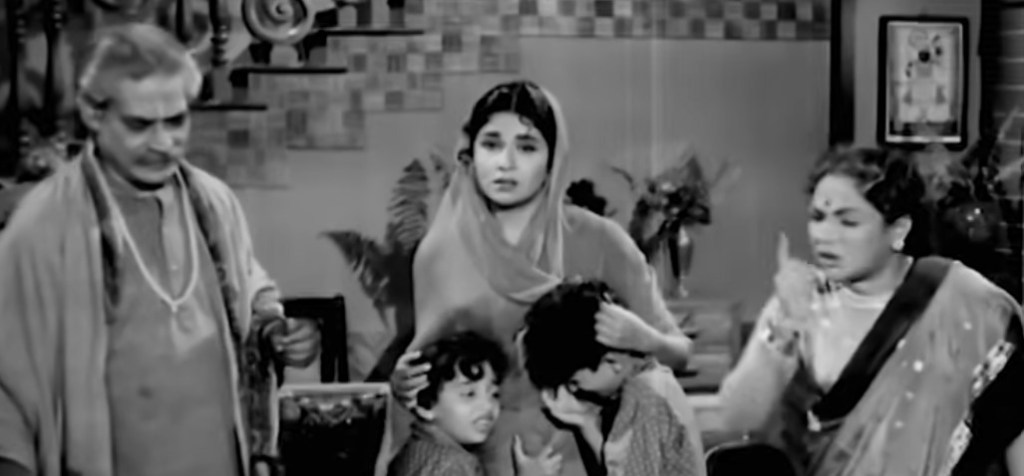
Kamal lectures his father to raise his voice and not leave everything to the will of God. Ramdas finally acts and goes to the extent of beating Shanta. Going forward, he will take charge of the house. Gauri will not be a servant of the house and new staff will be engaged immediately. Bhairavi goes with Sarang to their home and reconciles with her father in law. Ramdas also takes charge of the office and bars Kaliash from coming there or borrowing money.
Sita delivers a boy but Kailash doesn’t care. Kailash comes to know its Ragini’s birthday but he doesn’t have money to buy her an expensive present. He goes to Sita and demands the necklace he had gifted her. Sita hands him the box but but it is empty. (Unknown to them it had been “borrowed” by Bhairavi). This leads to further frustration for Kailash and he blames Sita and her character. His father, mother, brother – everyone makes an attempt to make him see reason. Sita tries to commit suicide but Kamal saves her.

All the melodrama continues until the misunderstanding is cleared at the end.
The Music


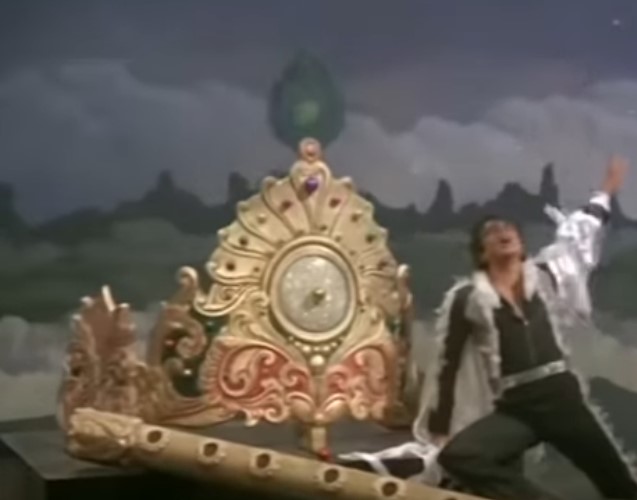
Gharana had some good songs by Shakeel Badayuni (lyrics) and Ravi (music). The ones that stand out are Mohammed Rafi’s Husnawale tera jawaab nahin, which has some weird choreography. Then there are 2 duets by Mohammed Rafi and Asha Bhosle – the romantic Jabse tumhein dekha hai ankhon mein tum hi tum ho, and the devotional duet Jai Raghunandan Jai Siya Ram. And finally, the delightful Dadi amma dadi amma maan jaao, sung by Asha Bhosle and Kamal Barot.

My Thoughts
Gharana could have been a fun film if not for all the melodrama. I was expecting Asha Parekh and Rajendra Kumar’s characters to team up and rebel against their tyrannical mother. That would brought some drama to the proceedings. But this hardly happens and the plot remains monotonous. Shanta is an extremely hard nut to crack.
The misunderstanding between Kailash and his wife is not convincing. If only he had talked to his “goddess” wife and brother it would have sorted matters and saved the audience from the agony. The Sita character is unbearable and she keeps preaching about the devotion of a wife, respecting one’s parents and so on. (Thankfully) Rajini’s character is not of a filmy vamp. She genuinely wants to help Kailash and make him see sense but fails like the others.
The film drags on but it seems the audience was happy with the result and made it a hit.











 Cine Gaurav