Category Archives: My Reviews

Itni Si Baat (1981)

Itni Si Baat means “such a small thing” or “a minor matter.” But a small thing can easily escalate into something big with a not so happy outcome. The same thought is portrayed in this movie where Sanjeev Kumar and Moushumi Chatterjee play a happily(?) married couple. It is said Sanjeev Kumar was the actual producer of the movie but does not feature in the credits. The director is Madhu M. So over to small things…


The Plot

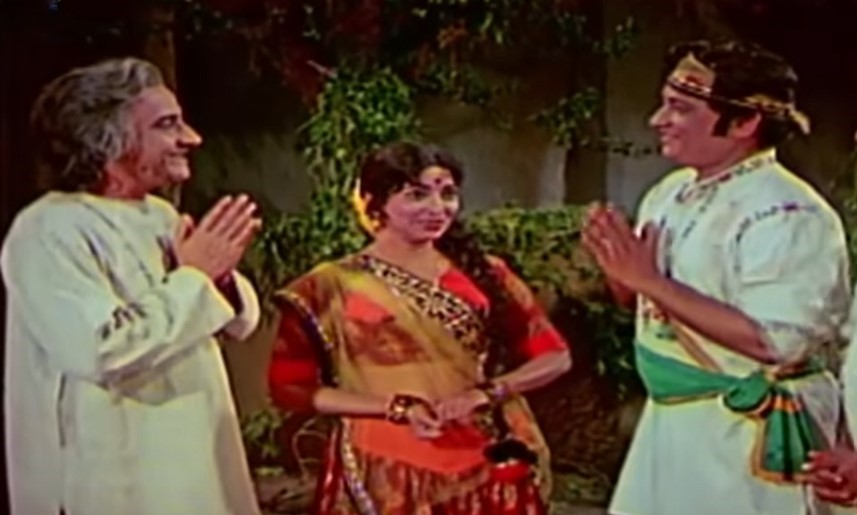
Our hero Raja (Sanjeev Kumar) lives in Mumbai. He travels on the same bus with a girl named Asha (Moushumi) everyday. Raja has feelings for Asha but is unable to voice them. One day Raja boards the bus and gives the conductor a 100 rupee note (the bus ticket costs 50 paise). Unsurprisingly, the conductor gets angry. Listening to their heated exchange, Asha steps in and offers to buy Raja’s ticket. Asha and Raja get down and Raja thanks her. Raja requests her to have a cup of tea in a nearby restaurant so that the change for the 100 rupees can be arranged and he can return her money. She agrees. But things are not different at the restaurant. The manager is scolding a customer for handing a 10 rupee note and not having the exact change. Raja realizes the situation and Asha again obliges by paying on his behalf (bill = 50 paise!).

Then Raja requests Asha to take an auto-rickshaw ride with him. He attempts to get change from the rickshaw driver but one look from the man at the 100 rupee note is enough for Raja. Asha pays the Rs 1.50 fare. Later, Raja sights an ice-cream shop. He asks if he can get change and the owner is more than happy to oblige. Unfortunately, Raja drops the 100 rupee note on the road and Asha once again ends up paying for him (bill = Rs. 2). Thus Raja ends up owing Rs 4.50 to Asha.

Next day, they meet again in the bus. Change is not an issue that day but the bus breaks down. Coincidentally, they get in the same auto as the previous day (Raja calls it “scooter”) to reach their destinations. Apparently, both have been traveling in the same bus for last 6 months and are interested in each other. They finally admit their mutual feelings and start singing a romantic song; the credits start rolling. During the course of the song, they get married and have 2 kids -Munni (Baby Geeta) and Bablu (Master Gautam).

Thus Raja and Asha have settled down happily with kids. But are they really happy? They live in a rented house without any luxuries. Even the wall clock is waiting to be fixed (it always points to 6.15). Raja earns a low salary and it is difficult to manage the monthly budget. Luxury is something only in their dreams. If only he could earn more.

Its morning time. Asha prepares tea for Raja but there is no sugar. He asks her how did it get over so soon. Is she incapable of managing such a simple thing? She responds that he brings his friends home without informing and she has to serve them tea and sweets. She asks him to earn more money if he wants her to manage these expectations. This is her daily struggle. She labours at home while he goes to office and enjoys under the ceiling fan.

A frustrated Raja reaches office late (he has to change 2 buses which is another problem). Waiting to welcome him is his irritable boss (Asit Sen), who is an old man with a very young wife (it’s wife no. 3). As expected, the boss lectures him for coming late. Also working in the office is the boss’s brother in law (Roopesh Kumar), a good for nothing fellow. His only job is to flirt with women in and out of the office and is always on the lookout for a fresh target. Poor Raja voices his home and office frustration to his colleague Anil. Anil tells him to purchase a 2 wheeler so he can reach office on time and avoid the dependency on public transport. Raja thinks it over.

Asha is equally frustrated at home. There is no gas connection in their house. Cooking in the traditional way using the chulha leads to unavoidable delays. She will request Raja to arrange a gas connection, so the cooking problem can be solved.

We are introduced to Asha’s parents. She comes from a rich family. Mukundilal (Om Prakash) is a halwai (confectioner or sweet maker) by profession. He used to work for Nathuram halwai and ended up marrying his daughter (played by Ashoo). Apart from Asha, they have a son Anand (Arun Govil).

Anand’s girlfriend is Radha (Tamanna), who works in Raja’s office. Her father is a classical singer Darbarilal (Madan Puri). There is a so called comedy side plot where Darbarilal needs to get convinced before he gives the green signal for Radha’s marriage with Anand. Anand doesn’t want Darbarilal to know that his father is a halwai as it does’t match Darbarilal’s stature and expectation.

Back to Raja and Asha. Due to the morning fight, Raja had left for office without taking his lunch. Due to delay, Asha is unable to prepare the full lunch and packs the hastily made khichri. She requests their helper cum servant Bansi (Dinesh Hingoo) to deliver the tiffin to Raja. Raja is desperately waiting for his lunch to arrive and notices his peon has many delicacies in his tiffin. His peon gives credit to his wife for managing to do this in spite of his meager salary. Raja is further frustrated when he hears this and compares with his own situation. The arrival of Bansi with the khichri tiffin rubs salt into his wounds!

But the truth is Raja and Asha still love and respect each other. They reconcile at night. But matters are going to get worse.

Raja tells Asha about his plan to purchase a scooter and she tells about her gas connection requirement. Finally, Raja brings home a second hand scooter. The gas connection will be arranged in a few months once he receives his bonus. Asha is not very happy but agrees to the arrangement. The root cause of their problems is money and she is waiting for the day when Raja will earn more and they can lead a better life. They have a new neighbour Meena (Kanan Kaushal), who seems to be a leading a comfortable life with her husband. Asha hopes for a similar day in her life as well.

And Raja is presented with a golden opportunity. The office is going to open a new branch. If Raja can impress his boss, he can become the manager of the new branch. Raja invites the boss and his wife for lunch at his house. Asha is supportive, she slogs and prepares a delicious meal. But tragedy strikes. Bansi informs her that he saw Bablu gambling when he should be in school. She rushes to take stock of the situation leaving the door open (there is no one else at home). Unfortunately, a cat and a dog make a mess of the food. Asha returns and is shocked to find the state of the kitchen and the food. The boss will be arriving any time. She explains the situation to Raja, who is extremely angry at her behaviour. She counters him stating their son’s future is important for her. But Raja is no mood to listen and blames her for screwing up his future. He even uses some unflattering terms for his boss. Unfortunately the boss arrives and hears everything. He leaves in a huff and asks Raja to forget his promotion and be ready for a demotion.

The matter is about to settle down but that does not happen. Raja compares Asha with his friend Anil’s wife who has manages their finances effectively, and has set up their home so beautifully with all comforts. Later, Asha insults Raja in front of their neighbour Meena. Meena works in a private firm and manages to earn Rs 2000 per month. She is a woman and is earning much more than Raja. So, the grass looks greener on the other side.

Raja decides to teach Asha a lesson and make her realise that earning money is not easy as she thinks. He will show her he can mange the house more efficiently. Thus he proposes a reversal of roles. Asha will be the working “woman” whereas he will stay home and manage the house. He is serious and Asha reluctantly agrees to all this. In a fit of anger, she challenges him she will be successful and will be earning more than him.

So, who will succeed? As expected there are some hilarious consequences of the role reversal. But is the grass really greener or there is a reality check ahead for both of them?

The Music

The lyrics are by Anjaan and music by Kalyanji Anandji. There are 5 songs but none have much recall value.

My Thoughts

The film plot is predictable but the performances keep the viewer interested. The highlight of Itni Si Baat is Sanjeev Kumar’s portrayal of Raja. Playing the initial romantic to the later helpless and frustrated character, he again proves what a marvellous actor he is! He is too good in the lighter scenes. And the sudden transformation in his angry reactions is worth watching. He is complemented by Moushumi Chatterjee and they share a wonderful chemistry. Dinesh Hingoo and Asit Sen are effective in their small roles. The comedy side plot involving Asha’s family is really unnecessary.

Putra Whava Aisa (1961)

Films focusing on the mother-child relationship are fairly common. There is a self sacrificing hard working mother who wants to have her child (normally, a son) grow up, become rich and famous, and make her happy. She has no other wish. Whether, and how the son fulfils her expectation makes up for rest of the story. Putra Whava Aisa (loosely: the ideal son) is based on the same plot. Directed by Raja Thakur, the film manages to leave its impact without following a preachy approach on its subject.


The Plot

The opening scene shows a school function depicting its 12th anniversary celebrations. Dadasaheb (Dada Salvi), a well known businessman from Mumbai is the chief guest. A student Avinash Kulkarni (Ashok Senjit) is called to recite a poem of B B Borkar. He sings Tethe kar majhe julati. Dadasaheb is moved by the performance and gifts him a gold medal.

An overjoyed Avinash rushes home to share his achievement with his parents. His mother (played by Ratnamala) is impressed and blesses him to continue his hard work. She has only one dream to see him grow up and become a successful man. She has endured a life of hardships and seeks a better future for her son.

His father, unfortunately is not a worthy man and doesn’t share his mother’s thoughts. He sells the hard earned medal and returns home drunk. Avinash’s mother is angry and lectures him. He starts beating her. Avinash reacts and hits him with a water pot. Sadly, his father collapses and dies. Avinash and his mother are shocked by the event. But his mother calms down and warns him to never speak about this matter to anyone. She asks him to go and stay with his uncle (mama) till further notice.

Avinash rushes to his uncle’s house. He explains his father has passed away and mother is alone. His uncle decides to visit his mother and look into the matter. Meanwhile, his mother confesses the crime and is taken into police custody.

His uncle has a daughter named Shaku who gets on very well with Avinash. She is excited to have Avinash staying with them. Few days later his uncle asks him to get ready. He takes him to the court where his mother will be brought for sentencing. He asks Avinash to wait outside and not call or talk to his mother unless he is called for. That is the moment of truth for Avinash. He comes to know his mother has confessed the crime she did not commit. She has been sentenced to 12 years of imprisonment. Uncontrolled by emotion, he rushes to meet her before she is taken to prison. His mother realizes he might blurt out the truth in his hyper state. She slaps him and warns him to remain quiet. His aim should be to become successful in life. She will await that golden day when she can point towards him proudly and tell people that he is her son. But for now, separation is inevitable.

So, Avinash returns to his uncle’s house but his aunt has other plans. Being a practical woman she makes it clear they have an additional mouth to feed. They are unable to afford his education expenses. He will be expected to drop out from school and do household chores if he wants to continue staying with them. Shaku offers to drop out from school and let Avinash continue his studies, but her mother shuts her up.

Avinash knows he has to continue his studies to live up to his mother’s expectation. He decides to leave or rather run away from his uncle’s house. He boards the steamer and reaches Mumbai. There he enters a bungalow and is attacked by the pet Alsation. A girl called Nalini rushes to save him. She takes him inside the house and asks her aunty to treat him immediately. Her father arrives who is none other than Dadasaheb. Dadasaheb recognizes Avinash as the deserving school student who had been gifted the gold medal. Avinash informs he is now an orphan and he is ready to do any work to continue his education in Mumbai.

Dadasaheb is impressed and offers him a helping hand. He makes all arrangements to take care of Avinash. He is accommodated in the bungalow’s outhouse. Dadasaheb tells him that he deserves to be successful. He only worships two things in life – virtues or merits and truthfulness. He cannot stand people who lie to him.

Thus Avinash settles down. He develops a close bond with Dadasaheb and Nalini. As expected he performs brilliantly in academics and becomes an engineer. The grown up Avinash is played by Vivek. Nalini has grown up into a charming woman (played by Jeevankala). Dadasaheb invites him to join his construction firm and hands him charge of the office. It is all smooth sailing.

Avinash settles down in his new role. He loves his work. Another important character is introduced at this point. There is a young typist (played by Ratna) working in the office. She is a widow who lives with her mother. In their first meeting, Avinash scolds her for coming late. She explains later that her mother is not keeping well and he mellows down.

Amidst his progress, Avinash has not forgotten his mother. He goes to meet her and inform about his achievements. He explains how he came to Mumbai and Dadasaheb helped him to become the person he is today. She is gratified after hearing all this. He has fulfilled her expectations as an ideal son would do. She will be released soon and they look forward to reunite and lead a happy life.

Dadasaheb proposes that Nalini and Avinash should get married. Avinash is happy but worried. He has lied to Dadasaheb of being an orphan. Dadasaheb, being a man of principles will never accept this. Avinash is in a dilemma. On one hand is all his success, Dadasaheb and Nalini outweighed by his mother on the other side. What path will he choose?

The Music

Vasant Prabhu delivers melodious tunes to the lyrics of B B Borkar, P Savlaram and Dr Avasare. B B Borkar’s poem Tethe kar majhe julati is voiced by Asha Bhosle.

P Savlaram has written 4 songs. Aai kuna mhanu mee is a soulful rendition by Asha Bhosle. There are 2 Suman Kalyanpur solos – the beautiful Yaman composition Jithe sagara dharani milte and Baghata hasuni tu mala. And surprise, the fourth song Yash he amrut zaale is sung by none other than Talat Mahmood. This was the first time he was singing in Marathi and won the Maharashtra State Award for best playback singer.

The last song Swapne Manatali by Dr Avasare (Shanta Shelke used this pen name due to some compulsions) is a sad duet by Talat Mahmood and Suman Kalyanpur.

My Thoughts

The film avoids going in the melodramatic mode which is commonly seen in these mother-son relationship movies. This is a simple story and there is no villain or vamp in the plot. The hero’s dilemma is handled effectively leading to a satisfactory ending. The actors perform to their abilities. The music is memorable going with the times.

Munimji (1955)

My introduction to Munimji (meaning accountant) was because of its songs, primarily Jeevan ke safar mein raahi which appears in 2 versions. The movie was made under the prestigious Filmistan banner, directed by Subodh Mukherjee. Nasir Hussain is credited with the screenplay and dialogues, who became a successful producer and director with films like Tumsa Nahi Dekha, Jab Pyar Kisise Hota Hai, Phir Wohi Dil Laya Hoon and Teesri Manzil. Starring Dev Anand, Nalini Jaywant, Nirupa Roy and Pran, the film stays afloat because of its star power and music.


The Plot

The first 30 minutes are complicated as the film tries to set the tone. The opening scene shows the police discussing the whereabouts of a dacoit known as Daaku Kala Ghoda and his gang. They are planning to set up a police chowkey near the edge of the jungle. Inspector Sharma is assigned this job. In the very next scene we see the dacoits looting the helpless villagers. Helping them is a young girl Bela (a very young Ameeta), who entertains the crowd with her dancing (reminded of Mera Saaya: Jhukma Gira Re?) while the dacoits attack and loot the unsuspecting crowd. The leader of the dacoits is Kala Ghoda (Pran) and the girl Bela is his wife. He has a tattoo of her face on his hand. Later, Kala Ghoda gets shot by the police and he arrives at his hideout injured.

The scene moves to a house. Malti (Nirupa Roy) is a servant at the house of Captain Suresh. She is worried that the Captain’s son Ratan had gone hunting and not returned for 2 days. It’s his birthday the next day. Ratan is actually Pran, who is also the dacoit Kala Ghoda. A man with 2 identities.

The Captain has got a watch as a gift for Malti’s son Amar, who is celebrating his birthday that day. Malti had totally forgotten about her son’s birthday. Apparently, she has been showering all her affection on Ratan, treating him as her own son. Ratan’s parents have passed away and the Captain has brought him up as his own son. Ratan has been made the factory manager and is engaged to the Captain’s daughter Roopa. Captain leaves for the factory after informing Malti that Roopa will be arriving tomorrow. She and her brother Shekhar have been staying abroad for some time.

Time for the “munimji” to enter. This is Amar (Dev Anand) who is Malti’s son and works as a munim in the Captain’s factory. He has a very unattractive appearance and speaks in a boring tone.

Malti hands him the watch and he admonishes her for forgetting his birthday. He accuses her of caring and worrying about Ratan all the time. Ratan has been ill treating Amar right from their childhood. Malti never scolded Ratan. It was Amar who had to bear the brunt and get punished. Ratan is a spoilt brat and treats Malti as a servant and nothing else.

The boys have grown up but Malti is not ready to leave Ratan’s house. Amar offers to seek a job elsewhere and take Malti with him but she is not agreeable. Why?

There is a reason for Malti’s behaviour. It’s flashback time. We see Captain and his friend Ramlal talking. Ramlal’s wife has passed away leaving their infant son in his care. As is common in Hindi movies, Captain promises that if he has a daughter, she will marry Ramlal’s son. The Captain leaves and Malti enters carrying a child. It seems Ram had married Malti but is not ready to accept her or her (i.e. their) son now. He calls her a neech aurat and throws her out of the house. But she returns with a plan for the sake of her son.

She manages to enter Ram’s house and switch the 2 babies. Ramlal comes to know the truth and threatens to kill her. She refuses to hand over his son. In the commotion, a snake bites Ram and he dies on the spot. Captain Suresh decides to take care of his dead friend’s son. Seems he employs Malti as a maid. Thus Malti became Amar’s mother (who was Ram’s son) and the servant of her real son Ratan.

Flashback over. Malti comes to know that there was a dacoity in the jungles of Neelgaon where Ratan had gone hunting. She begs Amar to go and search for him. He admonishes her again that she doesn’t care for Amar’s safety but wants him to bring Ratan home at any cost.

A reluctant Amar goes to the jungle and meets his (pet?) elephant. (He even has a pet monkey!). Amar dresses up as a sadhu and ventures to find Ratan. He comes across the police, who are in search of the dacoits and the injured Kala Ghoda. Amar meets Kala Ghoda alias Ratan (quite easily) and discovers his true identity. The injured Ratan (who had been shot earlier) is brought home and a doctor needs to be called immediately. Ratan has lost a lot of blood and Malti is ready to donate all the blood she can to save him. A doctor called “Dady” is brought to remove the bullet and do the blood transfusion. Ratan is saved. He is super angry when he comes to know that a servant has donated her blood and insults Amar and Malti. Malti is taken aback at Ratan’s behaviour.

It is next day and Roopa (Nalini Jaywant) arrives with her brother Shekhar (Madan Mohan). Captain Suresh welcomes his children. Also welcoming her on behalf of Ratan is Amar, the munim. He hands her a necklace sent by Ratan as a welcome gift. She is impressed by Ratan’s action but irritated by the munimji’s ramblings.

She decides to drive home in her own car and tells Amar to take back Ratan’s car. (As expected), Roopa’s car breaks down. She asks Amar (who had been following her) to repair the car and bring it home. She leaves in Ratan’s car. At this point, Amar removes his munimji disguise and we see a normal Dev Anand for the first time. He calls himself Raj.

He fixes Roopa’s car and overtakes her. She doesn’t recognize him in his handsome avatar as he has shed his munimji look. She thinks he is a thief and tries to follow him. But her car hits a tree and she gets thrown out, thankfully without injury. Amar/Raj explains that he fooled her servant munimji easily and “borrowed” the car. The poor munim has to walk all the way home.

Left with no option, Roopa is forced to travel with Raj. Raj, being the hero, sings a peppy song – Jeevan ke safar mein raahi.

Huff! That’s only half an hour into the movie. What happens next is not so unpredictable. Roopa is engaged to Ratan but gets drawn to Raj. When Malti comes to know this, she requests Amar to make the ultimate sacrifice – of giving up his love Roopa for the sake of Ratan. And he agrees for the sake of his mother! Ratan remains as he is. As Kala Ghoda, he even plans to rob his own father with the help of Bela.

The Music

The songs hold the movie together and appear as relief. S.D. Burman teams up with Sahir and Shailendra. Jeevan ke safar mein raahi appears in 2 versions – happy Kishore and a sad Lata version. There is a birthday celebration song – a dance performance Shivji bihane chale by Hemant Kumar depicting the marriage of Lord Shiva. The choreography by Sachin Shankar is impressive.

Geeta Dutt and Hemant Kumar team up in the funny song Dil ki umange hain jawaan. Geeta Dutt also sings a dance number Zindagi hai zinda.

The rest are Lata Mangeshkar songs. A light composition Ek nazar, bas ek nazar jaane tamanna dekh idhar. Then there is Nain khoye khoye signalling the love between Raj and Roopa. This is followed by Ghayal hiraniya main ban ban dolu (raag Mishra Kaafi) which is a classical masterpiece. The sad Aankh khulte hi tum chhup gaye ho kaha is a song of loneliness depicting the separation of the romantic couple.

My Thoughts

The movie relies heavily on its stars and music rather than its plot which has some ridiculous elements. Dev Anand performs both roles nicely. One of the helpless and irritating munim (Amar) and the normal Raj. Apparently he disguises himself as the munim because Ratan does not like him to look good and dress up smartly. Nalini Jaywant plays the rich and classy girl convincingly. Her chemistry with Dev Anand is good and she does well in the lighter teasing scenes as well as the emotional ones. Pran is in his usual element. How he becomes a daaku is not revealed. And strangely, the shrewd Captain is unaware of all this.

Nirupa Roy’s Malti is the most problematic character. She is ready to go to any extent to keep Ratan happy. It’s possible that her actions might have led to Ratan being what he was! She doesn’t realize she is mistreating Amar who is also her late husband’s son. Nirupa Roy was quite young when she did this role (and younger than Dev Anand, Pran and Nalini Jaywant!). She won the FilmFare best supporting actress award.

Madan Mohan (yes, the music director) appears in the small role of Nalini Jaywant’s brother but doesn’t have much to contribute.