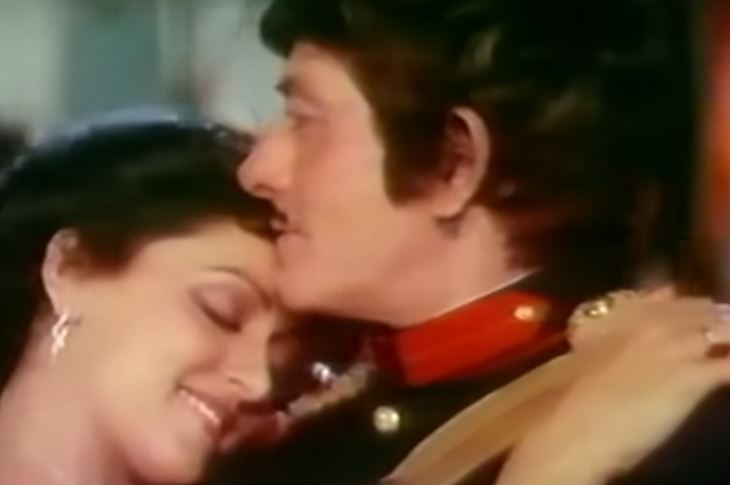
Mohammed Rafi – Teasing the Heroine songs

It has been a year already. Last year I had posted Describing the heroine songs remembering the great Mohammed Rafi, whose death anniversary falls on 31st July. Our heroes describe the beauty of the heroine in happier times but they also get into a naughty mood sometimes. This leads to some situations involving teasing or flirting with the heroine. While the heroine will be annoyed, the annoyance doesn’t stay that long. The hero is soon forgiven and romance walks in to take the story ahead.

The teasing / flirting can be expressed in different ways as evident from the songs in today’s post. Mohammed Rafi, being the versatile artist could mould his voice to fit any situation and leave his impact. So, here are 10 songs, all on different heroes. Which songs do you remember?


1) Song: Apni To Har Aah Ek Toofan Hai
Film: Kala Bazar (1960)
Credits: Shailendra | S. D. Burman | Mohammed Rafi

This is an unusual song set in a train compartment. Waheeda Rehman is travelling to Ooty with her parents. She and her mother have occupied the top berths while her father is sitting in the lower berth. Dev Anand is the fourth passenger, a stranger. He suddenly starts singing this song. The lyrics portray as if he is singing a devotional song to the uparwala (the almighty!) but that is not so. He is actually addressing the song to the heroine whom he wants to impress. (Unknown to her, he has been following her and wants to get close, as in fall in love).

This is a soft song with an undertone of teasing. The heroine keeps wondering the meaning and intention of the lyrics. Mohammed Rafi impresses by singing with an extra soft tone.

Apni toh har aah ek toofan hain,
Kya kare woh jaan kar anjaan hain,
Uparwala jaan kar anjaan hain,
Apni toh har aah ek toofan hain


2) Song: Aji Qibla Mohtarma
Film: Phir Wohi Dil Laya Hoon (1963)
Credits: Majrooh Sultanpuri | O. P. Nayyar | Mohammed Rafi

Joy Mukherjee was one of the those 60s heroes who was blessed to have Mohammed Rafi as his playback voice in majority of the songs. This is a playful song in Nasir Hussain’s movie. Joy Mukherjee and Asha Parekh are out in the countryside when the heroine’s friends arrive unexpectedly. She doesn’t know how to tackle the situation. And the hero embarrasses her further by singing this teasing number.

Aji qibla, mohtarma, kabhi shola, kabhi naghma,
Iss aap ke andaaz ka haaye kya kehna


3) Song: Hum Hi Se Mohabbat
Film: Leader (1964)
Credits: Shakeel Badayuni | Naushad | Mohammed Rafi

It is rare to see Dilip Kumar in a teasing and flirtatious mood and Mohammed Rafi adds an extra dimension with his singing. There is a long scene which culminates into the song. Dilip Kumar annoys Vyjanthimala to the fullest extent with his irritating antics. Her reactions are worth noticing too.

Hum hi se mohabbat hum hi se ladaai,
Are maar daalaa duhaai duhaai,
Abhi naasamajh ho uthaao na khhanjar,
Kahi mud na jaaye tumhaari kalaai


4) Song: April Fool Banaya
Film: April Fool (1964)
Credits: Hasrat Jaipuri | Shankar Jaikishan | Mohammed Rafi and Saira Banu

Biswajeet was another hero who immensely benefited by Mohammed Rafi singing for him. There are many romantic songs of this combination. Based on the April Fool’s Day concept, this is a typical song where the hero tricks and “fools” the heroine (Saira Banu). She is angry with him and he doesn’t miss the chance to irritate her further.

April fool banaya toh unko gussa aaya,
To mera kya kasoor, zamane ka kasoor,
Jisne dastoor banaya


5) Song: Lal Chhadi Maidaan Khadi
Film: Janwar (1965)
Credits: Shailendra | Shankar Jaikishan | Mohammed Rafi

How can a Mohammed Rafi list be complete without a Shammi Kapoor song? He probably sang the most number of teasing numbers for Shammi Kapoor. What a perfectly matching voice! In this song he refers to the heroine (Rajshri) as a red stick and bothers her as only Shammi Kapoor can.

Laal chhadi maidaan khadi,
Kya khub ladi kya khub ladi,
Ham dil se gaye ham jaan se gaye,
Bas aankh mili aur baat badhi


6) Song: Ae Nargis-E-Mastaana
Film: Arzoo (1965)
Credits: Hasrat Jaipuri | Shankar Jaikishan | Mohammed Rafi

This is a bit different song but with a teasing tone. The heroine (Sadhana) has some misconceptions about the hero (Rajendra Kumar). But they have been almost resolved. The hero voices his feelings by taunting her and listing down his “complaints.” She readily accepts them and this is the beginning of romance between the two characters. This was a period when Rajendra Kumar could do no wrong. His consecutive films were turning hits. Not the forget the contribution of Mohammed Rafi in achieving this success.

Ae nargis-e-mastaana,
Bas itni shikayat hai,
Bas itni shikayat hai

Samjha humein begaana,
Bas itni shikayat hai,
Bas itni shikayat hai


7) Song: O Dilbar Janiye
Film: Haseena Maan Jayegi (1968)
Credits: Prakash Mehra | Kalyanj Anandji | Mohammed Rafi

Compared to his brother Shammi Kapoor, Shashi Kapoor had a mild personality and you would normally not imagine him in such flirting with the heroine songs. But here he attempts to do that (and succeeds). He goes all out in chasing Babita and being a nuisance. Once again, Mohammed Rafi complements the onscreen happenings with his impressive rendition.

O dilbar jaaniye tere hain hum tere,
Chhupa lenge in aankhon mein,
Sanam hum gham tere


8) Song: Rukh Se Zara Naqaab Hata Do
Film: Mere Huzoor (1968)
Credits: Hasrat Jaipuri | Shankar Jaikishan | Mohammed Rafi

Like the first song, this has a soft and subtle tone. The film is set in Lucknow with all the tehzeeb and etiquette. So the flirting has to match, right? Mohammed Rafi sings for Jeetendra who flirts/ woos a burqa clad Mala Sinha. Jeetendra plays a poet (shaayar). There is no much moving around as the characters are travelling in a train. But the desired effect is achieved by the lyrics, composition and, of course the vocals.

Apne Rukh Per Nigaah Karane Do,
Khubsurat Gunaah Karane Do,
Rukh Se Pardaa Hataao Jaan-E-Hayaa,
Aaj Dil Ko Tabaah Karane Do,
Rukh Se Zaraa Naqaab Uthaa Do Mere Huzoor
Jalwaa Phir Ek Baar Dikhaa Do Mere Huzoor


9) Song: Chup Chup Chup Kyo Baithi Ho
Film: Hamrahi (1974)
Credits: Jan Nisar Akhtar | Kalyanji Anandji | Mohammed Rafi

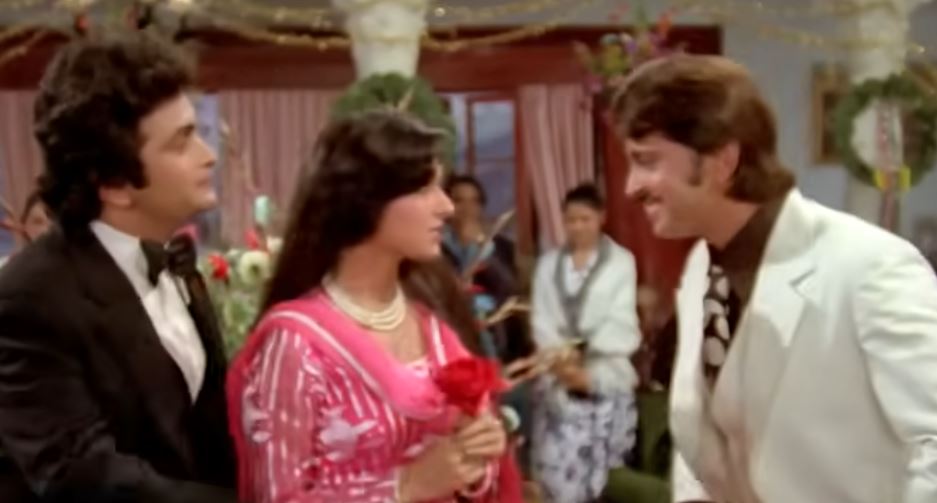
And here is another train song with Mohammed Rafi in a mischievous mood. Actually Randhir Kapoor in a flirty mood with his co-passenger Tanuja. Travelling together on a long journey, will our hero miss the opportunity?

Chup chup chup kyu baithi ho,
Main bhi akela or tum bhi akeli ho,
Tumsa haseen dekha nahi mujhsa jawaan hoga kaha,
Khatre bade hai in raho mein, ho aaja aaja meri baho mein,
Chup chup chup kyu baithi ho…


10) Song: O Meri Mehbooba
Film: Dharam Veer (1977)
Credits: Anand Bakshi | Laxmikant Pyarelal | Mohammed Rafi

And to end the list, a Dharmendra – Zeenat Aman song. He, a blacksmith and she a princess. Actually things have got sorted between the two but our hero has fun troubling her and plays a prank one last time. She detests him as he sings the song but that is temporary. By the end of the song all is forgiven and the romance is on track.

O meri mehbooba mehbooba mehbooba,
Tujhey jaana hai toh jaa teri marzi mera kya,
Par dekh jo tu ruth kar chali jayegi,
Tere saath hi mere marne ki khabar aayegi,
O meri mehbooba

Yaraana (1995)

What happens when you remake an English movie and add Hindi cinema elements without anticipating the outcome? The result is a mess like this movie. Inspite of a good story, actors and music the result is a disappointment. Yaarana is inspired from Sleeping With The Enemy (1991) starring Julia Roberts. During the same time there were two more remakes of this movie – Daraar (1996) and Agni Sakshi (1996). Yaraana was directed by David Dhawan, better known for the comedy genre. Unfortunately, the movie falters to make an impression and is one his forgettable offerings. The movie is best remembered today for its iconic song Mera piya ghar aaya o Ramji.


The Plot

The movie begins and we see Madhuri Dixit, dressed as a bride, running on the road in the night. Her character is called Lalita and she is being chased by her would be husband JB (Raj Babbar). Later, through a flashback we come to know Lalita is a talented dancer. JB had come to see her performance (Dil loye loye, aaja aaja mahi) and is mesmerized. Apparently, he is super obsessed with her. Lalita’s uncle Madanlal (Tez Sapru) works for JB. JB bribes Madanlal and proposes to get married to Lalita. Madanlal, being a shady character agrees willingly.

Madanlal hurries home to share the good news with Lalita and a neighbour “aunty” Mrs D’Souza (Sulbha Deshpande). Aunty is close to Lalita and a well wisher unlike Madanlal. Aunty and Lalita immediately smell a rat. Lalita accuses Madanlal of selling her off to JB and she will not agree to this marriage at any cost.

But JB is unrelenting. He forcefully brings Lalita to his house and treats her like a caged bird. While attending a party, he thrashes the photographer for taking photographs of Lalita. So extreme is his obsession. He warns Lalita that he “owns” her and there is no escape for her. Soon, the day of the wedding arrives. Lalita collapses in the mandap before the 7 pheras can be completed. JB sends for a doctor but Lalita manages to run away before she can be attended. Thus JB is chasing her, to take her back and marry her forcibly. The chase scene is impressively done.

Finally, he catches her but she slips away and enters a hotel. She sees some mannequins on display and gets an idea. She disguises as a foreign looking mannequin, with a wig and blue eyes (how she manages to replace the mannequin without attracting attention, how does she gets blue lens at short notice?.. is best answered by the director!).

We see a guest Raj (Rishi Kapoor) leaving the hotel in a drunken state. He looks at the mannequin, is impressed by her beauty and takes her with him, just like that. JB and the disguised Lalita cross paths but she is not recognized. The scene moves to Switzerland with an unwanted song Jaadu jaadu jaadu jaadu (there are many random and unwanted elements in this movie). Raj is too drunk to figure out whether he is dancing with a mannequin or a real girl. Lalita runs away as the song ends.

Now we are introduced to Raj’s family. This is a plot we have seen earlier. Raj’s grandfather dadaji Rai Saheb (Kader Khan) wants Raj to get married soon. He conspires with his friend and doctor Rashid (Anil Dhawan) and fakes a heart attack. Raj returns home and receives the sad news. Rashid tells Raj that he better get a “bahu” for dadaji, else he may not survive his heart condition. Raj doesn’t know what to do a decides to meet his friend Banke for advice.

The scene moves to a drama theatre. Banke (Shakti Kapoor) is the manager. Apparently his dancer has not arrived. The crowd is shouting Mohini Mohini (an obvious reference to Ek do teen from Tezaab). In steps Lalita and performs Mera piya ghar aaya, winning the crowd’s approval. After the performance, Banke thanks her for being a saviour. She calls him bhaiya and asks him to give her a job, which he does.

Raj enters suddenly. Lalita is scared he will recognize her as the mannequin cum foreign girl. But she is not wearing western clothes or the wig and Raj barely looks at her. Banke listens to Raj’s problem and understands they need to arrange a temporary wife for Raj. All this to pacify dadaji and make him feel better.

Next day, Lalita dresses up as the fake bahu and goes to Raj’s house. She is called Shikha. Dadaji is overjoyed to meet her. She takes his blessings and leaves. Raj hopes the matter will end here but dadaji has other ideas. He wants to meet Shikha again and make her stay with them. Raj is forced to go to Banke’s drama theatre and bring her back much against his wishes. Shikha shows reluctance but agrees to return. She settles down in her role and plays the perfect daughter in law, leaving everyone impressed. But for Raj, she is a nuisance.

There are other unwanted schemes in the pipeline. Banke makes Lalita meet Raj in the foreign girl’s disguise. She does so. This time she gives her name as Kavita Krishnamurthy. Raj falls in love with Kavita. He wants to marry her.

But dadaji wants to make Shikha his daughter in law as soon as possible. The track continues for some time. We also have Shikha’s fake parents (played by Sadashiv Amrapurkar and Himani Shivpuri) meeting dadaji and giving their consent for Shikha and Raj’s marriage. So Lalita acting as Shikha is troubling Raj all the time. On the other hand, she meets him as Kavita and romances with him.

Amidst all this, Raj is bound to find out that Shikha and Kavita are the same person, which he ultimately does! And Lalita has not told the truth about her past to Raj.

As things are getting sorted, it is time for JB to enter the scene again. He has been tracing Lalita. Will Lalita confess the truth to Raj and his family? What will be the consequence? Needless to say, the ending is predictable.

The Music

Anu Malik was heavily inspired when he composed the music and you can figure out the inspirations in most of the songs. There are many songs – Dil loye loye aaja aaja mahi, Jaadu jaadu jaadu jaadu, Rabbi re ralli, Noorani chehere wale, Mohabbat ki nazrein karam chahta hoon and Jaane woh kaisa chor tha, which were popular. But Mera piya ghar aaya remains timeless. Madhuri Dixit and Saroj Khan’s collaboration makes this one of their best remembered songs. Kavita Krishnamurthy won the Filmfare award for best playback singer.

My Thoughts

The title is not clear as Yaraana means friendship. Performance wise, all actors have done well. The problem lies in the mixing of 2 genres. It would have worked if it was a stand alone thriller or comedy movie. The comedy track involving fake heart attack, fake bahu, heroine in disguise have been seen earlier and seem stale. Not to forget the random songs which are a must in Hindi films. On the other hand, Raj Babbar’s obsession filled track is more impactful. This reminds us of other David Dhavan films like Aankhen, Shola Aur Shabnam which had well executed thriller/ drama filled scenes.

Rishi Kapoor and Madhuri Dixit make an odd pair. Raj Babbar is convincing as the villain. The supporting cast, most of them David Dhawan regulars, deliver as expected. This was a time when Switzerland had become the go to destination for Hindi producers. Most of the songs are shot in Switzerland and the locations would seem very familiar to the audience.
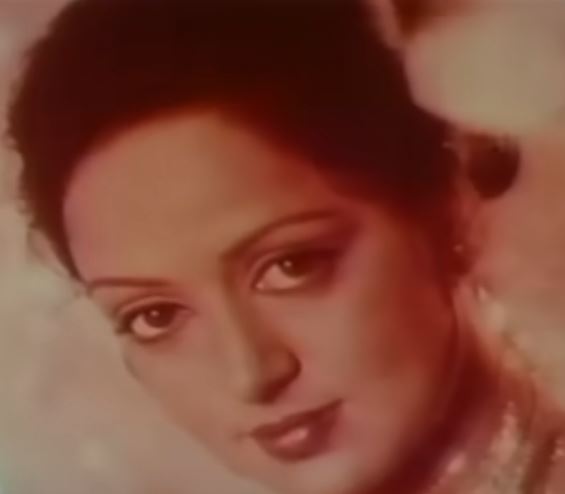
Aadhar (1969)

Aadhar meaning support is a Marathi film made by veteran director Raja Paranjape. It has been adopted from Shakuntala Gogate’s novel “Chandane Shimpit Jaa. ” It has an unusual storyline involving an older hero and a much younger heroine. This reminds us of another movie Jagachya Paathivar by the same director which has achieved classic status. Unfortunately, Aadhar leaves a lesser impact.


The Plot

The leading lady of Aadhar is Geeta (Anupama). She has married the man she loves Raju (Gajen Joshi) against their parents’ wishes. Raju hails from a rich family from Sangli. He is a college student and will be completing his graduation soon. Geeta works in an office. The house is run on her income, and she takes care of Raju’s education expenses. They stay in a small, rented house in Pune. The landlady is Geeta’s aunt and the only supportive relative after her marriage. In spite of their dire financial condition, Geeta supports Raju to the best extent, even gifting him some fabric on his birthday. They sing a romantic song in Saras Baug, Majhya re preeti phoola. Geeta loves him wholeheartedly and wishes he complete his studies and get a job.

But Raju is not as he seems. He is in contact with his parents unknown to Geeta. They send him a good allowance every month, which he spends on entertaining his friends, movies etc. They do not care about their daughter in law Geeta (who hails from a lower income family) but want their son to lead a comfortable life. One day, Geeta comes to know the reality when she sees a telegram from his father. She confronts him and they have an argument. Next day, on the pretext of visiting his parents, Raju leaves her forever. Through a letter, he admits everything. There had been other girls in his life before her. The only difference is Geeta made him marry her. He was never serious about their relationship. His parents have found a suitable match, and he is looking forward to settle down with the girl of their choice. There will be no obstacle in their divorce, and he is ready to pay alimony.

Geeta is devastated. Her aunt pacifies her. Geeta has some money from her father which she has not touched. She decides to utilize that, go to Mumbai and settle down there. She has many bitter memories in Pune and can’t stay there any longer. Accordingly, she manages to get a job in Mumbai and accommodation in a chawl.

Geeta is thought as snobbish by her office colleagues but thankfully that perception doesn’t stay for long. One of her colleagues and friend is Kishori (Lalita Desai).

Geeta leads a solitary life and doesn’t mingle with her neighbours in the chawl. There is a neighbour called Dinanath (Bal Kolhatkar), who is the chawl’s secretary. He attempts to befriend her but she rebutts him every time.

Dinanath conducts tuitions. One of the neighbour’s daughter Gooji (Neelam) is his student and flirts with him all the time. Her intention is to marry him. She even calls him “Naath” lovingly. Dinanath has no interest in her. There are some unnecessary “comedy” scenes between the teacher and his flirtatious student.

Dinanath longs to get close with Geeta. During the Ganesh festival celebrations, he invites Geeta to come and watch his performance (he sings a song Kaahi tari tu bol). But she deliberately avoids him and spends time with Kishori before returning late in the night. Dinanath feels insulted but Geeta doesn’t give a heed.

One day, Barrister Prabhakar (Raja Paranjape) visits Geeta’s office. As Kishori introduces Geeta, he is startled to see her. Later, Kishori informs Geeta that Prabhakar is a rich man. His wife has passed away 20 years ago. He loved her too much to think of settling down again. Geeta is impressed at hearing this given her own failed marriage and the character of her husband.

When Prabhakar returns home, we come to know the reason for his startled reaction. Geeta is a lookalike of his late wife Nirmala. It’s as if he saw Nirmala standing in front of him in the office.

Prabhakar and Geeta’s paths are going to cross soon. One day Geeta brings a stray pup to her house. She has rescued it from the clutches of the municipal authorities. The chawl residents oppose the entry of the new resident stating he will be a nuisance. The owner of the chawl hands over an official letter to this effect. Geeta and Kishori consult Barrister Prabhakar, who clearly states the law is not in favour of Geeta. Geeta accepts the reality and lets the dog go.

Later, Prabhakar sees Geeta drenched in the rain at the bus stop and offers her to drop her home. He realizes she has high fever and calls for the doctor. But her condition worsens. He requests Dinanath to call Dr Gupte (Vivek), who is his family doctor. Dr Gupte also notices Geeta’s striking resemblance to Nirmala. He treats her and confirms the case is moving towards typhoid. Prabhakar is shaken. Nirmala had passed away in similar conditions with the same disease. He doesn’t want the same fate to fall upon Geeta.

One day in the hospital, Prabhakar is lost in the thoughts of Nirmala and inadvertently tries to get intimate with Geeta. Geeta suspects his intentions and informs the doctor of her decision to get discharged. She is much better now and would prefer to go home. Additionally, she cannot afford to stay in the hospital due to her financial condition. Prabhakar visits her at home, and she attempts to pay back her treatment costs. Prabhakar apologises for his behaviour but she is no mood to listen.

The misunderstanding continues for some time. Prabhakar falls sick and Dr Gupte requests Geeta to visit him. She reluctantly does so. Upon entering his room, she sees Nirmala’s portrait and her doubts are soon cleared. Prabhakar is surprised to see her and requests her to leave. She apologizes for her behaviour.

He advises her to get married soon. He knows what it is to live alone without your partner as a support. She is young and has a long life ahead of her. He promises to do anything for her to see her happy. Her response is unexpected. Geeta proposes they get married and he is taken aback. After much drama, he agrees, and they are husband and wife.

Dinanath is one of the people who is not happy. He accuses Geeta of falling for Prabhakar’s wealth and making a selfish and hasty decision. She is the same person who had decided to stay away from any relationship after her prior experience. How could she change overnight?

Unfortunately, other people have the same thoughts and taunt the couple. They talk about their age difference and Geeta’s true motive. Things reach a point where Prabhakar suspects Geeta of having an affair with Dinanath (who is making all the moves to poison Prabhakar’s mind). All this leading to tragical circumstances for the couple.

The Music

The golden trio of G D Madgulkar,  Sudhir Phadke and Raja Paranjape once again collaborate for some memorable music. Majhya re preeti phoola is one of the most enduring duets by Sudhir Phadke and Asha Bhosle. 2 Asha Bhosle solos, Wara sute sukhacha and a sad song Khel kalena tujha are other gems. The fourth song is Kaahi tari tu bol by Vasantrao Deshpande.

My Thoughts

The music and direction are engaging. But the film has a depressing tone and moves at a slow pace. The scenes are long drawn and get boring. Anupama is effective but Raja Paranjape does not seem comfortable in the role of the hero. He wears a wig and his dialogue delivery is not clear. The chemistry seems forced between the 2 leads. It is difficult to comprehend Geeta’s sudden decision to marry Prabhakar. Later, Prabhakar (a barrister) is shown gullible enough to get suspicious about his wife. Can’t he confront his wife and clear the matter? The way he distances himself from the reality and relies on his own assumptions makes the character weaker.

The doctor character played by Vivek is wasted (maybe he could have played the hero more convincingly!). Dinanath’s transformation into a negative character is also not convincing.

The songs come as a relief but are few in number considering its a Raja Paranjape film. Maybe more songs could have helped to balance the dull proceedings.