“Yaad” Duet Songs

Yaad means memory or remembrance. It can be good or bad. In Hindi cinema, yaad is most commonly associated with separation. And mostly involving lovers or family members. When you leave or separate from someone, the best way to express yourself is through a song. There are so many songs on yaad and yaadein. In today’s post, we revisit some duet songs on this theme.


1) Song: Kahan Ho Tum
Film: Malhar (1951)
Credits: Kaif Irfani | Roshan | Mukesh and Lata Mangeshkar

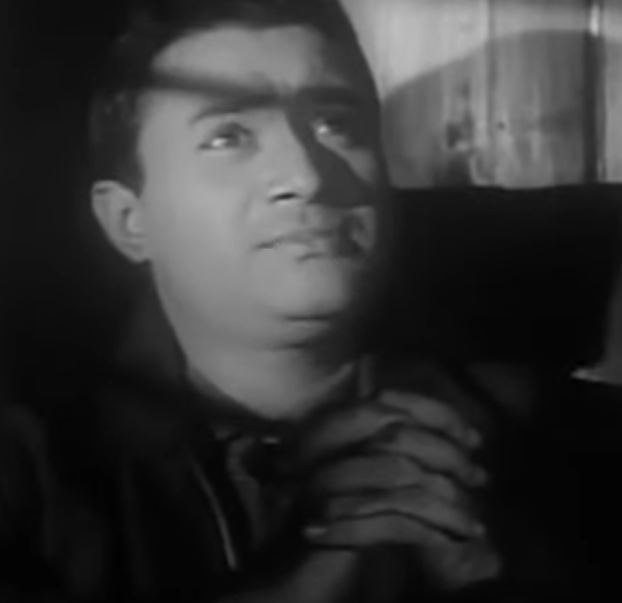
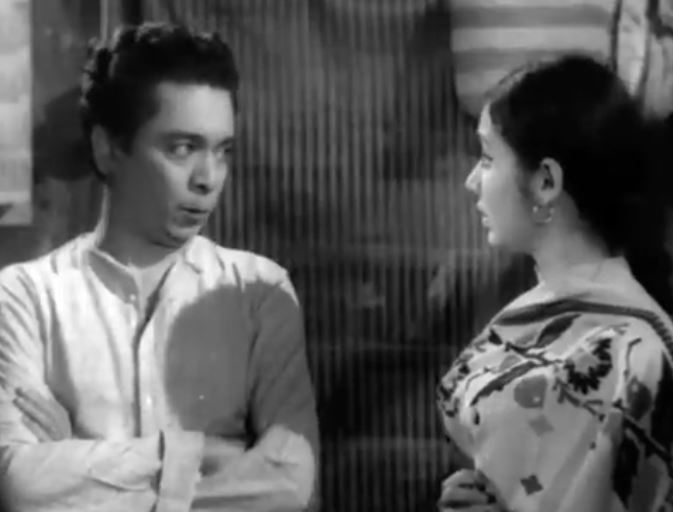
Malhar is an obscure film produced by Mukesh under the banner Darling Films(!). The only “yaad“of this movie today is its beautiful songs. This memorable song is picturized on Arjun and Shammi (the same Shammi who became famous as a character actress in later years). A sorrowful song and probably one of those which is best heard than seen!

Kaha ho tum, zaraa awaaz do, hum yaad karte hai,
Kabhi bharte hai aahe aur kabhi fariyaad karte hai,
Kaha ho tum…


2) Song: Yaad Kiya Dil Ne
Film: Patita (1953)
Credits: Hasrat Jaipuri | Shankar Jaikishan | Hemant Kumar and Lata Mangeshkar

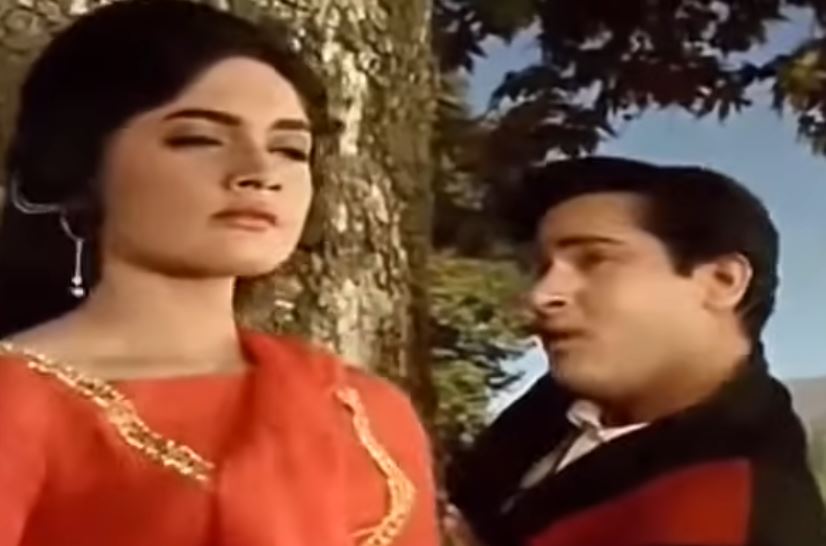
A classic composition by Shankar Jaikishan and one of those immortal duets. The voices blend nicely with the onscreen characters. Dev Anand and Usha Kiran enjoy some moments of bliss on screen.

Yaad kiya dil ne kahaan ho tum,
Jhumati bahaar hai kahaan ho tum,
Pyaar se pukaar lo jahaan ho tum,
Pyaar se pukaar lo jahaan ho tum


3) Song: Tumhe Yaad Hoga
Film: Satta Bazaar (1959)
Credits: Gulshan Bawra | Kalyanji Anandji | Hemant Kumar and Lata Mangeshkar

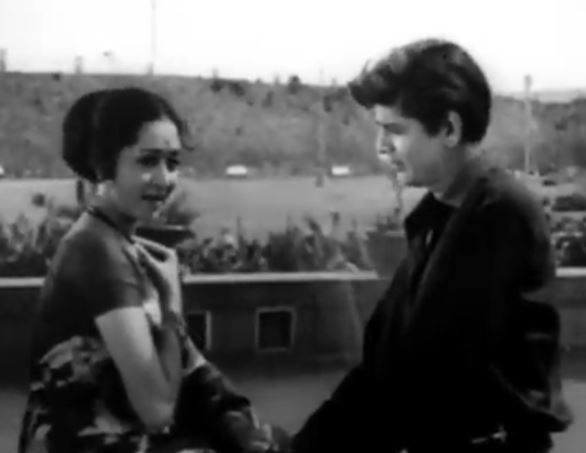
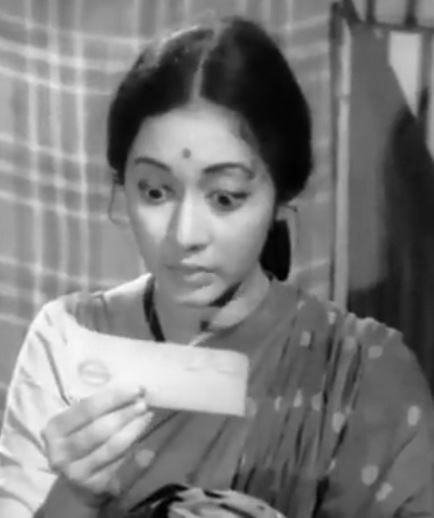
While the movie stars Balraj Sahni and Meena Kumari, the song is picturized on another young pair of Suresh and Vijaya Chowdhury. Similar to the song from Malhar, this is another song to be enjoyed in its audio version. A lilting composition by Kalyanji Anandji, enhanced by the soulful singing.

Tumhe yaad hogaa kabhi hum mile the,
Mohabbat ki raaho mein mil ke chale the,
Bhoola do mohabbat mein hum tum mile the,
Sapna hi samjho ke mil ke chale the…


4) Song: Aapne Yaad Dilaya To Mujhe Yaad Aaya
Film: Aarti (1962)
Credits: Majrooh Sultanpuri | Roshan | Mohammed Rafi and Lata Mangeshkar

Aarti had all good songs and this is another classic composition by Roshan. Meena Kumari is so expressive as she responds to Pradeep Kumar and joins him in the duet.

Aapne yaad dilaya to mujhe yaad aaya,
Ke mere dil pe pada tha koi gham ka saya,
Aapne yaad dilaya


5) Song: Woh Jab Yaad Aaye
Film: Parasmani (1963)
Credits: Asad Bhopali | Laxmikant Pyarelal | Mohammed Rafi and Lata Mangeshkar

This is one of the best songs of Laxmikant Pyarelal in their debut film with a combination of good lyrics and singing. Filmed on a forgettable couple of Mahipal and Geetanjali, this is a memorable song in raag Yaman. It describes the state of the separated characters.

Wo jab yaad aaye bahut yaad aaye,
Gham-e-zindagi ke andhere mein humne,
Chirag-e-mohabbat jalaaye bujhaaye,
Wo jab yaad aaye bahut yaad aaye


6) Song: Yaad Mein Teri
Film: Mere Mehboob (1963)
Credits: Shakeel Badayuni | Naushad | Mohammed Rafi and Lata Mangeshkar

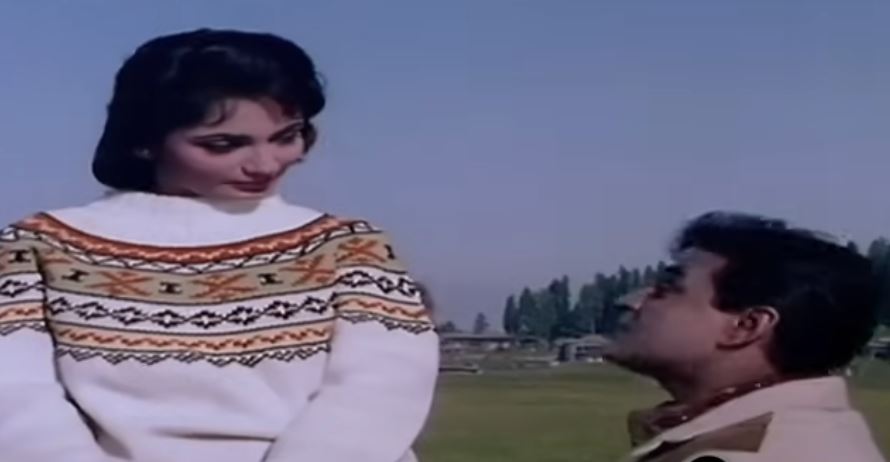
Mere Mehboob was another movie with one great song after the other. Rajendra Kumar and Sadhana play the romantic couple. This is a sad song about separation when the lovers are forced to move away from each other. Life is a sorrow when your loved one is not with you with only memories as your companion.

Yaad mein teri jaag jaag ke hum, raat bhar karwatein badalte hain,
Har ghadi dil mein teri ulfat ke, dheeme dheeme chiraag jalte hain, Jabse toone nigaah pheri hai, din hai soona to raat andheri hai,
Chaand bhi ab nazar nahin aataa….ab sitaarein bhi kam nikalte hain,

Yaad mein teri jaag jaag ke..


7) Song: Wo Din Yaad Karo
Film: Hamrahi (1963)
Credits: Hasrat Jaipuri | Shankar Jaikishan | Mohammed Rafi and Lata Mangeshkar

A light song talking about golden times. Mehmood and Shubha Khote are a married couple with kids. They remember the memorable times when they had lesser domestic compulsions. Life was so enjoyable then but alas change is inevitable.

Woh din yaad karo, woh din yaad karo
Woh chhup chhup ke milna, woh hansnaa hansaana,
Woh din yaad karo

Woh din yaad karo, woh din yaad karo,
Woh phoolon ki chhaiyyaan, woh mausam suhaana,
Woh din yaad karo


8) Song: Yaadon Ki Baaraat
Film: Yaadon Ki Baaraat (1973)
Credits: Majrooh Sultanpuri | R. D. Burman | Mohammed Rafi and Kishore Kumar

A duet which becomes a reuniting song for 3 brothers. The youngest brother (Tariq) sings the song which their family used to sing together every year. However their parents are killed and the three brothers are forced to separate. They remain connected by the memory of those times. After many years, through a coincidence, the 3 of them are at the same location. While Tariq sings, Vijay Arora joins in and identifies himself as his elder brother. The third brother Dharmendra is overjoyed to find his long lost brothers.

Yaadon Ki Baaraat Nikli Hai Aaj Dil Ke Dwaare,
Dil Ke Dwaare,
Sapnon Ki Shehnai Beete Deeno Ko Pukare,
Dil Ke Dwaare,
Ho O O Chhedo Tarane Milan Ke Pyaare Pyaare,
Sang Hamare….


9) Song: Naam Gum Jayega
Film: Kinara (1977)
Credits: Gulzar | R. D. Burman | Bhupinder Singh and Lata Mangeshkar

An iconic song because of the words “Meri awaaz hi pehchaan hai, gar yaad rahe“! From the pen of Gulzar. The song describes how things, events will come and go but ultimately its the voice which will remain eternal, only if remembered.

Naam gum jaayegaa,
Chehra ye badal jayegaa,
Meri awaaz hi pehchaan hai,
Gar yaad rahe…


10) Song: Yaad Aa Rahi Hai
Film: Love Story (1981)
Credits: Anand Bakshi | R. D. Burman | Amit Kumar and Lata Mangeshkar

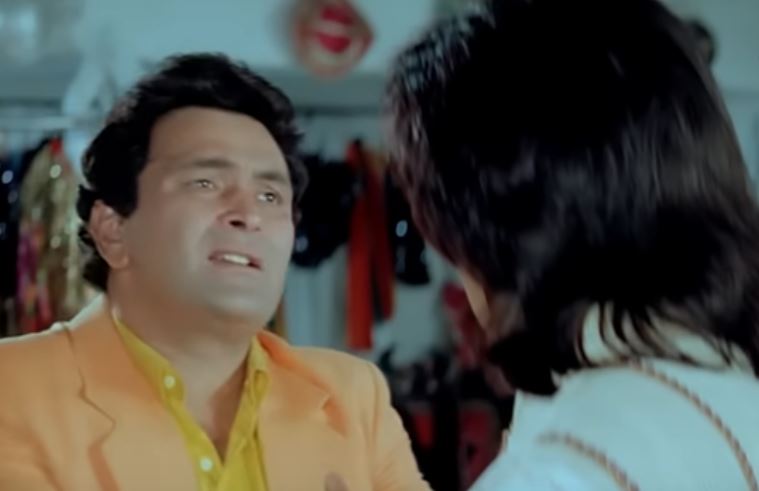
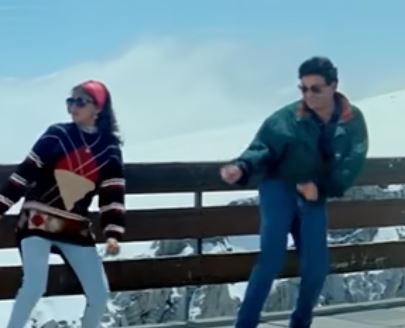
And to end the list a song between two young lovers. A typical situation where the boy meets the girl and hate each other. Circumstances lead them to spend time together. Later when they separate, the separation leads to the realization of love. They sing this beautiful duet remembering each other. Starring Kumar Gaurav and Vijayta Pandit. There is a solo version of the song for which Amit Kumar won the FilmFare award.

Yaad aa rahi hai, teri yaad aa rahi hai,
Yaad aane se, tere jaane se, jaan ja rahi hai

Lekin (1990)

The year was 1990-91 and there was a buzz around the Hindi movie Lekin. Produced by Lata Mangeshkar and directed by Gulzar, it won 5 National awards. Its music was famous and Yaara Seeli Seeli became synonymous with the movie. Lekin draws its inspiration from Rabindranath Tagore’s story Kshudhit Pashaan (Hungry Stones) and can be termed as a ghost/wandering soul story. I finally got the opportunity to watch this movie recently and write about it. (Incidentally, 08 June is Dimple Kapadia’s birthday, who played the protagonist in Lekin.)


The Plot

Lekin is set in Rajasthan and begins with the song Kesariya Balmaa playing during the title credits with views of the desert.

Vinod Khanna plays a Government officer Sameer Niyogi. He seems to be an avid collector of antique objects as is evident from his house full of such stuff. He is busy admiring his latest possession – a 200 year old lock when his superior Dr Sen calls him regarding an assignment. Sameer is to visit an old palace in Jasor, Rajasthan.

Thakur Amar Singh was the last Raja of this princely state, who went to England and settled there. His brother Param Singh took charge but was not an able administrator. The state had lost most its riches by the time it was integrated in 1948 after the country’s independence. Apparently, Param Singh went missing and the palace was sealed. After 40 + years, the Government was now seeking to open the palace and catalogue its items. That will be Sameer’s job.

Sameer boards the train to Rajasthan and settles in his first class compartment. The train stops at a station which is all wet due to rains, a rare occurrence in Rajasthan. The train is about to move when he sees a woman (Dimple Kapadia) clinging to the door. He invites her inside. She is dressed in rural attire and doesn’t speak a word but keeps looking at him. He asks her to relax and get down at next station to go to her compartment. He dozes off and gets up to find her gone. He notices she has got off a station called Puniya. He has a glimpse of her as the train departs.

The train reaches Jasor. He meets Shafi Siddiqui (Amjad Khan) who is the local collector. Shafi is his old friend and has a joking nature. His wife is Sharda (Beena). Shafi invites him to stay in his house. Sameer says he will be staying in the circuit house assigned to him.

Sameer and Shafi visit the palace to get a feel of the place. It has been opened after 40 odd years. Sameer has a feeling it has been lived in but Shafi rubbishes the claim. From the terrace, Sameer notices a group of banjaras (gypsies) have occupied the neighbouring land. He requests Shafi to clear the area.

Its time for Dimple’s entry again. She wanders around the palace singing a song of separation- Yaara Seeli Seeli. Sameer meets her in the palace. She has lit a fire and is cooking bajra rotis. He admonishes her for cooking in the palace grounds. The wall has turned black because of the flames. He recognizes her as the woman in the train and thinks she is one of the banjaras but they have already left the area. She says she is alone and offers him roti and gud (jaggery) which he accepts. It seems she has also opened the palace door which was supposed to have been locked.

A puzzled Sameer enters the palace. Its like stepping into a different era. The woman shows him around and he sees visions of a torture chamber, chains and blood on the wall, a girl being brought by the guards. The woman vanishes and he finds himself locked in the palace. He breaks the glass and manages to come out injured. Sameer is thoroughly puzzled. There is no trace of the woman. The place where she was cooking, including the wall is totally clean. Who is this mysterious woman? Is she is a ghost or a soul who wanders around the palace? He doesn’t even know her name.

Shafi and Sharda are puzzled as well when Sameer shares his experiences with them. They are worried about him. They visit a banjara basti to try and find the girl and do some investigation which doesn’t help much. Meanwhile work continues in the palace. A painting is found belonging to Param Singh.

That night Sameer finds he has lost the way to the circuit house when he meets the woman again. She asks him to light her lantern, he obliges. She shows him the way. He asks her about her vanishing act the other day. She said she herself is lost in the palace, with its so many doors. There is history all around, even the music of those times is buried there. She disappears again but leaves the lantern behind. Sameer finds out that the lantern is from the palace and part of the catalogued items. He is further intrigued. How did she get it? Who is she really?

Shafi and Sharda are worried. Sharda makes him wear a taveez (amulet/charm) to ward off the supposedly ghostly influence. Shafi asks the police to deploy some personnel near the palace.

Sameer is doing his own research and goes to Jaipur to get books on para psychology, rebirth etc. In the bookshop he coincidentally meets Prof B. N. Mathur (Manohar Singh) who is an expert in these areas. We come to know that Sameer had a girlfriend Pammi and they had separated a few years back. Prof Mathur is Pammi’s uncle.

Prof. Mathur takes Sameer to his house for discussing his case. Pammi (Moonmoon Sen) also comes in. Prof. Mathur explains that Sameer might be meeting the soul of a woman who is kind of stuck in time. She is seeking his help to be free. Till then she will keep wandering. She might be related to him in an earlier birth.

Meanwhile the soul sings another song Main ek sadi se baithi hoon. Sameer meets her again, this time in the desert. He praises her singing. She says she has learnt music from Ustad Meraj Ali (Alok Nath). Her village is across the desert. She is waiting for someone called Mehru who will help her to cross the desert. He had gone to Puniya. The shadows in the desert trouble her and do not let her pass. He offers her the taveez for protection, which she accepts.

Later, one night he sees a woman carrying a lantern. He is unable to trace her and he goes to the palace to find if the lantern has gone missing again. He is all alone in the palace. This time he hears someone singing and the woman comes forward. She tells him its her elder sister singing. The elder sister is Tara (Hema Malini). And her own name is Rewa. Thus the woman’s name is finally revealed.

We are treated to the song Joothe naina bole saachi batiya performed by Ustad Meraj Ali and Tara in front of Param Singh. After the song, Param Singh (Vijayendra Ghatge) asks Tara to stay in the palace for the night. Ustad realises his intentions are not clean. He goes to Tara and Rewa’s father and asks them to take the daughters and leave immediately. The camels are waiting outside. They will be safe once they cross the desert. They hurry and do as advised but are unlucky. Param Singh’s soldiers follow and attack the camels. Rewa’s camel manages to run away but their father and Tara are captured.

What follows is their father’s merciless torture and he is left to die in the desert. Ustadji and Rewa are imprisoned in neighboring cells. Param Singh is waiting for Rewa to grow up so he can fulfil his desire. Ustad and Rewa pass their time by practicing music and singing compositions like Rasool Allah, Jaa Jaa Re and Suniyo Ji Araj Mhariyo.

8 years later, Rewa grows up into a beautiful woman (Dimple Kapadia) and Ustadji fears for her safety. He designs a plan to rescue her from the clutches of Param Singh. He has sent word to a trusted aide Mehru to come and arrange Rewa’s escape.

Will Ustad Meraj Ali be successful? What happens to Rewa – why is her soul wandering all these years? And where does Sameer fit into all this?

The Music

With lyrics by Gulzar and music by Hridaynath Mangeshkar, the music has achieved cult status. It is said that the deteriorating quality of the music in 1980s motivated Lata Mangeshkar to make the movie, with music and lyrics being a strong focus. Lata Mangeshkar, Gulzar and Hridaynath won the National award for their efforts.

Lata Mangeshkar lends her voice to Yaara Seeli Seeli, Kesariya Balmaa, Main Ek Sadi Se, Suniyo Ji, and Jaa Jaa Re (a duet with Hridaynath Mangeshkar). Joothe Naina Bole, the dance number is sung by Asha Bhosle and Satyasheel Deshpande. The only male solo Surmai Shaam is picturized on Vinod Khanna with vocals by Suresh Wadkar.

My Thoughts

Overall, Lekin is a “heavy” movie. You need patience for the things to settle and enjoy. It is sluggish and picks momentum only when Rewa starts narrating about her family. But the story is engaging and maintains its mysterious tone throughout. It keeps hovering between the supernatural elements and reality. There are small details which are nicely tied up later. Gulzar’s poetic touch is evident in the direction. Music, of course is the winner. Rajasthan’s picturization adds it’s own charm.

Performance wise Dimple steals the show. Right from her first appearance to the unfolding of her character, her expressions and dialogue delivery are to the point. She delivers a convincing wandering soul character. This will rank as one of her best performances along with Rudaali. Vinod Khanna looks aged but is a good performer. Amjad Khan, Beena, Manohar Singh, Vijayendra Ghatge are all good. Alok Nath is in his usual character and Hema Malini appears in an effective guest appearance. Moonmoon Sen doesn’t add much and speaks Hindi with a fake accent.

Escapade in Japan (1957)

Escapade in Japan is a charming story of 2 young boys (one American and one Japanese) who run away from home and spend time traversing across Japan. Escapade means an adventure involving danger. Set in post world war Japan, it was made by RKO Radio Pictures; produced and directed by Arthur Lubin.


The Plot

At the beginning, we see the Manila international airport. A young boy Tony Saunders (Jon Provost) is travelling alone to join his parents in Tokyo. His parents are Dick Saunders (Cameron Mitchell) and Mary Saunders (Teresa Wright). His father has transferred to Tokyo after spending 2 years in Manila. Apparently the real reason of the transfer is marital discord. Dick had got involved with another woman in the Philippines while Mary was in the U.S.. Mary wants to clear up things with her husband before Tony joins them. She is planning to leave Dick and return to the United States with Tony.

Tony is enjoying his flight by reading comics and dozing. The plane develops a mechanical fault suddenly and begins descending. An emergency is declared. The plane is set to make a ditch i.e. an emergency water landing. After that the plane loses contact and it is not clear what whether it crashed, the passengers are safe etc. The U.S. air force has deployed nearby ships to search for the missing plane as its exact location remains known.

Tony’s parents arrive at the airport and come to know about the unexpected development. They go back home and wait impatiently for the plane’s and Tony’s whereabouts. Mary blames herself for leaving him alone in Manila.

But Tony is safe and sound! He is floating in the water on a life raft, wet and hungry but otherwise fine. Its a foggy morning. Tony’s raft is sighted by a young Japanese boy Hiko (Roger Nakagawa). Hiko is on a fishing boat with his father Kei (Susumu Fujita) and mother Michiko (Kuniko Miyake). The family is out fishing in the sea. They bring Tony on board, make him warm and feed him. Luckily, Hiko speaks English and starts conversing with Tony. Both the boys soon become friendly. There is a fun scene when Tony is hungry and “learns” the use of the chopsticks, courtesy Hiko.

After the fishing is done, the family returns to their home in the village. Hiko overhears his father telling his mother that he will inform the police to take Tony away. Hiko misundertsands the intention of calling the police. He tells Tony that the police will take Tony to jail and he will not be able to meet his parents. A worried Tony pleads Hiko to help him. A quick decision is made. Hiko decides to run away with Tony. They start their journey on a tempo loaded with vegetables with the intention to reach Tokyo where Tony’s parents have been stationed.

The village is some 3 hours away from Tokyo. After receiving news from the police and the air force officers, Tony’s parents arrive in the village to find the boys have gone. Tony as well as Hiko’s parents share the same difficult situation and try to pacify each other. They are all trying to comprehend what made the boys leave so suddenly.

The parents wait impatiently for the Japanese police to find the boys. It is night time and the boys are hungry. Hiko interacts with an elderly couple and gets food. Next day, they hop on a goods train. Hiko doesn’t know if the train goes to Tokyo but the intention is to get away from the police. Unfortunately, they are caught and asked to get off the train. They do so to find they have landed in Kyoto which is far off from Tokyo.

Thus begins their Kyoto tour and getting a slice of Japanese city life. They visit a couple of entertainment shows including a Geisha performance. After the show, they are met by a friendly Geisha. Hiko tells her that they are not lost but hungry. She asks them to come with her.

She takes them to the Geisha residence. Here the boys enjoy a luxurious bath and delicious food. Further they are entertained with a baseball themed dance. But Tony being Anerican has attracted attention. Later, Hiko overhears that the police will be called for in the morning and informs Tony. Its time to flee.

Next day in Kyoto, they see a bus full of school children. Apparently, its the children’s day out and they are undertaking the Kyoto city tour. Tony and Hiko join them and spend the day with the students and their teacher. They are enjoying the tour. Unfortunately, Tony’s picture has been published in the newspaper. Hiko shows it to Tony and they run away again. Meanwhile, Tony’s parents have reached Kyoto (the police had been informed by the Geisha). The hyper school teacher meets them and explains the situation.

The boys reach the railway station and manage to get in without tickets. They randomly board a train to Nara. We see the train to Tokyo on the neighbouring platform! The adventure continues leading to an exciting climax and reunion with the parents.

The Music

The music by Max Steiner is impressive and carries the mood of the movie. The Japanese music adds its own charm.

My Thoughts

The film is set in the post world war period when US forces continued their presence in the country. It does not make any political commentary but presents the Japanese in a positive light. In one scene, it is made clear that Japanese boys don’t have a habit of running away, nor do children get kidnapped. This points to the children being safe and taken care of even if they are alone, which is depicted in the movie.

There are some funny interactions between the 2 boys. The English language is hilariously termed as “American” by Hiko. In one scene, Tony is impressed that Hiko is learning English but ponders why he is not being taught Japanese. The boys wonder why cant everyone converse in one language, it would be so easy.

The story is kept simple and the boys do not encounter obstacles in the form of a villain as is commonly shown. The acting is casual. The pace is slow and you get a bit bored in the middle. There are many Japanese dialogues and it would have been interesting if they had subtitles to get a flavour of the conversation. The parents don’t have much to do except worry and wait but provide good support. The show stealer is undoubtedly Japan. Right from the the fishing village to the scenic country side and city shots capture 1950s Japan in its Technicolor splendour. Come and indulge…