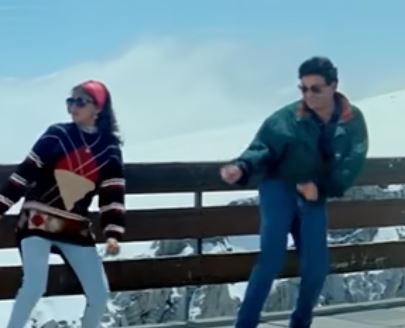
Laxmikant Pyarelal – Disguise and Deception Songs

Laxmikant Pyarelal (LP) were a prolific music director duo of Hindi cinema. They saw unprecedented success and continued to work together from the early 1960s till the late 1990s (Laxmikant had passed away on 25th May 1998). While they had their share of critics, it did not affect their whopping output, delivering one hit after the other across various genres. Similar to other music directors, they created their own brand LP, which had an enduring journey.

Hindi films have situations where the actors are involved in deception for various purposes. This may be to commit a crime, to fool someone, save someone and so on. And may involve the use of disguises. Overall, resulting in some entertaining situations for the audience. Today’s post covers such songs involving disguises and deceptions, all from the able hands of LP. Enjoy!


1) Song: Hansta Hua Noorani Chehra
Film: Parasmani (1963)
Credits: Asad Bhopali | Laxmikant Pyarelal | Lata Mangeshkar and Kamal Barot

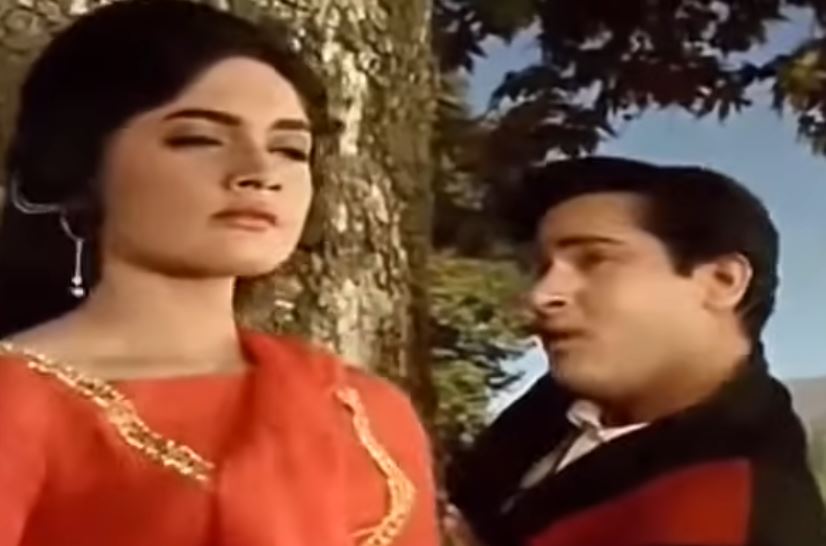
Lets start with LP’s debut film Parasmani, a B grade fantasy film. With songs like “Woh Jab Yaad Aaye“, “Mere Dil mein halki si“, “Hansta hua“, “Roshan Tumhi se,” it marked the arrival of LP as new music directors. The hero (Mahipal) in search of the parasmani reaches a strange land ruled(?) by a sorceress. He pretends to be in love with her and she believes the deception. She is happy and arranges an entertainment song through her magical powers. Apparently, LP felt this was a weak song compared to the others but this became the most famous song from the movie. Today, Parasmani is synonymous with this song, what say?


2) Song: Pyar Kiye Jaa
Film: Pyar Kiye Jaa (1965)
Credits: Rajendra Krishan | Laxmikant Pyarelal | Kishore Kumar

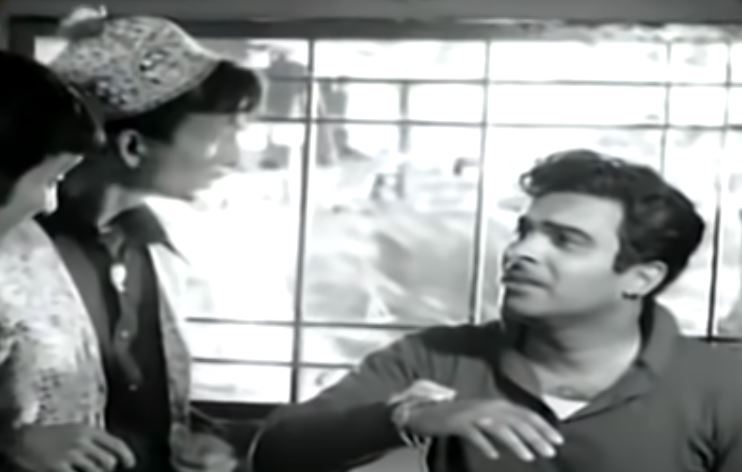
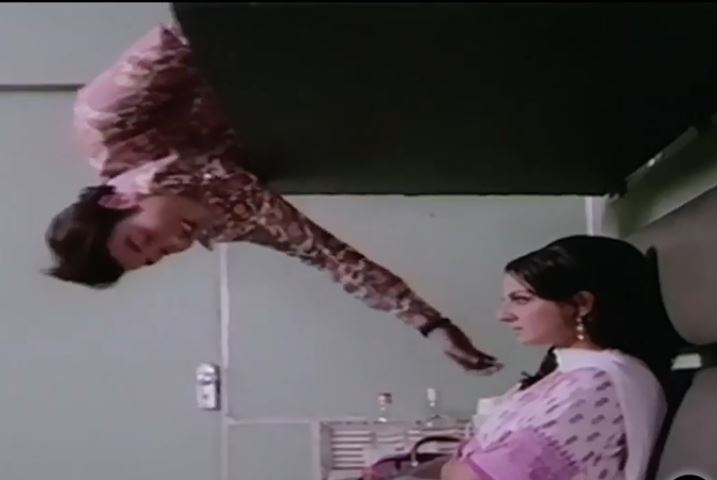
This delightful comedy film was a remake of a Tamil film. Here, we have Kishore Kumar masquerading as an old man for most of the movie. He teases the young heroine (Kalpana) who doesn’t know it’s her boyfriend behind the beard. LP gave some light compositions suiting the mood of the movie. They seem to give a free hand to Kishore Kumar in this song, who as expected excels in the singing and acting.


3) Song: Mera Naam Hai Chameli
Film:  Raja Aur Runk (1968)
Credits: Anand Bakshi | Laxmikant Pyarelal | Lata Mangeshkar

Based on the prince and the pauper plot of lookalikes getting interchanged, the movie had all great songs by LP. This is a situational song. A dancer (Kumkum) hatches a plan to free Sanjeev Kumar from the prison. She assumes the role of a gardener (maalan) and reaches the prison with her basket of flowers. In filmy style, she sings this catchy number, diverts the attention of the prison guards and gets closer to the prisoner. Seems its not very difficult to fool filmy security guards through such deceptions.


4) Song: Geet Tere Saaz Kaa
Film: Intaqam (1969)
Credits: Rajendra Krishan | Laxmikant Pyarelal | Lata Mangeshkar

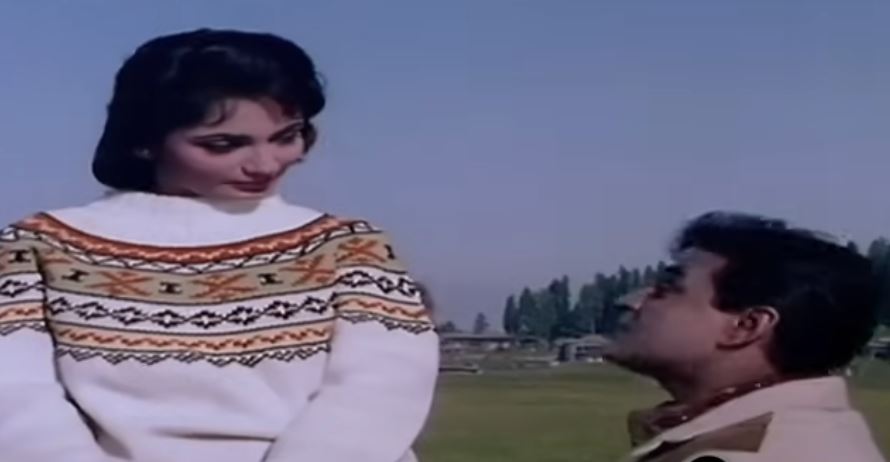
Deception for revenge would be the apt description of this song. Circumstances lead the heroine (Sadhana) to trap the hero (Sanjay Khan) and make him fall in love with her. All this to avenge the wrongdoings of the hero’s villainous father. The beautiful heroine sings the song and the hero enchanted by her voice (and beauty) gets drawn to her. This is a melodious song. Intaqam is better known for the Aa Janeja number, arguably one of few such songs sung by Lata Mangeshkar.


5) Song: Jaipur Ki Choli
Film: Gehri Chaal (1973)
Credits: Rajendra Krishan | Laxmikant Pyarelal | Kishore Kumar and Asha Bhosle

A not so famous movie but had some catchy numbers by LP. Jeetendra and Hema Malini disguise as dancers and visit Bindu’s house to trick her and get some vital information. They perform this folksy number and get closer to their purpose.


6) Song: Amar Akbar Anthony
Film: Amar Akbar Anthony (1977)
Credits: Anand Bakshi | Laxmikant Pyarelal | Kishore Kumar, Mahendra Kapoor and Shailendra Singh

A crazy but one of the most entertaining movies from Manmohan Desai complemented by fun songs from LP. Based on the lost and found formula, the three brothers from different religions reunite (in disguises) in this climax song. Once again, LP gave some evergreen songs and won their fourth Filmfare award for this movie.


7) Song: Hum Banjaaron Ki Baat
Film: Dharam Veer (1977)
Credits: Anand Bakshi | Laxmikant Pyarelal | Kishore Kumar, Lata Mangeshkar and Chorus

Same year, another Manmohan Desai movie. This time a plot of lost and found twins. The songs are a bit weak compared to Amar Akbar Anthony. This is another escape via deception song. Dharmendra is imprisoned by Zeenat Aman. Jeetendra (a prince) gets the help of gypsies (banjaras) to get him freed. He pretends to be a dancer with Neetu Singh and they perform this hit song. This is one of those songs with a grand set and an equally grand musical composition, courtesy LP!


8) Song: Band Aankh Se Dekh Tamasha
Film: Parvarish (1977)
Credits: Majrooh Sultanpuri | Laxmikant Pyarelal | Kishore Kumar, Amit Kumar and Chorus

And one more Manmohan Desai movie with all the masala elements of lost and found, crime, revenge etc. Almost all songs from this movie involve some disguise or deception! Hum premi prem karna jaane and Jaate ho jaane jaana are more famous compared to this song. In this song, Amitabh pretends to be blind. He visits his brother Vinod Khanna who teaches in a blind school. In reality, Vinod is a smuggler. Amitabh joins the blind students on a boat tour. But his purpose is to catch his brother red handed while completing a smuggling operation in the sea. It is fun to note that Vinod Khanna “teaches” a song to the students by playing the tape recorder while he completes his smuggling job in a nearby boat. The things that happen in movies!


9) Song: Hawa Hawai
Film: Mr. India (1987)
Credits: Javed Akhtar | Laxmikant Pyarelal | Kavita Krishnamurty and Chorus

A delightful movie that became a cult classic. And what an iconic composition by LP! A reporter (Sridevi) overhears a conversation involving some villains and a dancer called Hawa Hawai. Being the investigative journalist, she presents herself as Hawa Hawai and performs this weird song.


10) Song: Choli Ke Peeche
Film: Khalnayak (1993)
Credits: Anand Bakshi | Laxmikant Pyarelal | Alka Yagnik, Ila Arun and Chorus

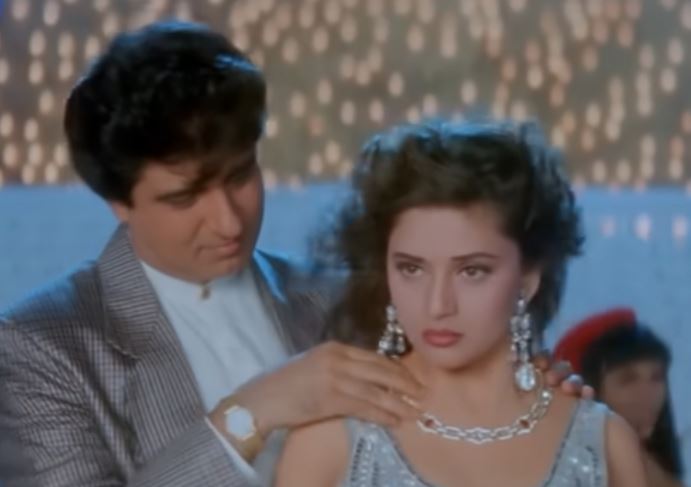
Sanjay Dutt is the Khalnayak. Madhuri Dixit is the policewoman tracking him in order to capture him. And being Madhuri, a dance performance is the best way to try and trap the offender. A controversial song but LP prove they still had it in them to give a chartbuster, 30 years after Parasmani. Indeed, this catchy rhythmic song has become synonymous with the movie. It also got the Filmfare awards for its singers.

Ek Gaon Bara Bhangadi (1968)

The 1960s was a period when Marathi cinema saw a wave of tamasha oriented movies. Sangtye Aika (directed by Anant Mane) was probably the trendsetter of this wave. Tamasha movies make use of the lavani dance form (from the state of Maharashtra). Typically, the story revolves around the lavani dancer character, in a village set up. And of course, propped up by some catchy music compositions. Ek Gaon Bara Bhangadi (literally one village and 12 affairs) belongs to this genre. It was also directed by Anant Mane.


The Plot

The movie begins with a lavani performance. The village chief “sarpanch” Patil (Dada Salvi) and his two associates Jhele Anna (Nilu Phule) and Gavde Anna (Bhalchandra Kulkarni) attend the show of a renowned lavani dancer Phulawati / Phula (Jayshree Gadkar). Phula presents an intoxicating lavani (Ashi mee khidkit rahate ubhi) and the three are impressed. Jhele Anna requests her to sing a westernised lavani. She immediately complies by singing Raya aata rickshaw hou de suru.

After the performance, the trio meet her and offer her supari (invitation) to visit their village “Mauje Thakwadi” on 15 August. Thak means thug. Phula is first scared by the name but they assure her that its a beautiful village and so are its inhabitants. A convinced Phula accepts the invitation.

The trio return to their village Thakwadi. On the outskirts of the village, they are met by a group of men looking like thugs (or bandits). Apparently there have been some dealings between Patil and these people. Patil warns them not to show their faces until they are called for. When the trio enter the village, they are met by a mad man. This seems to be a typical character in old movies, who normally has a back story relevant to the plot and is revealed later!

There is a new (young and beautiful) school teacher in the village. Unfortunately, she is being pestered by the men of the village, who follow her, pass comments, make funny drawings on the school wall and in general be a nuisance. Frustrated, she approaches the sarpanch Patil for help. However on the pretext of being sympathetic, he tries to take advantage of her. His wife arrives suddenly and the teacher manages to flee from the scene.

She then goes to the school principal (Govind Kulkarni) with a transfer application. He is a good man. He advises to rethink her decision and go to the sarpanch for help. She narrates her embarrassing “experience” at the sarpanch’s house and realises she is helpless. Nevertheless, he tries to pacify her when a man called Gopal arrives. Gopal is one of Patil’s men. He taunts the Principal and the teacher and apologises for “disturbing” their private matter. She leaves hurriedly.

The school Principal is also the secretary cum treasurer of the village cooperative society and manages its finances. Gopal has come with a request of Rs 500 from the society. The society chairman (none other than sarpanch Patil) has recommended / approved the request. The Principal refuses to give the money. Then Patil arrives, lectures the Principal and forcibly hands over the money to Gopal. The Principal explains that these are the society’s funds and should be distributed in a justified manner. He cannot keep working on the sarpanch’s recommendations and waste the money. He quotes a few examples to the furious sarpanch. In total Rs 25,000 have been “utilized” for the welfare of the villagers till date. A servant comes to call Patil as his sister Rajakka (Shanta Tambe) is waiting at his house. Patil leaves but he knows the matter is not over.

Rajakka is a widow and Patil is helping her to manage her farm land. But again, her best interests are not on his mind. She accuses him of stealing her rightful claim to the crop yield and threatens to adopt her nephew, so that there will be no further dealing required with Patil. Patil cannot digest this as it will mean a loss of one of his sources of income. Looking for an opportunity, he pushes his sister from the roof and silences her permanently.

Unfortunately for Patil, the Principal witnesses the murder. There is  no option but to silence the witness. Patil kills the Principal the same night. He kidnaps the school teacher and imprisons her in the basement of his house. Word is spread that the Principal ran away with the teacher and had mismanaged the society’s finances. The villages are shocked but have no option but to believe and accept the news.

Thus we come to know the true character of Patil and his cronies. They can go to any extremes to make money and retain authority in the village. Those who oppose them will be dealt with a rough hand.

But all this is about to change. Enter the hero and heroine. The police receive an anonymous letter and an officer Shirke (Arun Sarnaik) is sent to Thakwadi for investigation. At the station, Phula is boarding the train along with Ganpya (Ganpat Patil). As happens in movies, the hero and heroine board the same compartment (conveniently first class). Shirke plays a prank and records the conversation between Phula and Ganpya. He explains he has a tape recorder which is used to record voices, songs etc. This helps to break the ice. He requests Phula to sing a song. She obliges and sings a devotional song “Kashi gavalan Radha bawarli”.

Later in the night, a robber enters the compartment. Being the policeman, Shirke saves Phulawati and she expresses her gratitude. Shirke hatches a plan. He will join Phula’s troupe as a musician so he can enter Thakwadi easily without any suspicion. The plan is carried out. They settle down in the village. There are more lavanis on the way (Ata lagnacha way maza zhala ga and Thawa nahi ishqacha inga).

So we have lots of investigation work by Shirke with support from Phula leading to some interesting developments. Patil is a wily character. He is suspicious about Shirke and his intentions. There is another murder – Jhele Anna is eliminated when he tries to go against Patil. Shirke moves closer to the truth leading to a rather unexpected climax.

The Music

Veterans Jagdish Khebudkar (lyricist) and Ram Kadam (music director) have collaborated in multiple movies and their lavanis are a delight for the audience. It is a difficult task to write the appropriate song for every situation which has to be in a lavani format. And equally difficult to compose a matching tune. For example, the western lavani in this movie which has to sound western but have the structure of a lavani! As expected, they are successful in their task.

Krishna Kalle has sung most of the songs, while one by Suman Kalyanpur and one by Balakram. The standout song is the title song (Ek gaav an bara bhangadi aika sangte kahani ) where all the wrongdoings are revealed in a lavani performance much to the shock of the villagers.

My Thoughts

The storyline is predictable as we know the villain and the outcome. But the director’s treatment makes it an interesting watch with the help of good songs. Arun Sarnaik and Jayshree Gadkar share good chemistry. Thankfully, there is no long drawn romantic plot with unnecessary songs. The heroine excels in the acting and the dance performances. Dada Salvi is a bit monotonous as the villainous sarpanch who has only one mission – his own welfare. But he enacts the evil character convincingly. This was Nilu Phule’s debut movie. Strangely his Jhele Anna character talks in a Belgavi accent instead of his trademark voice that achieved legendary status. The actor playing Gopal is impressive.

Overall, a predictable affair which is worth a watch.

Do Boond Paani (1971)

The land of Rajasthan brings into mind the vast expanse of the desert, where for miles you can only see sand. It brings into mind the significance of greenery, the source of which is precious water. Written, produced and directed by K. A. Abbas, Do Boond Paani is focused on the scarcity of this valuable resource and how it impacts the characters of the movie.


The Plot

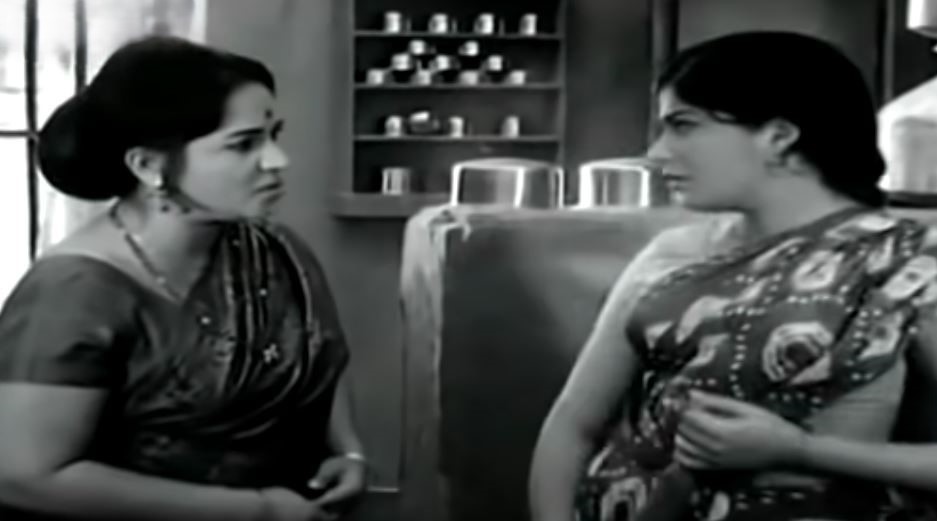
The setting of Do Boond Paani is a village in Rajasthan called Bhartiya. Ganga Singh (Jalal Agha) is bringing his newly wedded wife Gauri (Simi Garewal) to the village. Gauri is an educated girl who can speak her mind and think practically. Ganga is pleasantly surprised to know that she can read and write as well. Education does make a lot of difference! They are welcomed with great fanfare and a song (Baani teri bindiya) by Ganga’s sister Sonki (Madhu Chanda). The new couple is blessed by Ganga’s father Hari Singh (Sajjan).

Unfortunately, things are not hunky dory in the village. It has not rained since 7 years. The water sources have dried up. The village women spend a lot of time walking long distances to fetch a pot of water. The new bride Gauri joins Sonki and the other women as they begin their daily journey in search of water. To pass the time, they sing a song Peetal Ki Mori Gagari. Gauri and Sonki develop a mother – daughter bond. Gauri starts teaching her to read and write.

Apparently, Ganga’s family occupation is farming. But the fields are dry. Ganga and his father have started working as blacksmiths as a temporary(?) occupation. They are waiting for the rains to return, so they can resume cultivation of the land. A frustrated Hari Singh tries to grow crops in a mini patch.

Ganga has a friend called Mangal Singh (Prakash Thapa?). Mangal Singh is a shady character who wants to earn easy money. He has his sights on Sonki and wants to marry her but she knows his true character and rejects his advances.

The villagers’ life takes an unexpected turn when a “sarkari” man arrives in the village. His job is to travel from village to village and show government films/ documentaries on the bioscope. Night comes and the whole village gathers to see the show. They see visuals of the Republic day parade in New Delhi followed by a segment on the Government’s efforts to build a canal in rain parched Rajasthan. There is a young engineer Mohan Kaul (Kiran Kumar) appealing to the audience to come in large numbers and join him in his efforts to construct the canal. He awaits the day when the canal will be ready and reach the dry parts of the state.

The audience is mesmerised. Sonki is taken in by the young and tall (lambu) engineer. Ganga makes a quick decision to leave the village and join the engineer at the project site. He wants to contribute to the Government’s efforts and bring water to his village. Hari Singh and Gauri are supportive.

So Ganga leaves after sharing goodbyes with everyone in the village. He is expected to be away for 2 or 3 years by when the canal is expected to get completed. However, in the journey, he keeps thinking of Gauri and returns home the same night. Gauri is furious. Through a story involving a Rajput couple, she indicates that she will kill herself if he returns without completing his mission. The Rajput pride is at stake. A shaken Ganga promises he will return only when his undertaking is a success.

Ganga reaches the project site to meet Mohan Kaul. Mohan is impressed and surprised by Ganga’s arrival. He explains the documentary shown was created 4 years ago and it is only now that it has reached Ganga’s village. And Ganga is the first person to come responding to the engineer’s appeal. So much so for the Government’s marketing efforts!

As Ganga does not have any specific skill, he is given the job to handle the donkeys used in the construction. However with his own efforts and Mohan’s encouragement, he learns how to operate the tractor and manages it efficiently. He also makes effort to become literate, so he can write to his family himself and does not have to rely on Mohan or anyone else. After all, its personal! Mohan is impressed and treats Ganga as his brother. Ganga receives news that he is going to become a father soon.

While the canal is getting ready, things are deteriorating in the village. The drought continues and villagers decide to leave the village. Hari Singh and his family are not convinced. They have faith in Ganga’s mission and are willing to wait for his return. Through a song (Do Boond Paani), we see the villagers moving out, literally in search of greener pastures. So, only Ganga’s family stays back. It is getting difficult to obtain potable water, most of the times it is more mud and less water.

Hari Singh falls sick. In a state of delirium, he dreams of the water reaching the village, and the lush green fields signalling the end of their woes. His condition worsens and he passes away. Later, Sonki is pursued and raped by Mangal Singh and she runs away from the village.

Gauri is left alone and sings a song of loneliness (Jaa ri pawaniya piya ke des jaa). She delivers Ganga’s child, a son (Jamuna Singh) and continues to live in the village. The local postman is the only visitor in the village. He delivers Ganga’s money orders to Gauri and helps her by bringing daily necessities to keep the house running. Needless to say, she is desperately waiting for Ganga to come back.

Will Ganga come home? What happens to Sonki and Mangal Singh? And the million dollar question – will the canal project get completed?

The Music

The film songs are written by Kaifi Azmi and Balkavi Bairagi with music by Jaidev. They are voiced by Asha Bhosle, Mukesh, Laxmi Shankar, Minu Purushottam and Parveen Sultana. While the first two songs are placed in happier times, the remaining 2 are aligned to the darker part of the story. The songs serve to balance the dry proceedings and provide relief.

My Thoughts

The subject is different. The film is totally based in Rajasthan. We see the desert landscape throughout the movie. Though made more than 50 years earlier, It is successful in highlighting the importance of water and remains relevant in the present times. There are no loud dialogues, lecturing or over the top performances. It is a simple story told in a simple way. Overall, K. A. Abbas manages to deliver an engaging film. Considering the subject, the film may feel a bit sluggish at times. There is a sub theme about the slowness of the Government machinery, time taken in decision making and its impact on the common people.

Acting wise, Simi Garewal shines in the role of the farmer’s wife. She makes practical decisions for her family’s benefit and gets their support. Jalal Agha is charming and convincing as the simple farmer who undertakes a difficult mission and aims for the betterment of his family. Madhu Chanda and Sajjan are adequate. This was Kiran Kumar’s debut movie and he performs confidently.