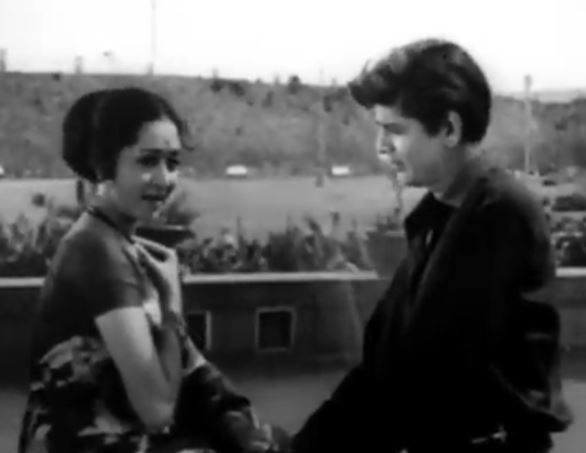
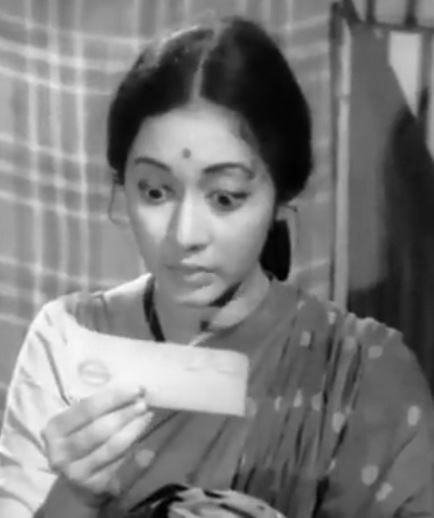
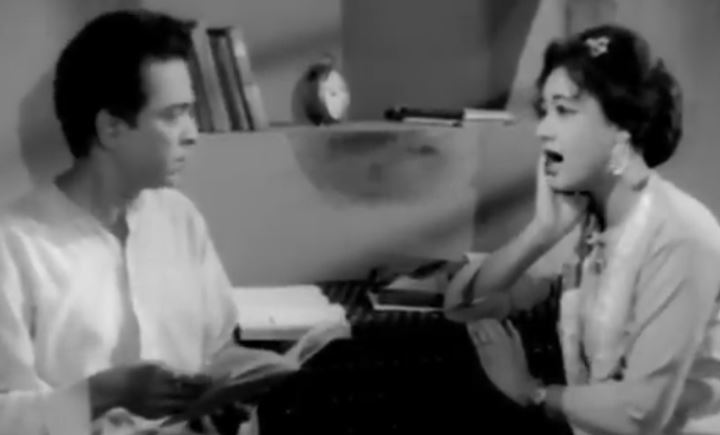
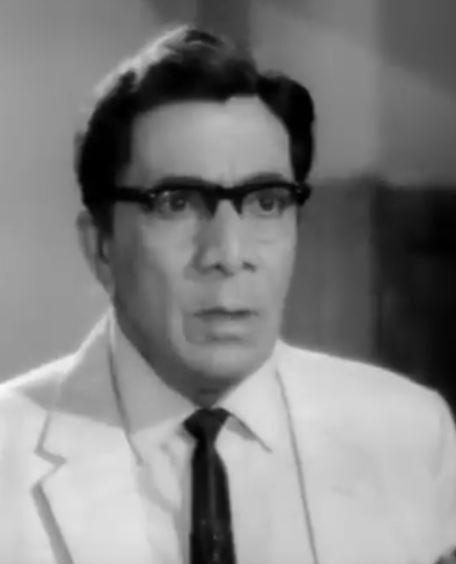
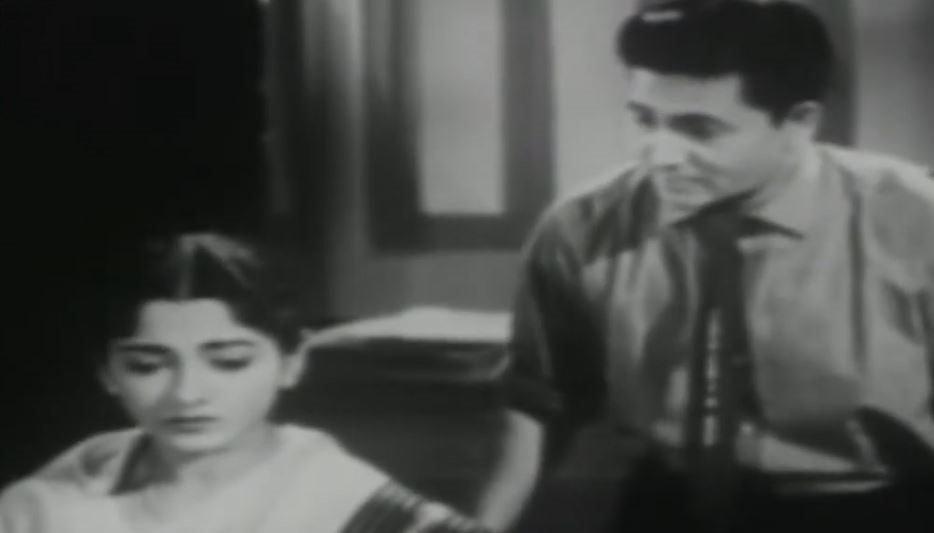
Mazdoor (1983)

In 1957, B.R. Chopra made a memorable film which focused on the man v/s machine conflict. The film was Naya Daur which has achieved classic status in Hindi cinema. The audience accepted the realistic theme with its entertaining story line, star cast and music. (It won 3 Filmfare awards for its hero, music director and story writer). More than 25 years later, under the same production (B.R. Films) came Mazdoor which is clearly inspired from Naya Daur. It was directed by B. R. Chopra’s son Ravi Chopra. Unfortunately, it failed to achieve the same status and recall value of its inspiration.


The Plot

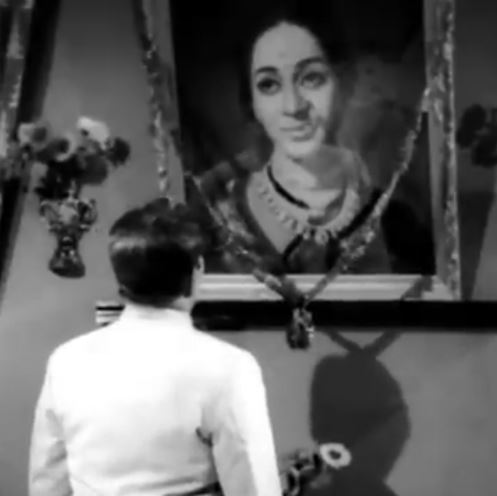
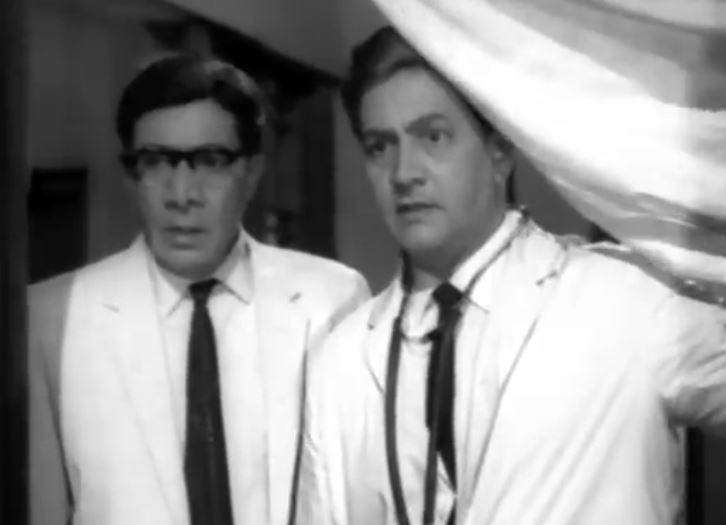
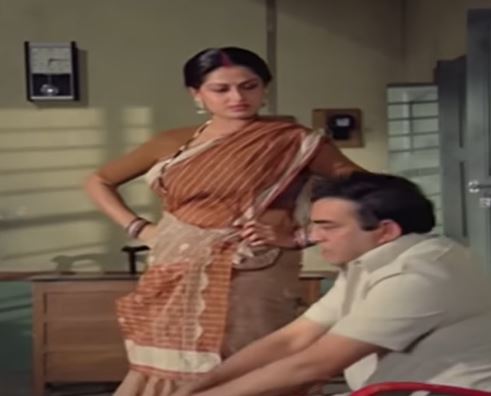
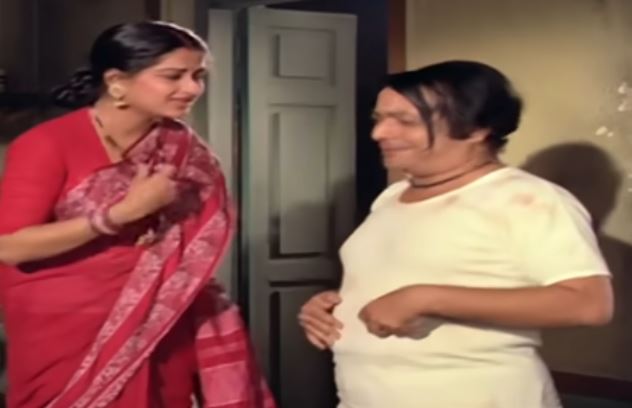
Sinha (Nazir Hussain) is the owner of Hiralal Mills named after his son who is currently abroad. Sinha is a caring owner who is not only after profits from the mill but ensures the welfare of his workers. His close associate is the foreman Dinanath Saxena (Dilip Kumar), who also has a caring nature towards the mill and its workers. He has one dream – he is waiting for the day when a mazdoor will be able to write his own destiny. His co-workers include Govinda (Johnny Walker) and Yunus (Yunus Parvez).

Another important character is Ashok Mathur (Raj Babbar). He delivers tiffins to the mill staff and is studying textile engineering. Dinanath is impressed by his hard work and attitude.

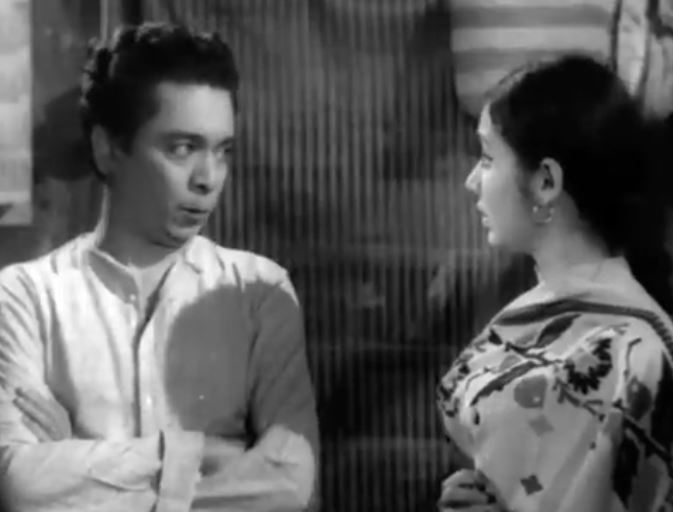
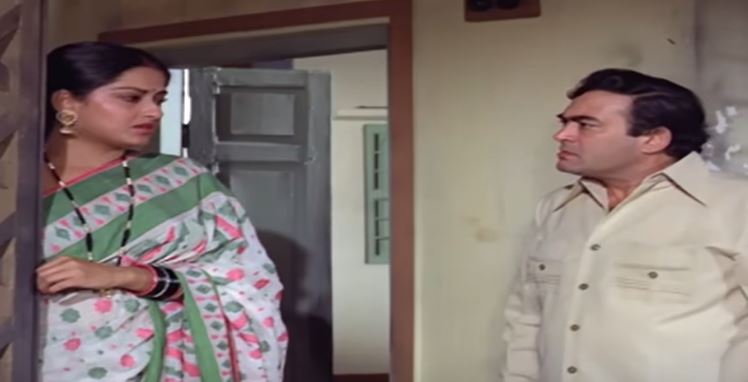
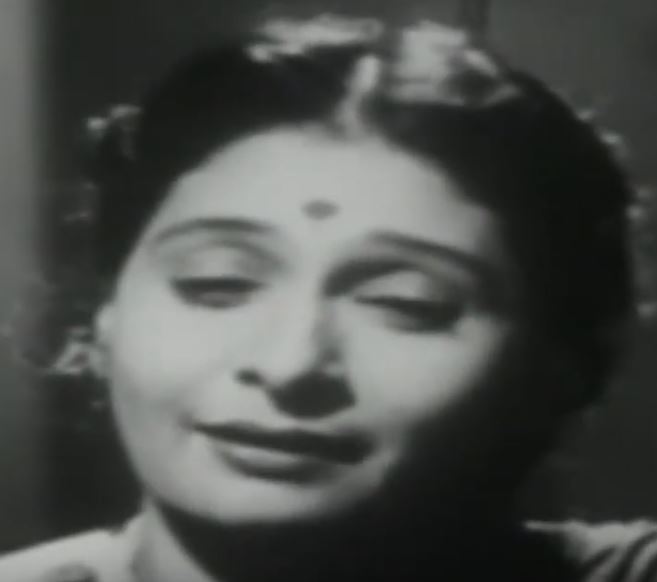
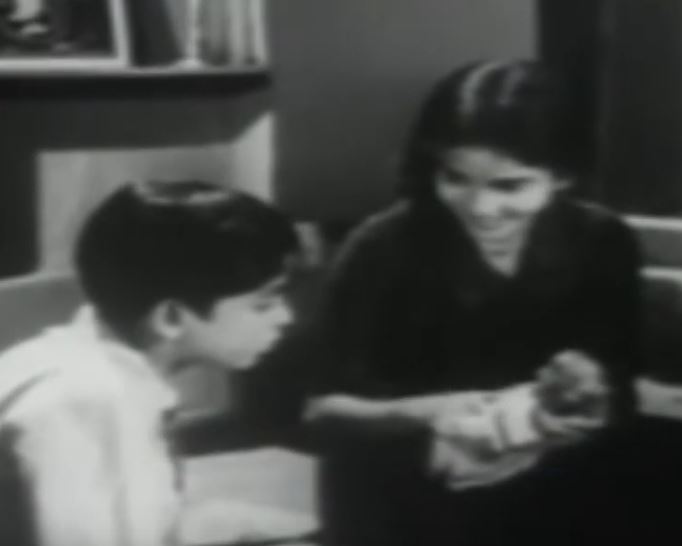
We are introduced to Dinanath’s family. His wife is Radha (Nanda). Dinanath purchases cut pieces of cloth from his mill at reduced rates. Radha tries to supplement the family income by selling them in a makeshift shop in their house. They have 2 children, a daughter Meena (Padmini Kolhapure) (who apparently goes to school) and a son Ramesh (Raj Kiran), who is a college student. Ramesh has bunked college for a movie and Dinanath lectures him to be serious etc. He compares him with Ashok who is slogging to be an engineer.

Dinanath invites Ashok to his house and meet his family. Ashok offers some sales advice to Dinanath and Radha. Instead of selling from the house, what if he attempts sell the fabrics around the city? This will help increase the reach and sale. Dinanath agrees and the deal is sealed. Ashok is successful in his mission and soon becomes a household member. Dinanath accepts him as his son and Radha and Meena are impressed too. Only Ramesh doesn’t care about him, he considers him an outsider and insults him regularly.

Things take a sudden turn when Sinha Seth dies due to a heart attack. His son Hiralal (Suresh Oberoi) arrives to take over the management of the mill. But father and son are not cut from the same cloth. Hiralal is money minded. He is ready to go to any extremes to make money, be it at the cost of the workers’ well being. Aiding him is corrupt Daulatram (Madan Puri).

The mill has earned a huge profit that year. But Hiralal wants to increase the production by purchasing new machinery. He announces there will be no bonus for that year, and this is a shock for the workers. A crestfallen Dinanath comes home with the news. He tells Radha that he doesn’t care for his own bonus but his fellow workers had made plans in anticipation which now lay shattered. As a diversion, his mood is uplifted by Ashok who has managed to sell almost all the cut pieces and make a profit.

In the mill, Ashok gets introduced to Hiralal. One day, a machine suddenly stops working and Hiralal is aghast as the mill engineer is on a month’s leave. Work cannot be stopped because of one person’s absence. In steps Ashok, who repairs the machine (almost!) in a jiffy. He quotes a sum of Rs 1,000 as his charges stating he decides his own price. He gets paid and he offers the money to Dinanath as he looks up to him as his father. It is agreed that Dinanath will buy more cut pieces from the amount to continue their business deal.

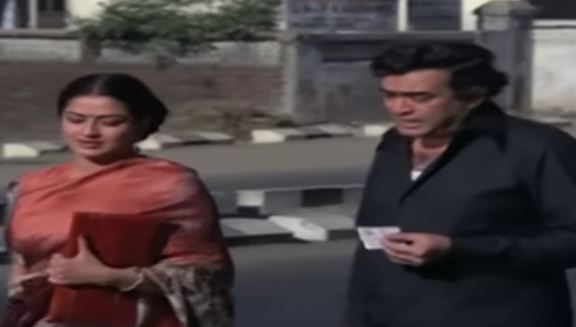
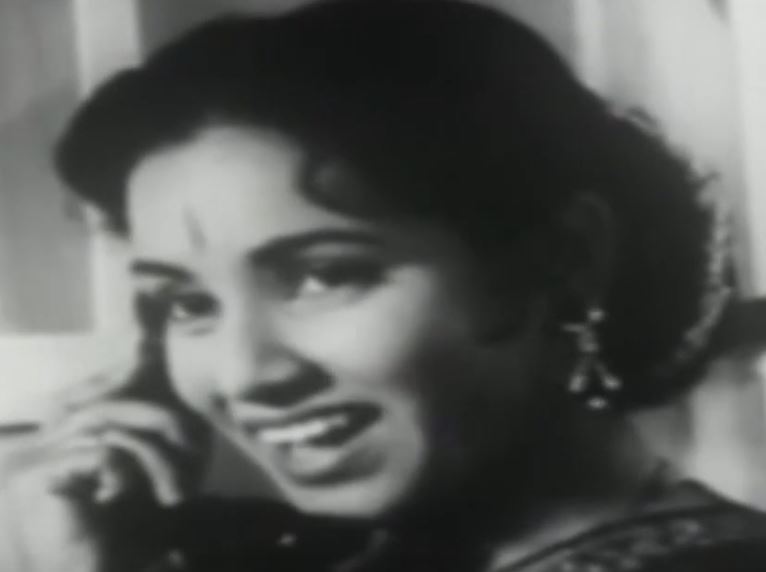
Now it is time to introduce the inevitable love angle. Meena is falling for Ashok. Ashok is getting closer to a stranger Smita (Rati Agnihotri) with whom he has had a chance meeting. In short, both ladies are falling for the same man, leading to future complications.

Things are not going smooth between Hiralal and the workers. A worker Raju dies in an accident while on duty. The workers take him to the hospital and attend his last rites. Hiralal is furious that the work has stopped randomly. He confronts Dinanath who lectures him on humanity, ethics etc which have no effect. Hiralal decides to suspend Dinanath for 10 days and cut the wages of the workers.

Dinanath can’t digest the injustice done to the workers. He is ready to be suspended but does not want the workers to suffer. He attends the mill’s Annual General Meeting and raises his voice on behalf of the workers. Hiralal offers him to sign an apology after which things will return to normal. Dinanath insults Hiralal by tearing the apology document and voluntarily resigns.

The workers misunderstand and think he has been sacked. They offer to go on strike but he explains the situation, pacifies them to continue working and returns home.

On the same day, Ashok comes with good news – he has passed the exam and is now an engineer. Dinanath takes Ashok to a burnt mill to check if it can be made operational again. They need to pay Rs 3 lakhs but Dinanath has only Rs 25,000 which he pays as advance. They attempt to take loans but are unsuccessful. (In the background, Hiralal is ensuring they are not successful in arranging the money. He cannot forget his insult and is waiting to extract his revenge).

The deadline to pay the balance amount approaches when their savior enters the scene. This is Mr Kundanlal Batra (Iftekhar), a well known businessman. He knows everything about Dinanath and wants to help him out. And coincidence! Smita turns out to be his daughter.

So, Dinanath is now a mill owner and he and Ashok begin the tough job of starting production as soon as possible. The beginning is tough but they are soon joined by their old colleagues Govinda, Yunus and the lot. The cloth from their mill is of high quality. Hiralal makes moves to stop their goods from reaching the market, so they sell the garments and fabrics in a makeshift market on the road. This further frustrates Hiralal.

Overall, there is smooth sailing. Dinanath Saxena is now a rich and reputable businessman in the city. Dinanath proposes that Ashok marry Meena and all of them can stay together. Ashok is unable to confess his love for Smita openly considering all that Dinanath has done for him. He reluctantly marries Meena, leaving Smita devastated. Then Smita makes a plan to marry Ramesh, so she can enter his house and spend time with Ashok.

Thus the story line evolves into a love triangle leading to disastrous consequences. Things reach a point where Dinanath disowns Ashok and asks him to leave the house and mill permanently. Ramesh is fully supportive of his father’s actions. He was never in favour of the orphan Ashok anyway.

The workers are against this decision to remove Ashok and go on strike. What will happen? Will Dinanath be able to resolve the labour problem? Will Hiralal be successful in taking his revenge? And what happens to Ashok on a professional and personal front? Will he be forgiven by the Saxena family?

The Music

The comparison with Naya Daur’s music is inevitable. Unfortunately, lyricist Hasan Kamaal’s and R.D. Burman’s collaboration hardly leave an impact. Many songs are an opportunity for Dilip Kumar to showcase his dancing skills – Hum Mehnatkash Is Duniya Se, Pet Mein Roti, Tan Par Kapda and Nana Ho Gaya Diwana, where Mahendra Kapoor provides the playback. They have nothing new to offer. The others are sung by by Asha Bhosle (Baat Adhoori Kyon Hai and Tumhein Bhool Jaane Ka Haq Hai Magar) and Salma Agha (Pehla Pehla Pyar Na Bhoole).

My Thoughts

As evident, the movie falls to achieve the status of its predecessor Naya Daur. Its focus on the “mazdoor” is lost in between as romance and marital discord take priority. Maybe the filmy touches dilute the effect. It would have been interesting to see the ideological clash between the maalik and the mazdoor with its twists and turns leading to a satisfying end as in Naya Daur.

Dilip Kumar occupies every frame and performs effectively. His typical mannerisms and dialogue delivery impress at the beginning but become repetitive as the story progresses.

Suresh Oberoi’s character makes a mild villain in front of the veteran acto’s character. Maybe that was intentional. The other characters perform as required but don’t have much to contribute. Raj Babbar has some impressive dialogues which he delivers effectively. It is probably the only film featuring Dilip Kumar and Nanda together. Trivia: Dilip Kumar, Nazir Hussain and Johnny Walker had starred in Naya Daur as well as Mazdoor.

Shankar Jaikishan – Party Songs

Shankar Jaikishan (SJ) were the one of the most successful composers of Hindi Cinema. Their pairing ensured a long list of evergreen compositions. These continue to be cherished by music fans. Their repertoire covered many themes as per the requirement of the song including romantic, sad, longing, naughty, dance numbers, classical and even qawwali. And incredibly they were able to deliver one hit after the other. They created magic teaming up with lyricists Shailendra and Hasrat Jaipuri and utilizing the top singers of that era. A formidable team indeed!

26 April is the remembrance day of Shankar (Shankar Singh Raghuvanshi). This post covers some of the party numbers composed by this talented duo. The songs depict varied emotions like happy, sad, disappointment and fun. All are highly enjoyable and prove the versatility of the composers.


1) Song: Ek Bewafa Se Pyaar Kiya
Film: Awara (1951)
Credits: Hasrat Jaipuri | Shankar Jaikishan | Lata Mangeshkar

SJ had a long collaboration with Raj Kapoor starting from Barsaat. This song is from Awara. Its Nargis’s 21st birtday celebration. She is happy but a dramatic scene involving Prithviraj Kapoor, herself and Raj Kapoor unknowingly reveals the truth about Raj’s character. She is still coming to terms with the revelation, when the performer (Honey O’Brien?) starts singing and dancing. Why someone would such a song at a birthday party is another matter, but it brings out Nargis’s state of mind effectively. SJ deliver a catchy tune which is enhanced by the lyrics, singing and the heroine’s expressions.

Ek bewafa se pyaar kiya, usse nazar ko chaar kiya,
Hai re humne yeh kya kiya hai kya kiya…

Bholi surat waala nikla lootera,
Raat chhupaaye dil mein munh pe savera,
Oye humne dil nisaar kiya, usko beqaraar kiya,
Hai re humne yeh kya, hai kya kiya


2) Song: Sunte The Naam
Film: Aah (1953)
Credits: Hasrat Jaipuri | Shankar Jaikishan | Lata Mangeshkar

Aah came after Awara and was not that successful but its music was at par. SJ gave Lata Mangeshkar some of the best songs of her career. These were across multiple genres showcasing the adaptability of her incomparable voice.

In the movie scene, Nargis’s elder sister (played by Vijayalaxmi) is requested to sing at a party. She makes excuses but her mood changes when she sees a dashing young man (Raj Kapoor). On knowing his identity, she bursts into song.

Sunte the naam hum jin ka bahaar se,
Dekha to dola jiyaa jhoom-jhoom ke..

Chhupate rahe jo meri nazar se, dil bole mera tum hee to ho,
Ho, dil bole mera tum hee to ho,
Aankhon se rang mere dil ki umang pe, daalaa to dola jiyaa jhoom-jhoom ke…


3) Song: Sab Kuch Seekha Humne
Film: Anari (1959)
Credits: Shailendra | Shankar Jaikishan | Mukesh

Moving to a sombre number. Anari was the story of a rich girl (Nutan) and a poor and simple man (Raj Kapoor, who else?). He thinks she is a poor girl and falls in love with her. The truth gets revealed at her birthday party. Her uncle requests him to sing a song. He sings about himself. How he got fooled, he is really an “anari.” Mukesh was Raj Kapoor’s voice and SJ contributed some great songs throughout for this partnership. It also shows their ability to blend a song suited to the character’s personality and the singer’s expertise. Simple but impactful.

Sab kuch seekha hum ne, na seekhi hoshiyaari,
Sach hai duniya walon, ke hum hain anadi..

Duniya ne kitna samjhaya, kaun hai apna kaun paraya,
Phir bhi dil ki chot chhupa kar, hum ne aap ka dil behlaya,
Khud hi mar mitne ki yeh zid hai hamari,
Sach hai duniya walon, ke hum hain anadi..


4) Song: Tumhe Aur Kya Doon Main
Film: Ayee Milan Ki Bela (1964)
Credits: Hasrat Jaipuri | Shankar Jaikishan | Lata Mangeshkar

A double birthday celebration! Its Rajendra Kumar and Dharmendra’s birthday on the same day. The party is arranged and the guests arrive. The heroine Saira Banu presents the song wishing them a long life. Set by SJ in their favorite raag Bhairavi, the singing is so effective and Saira Banu looks enchanting on screen.

Tumhe aur kya doon main dil ke siway, tumko hamari umar lag jaaye..


5) Song: Har Dil Jo Pyaar Karega
Film: Sangam (1964)
Credits: Shailendra |Shankar Jaikishan | Mukesh, Lata Mangeshkar and Mahendra Kapoor

Sangam was a love triangle directed by Raj Kapoor. Rajendra Kumar has returned to India after becoming a lawyer and the grand party is for celebrating his success. Vyjanthimala is looking forward to meet him and confess her love. But Raj Kapoor is also in the picture (he loves Vyjanthimala). Handy with his accordion, he becomes the party entertainer and sings this song. He is joined by the other leads who voice their intentions. A brilliant composition, well sung and enacted. And the ace director’s touch is evident in the song’s presentation.

Har dil jo pyaar karega woh gaana gaayega,
Deewaana saikadon men pehchaana jaayega, deewana..

Aap hamaare dil ko chura ke aankh churaaye jaate hain,
Ye ik-tarafaa rasam-e-wafaa ham, phir bhi nibhaaye jaate hain,
Chaahat ka dastoor hai lekin, aap ko hi maaloom nahin,
O o o, jis mehfil men shama ho, parwaana jaayega,
Deewaana sainkadon men pahachaana jaayega, deewana..


6) Song: Aji Rooth Kar Ab
Film: Arzoo (1965)
Credits:  Hasrat Jaipuri | Shankar Jaikishan | Lata Mangeshkar

This is another typical party scene. Sadhana is requested to sing but she is horrified at the suggestion. Her uncle gets upset with her and so does the hero (Rajendra Kumar). She responds to him through the song and pacifies him. Of course, there is an undercurrent of romance in the lyrics. The song is known for its impossibly high notes and was challenging to sing.

Aji rooth kar ab kahan jaiyega,
Jahan jaiyega hamein paiyega…

Khayalon mein bhi tum na aao to jaane,
Aji lakh pardon mein chhup jaiyega,
Nazar aaiyega, nazar aaiyega…


7) Song: Mujhe Tum Mil Gaye Humdum
Film: Love in Tokyo (1966)
Credits: Hasrat Jaipuri | Shankar Jaikishan | Lata Mangeshkar

This is like a pre-climax song of the movie. Everything has been sorted, the only thing that remains is the union of the hero (Joy Mukherjee) and heroine (Asha Parekh). She sings to him acknowledging his presence in her life. He accompanies her on the piano. Everything is happy and romantic but the mood changes with Pran’s arrival. This change is reflected in the musical composition effectively as it brings out the varied expressions of joy, shock and anger of the character(s).

Mujhe tum mil gaye humdum,
Sahara ho toh aisa ho,
Jidhar dekhu udhar tum ho,
Nazaara ho toh aisa ho….


8) Song: Chhoti Si Mulaqat
Film: Chhoti Si Mulaqat (1967)
Credits: Hasrat Jaipuri | Shankar Jaikishan | Mohammed Rafi and Asha Bhosle

Birthdays seem to be a common theme for many songs in this list. This time it is Vyjanthimala’s celebration. She is eagerly waiting for the hero’s (Uttam Kumar’s) arrival. He arrives, then there is a so called funny scene and both start singing the catchy composition with some weird lyrics. A true party song which brings out the energy and romantic involvement of the lead pair.

Chhoti si mulaqat pyar ban gayi,
Pyaar banke gale ka haar ban gayi,
Ya ya yippi yippi ya ya ya,


9) Song: Aaj Kal Tere Mere Pyaar Ke Charche
Film: Brahmachari (1968)
Credits: Hasrat Jaipuri | Shankar Jaikishan | Mohammed Rafi and Suman Kalyanpur

This is one of those situational songs. Conveniently, Shammi Kapoor arrives at Pran’s party. He is a singer and is requested to sing and dance with Mumtaz. And him being Shammi Kapoor, he sings a flirty number. Another evergreen song from SJ.

Aajkal tere mere pyar ke charche har zubaan par,
Achha – sab ko maloom hai aur sabko khabar ho gayi,
Toh kya…


10) Song: Meri Zindagi Mein Aate To Kuch Aur Baat Hoti
Film: Kanyadaan (1968)
Credits: Hasrat Jaipuri| Shankar Jaikishan| Mohammed Rafi

And to the end a list, a sad song. Shashi Kapoor (a poet) arrives at the marriage anniversary party of his friend. He is requested or rather forced to sing his composition. He does so reluctantly, addressed to the heroine (Asha Parekh). A typical SJ composition, rendered by Mohammed Rafi in his effortless manner. SJ had started to become a bit repetitive at this stage of their career and faced stiff competition from new composers like Laxmikant Pyarelal.

Unki zulfein unke chehre se hata sakta nahin,
Dil ki betaabi kisi soorat chhupa sakta nahin,
Kitni dilkash hain mohabbat ki jawan majbooriyan,
Saamne manzil hai aur paanv badha sakta nahin,

Meri zindagi mein aate to kuch aur baat hoti,
Toh kuch aur baat hoti, Toh kuch aur baat hoti,
Yeh naseeb jagmagaate to kuch aur baat hoti…

Re-release

The past few years has seen a spate of movies rereleasing in theatres. But this is not a new phenomenon for Hindi Cinema. There used to be a time, at least till the 1990s when old movies would play in cinema halls in what was termed “matinee” shows. This was a welcome approach as it enabled the new generation to get introduced to and enjoy the older classics and other movies. Presumably, the producers would be earning money through the reruns of their movies.

I recall hearing about the release of the Dev Anand starrer Hum Dono, 50 years after its initial release in 2011. The plus point? It was the colorized version and aptly named as Hum Dono Rangeen! Having not seen the movie, I stepped into the cinema hall in anticipation. The attraction was the aura associated with the movie, the big stars, and of course its evergreen songs. And what a pleasure it was. It was almost magical to revisit that era on the big screen. How lucky was the generation when such movies were being released week on week and one could enjoy them firsthand!

I had the same experience with CID (1956) a few years later (unfortunately, I knew the plot, so that was a bit of a dampener). But yes, it was still a memorable experience to revisit the oldie offering.

The rereleases of Mughal-e-Azam (2004) and Naya Daur (golden jubilee year in 2007) were big events and made special news. They were also released in fully colorized avatars and met with mixed success. The trend continued and in recent times, we see movies mainly from the 90s and beyond scorching the big screen once again. Some classics are also screened as a tribute to the creators such as Raj Kapoor, Bimal Roy, Guru Dutt and so on.

That brings me to my recent experience in 2025 of revisiting Yeh Jawaani Hai Deewaani (YJHD). The 2013 Ayan Mukerji directed movie has achieved cult classic status and its endearing characters, the dialogues and the songs continue to charm us. The movie rereleased with much fanfare and box-office success.

Having watched the movie with ad breaks on T.V. I was looking forward to view it in the cinema hall with lesser distractions. And the show time arrived. Surprise! the screening began with the UTV logo and trailers of the movies that were probably shown along with YJHD’s original screening in 2013. It was kind of funny to watch the trailers of Fukrey and Once Upon a Time in Mumbai Dobaara. How time flies, literally!

The cinema hall was a full house filled with a young crowd in their teens and 20s. They were probably school going children when the movie had released. That showed the staying power and recall value of a cult movie that can be related to even today. As expected, the movie was a joy to watch. Ranbir, Deepika, Aditya and Kalki were at their peak and the wonderful supporting cast didn’t disappoint. The audience was enjoying the witty dialogues and the one-liners to the fullest. But nothing had me prepared when the blockbuster songs lit up the screen. Balam Pichkari and Budtameez Dil made the crowd erupt. They got up from their seats, went up to the screen, sang and danced along, clicked selfies and shared socially the live experience of being there and watching YJHD. The multiplex management had to intervene but that was a mild matter. This was the genuine magic of cinema in front of my eyes.

So, the trend will not end. There will be more anniversaries coming up – 20, 25, 30 years and revisits on the way. The charm of cinema continues.