Some movies are trendsetters. Mahal (literally: palace) can be termed as such a movie. It was probably the first Hindi movie involving a haunted mansion, a beautiful ghost singing a haunting song. And the hero all ready to follow her, mesmerized by her beauty and singing. Welcome to the horror / suspense genre.
A comparatively young Ashok Kumar and even younger Madhubala at her ravishing best, accompanied by horror elements, great music and an unpredictable story line add to the charm of Mahal.
Some trivia. Ashok Kumar was the co-producer of the movie under the Bombay Talkies banner. It was Kamal Amrohi’s first movie as a director. Kamal Amrohi passed away on 11 February 1993 and its Madhubala’s birthday on 14 February.

The Plot
The movie begins with a man arriving at a palace like residence on a stormy night. This is the Mahal named as Sangam Bhavan. It was built on the bank of the Jamuna river in Naini close to Allahabad. There is a voice over which informs us that the Mahal is regarded inauspicious and haunted due to its history. The old gardener (maali) of the Mahal is narrating the Mahal’s unfortunate history to the man.
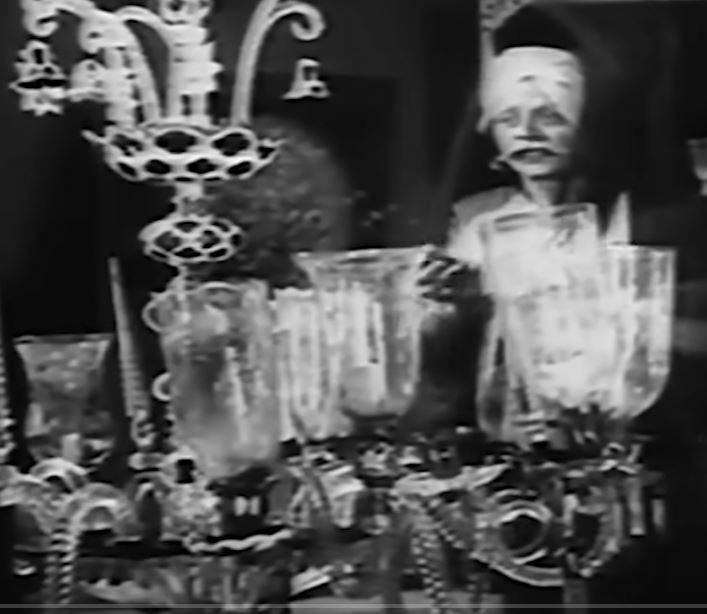
Some 40 or 45 years ago, an unknown man built the Mahal/ Sangam Bhavan. He would cross the Jamuna river every night, inspect the construction and go back in the morning. After the Mahal was built, a lady called Kamini came to stay here with him. She would wait for his arrival by boat every night. He would visit her and leave in the morning. One night, the boat was caught in a storm while crossing the river and got sunk. Later, Kamini also dies in the waters of the Jamuna. The gardener serving the owner does not know the owner’s name or his origins. He has continued to stay there acting as a caretaker.
He is narrating all this to the new owner of Mahal – Hari Shankar (Ashok Kumar). Shankar is the son of a reputed judge in Kanpur who has purchased the Mahal. Shankar asks the gardener to go and inform his friend Barrister Shrinath in Allahabad that he has arrived at Sangam Bhavan. The gardener leaves and Shankar prepares to spend the night in the Mahal.
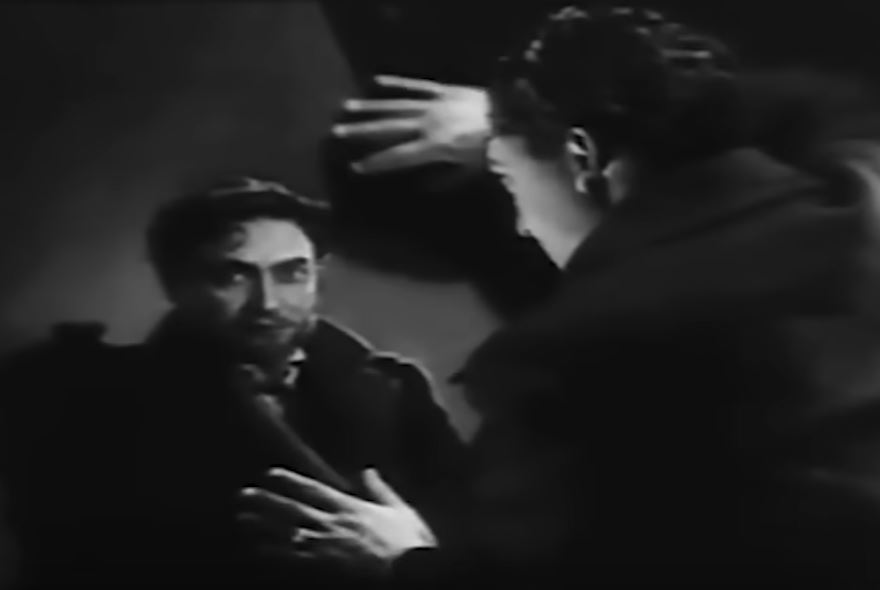
A painting suddenly falls down and Shankar is shocked to see himself in the painting. This is the original owner’s painting and an exact copy of Shankar. Shankar is thinking whether he is the reincarnation of that unknown owner in the painting. As he is reasoning, the clock strikes 2.00 a.m. The storm continues outside, the chandelier sways and he hears a woman singing a song. This is Aayega Aanewala, perhaps the most iconic of haunting songs in Hindi cinema.

Shankar follows the woman (Madhubala) throughout the Mahal but she keeps disappearing and reappearing. The song ends. Shankar is shaken by the spooky atmosphere. The storm, the painting and now this woman and her song! He is still in a state of disbelief when his friend Shrinath (Kanu Roy) reaches Sangam Bhavan. He advises Shankar that the painting is a coincidence and to forget the imaginary woman. Upon hearing this, the woman suddenly appears and tells them she is not a fantasy. Apparently, she is Kamini, the same woman who was associated with the previous owner and had died after his death. It seems she is Kamini’s soul, waiting for her lover to arrive again and unite with her.
Shrinath convinces Shankar to forget the Mahal and the woman and return to Kanpur. Apparently, Shankar has a fiancee in Kanpur and they are about to get married. Shankar’s father has admitted his mistake in purchasing the “manhoos” Sangam Bhavan and wants to get rid of it soon.

The train leaves Allahabad station and reaches Naini. It is 2.00 a.m. Shankar sees the Mahal from the train, hears the haunting melody and cannot control himself. He gets down at Naini, and returns to Sangam Bhavan. He has a face to face interaction with the ghost/ soul Kamini. This is an impressive scene and Kamini (Madhubala) conveys a lot through her expressions and minimum dialogue. As Shankar is getting closer to Kamini, Shrinath arrives and shouts at Shankar. Kamini warns Shrinath not to come between her and Shankar. She has been waiting for him all this while. Shrinath tries to kill her but is unsuccessful. Can a ghost die?

So Shankar stays back. Every night, the clock strikes 2.00 and Kamini emerges. Shrinath wants to help hs friend. He approaches 2 woman “entertainers” to use their charm and ensure Shankar gets out of his fantasy. The 2 sisters (Leela Pandey and Sheela Naik) perform a song “Ye Raat Phir Na Aayegi.” They are almost successful in diverting Shankar’s attention. But the clock strikes 2.00 and Shankar hurries back to Sangam Bhavan.
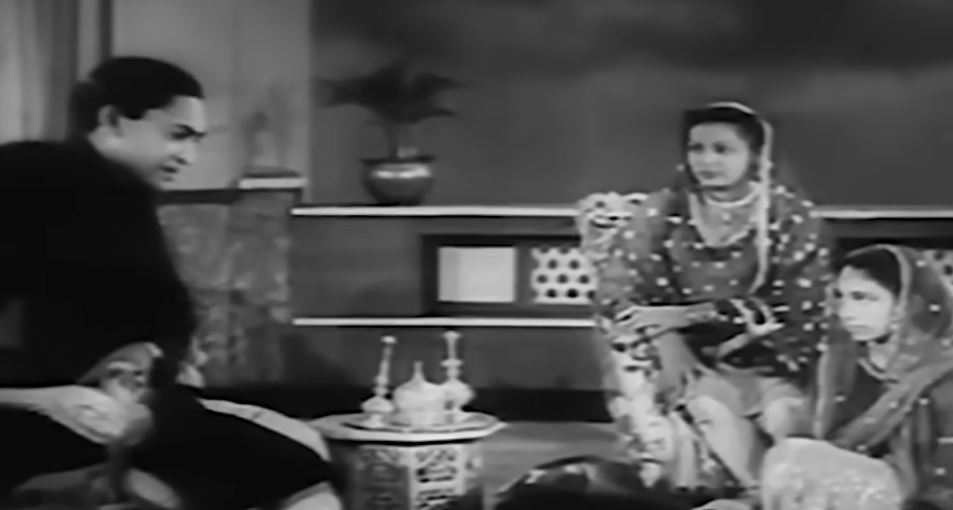
Kamini is waiting for him. She shows him the secret passages of the Mahal. She takes him to the spot by the river where she would wait for her lover. Shankar is almost in a trance and ready to do anything for Kamini. She asks him to jump in the river and give away his life so their souls can reunite in the present life. But she is afraid that the attempt would fail and they would remain separated.
She proposes a weird alternative. Shankar needs to kill a woman he loves so that Kamini’s soul can enter the dead woman’s body and spend the rest of her life with Shankar. Shankar tells her he does not know any woman so she proposes he kill the gardener’s daughter. So easy! There is a great build up of suspense and anticipation as Shankar waits to meet the daughter in the morning. But the plan fails when Shankar’s father arrives with Shrinath to take him back to Kanpur forcibly.
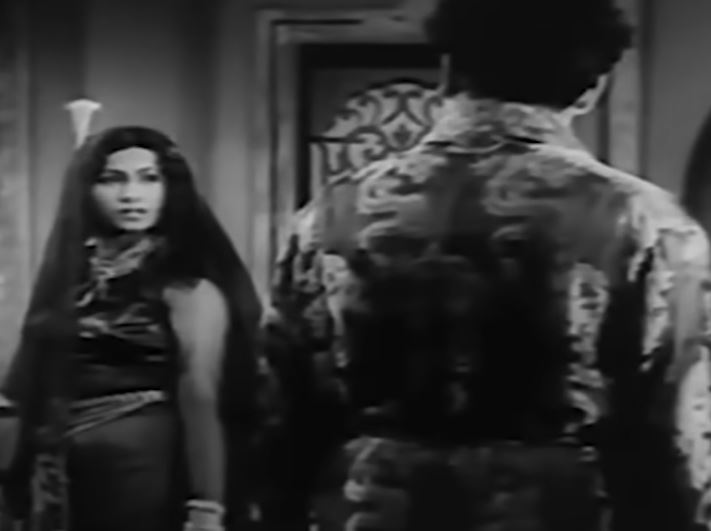
After a dramatic interaction with his father and emotional blackmailing, Shankar agrees to get married to Ranjana (Vijayalaxmi). Kamini vents her sorrow through a song Mushkil hai bahut mushkil. On the suhaag raat, Shankar leaves Ranjana as the clock strikes 2.00 a.m. and returns later. Of course, Ranjana is puzzled by his actions.
Shankar informs Ranjana that he has made the decision to leave Sangam Bhavan. He plans to go and settle in a far-off place where he will not be troubled by the 2.00 a.m. musical summons from Kamini. Then he will be able to spend time with Ranjana and be able to love her. Ranjana has no choice and agrees to the decision.
But it is not a very feasible solution. After a long travel, the couple settle down in a mountainous area. 2 years pass by. But things do not go on expected lines. Shankar does not develop a relationship with Ranjana. And strangely, he has still not seen her face all this while! An unhappy Ranjana conveys all this via a letter to her bhabhi (the wife of Shankar’s friend).

Where does this lead to? Will Shankar return to Sangam Bhavan? What happens to Kamini, will her love be successful in this life? And what is the future of Shankar and Ranjana’s marriage?
The Music
The lyrics are by Nakshab and music by Khemchand Prakash. Of course, Aayega Aanewala is the clear winner and remembered even after so many years. It was Lata Mangeshkar’s breakthrough song. Unfortunately, in those times, the film credits or the music records did not mention the singer’s name (this would change soon for the better!).
The other songs including the duet Ye Raat Phir Na Aayegi (by Zohrabai Ambalewali and Rajkumari) are not bad. But there are too many sad songs (in the voices of Rajkumari and Lata Mangeshkar). They slow down the flow of the story and seem repetitive.
My Thoughts
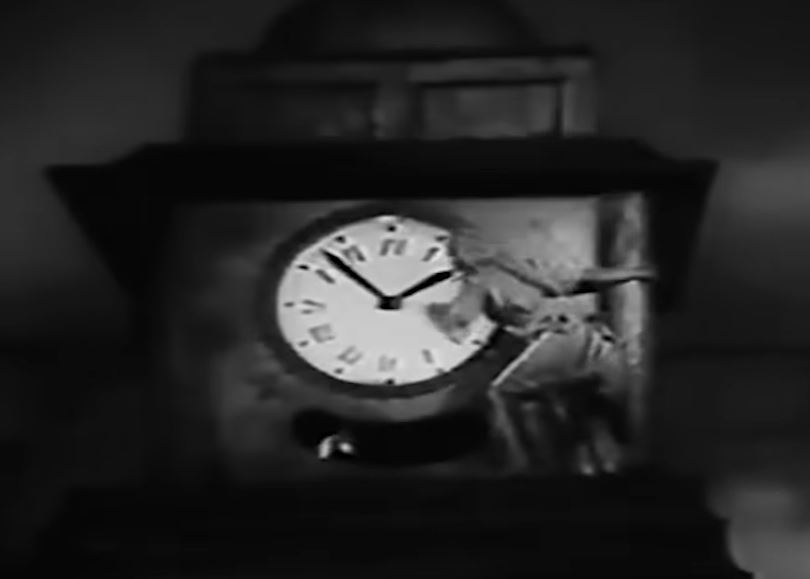
The movie was a big success. Kamal Amrohi does a splendid job in setting the movie’s dark tone and mysterious outline. The ghostly scenes leave their impact on the audience. There is a scene involving Ranjana, and her encounter with a bat and a snake. It is a captivating scene involving some scary close-ups.
This was Madhubala’s first hit film. She performs the serious role brilliantly. Unfortunately, she was typecast in those bubbly roles in most of her later movies. Ashok Kumar is too good. He shows his helplessness where he is seeking to identify his past relationship with Kamini and also come to terms with his present life involving his father, wife and friend. He brings out the psychological impact effectively right from the initial scene involving the painting. Rest of the supporting actors are good. Being a 40s film, some dialogues and scenes sound odd today and may seem slow and boring.
The film is not without its flaws. Some plot points are not explained properly and liberties are taken by the director. There are loopholes in the story. In spite of the shortcomings, the film manages to engage the viewer till the end. There are some surprising plot twists right up to the climax which leave their mark on the unsuspecting viewer. Well that is what makes a suspense film successful, right?