Gharana (1961)

There was a time when many South Indian studios or production houses were active in producing Hindi films. AVM, Gemini and Prasad Productions were some of the big and established names. They primarily remade southern language movies into Hindi and met with success.

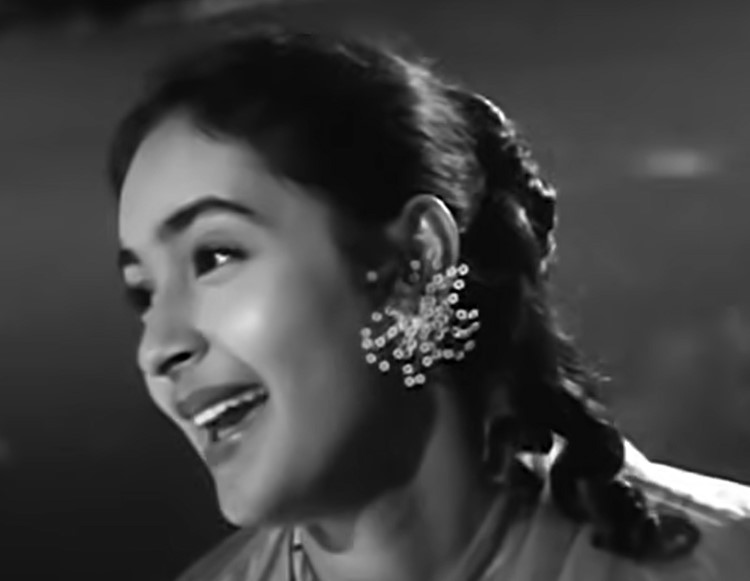
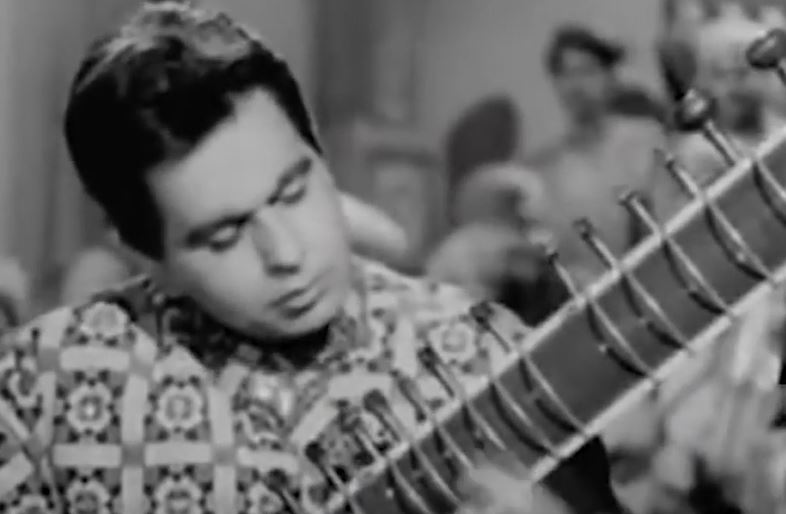
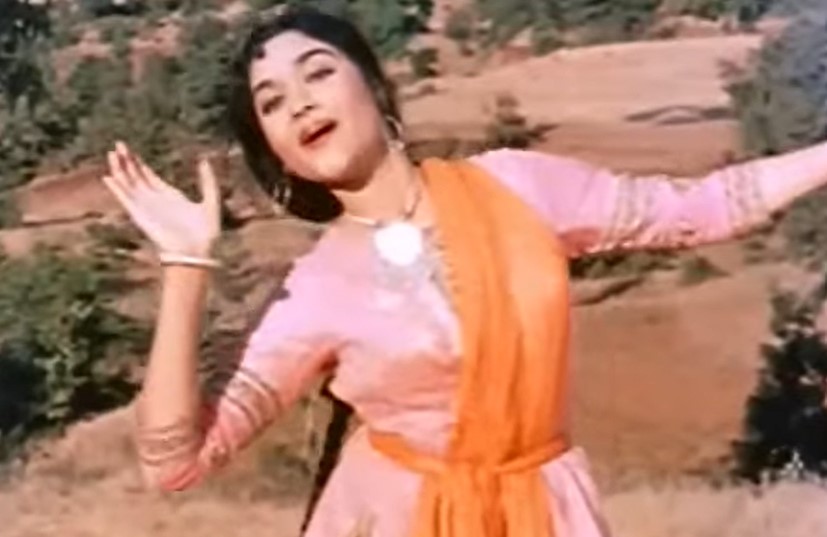
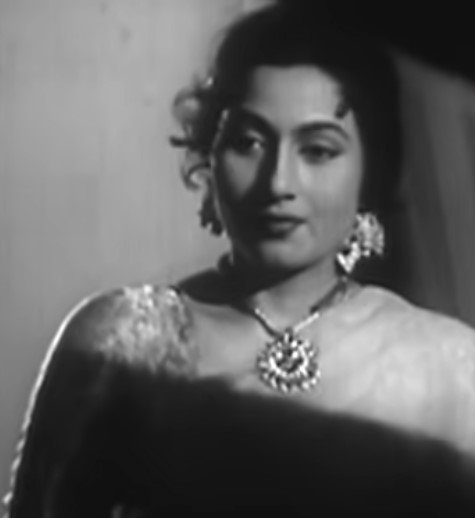
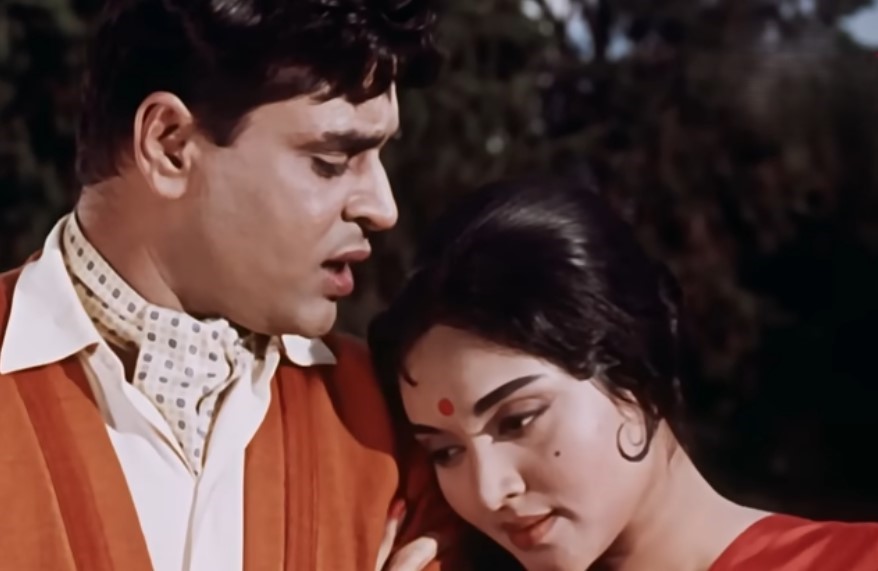
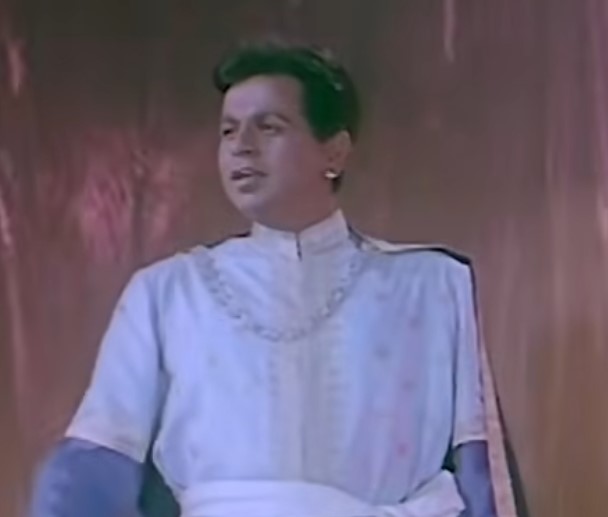
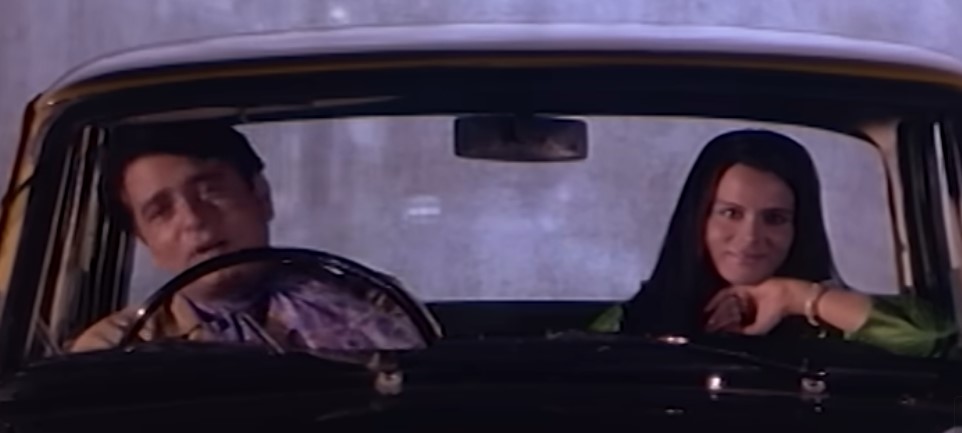
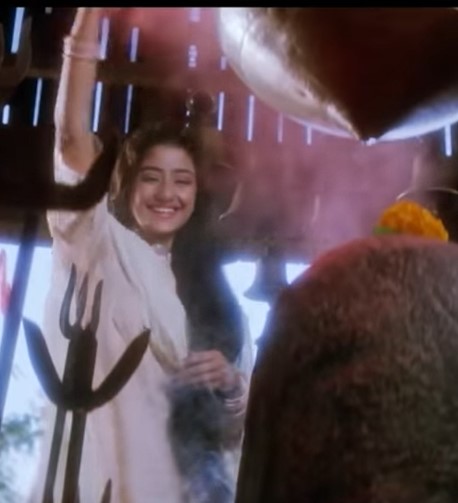
Gharana, made under the Gemini banner was one of such successful productions. Directed by S S Vasan, it was a typical family drama involving a joint family, romance, misunderstanding and sacrifices. It had some big names from the Hindi film industry and lovely music.


The Plot

Gharana tells the story of a wealthy family. The head of the family is Rai Bahadur Ramdas (Bipin Gupta) who doesn’t have any say in the running of the house. His favorite phrase is “Ichcha bhagwan ki” meaning “it is the god’s will” and basically admitting he is helpless. The real controller is his wife Shanta (Lalita Pawar), who doesn’t stay or let others stay peaceful for a moment. You can call her a dictator, a terror. Shanta’s typical day begins by calling out loudly to her daughters in law and make them slog the whole day. No one including her husband dare to defy her. They just let the things be as they are.

Ramdas and Shanta have 3 sons and a daughter. The eldest son has passed away. His wife is Gauri (Vijayalaxmi) who has 2 sons Gappu and Pappu (played by Moppet Raja and Master Randeep). The second son is Kailash (Raaj Kumar). He looks after the family business and travels to Mumbai frequently. His wife is Sita (Devika). Sita worships her husband and even has his photo in the temple in her room. Kailash is tired of the constant interference and dominating nature of his mother and talks about moving to a different residence with Sita. But she talks sentimentally about the importance of a family staying together. It doesn’t take much time for cracks to develop in a house when people start leaving.

The youngest son is Kamal (Rajendra Kumar), a college student. Through a silly scene, he meets Usha Gupta (Asha Parekh) and they eventually fall in love. Usha’s father is a lawyer Shyam Lal Gupta (Kanhaiyalal). She has a stepmother Sheela (Krishna Kumari) who behaves like a filmy stepmother. But Usha has a caring father who is always concerned about her well being in spite of his wife’s pressure.

And there is a daughter called Bhairavi (Shubha Khote) married to Sarang (Agha). Bhairavi stays with her parents because her father-in-law is a classical singer and she can’t stand his singing. (May be ironic but Bhairavi and Sarang are the names of 2 classical ragas!). Sarang keeps coming to meet Bhairavi and persuade her to come home but she refuses and her mother is fully supportive in this decision. So Bhairavi stays in the house and she spends her time backbiting about the other family members to her mother.

Kailash is returning home from Mumbai in a train. He meets his friend Madan’s sister Ragini (Minu Mumtaz). Ragini’s would be husband, a pilot officer had died in air crash just prior to the marriage.

Apparently, Madan had considered Kailash as a potential groom for Ragini but Kailash’s father had already selected a girl for him. Ragini had liked his photo too but life had other plans. They joke about it. Ragini is a spinster. She, along with her sister have started a dance school. She is devoted to dance and happy to serve the society.

Kailash reaches home, he has brought presents for everyone. He gifts a camera to Sarang, This is to ensure a bit of comedy and play an important part later in the movie.

He gifts a diamond necklace to Sita making Bhairavi jealous. Bhairavi is not happy as he has not got anything for her. Kailash tells her he had assumed she would be in her husband’s house. Sita offers to give the necklace to Bhairavi but Kailash stops her. He advises Bhairavi to behave maturely and go and stay with her husband. But she is in no mood to relent and leaves the room angrily.

Sita starts unpacking Kailash’s suitcase and is amused to find women’s clothing in it. Kailash realizes his luggage has got switched with Ragini’s. Next moment, Ragini arrives with Kailash’s suitcase. In their conversation, Kailash mentions that his wife is a goddess and it is her love that draws him to this house. Thanks to his mother, there is a persistent stormy atmosphere in the house and it is Sita who helps in calming him down.

Later, Sita reveals to Kailash she is pregnant. The elder daughter in law Gauri informs the happy news to Shanta. Shanta is overjoyed at the news. Bhairavi tries to poison her mother’s ears stating Sita or Kailash did not consider it important to let her know first. This is an insult to her. Shanta is quick to reprimand both and create a scene.

Through a coincidence, Kamal’s marriage gets fixed to Usha. Her father is obliging and Shanta has him agreeing to all her terms and conditions, meaning a fat dowry etc. The marriage takes place. There is a celebration song with Bhairavi and Sheela singing praises of the groom and bride respectively.

During the song, Kamal notices that his bhabhi Sita is not around and goes to meet her. She is not feeling well. He insists that she come down and makes her wear the necklace gifted by Kailash. Kailash sees the intimacy between Kamal and Sita and suspects they are having an affair. (Bhairavi is partly responsible as she had hinted this to Kailash indirectly when he had returned from Mumbai). But that is far from the truth. Kamal treats Sita like his mother. This is understandable considering Shanta’s character; displaying love or compassion is not in her nature.

Kailash is hurt. He leaves the house abruptly in his car. He attempts suicide but is saved by (who else?) Ragini. She takes him to her house and calms him down. He refuses to go back and prevents her from informing his family about his whereabouts.

Ragini helps Kailash to come out of his depressive state. Kailash recovers but refuses to go back and stay with Sita. Ragini goes to meet Sita and inform that she knows where Kailash is staying etc. He is planning to marry a second time though the law does not permit this. Sita says her husband is her God and she is ready to do anything for him. She talks about sanskriti, the duty of an ideal wife and so on. She blames herself for this situation and is ready to give consent for his marriage. How ridiculous!

Kailash comes home to collect his belongings. Sita begs her pati parmeshwar to stay for their child’s sake. But he doesn’t care and leaves.

In a random scene, Shanta is beating the 2 boys (who were mimicking her and Bhairavi!), when Gauri stops her. She raises her voice and lectures Shanta about her behaviour for the first time. She has been suffering after her husband’s death and being treated like a servant but she will not let her children suffer. Shanta orders her to leave the house with her children. Usha steps in and supports Gauri.

Kamal lectures his father to raise his voice and not leave everything to the will of God. Ramdas finally acts and goes to the extent of beating Shanta. Going forward, he will take charge of the house. Gauri will not be a servant of the house and new staff will be engaged immediately. Bhairavi goes with Sarang to their home and reconciles with her father in law. Ramdas also takes charge of the office and bars Kaliash from coming there or borrowing money.

Sita delivers a boy but Kailash doesn’t care. Kailash comes to know its Ragini’s birthday but he doesn’t have money to buy her an expensive present. He goes to Sita and demands the necklace he had gifted her. Sita hands him the box but but it is empty. (Unknown to them it had been “borrowed” by Bhairavi). This leads to further frustration for Kailash and he blames Sita and her character. His father, mother, brother – everyone makes an attempt to make him see reason. Sita tries to commit suicide but Kamal saves her.

All the melodrama continues until the misunderstanding is cleared at the end.

The Music

Gharana had some good songs by Shakeel Badayuni (lyrics) and Ravi (music). The ones that stand out are Mohammed Rafi’s Husnawale tera jawaab nahin, which has some weird choreography. Then there are 2 duets by Mohammed Rafi and Asha Bhosle – the romantic Jabse tumhein dekha hai ankhon mein tum hi tum ho, and the devotional duet Jai Raghunandan Jai Siya Ram. And finally, the delightful Dadi amma dadi amma maan jaao, sung by Asha Bhosle and Kamal Barot.

My Thoughts

Gharana could have been a fun film if not for all the melodrama. I was expecting Asha Parekh and Rajendra Kumar’s characters to team up and rebel against their tyrannical mother. That would brought some drama to the proceedings. But this hardly happens and the plot remains monotonous. Shanta is an extremely hard nut to crack.

The misunderstanding between Kailash and his wife is not convincing. If only he had talked to his “goddess” wife and brother it would have sorted matters and saved the audience from the agony. The Sita character is unbearable and she keeps preaching about the devotion of a wife, respecting one’s parents and so on. (Thankfully) Rajini’s character is not of a filmy vamp. She genuinely wants to help Kailash and make him see sense but fails like the others.

The film drags on but it seems the audience was happy with the result and made it a hit.

Disco Dancer (1982)

A few months ago I had read about the popularity of the Hindi film Disco Dancer (DD) in Russia (then Soviet Union). The film met with unprecedented success and became the highest grossing Indian film in the Soviet Union (replacing Awara (1951), which held the honour till then). That got me curious and the result is today’s post.

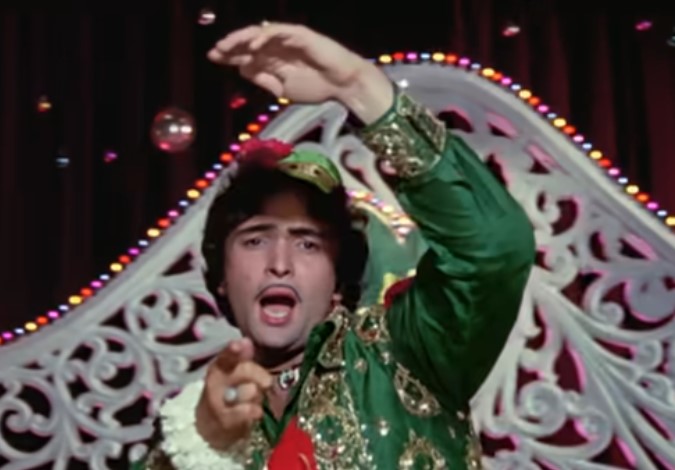
Mithun Chakraborty stars as the main character in this B Subhash produced and directed movie. Bappi Lahiri gave some extremely popular numbers like I am a Disco Dancer, Koi yahaan naache naache, Jimmy Jimmy Jimmy aaja aaja, possibly starting the disco music trend in Hindi film music. So, over to the film!


The Plot

DD is the story of a poor boy Anil. Anil is a singer cum dancer who performs on the streets of Mumbai with his uncle (father’s friend) Master Raju (Rajesh Khanna in a special appearance). They play a variety of instruments and sing songs like Goron ki na kalon ki. At the end of the day, he goes home. His widowed mother Radha (Geeta Siddharth) is waiting for him. Anil informs her that Raju uncle had to go to his village as his mother is seriously ill. Anil’s father used to perform with Raju and wished that his son will be a successful artiste. No details are given how his father passed away. Also, we don’t know if Anil attends school and seems his mother relies on his earnings to run the house.

Anil has a (bad) habit. He will not eat until his mother feeds him with her hands. This is a daily ritual. Next day, Anil goes to perform with his mother. A small girl invites him inside her bungalow. She has been watching him perform everyday and likes his singing. She even knows the song by heart and has a guitar. Soon the children start singing and enjoying until the girl’s father arrives – Mr. P N Oberoi (Om Shivpuri).

He sees people watching the kids’ performance by climbing the compound wall of the bungalow. He shoos them away angrily. He is in an extremely foul mood and barges inside. He slaps his daughter and orders her to go in. He slaps Anil and pushes Radha when she comes to protect him. Radha gets injured. Anil tries to hit him with the girl’s guitar when the police arrive. Oberoi cooks up a story. He sees his daughter’s guitar in Anil’s hand. He accuses him of stealing the guitar. Radha claims she is the culprit and is sent to jail.

Anil comes to meet her and promises he will grow up soon and teach the “Seth” owning the bungalow a lesson. After she is released from jail, Radha goes with Anil to their house in a basti (settlement). The neighbours keep harassing Radha, calling her a thief. The taunting continues even though Radha is innocent. Anil threatens to cut their tongues. Radha pacifies him and decides to leave Mumbai. They move to Goa.

18 years pass and Anil is now a young man (Mithun Chakraborty). We see him performing at a wedding in Goa (Tuntun is the bride). She pays him 100 rupees which he distributes amongst his friends cum musicians. They are not pleased by the paltry amount. He mollifies them saying at least they got something. He is waiting for the day when he will be a successful musician and will reward them in a better way.

Anil comes home. He still insists his mother to feed him with her hands else he won’t eat. Being the Hindi film mother, she obliges. He promises her that when he will be a big man, there will be a big party in his honour and she will have to feed him with her hands in front of the guests. He is still bitter about their experience in Mumbai and waiting for the day when the same city will welcome his mother with respect. He will sharpen his musical talent like a sword and stab the city (what a dialogue!).

In Mumbai, Oberoi is still staying in the same bungalow. His son Sam (Karan Razdan) is a famous disco dancer. He is traveling to Goa for a show. He performs one of the many hit songs of the movie Koi yahaan naache naache, with his partner/lover Nikki Brown (Kalpana Iyer). She is the daughter of his manager David Brown (Om Puri).

After the show, Sam is enjoying some romantic moments with Nikki in the Green Room. David enters the Green Room to talk about their next show, and Sam doesn’t like the intrusion. Sam is arrogant like his father. He insults David badly. David is hurt by this behavior. He is not a servant or secretary and demands respect but Sam is no mood to listen. Apparently,  this has happened many times but this time David takes a tougher stand. He decides to leave Sam and teach him a lesson. He vows to create a new superstar in the disco universe, and Sam will drown in his brilliance (wow!). Nikki cares for Sam and doesn’t know how to react.

Very conveniently, Sam’s replacement is readily available in Goa. David sees Anil dance walking on a bridge in the night. He is impressed and approaches him. Anil is overwhelmed by the opportunity, that to from Sam’s manager. He agrees to perform in the show. Anil assumes a new name Jimmy.

Sam is not sitting quiet. He has sent his sister Rita (Kim) and her friends to disrupt the performance. David introduces Jimmy. As expected, the audience is not very receptive of Sam’s replacement. Rita mocks him, calling him sadak chhap many times but Jimmy maintains his calm and concentrates on his performance. He performs the song Ae Oh Ah…zara mudke mila ankhen, which wins over the crowd. He doesn’t leave the opportunity to mock Rita, who is not amused. The show is successful and David is relieved.

Next day, Anil/Jimmy meets Rita. It seems Jimmy knows Rita is Oberoi’s daughter i.e the daughter of his old enemy. But is she still the small, kind girl who had invited him to her house? Doesn’t seem so. She behaves like a typical rich man’s haughty daughter. He agrees he is a sadak chhap singer cum dancer, risen from the streets. But he is confident the day will come when he will be successful enough to compel her to ask for his autograph.

Fresh from their successful collaboration, David is arranging more shows. He plans to take Jimmy to Mumbai, the place for fame and riches. Radha is reluctant to go but Jimmy convinces her. They arrive in Mumbai and pass by Oberoi’s bungalow. David mentions that it is their common enemy’s residence.

David calls Sam and informs him that he has been replaced by Jimmy in all future shows, making him agitated. Sam’s father Oberoi hears this and is angry too. He calls Basco/ Bosco (Yusuf Khan) to take care of Jimmy and ensure he does not reach the show venue. Bosco and his gang meet Jimmy. While initially helpless, Anil gathers courage (like a Hindi film hero) and tackles all the men single handedly. Jimmy rushes and manages to reach the auditorium and performs Krishna, dharti pe aaja tu.

The show is a success and Jimmy becomes a star. He is all over the media. Fans follow him everywhere. His merchandise floods the markets – Jimmy T-shirts, fabrics, perfumes, and so on. But at heart, he is the same person who cares for his mother.

Sam has sunk into depression and spends the whole time in Nikki’s house. He is unable to accept his downfall. He drinks all day. David is aware of this. He asks Nikki to join Jimmy’s troupe but she refuses politely.

One day, Jimmy meets his old friends from Goa. He also visits the basti where the residents had taunted his mother. There is a sub-plot where Oberoi is trying to grab the basti land and develop it for immense profits. Oberoi engages a foreign goon (Bob Christo) with Bosco’s help to threaten the dwellers and make them vacate the land forcefully. Jimmy helps in thwarting these plans by tackling all the goons. He comes to know that Oberoi is behind all this.

The city mayor Khandelwal (Khandelwal) invites Jimmy for a party (it’s his daughter’s 18th birthday). It is the big party Jimmy had been waiting for. The VIPs and notable personalities from the city will be attending the function. The big names gather around Jimmy. Even Sam feels insulted when his fans rush to meet Jimmy on his arrival. The mayor welcomes Jimmy and Radha with respect. Oberoi and his daughter Rita are among the guests.

Jimmy has tears in his eyes as he describes the past events of his life and talks about the sacrifices by his mother. (Yes, and his mother feeds him lovingly with her hands, as expected.) The mayor introduces Oberoi to Jimmy who refuses to shake hands and insults him openly, reminding how he had behaved 18 years back, beaten him etc. Rita realizes Jimmy is the same boy who used to sing in front of her house.

Next day, Rita comes to meet Jimmy and gifts him the same guitar that he had been accused of stealing 18 years earlier. She apologizes for what has happened. Love blossoms. Oberoi is angry when he sees Rita with Jimmy. Rita is adamant and leaves her house and comes to live with Jimmy.

A revenge game between Jimmy and Oberoi begins. Sam has started taking drugs and Oberoi cannot bear to see his condition. Rita has already revolted against him. Oberoi plots to destroy Jimmy. There are many plans. One plan is to electrocute him when he picks up an electric guitar at a party. Nikki informs Radha about this. Radha rushes to the party and picks the guitar before Jimmy can do so. She gets killed due to an electric shock. Later, Jimmy is beaten up and his legs are broken. He spends a lot of time recovering with Rita assisting him to walk.

All this has impacted Jimmy. He develops guitar phobia (if that is a term). He imagines his mother whenever he sees a guitar. He is reminded of the shocking incident. He doesn’t have the courage to pick the guitar and perform. Nothing motivates him to sing and dance.

David and Rita try to bring him out of this state but are not too successful. Will Jimmy overcome his demons and perform again? Music is his life, how will he carry on? And what happens to Oberoi? All is answered at the end after few more songs and even Master Raju reappears in the climax.

The Music

Bappi Lahiri shot to fame with his disco themed music and it attained popularity outside India as well. While not of a classic quality, all songs are catchy and hummable.

Goron ki na kalon ki” (Suresh Wadkar and Usha Mangeshkar), “Ae Oh Ah…zara mudke mila ankhen” (Kishore Kumar), “Koi yahaan naache naache” (Bappi Lahiri, Usha Uthup) and “Yaad aa raha hai” (Bappi Lahiri) feature famous names.

There are some new names who sing popular numbers like “Jimmy Jimmy Aaja” (Parvati Khan), the title song “I Am A Disco Dancer” (Vijay Benedict), and “Krishna, dharti pe aaja” (Nandu Bhende).

My Thoughts

I am confused about the reason for the huge success of the movie. It’s not a mediocre movie but the execution could have been better. I cannot comment about the quality of Mithun’s dance or technicalities, but yes, he has the moves. (He outperforms Karan Razdan who just couldn’t dance). But Mithun outshines all others in the acting department. He has a raw and natural presence, the emotional scenes are particularly impactful. In comparison, the action scenes are tedious to watch. But Mithun convinces the audience that his character has learnt to sing and dance on the streets. He has also learnt to fight and defend himself on the streets. So, it works in his favour!

The romantic track between Mithun and Kim seems forced and they lack the chemistry. Kim is memorable in the iconic song Jimmy Jimmy Jimmy aaja aaja. Om Puri is good but doesn’t have much of a role. The villains are uninteresting and ham all the way. Om Shivpuri and Karan Razdan are irritating. Yusuf Khan and Bob Christo have strong screen presence but their characters lose steam when the hero tackles them easily!

At the core of DD is the revenge theme. The wronged hero, who returns to claim his place. He is down many times but rises each time to take on his enemies and move ahead. Maybe that thought resonated with the audience. And the music, which was “different” and something the audience was fine to accept. And credit to Mithun Chakraborty, who connects the character with the audience successfully.

Gharabaher (1999)

The women’s reservation bill has been an ongoing topic for many years in India, meant to improve the status of women by giving them representation in Government bodies. Gharabaher (literally out of the house) handles this subject through the story of an influential political family. It shows how the deeply rooted beliefs are difficult to overcome. This is not limited to gender inequality but other factors like social standing, caste that matter while holding public positions and being successful in politics. Produced by Ratan Madaan and directed by Sanjay Surkar, Gharabaher makes it’s point.


The Plot

Annasaheb Patil (Mohan Joshi) is the head of a political family based in Hanamantwadi. With a political experience of 30 years, he has been the local MLA for many years. He has a strong hold on his constituency. A shrewd and experienced politician, he knows how to manage his supporters and opposition. He is looked at with respect. One of his close friends is businessman Hasmukh Patel (Madhav Abhyankar), who owns a factory in the village.

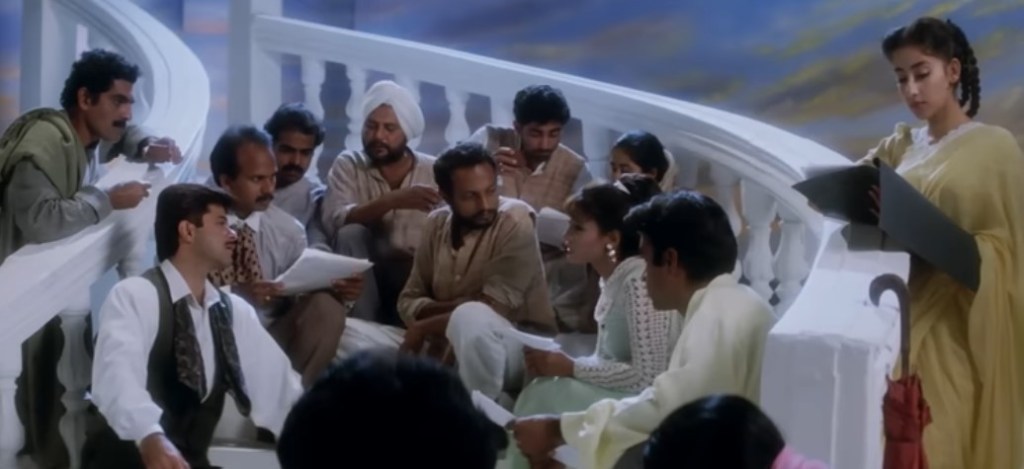
Through a breakfast table discussion (where he is joined by the village chief (Jayant Sawarkar) and a political worker (played by Prashant Damle), we come to know that the Government is planning to introduce reservation for women in the legislative assembly. The men discuss that this was already implemented in local rural and urban Government bodies. But that hasn’t made a difference. The place of a woman is in the house and should remain as is.

Annasaheb’s wife is played by Smita Talwalkar. She has no interest in politics and happy to manage the house and care for her family. Annasaheb has a son Balasaheb (Sachin Khedekar). His wife is Laxmi (Mrunal Kulkarni). Balasaheb runs an educational institute.

Annasaheb has a daughter Vasudha (Sonali Kulkarni). She is studying to be an architect in the city college, and appearing for her final exam. She is a practical and modern woman in spite of her rural family background. She is fond of photography. On a study tour she comes across a woman candidate busy in campaigning. Her husband has been the local councilor for many years. Due to introduction of reservation, the wife has been forced to contest the elections. But she is a mere rubber stamp as is evident from her responses to a press reporter. For every question asked, she points to her husband – why dont you ask him? much to the delight of the onlookers.

Vasudha and her friends laugh at this response. Her friends have a discussion about women in politics. The elected women don’t have a say, the real power remains with their husbands. They ask Vasudha if she is ready to plunge into politics. After all, she has a strong family background. But she makes it clear she has no interest in politics and will leave it to her father and brother to manage.

The men are not without their vices. Annasaheb is involved with Chandrakala (Reema Lagoo). Balasaheb is close to Rajni Jadhav (Kishori Ambiye). Both the women are aiming for plum posts in Government bodies. They hope that their relations with the influential politicians will help to achieve their ambitions. The politicians are in turn using them for their benefit. Such is the compulsion when politics are involved.

Balasaheb is following his father’s footsteps. He runs the educational institute but not without charging hefty donations. Corruption is perhaps a by product of politics! And he has an eye for women.

There had been an unpleasant situation when he was involved with a woman (apparently a college staff member). The woman had committed suicide and Annasaheb had a tough time getting the case closed. The matter was closed but Balasaheb has not learnt a lesson. He now has his eyes on Naina Gholap (Madhura Lele), a new professor. He promises her a post in the public relations department in return of her “services.” She runs away when he tries to take advantage of her.

Back to Vasudha. Vasudha returns home after her exams. The whole house including the servants dote on her. She is glad to be back. Her mother mentions its time for her to get married which her father and brother agree upon. But she counters them stating the world has changed and women are not limited to managing the house and stay within its confines.

One of her classmate was Sameer Shinde (Kishor Kadam). He is the member of Gramvikas Yuvak Sangh, a youth organization and also a progressive farmer. His associate and love interest is Nanda Thorat (Aparna Kumar(?)). Sameer is working for the welfare of the villagers. He is fed up of people like Chandrakala who are involved in illegal activities and resist any effort made by his team for the betterment of the villagers. He raises his concern with Annasaheb, who pacifies him in a fatherly manner. Needless to say, Annasaheb is fully supportive of Chandrakala and doesn’t care for people like Sameer, who is the son of a farm labourer and of a lower caste.

Sameer invites Vasudha for a hurda party arranged on his farm. There is a celebration song Punavechi raat sakhya. At the end of the song, Naina comes running to meet Sameer and tell him about her experience with Balasaheb. He directs her to Vasudha, who is shocked to hear about the matter.

She rushes home disturbed to talk to Balasaheb. It is quite late in the night but Balasaheb is yet to arrive home. He comes late and drunk. The next morning, she confronts him on Naina’s claim. He downplays the matter and tries to put the blame on Naina. But Vasudha doesn’t agree. She counters asking why a respectable woman would make such grave accusations?

Later, Laxmi goes with Vasudha on a long drive and shares her thoughts. Apparently, Balasaheb comes home late everyday. She knows he is a womanizer. That’s how it has been since their marriage. She feels like a trapped bird and so on. Vasudha is disturbed to hear all this. There is another song at this point – Paus ranaat.

The Naina matter is taken by Sameer to Annasaheb for intervention. Chandrakala tries to threaten Naina in her style but things don’t work out as desired. Annasaheb is forced to comply as the elections are round the corner. A meeting is arranged between Naina, Sameer and Balasaheb. Balasaheb apologizes to Naina. Annasaheb advises that Naina should resign and leave the college. He is happy to help with another posting. Sameer agrees reluctantly.

Vasudha is further acquainted with the happenings in the rural area. She meets a woman Ramabai, village head of a neighboring village. Ramabai was elected on basis of a caste based reservation but the men and high caste functionaries do not allow her to function independently. She is helpless and appeals for help.

And the assembly elections are announced. Unfortunately, Annasaheb’s family seat is reserved for a woman candidate. Potential candidates like Chandrakala and Rajni are considered but he knows that he needs someone who will be acceptable to all, especially his detractors and party seniors. The choice is limited and after much deliberation, he identifies Vasudha as the perfect candidate to fill in his shoes. Most importantly, a family member will occupy the seat in the assembly.

Vasudha opposes the plan but there is emotional blackmail from Annasaheb, her mother and brother. Finally, her father tells her that this is her opportunity to do something good which makes her agreeable.

Her life is about to change. She is pulled into the election campaigning, all managed by her father, brother and the party’s supporters. The election campaigning and polling is depicted through a song Dhav ghe karunakara. Vasudha she gets elected by a record margin.

This is just the beginning. It doesn’t take long for Vasudha to realize that she is just a pawn in the political game. Her father continues to have his way. And all is not hunky dory as she had assumed. Vendetta, corruption etc are all part of the game. In a moving scene, she is reminded of that woman candidate who directed all questions to her husband. She seems to share her plight.

Events keep happening where she is forced to take a stand for herself and her constituency. The businessman Patel’s factory is responsible for contaminating the village’s water sources. Sameer keeps raising the matter and expose the wrongdoings of Annasaheb, Balasaheb and their associates. Seeing him as a threat, Balasaheb orders Chandrakala to finish him off.

Sameer is murdered and his wife seeks justice from Vasudha. Chandrakala is arrested who spills the beans to Vasudha, laying the truth in front of her. Does she have the guts to get her brother arrested and ensure justice?

What option does Vasudha have? Will she go against her family? Or will she save the family’s prestige and play the same game?

The Music

There is no scope for the 3 songs which unnecessarily break the flow. Vijay Kuvalekar is the lyricist and Shridhar Phadke the composer. Suresh Wadkar sings Dhav ghe karunakara which is set against the backdrop of the election campaigning. It is a devotional song which doesn’t match the visuals. There is a hurda party song Punavechi raat (Asha Bhosle) and another song on the farm Paus ranaat (Asha Bhosle and Mahalaxmi Iyer).

My Thoughts

The film is a sincere attempt to highlight the subject of women’s reservation and their role in politics. We have a long way to achieve the expected objectives. Rich and influential families continue to control the political landscape in their areas. The film sticks to its core theme and doesn’t divert with sub plots including comedy and romance. It also speaks about the place of women in society. Being from an entitled household doesn’t guarantee that all is well. The film won 2 National awards for best feature film and best director. It also won multiple Maharashtra state awards.

The star cast is filled with seasoned actors making it a pleasure to watch. Sonali Kulkarni is the protagonist and performs convincingly. She plays the happy go lucky character looking for relaxation before she can think of future plans. But life has other plans, making her take a stand against her own family. Mohan Joshi, Smita Talwalkar, Mrunal Kulkarni, Kishor Kadam and Sachin Khedekar are good. Reema Lagoo portrays a different character than her usual motherly roles and she looks the part. Prashant Damle adds a touch of comedy but his role seems wasted.