Arey Sansaar Sansaar (Oh, this life!) is a Marathi movie directed by the veteran director Rajdutt. The movie shows the struggles of a farmer and his family. How they deal with a series of hardships and try to overcome them with great courage and unrelenting effort. It is based on a story by Pt. Mahadevshastri Joshi, who is credited as the source of many female centric movies in Marathi cinema.
The Plot
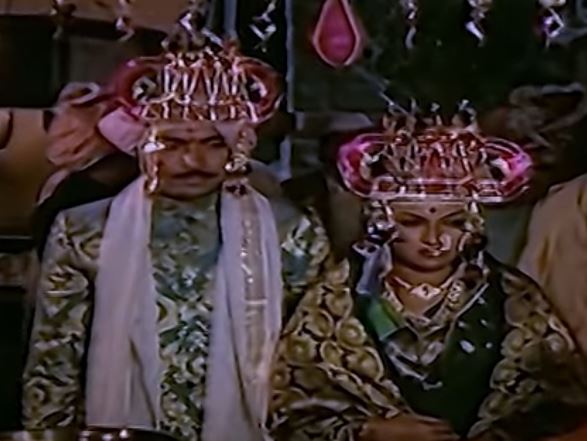
Arey Sansaar Sansaar is the story of a well to do farmer Bapu Desai (Kuldeep Pawar). Well to do in the sense that he is a watandaar (landholder). However his farm has been mortgaged with the local moneylender Sawkar (Ashok Saraf). Bapu is getting married and he has arranged the money by mortgaging his ancestral house. His wife is Ratna (Ranjana), who is also from a moderately rich family. In the very first scene, Bapu is bringing his newly wedded wife home. They have a sweet banter as they enter the village. Ratna is visibly impressed by her husband and his house.
As seems to be the custom, Bapu takes Ratna to meet Sawkar. Sawkar is a lecherous fellow with no scruples. He sees Ratna and is lusted by her beauty. This is a pointer of things to come!
The tobacco crop is ready. Bapu wants to sell it in the Nippani market where he is expected to get a much better rate than offered by the local Sawkar. The Sawkar is furious when he hears this. He goes to meet Bapu and offers him the same rate. There are some uncivil comments made by the Sawkar’s servant (Majnalkar) concerning Bapu’s wife Ratna. Bapu, gets angry and refuses to sell the crop to Sawkar come what may. Unfortunately, the crop gets damaged due to unexpected heavy rains and foils Bapu’s plans.

Sawkar goes to meet Ratna when Bapu is away. He tries to woo her but she gives him a fiery response and warns him to stay away from her. Bapu comes home and Sawkar reminds him of the loan. He will seize his land and house if the money is not paid back soon. A shaken Ratna offers her jewellery to cover some of the amount. The Sawkar leaves but his next scheme is ready. He ensures none of the farm labourers turn up to work for Bapu. Bapu is forced to work alone and keep the activities going.
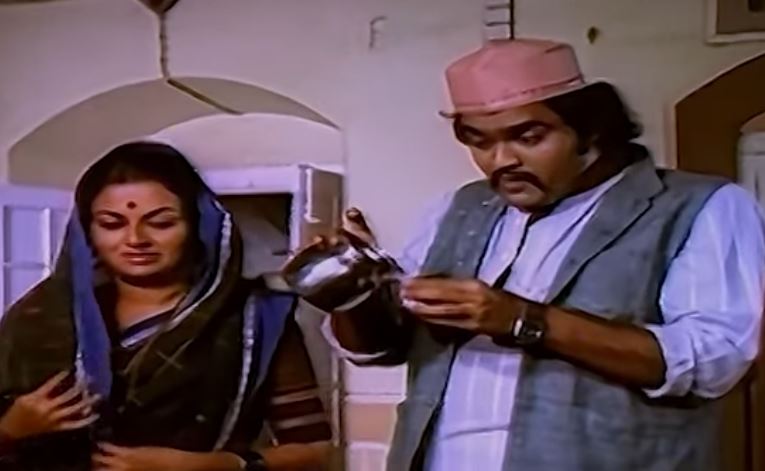
So, now Ratna knows the reality of her in-laws’ financial condition. She is a feisty and practical woman. She cannot accept sitting at home while her husband toils in the fields. She joins him but he is not impressed. The women of his family are supposed to mind the house and not slog in the farm. What will the villagers, her parents etc say? She patiently explains that she has pledged to be with him in his joys and sorrows. He is finally convinced and thus begins their new farm life! They sing a song Raja lalkari ashi ghe.

Sawkar can’t let go of Ratna from his mind. He attempts to rape her but Bapu steps in and gives him a good bashing. In retaliation, Sawkar gets a seizure order and Bapu and Ratna are forced to leave their house and give up the farm too. They start living in a small hut. All that they have left is a small tract of jungle land which had been received as a reward (inaam) by Bapu’s family.
Bapu is disturbed by the developments. Gone is the prestige of the Desai’s. He cannot even guarantee a comfortable life for his better half. He attempts suicide but Ratna is alert and stops him in time. He asks her to leave him and go back to her parents. She says she has committed to be his shadow. This is a dark night but they should look forward for the sunshine. He agrees and they start working to clear the land and attempt cultivation. They sing another duet Kalya maatit maatit.

8 years pass on. They are blessed with 3 sons and also a bumper crop of sugarcane. They are looking forward to harvest the sugarcane when tragedy strikes. Sawkar sets the farm on fire and kills Bapu.
Ratna is broken and her struggles continue. There is severe famine and no food. She may have to sell off the last piece of land to support her family. She sings a sorrowful lullaby Jo jo gaate, zoka dete. Sawkar attempts to give her food and money but she refuses both with great will and effort. She cannot let her family’s principles wither away and die. Again, she looks forward for the positive tomorrow to arrive.
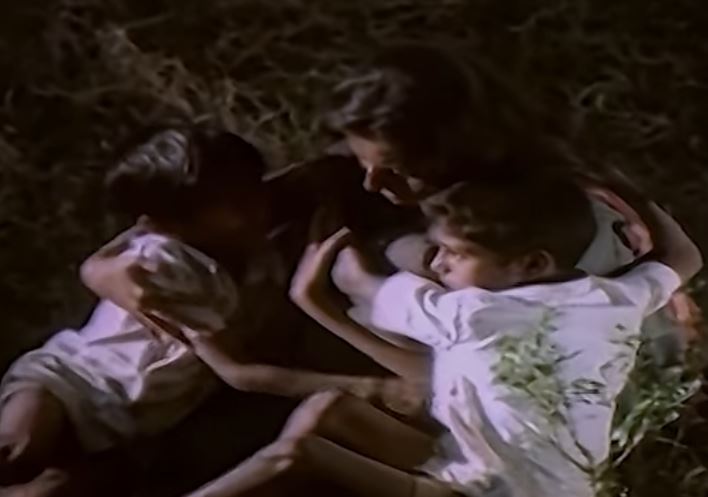
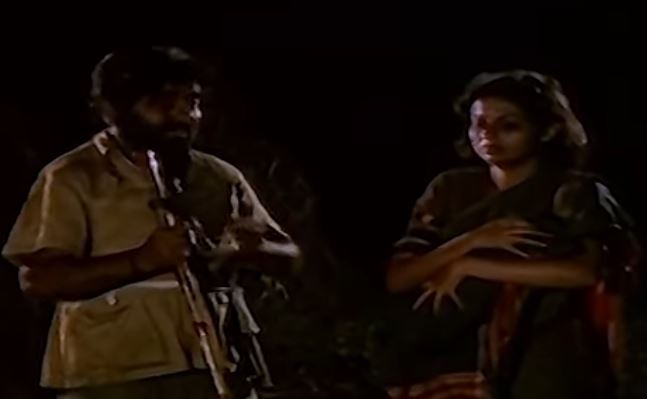
Sawkar attempts to abduct her children to force Ratna to come to him but she is saved by a good samaritan Sambha (Dinkar Inamdar). Sambha had faced a similar fate when the Sawkar lusted after his wife and eventually raped her. He had lost sanity for many years and roamed in the village like a mad man. Seeing Ratna’s plight, he is reminded of his past events and is suddenly brought back to reality. He attacks Sawkar and compels him to leave the children alone. Ratna accepts him as his brother. The rains arrive soon, bringing hope.

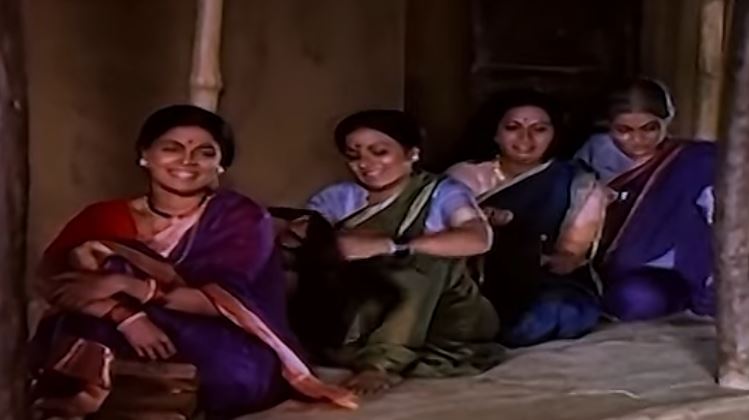
Finally, there is some joy in Ratna’s life. Ratna has aged, her children have grown up. The elder sons are married with children. The youngest Mahadev (Mohan Gokhale) has his sights on Hansa (Reema) and they look forward to get married with Ratna’s blessings.


And Sawkar? He won’t let Ratna or her family forget their hard times. He plans to sow the seeds of jealousy and discontent among her sons and daughter-in-laws. Will he succeed? Will Ratna continue to defy his intentions and manage to keep her family united?
The Music
The movie receives able support from its songs and are complementary to the story. Anil Arun are the music composers and Jagdish Khebudkar and Prof. Vitthal Wagh the lyricists. Suresh Wadkar and Anuradha Paudwal sings the hit duets Raja lalkari ashi ghe and Kalya maatit maatit (which comes in 2 versions). Vithu mauli tu is a devotional song in the voices of Sudhir Phadke, Suresh Wadkar and Jaywant Kulkarni. It is picturized on the 3 sons as an ode to their mother who has suffered all her life to bring them up successfully. The lullaby Jo jo gaate is also effective with its lyrics and picturization.
My Thoughts
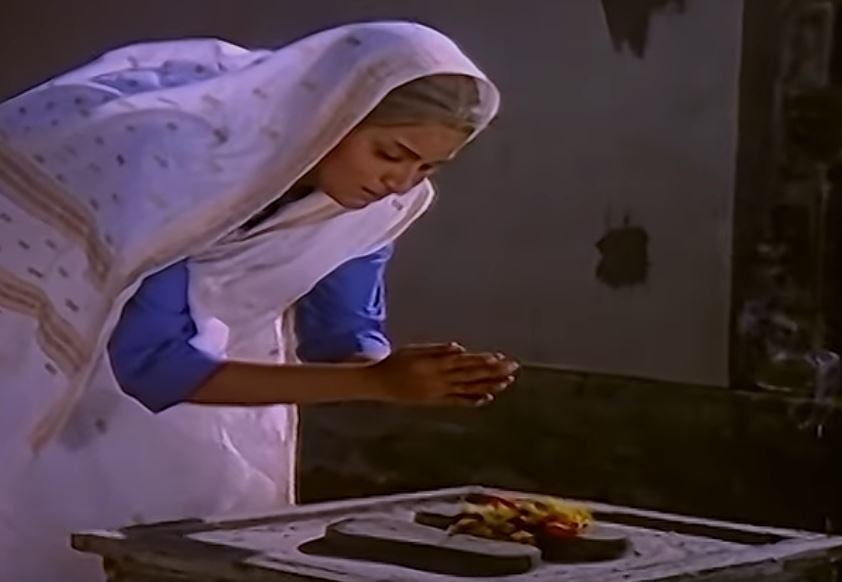
The story is a long string of challenges faced by the main leads. It shows the debt trap that farmers enter into and is difficult to escape as the debt keeps piling up. They are at the mercy of the moneylender who exploits them openly. The viewer is easily reminded of Mother India with its fairly similar plot of the moneylender and the farmer’s family.
Kuldeep Pawar plays a character who is initially strong willed but later on forced to accept the reality of the debt trap and faces an unfortunate death. He shares a great chemistry with Ranjana. Ashok Saraf plays a comical villain. He is effective in some scenes but the comedic touch does not work every time. Maybe it would have benefited to show him as a typical evil villain who keeps plotting to fulfill his schemes against the Desai family. The show stealer is Ranjana. She is especially effective in her aged role right to her body language and movements showing a character who has seen it all that life has offered to her. She has no complaints and wants to spend her remaining days in the company of her children and grand children. The only jarring note is her soft dialogue delivery which is difficult to comprehend at times.
The movie also starred a young Reema Lagoo who is effective in her small role of the daughter-in-law. Interestingly, her real mother (Mandakini Bhadbhade) played her mother’s role on screen.
 Cine Gaurav