Films revolving around religious themes have been common in Indian cinema. This week the Ganesha or Ganpati festival is being celebrated across India and abroad. Lord Ganesha occupies a special place in the hearts of its followers. In 1979, came Ashtavinayak, a Marathi film centred around this favourite deity. Under the banner of Manoram Films, it was produced by Sharad Pilgaonkar and directed by Rajdutt. It is said to be based on a real story from 1975 involving a well known business family in Sangli.
Ashtavinayaka means “eight Ganeshas”. It refers to the eight Hindu temples in the state of Maharashtra, India, located around the city of Pune. Devotees undertake the Ashtavinayaka tour to visit all the temples in a specific sequence.
The Plot
As the titles roll, we see Shree Gajanan Mills celebrating its silver jubilee. A well known singer Pandit Vishwanath Bhosle (Dr. Vasantrao deshpande) is performing with his young daughter (song = Tu sukhkarta). Few more years pass as the credits end.

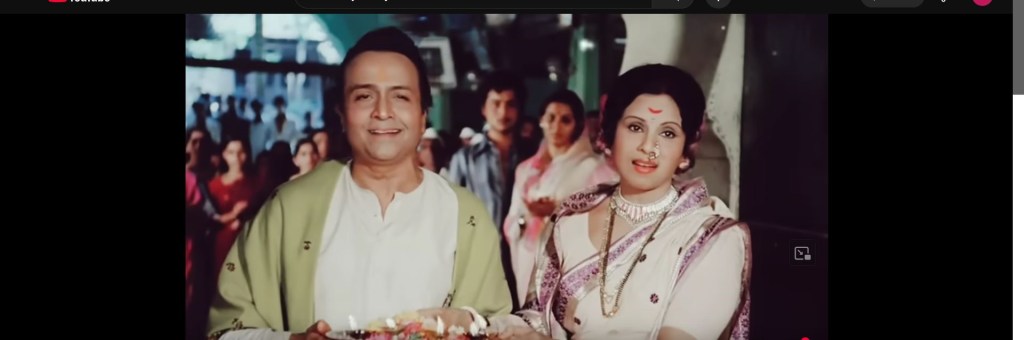
The owner of the mill is Nanasaheb Inamdar (Chandrakant). He is recovering from an illness and the doctor has advised him to take it easy. Nanasaheb is a respected and caring employer. He has helped many a worker in the time of their need. He is also an ardent devotee of Ganpati. Everyday, he worships the Ganesha idol in the mill. And the annual Ganpati festival celebrations are well known and a period of relaxation for the workers.

Nanasaheb’s close associate cum friend is Appa Sathe (Sharad Talwalkar). Appa has brought his son Sadanand to meet Nanasaheb. Sadanand has passed his graduation exam and Nanasaheb offers him the job of sub accountant in his mill. Nanasaheb has one son Balasaheb/ Bal (Sachin). Bal is studying in Italy and will be returning to India soon. Bal’s mother has passed away. Nanasaheb has married again but Bal is not on very good terms with his stepmother referred as Maa (Padma Chavan).

Sadanand is dispatched to Mumbai to receive Bal and bring him home. Nanasaheb is overjoyed to see his son back. Bal has completed his degree education in Italian paper technology and won the gold medal. Bal is a talented and practical person. He soon impresses everyone with his knowledge and brings efficiency in the way the mill is operated. Nanasaheb hands over the running of the mill to Bal.
Nanansaheb, Appa and the workers are happy. But there is one glitch. Nanasaheb is a pious man devoted to Lord Ganesha. But Bal is the exact opposite. He is not a believer in God and insists its a person’s hard work and talent that is important to be successful. (His reason for being a non-believer is revealed later.) This difference in their beliefs is going to cause problems.

One person not happy with Bal’s success is Maa. She feels insecure with Bal taking charge of the mill. With her husband’s attention and affection diverted to his son, she has no say and feels like junk in the house. She has called her brother Narayan Chavan alias Naru Mama (Raja Gosavi) to offer her support. Naru Mama is a dishonest and lazy character. He is someone who doesn’t do anything himself and finds pleasure in the suffering of others. Especially when he is the root cause of their suffering! He has his own family – a wife, son and daughter (Shama Gosavi). He doesn’t mind leaving them to the fend for themselves as he enjoys a comfortable life in his sister’s company.

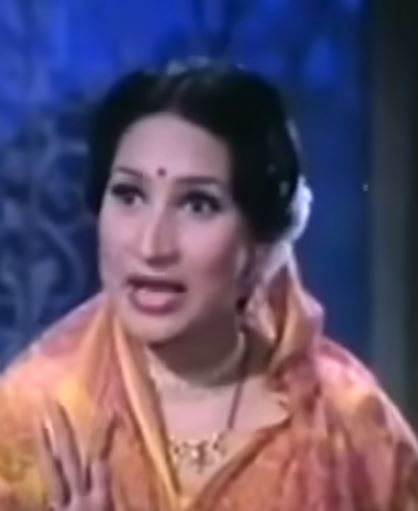
Bal is constantly thinking of efficiency and innovation to benefit the mill. Nanasaheb tells Bal that he is impressed by his hard work; ultimately all this grandeur is going to be his one day. Maa is uncomfortable to hear this. She tells Naru Mama to do something. He finds a solution. Naru Mama will ask his daughter Nayana to come and meet Bal. The plan is to get Bal and Nayana married so that he and Maa can continue enjoy the fruits of Bal’s labour effortlessly.
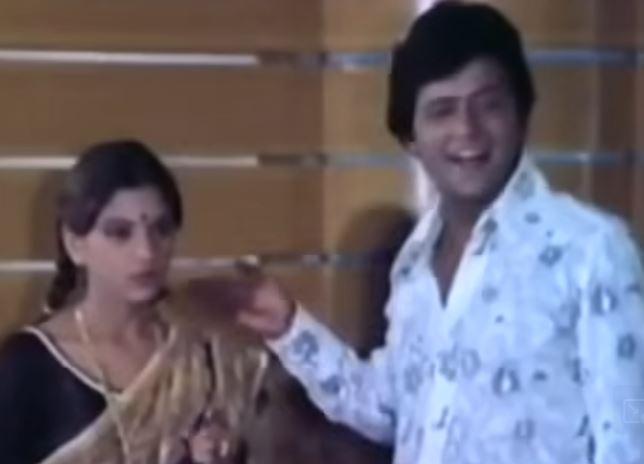
But things don’t work as desired. Naina arrives but she meets Sadanand and falls for him. She moves closer to him instead of Bal.
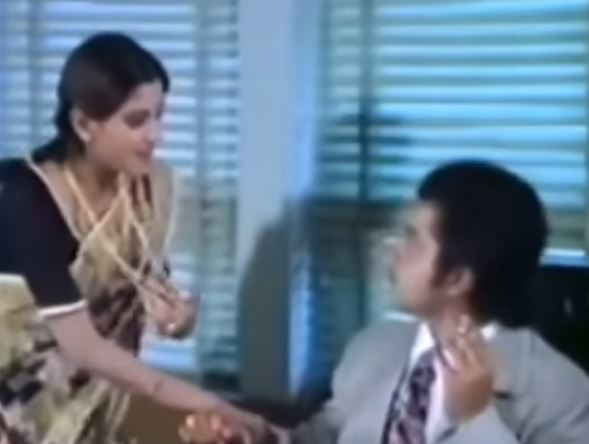
The mill gets a huge order to be completed in a few months. Bal devises a plan to make the workers work overtime to complete the order. Appa points out that the annual Ganesh festival is around the corner. The festival is celebrated in the mill with full pomp every year since last 40 years. Bal tells him that he cares more about the committed deadline and profit rather than whiling away of time in religious celebrations. Work is a priority and their product needs to be in the market as per the agreed schedule.
This doesn’t go with the workers as well as his father. Nanasaheb proposes to get an extension for the order delivery date but Bal is adamant. Nanansaheb is regretting his decision to handover the charge to Bal. Bal gives him a choice – the workers can celebrate the festival but he will quit his post. Nanasaheb is unable to hear this and collapses. He is seriously ill and bedridden.

Naru Mama asks Maa to clarify with Nanasaheb what provision has been made for her after his death. Or else her future will be in the darkness with Bal being in charge. She goes to meet Nanasaheb and ask him outright but he is unable to digest another shock and passes away. The workers are devastated at the loss of their owner and fatherly figure. But they recover and continue with the production schedule.
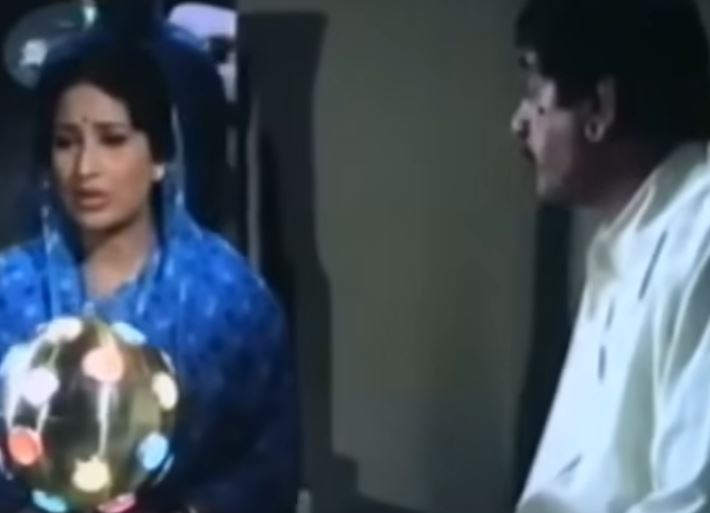
With new orders coming their way, it is time to open a new branch of the mill. The bank authorities are impressed by Bal’s success. They are ready to back him financially. Appa tells Bal him that there is land available near the Krishna river in Sangli. Bal decides to go to Sangli to view the site. On the way, he encounters torrential rain and a tree collapse which force him to seek shelter. Luckily he sees a house. This is the house of his family’s old acquaintance Pandit Vishwanath Bhosle (Pt. Vasantrao Deshpande). He is away but his daughter Veena (Vandana Pandit) and sister (Saroj Sukhtankar) welcome Bal wholeheartedly. Next day, Bal is introduced to Veena’s talent – she is a singer too. Needless to say, he has fallen in love at first sight.
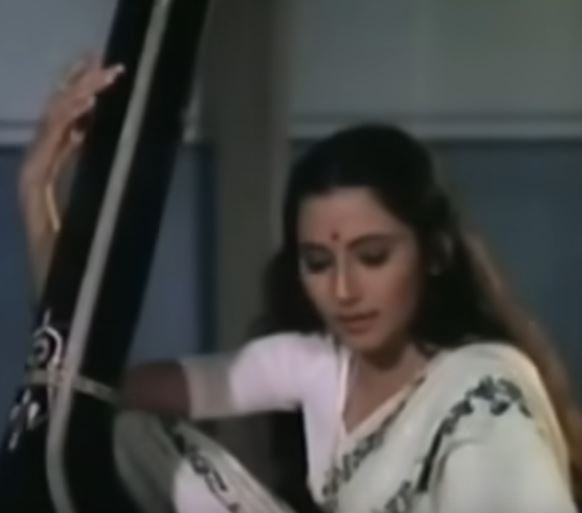
Upon returning, he conveys his decision to get married to Veena. Appa is overjoyed and goes to meet Panditji (he is performing with his daughter in a temple (song = Pratham tula vandito)) . Maa and Naru Mama fume at the failure of their plan and admonish Nayana.
Bal has made it clear that he does not expect anything from the Bhosle family (meaning dowry). Panditji is happy with the proposal. Veena rushes to pray to the Ganesh idol and promises that she will come with her husband and complete the Ashtavinayaka yatra. This is a dramatic moment as Appa hears it. He realizes Veena and Bal are diametrically opposite in their religious views and fears the way ahead for the couple.

So, Veena and Bal get married. The first few months are fine. Maa is not very welcoming to Veena but Bal and Appa provide support as she settles down in the Inamdar household. And Veena is expecting their first child. But things don’t stay normal.

The new factory construction is underway in Sangli and there is a Ganesh temple blocking the construction site. Bal orders demolishing of the temple to make way for the factory’s power house building. Veena is shaken to hear this. She joins the villager’s protests but Bal succeeds in his mission. Veena gets injured and is affected emotionally. She is hospitalized and is in a fragile mental state.
There are further twists. There is a fire incident in the new mill and Bal may lose everything that he had aspired for. That includes not only his mill and his wealth but also Veena. Things reach a point when Bal has to make a decision that tests his faith. Will he bend and overcome his principles? And what about Veena’s unwavering faith in the Almighty?
The Music
The film has all memorable songs composed by the Anil Arun duo. There are 4 lyricists namely Shanta Shelke, Madhusudan Kalelkar, Shantaram Nandgaonkar and Jagdish Khebudkar. Pratham tula vandito krupala (Pt Vasantrao Deshpande and Anuradha Paudwal), Tu sukhkarta (Pt Vasantrao Deshpande and Rani Varma) are duets addressed to Ganesha. Daatun kanth yeto Pt Vasantrao Deshpande) expresses the emotional state of a father whose daughter is getting married.
The two solos by Anuradha Paudwal, Diste majala sukh chitra naave and Aali majhya ghari hi Diwali showcase the happiness of the heroine.
And finally the climax song which takes the viewer on an Ashtavinayaka yatra (journey)!. Ashtavinayaka tujha mahima kasa, sung by multiple singers and picturised on well known faces of the Marathi film industry (Usha Chavan, Asha Kale, Jayshree Gadkar, Shahu Modak, Suryakant, Krushnakant Dalvi, Sudhir Dalvi, Ravindra Mahajani and Ashok Saraf). It is said that Jagdish Khebudkar was specially brought in to write this song. The song describes each Ashtavinayak location, the temple and the deity. Apparently, the lyricist had never visited any of the temples yet delivered this superb number. For each verse, the tune incorporates different musical forms from the state of Maharashtra.



My Thoughts

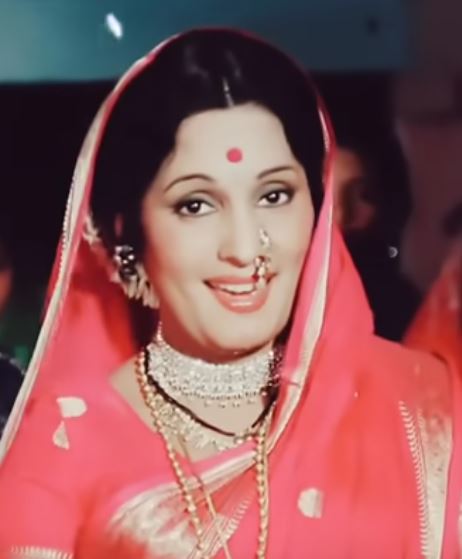
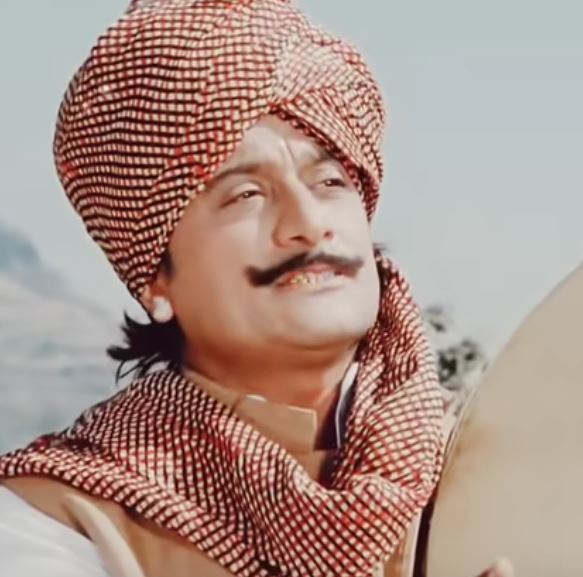
The well made film won multiple trophies at the State Film Awards. Ashtavinayak was presented by Sachin, whose father was the producer. He forms a fresh pair with Vandana Pandit. This was perhaps her only movie as the main lead as she got married and quit films. Well known singer Pt Vasantrao Deshpande played a small role and performs the father cum singer character convincingly. All his songs are popular till date. Overall, it is the older cast who steal the show. Sharad Talwalkar, Raja Gosavi and Padma Chavan are impressive.
The story is about the non-believer (atheist?) who sticks to his beliefs until circumstances compel him to at least rethink his approach. The change is gradual and the ending is a bit ambiguous. The film has a serious tone but is balanced by the humorous touches which keep it entertaining. The popular songs especially the long climax number will continued to be heard during the Ganpati festival, highlighting the longevity of a good score.
 Cine Gaurav