Bhalji Pendharkar is regarded as one of the pioneers and most respected filmmakers in Marathi cinema. He was an influencer and mentor to many artistes. Though more famous for historical films centered around the Marathi empire, he also made films on other subjects occasionally. His creation Sadhi Manasa (Simple People) is a gem of a movie. Like its name, it tells the story of simple people and the hardships faced by them. Perhaps the most special thing about the film is its music, which was composed by none other than Lata Mangeshkar (credited as “Anandghan”)!
At the 13th National Film Awards, it won the President’s silver medal for the Best Feature Film in Marathi. At the Maharashtra State Film Awards, the film won 9 awards including Best Film, Best Director, Screenplay and Dialogue (for Bhalji Pendharkar), Best Actress (Jayshree Gadkar), Best Music Director and Best Female Playback Singer for Anandghan / Lata Mangeshkar as well as Best Cinematography: Arvind Lad and Best Art Direction: Sadashiv Gaikwad.
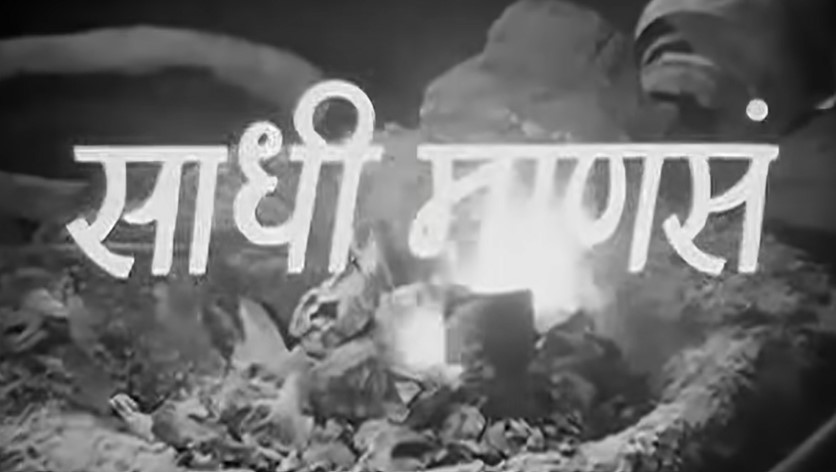
The Plot
The film is set in Hanbarwadi village and tells the story of Shankar (Suryakant) and Parvati alias Paru (Jayshree Gadkar). Shankar is an ace blacksmith. His skill is demonstrated in the first few scenes.
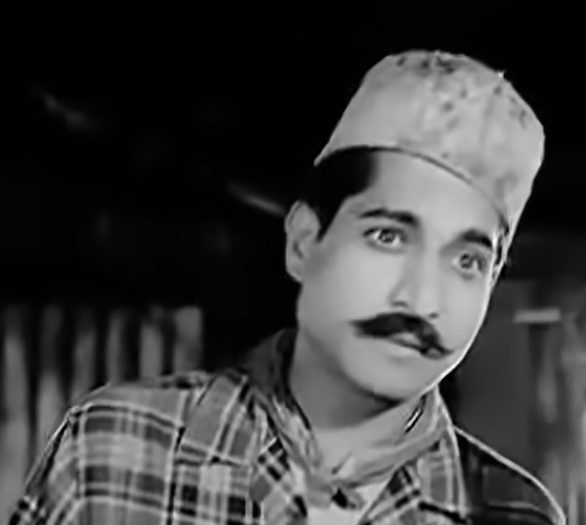
Chakkadrao (Rajshekhar), a truck driver arrives in the village. His truck has developed a snag and a certain part needs to be fixed. He is directed to Shankar’s house. Shankar, helped by Paru gets on the job. It is also the perfect setting for one of the most well known songs – Airanichya deva tula thinagi thinagi waahu de.
Shankar repairs the part and Chakkadrao is impressed. He offers to take them to Kolhapur, a big city where Shankar can make better use of his skill. He asks the couple to think about it for a few days. If agreeable, they can join him on his return journey.
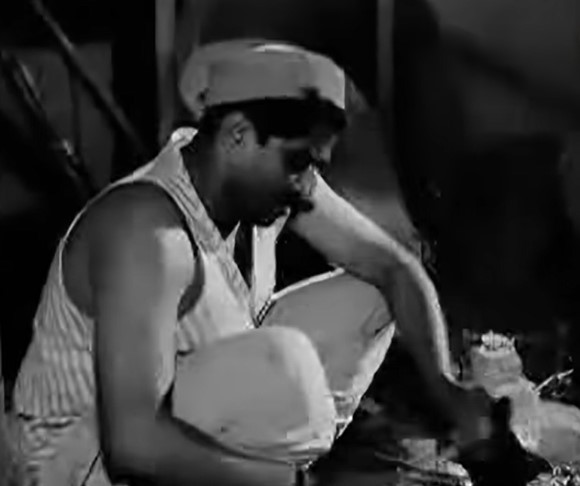
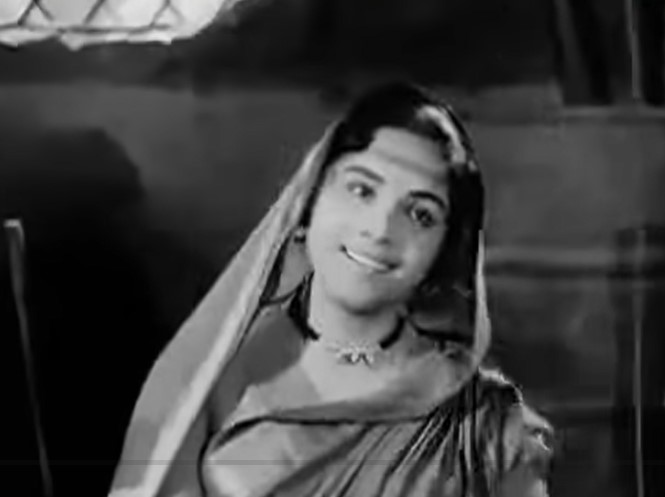
Shankar starts thinking of the proposal. A big city means more money and that will improve their lives. Paru is not very agreeable, she is happy as they are. It is decided they will consult Paru’s brother Mhatoba (Master Vitthal) and sister in law (Sulochana), whom they hold in high regard and seem to be their only close relatives.
Paru goes ahead to her maternal home. Shankar will join her after completing the tasks at hand. Mhatoba and his wife are glad to have her with them. Their kids Shirpa and Hansa are fond of their aunt. The two ladies share a close bond and are constantly engaged in an entertaining banter.
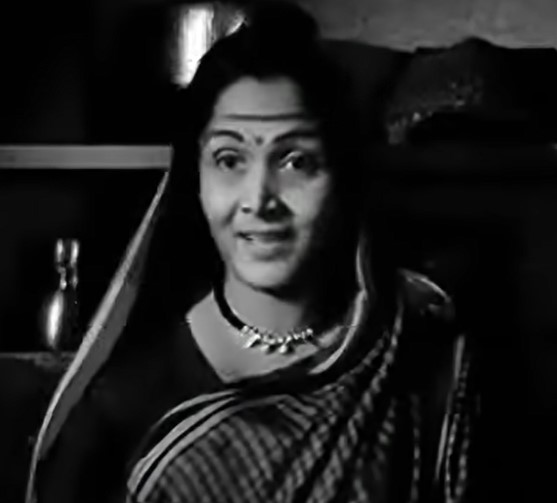
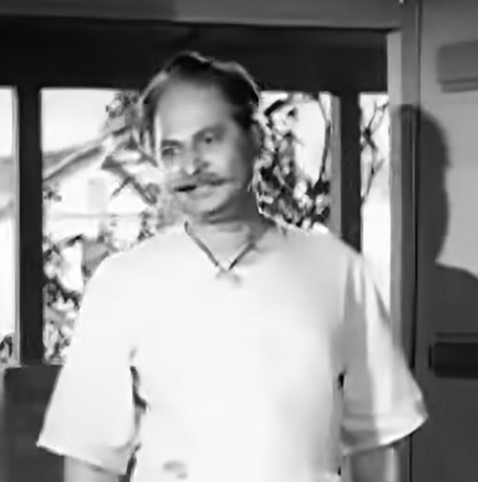
Shankar’s arrival is delayed and it is time for Paru to sing another song Waat pahuni jeev shinala. He finally comes and the decision is made to go to Kolhapur. As promised, Chakkadrao takes them to Kolhapur in his truck. He also arranges their accommodation in the same locality where he stays. The couple settle down in their new surroundings. Shankar is lucky and gets a job in an engineering unit.
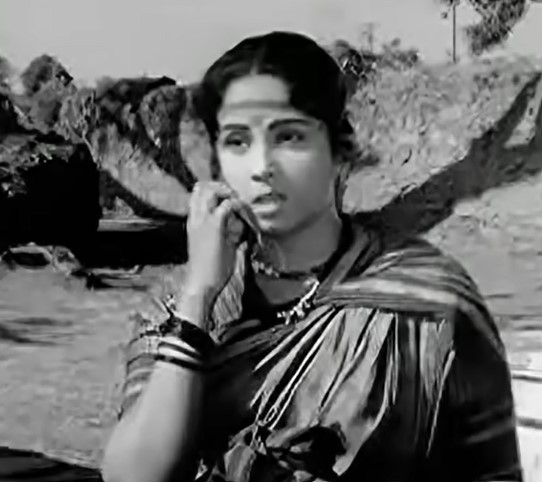
Life is different in Kolhapur compared to their village. They have an elderly and helpful neighbour called Tuka Jadhav. But the rest are of the troublesome category. There is a drunkard who beats his wife Sanguna (Asha Patil) daily and extracts money from her. He also tries to borrows money from his neighbours and keeps irritating them.
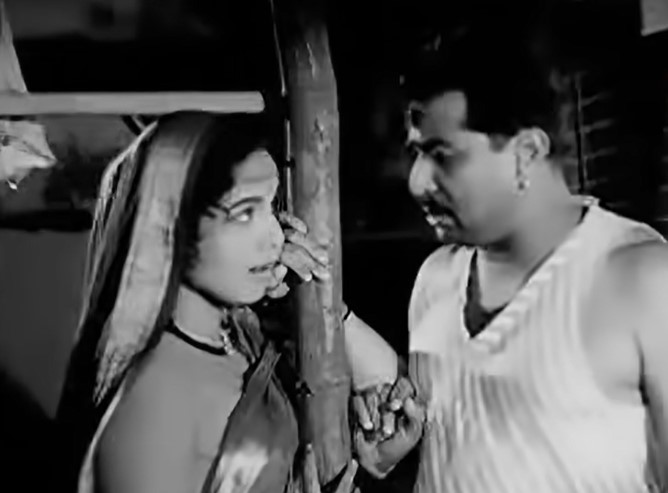
One day, the neighbour Sanguna comes hurriedly to Paru. She request her to keep her putali necklace safely as she does not want her husband to get hold of it. This is her last piece of jewellery and she cannot think of parting with it to support her husband’s drunken ways. Paru is reluctant but Sanguna presses her. Paru agrees and keeps the necklace in a jar of pulses in the kitchen.
This incident is witnessed by Chakkadrao. He is not the good samaritan he pretends to be. He has his sights on the beautiful Paru since their first meeting. He is waiting for an opportunity to get closer to her. Paru has sensed this and voiced her concern about Chakkadrao’s intentions to Shankar.
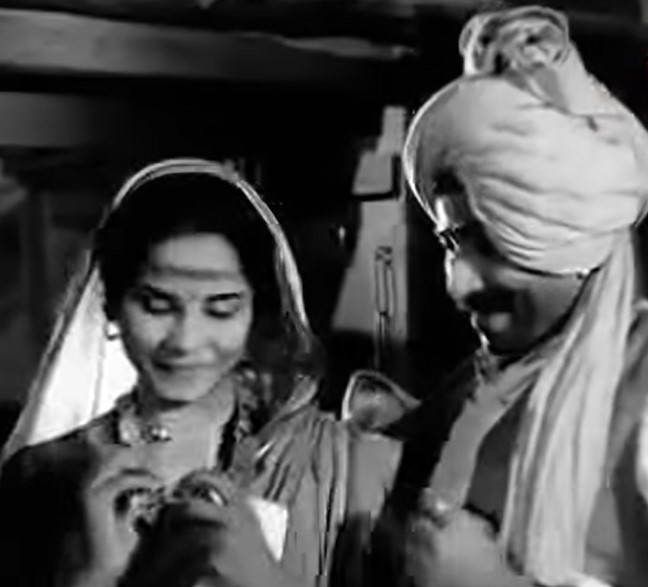
The same day, Shankar comes home with his first salary. He has purchased a watch for himself and a saree for Paru. Paru is overjoyed and sings a song Malayachya malyamandi patacha paani jaata remembering her maternal house and describing her brother, sister in law and the kids.
Chakkadrao meets Shankar and suggests visiting the renowned Jyotiba temple. Shankar agrees. But this request is part of a well thought plan. Chakkadrao has instructed his helper to steal the necklace when Paru and Shankar are out visiting the temple. The plan is successful and the helper hands over the necklace to Chakkadrao. The couple is unaware of this.
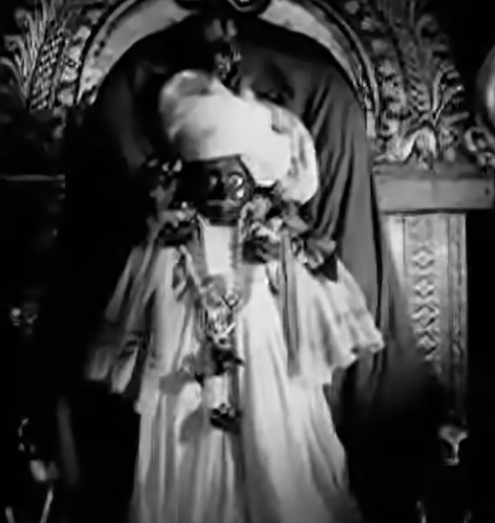
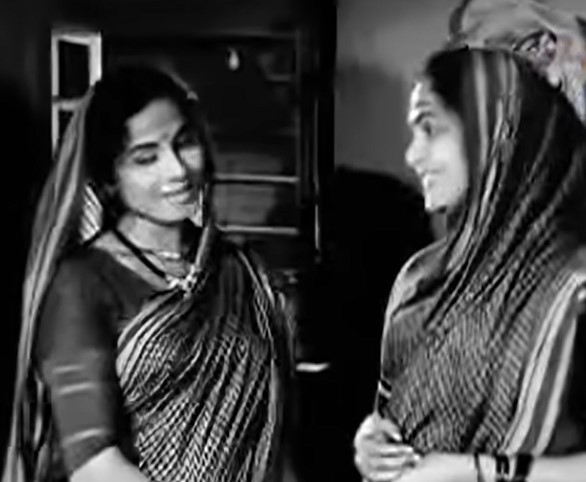
Paru’s brother and sister in law arrive in Kolhapur for a very short visit. There is another sweet song between the ladies – Rajachya rangmhali sonyacha bai palang.
All is hunky dory and it is time for Chakkadrao to make his move. Chakkadrao asks the drunkard to ask his wife for the necklace. He makes a huge fuss and forces Sanguna to goes to Paru and demand the necklace. Paru searches frantically but cannot find it in the kitchen. She realises the necklace as well as the salary amount (cash) are missing. Shankar and Paru accept the reality. News about the “stolen” necklace reach Shankar’s boss. He asks Shankar to arrange for a guarantor if he wants to continue in his job.
Shankar mortgages their house in Hanbarwadi and arranges the money. He doesn’t know any jeweller and Chakkadrao offers to help him in this task. Chakkadrao keeps the money and hands over a fake necklace in return. Shankar is a simple man and doesn’t understand he has been taken for a ride.
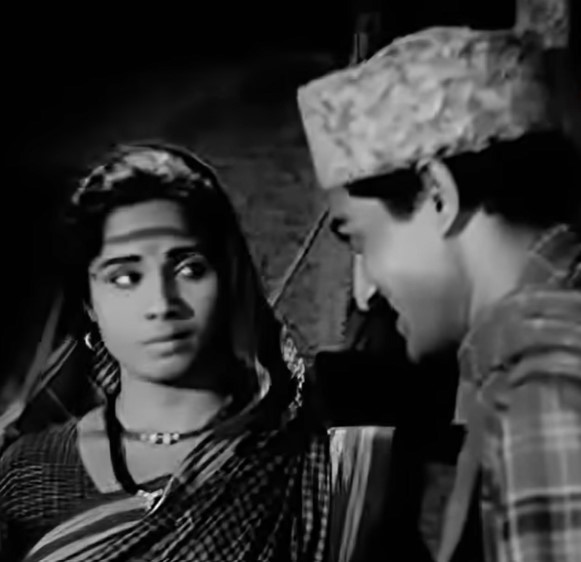
The truth is soon found out by Sanguna and her husband and the blame falls on Shankar. He is arrested, convicted and sent to jail. Paru is unexpectedly left to fend for herself. Her condition is portrayed through the devotional song Nako devaraya anta aata pahu. Chakkadrao offers to help her but she knows his intentions and throws him out. She is forced to vacate their house and starts working as a farm labourer.
She meets Shankar in the prison. He tells her to go her brother’s house but she disagrees. She doesn’t let her brother and sister in law know what has happened.
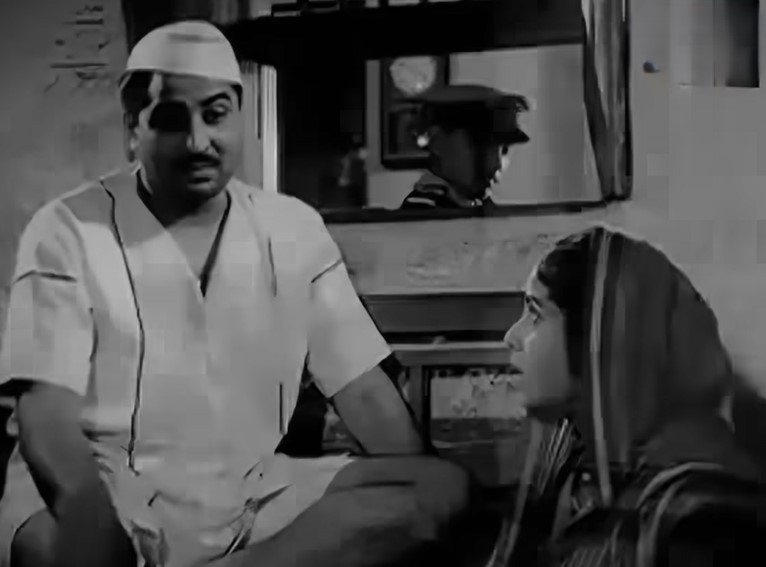
So, the couple continue their struggle. Shankar works as a blacksmith in the prison and spends his time in the company of a fellow prisoner cum teacher (played by Chandrakant Gokhale) who teaches him to read and write. Shankar is also desperate to flee the prison one way or the other. He cannot bear to live without Paru.
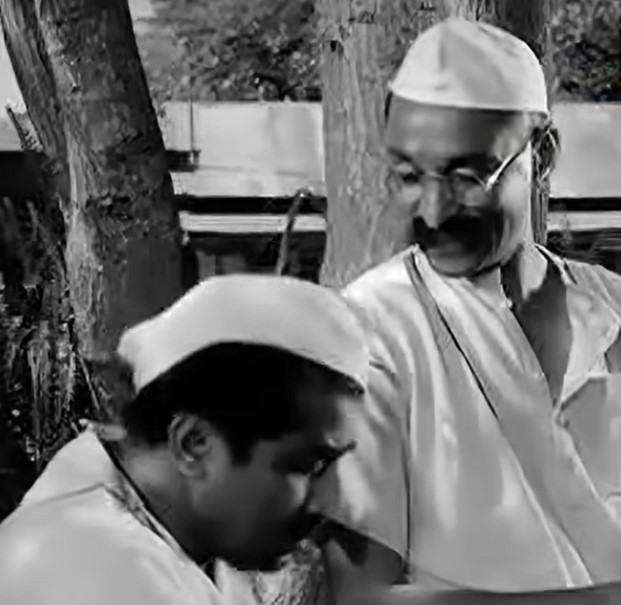
But more testing times are in store for the couple. Chakkadrao tracks Paru and attempts to make unwanted advances. She beats him with a wooden stick in self defense until he dies.
Where will this end? Will Paru be convicted of her crime? Will the couple be able to live happily again?
The Music
The film has evergreen music. Lata Mangeshkar composed the music under the pseudonym Anandghan. The story goes that the identity of “Anandghan” was revealed when Lata Mangeshkar got up to collect the award during the State Awards ceremony. The songs are in the voices of the Mangeshkar siblings – Lata, Usha and Hridaynath.
Airanichya deva is a well written song by Jagadish Khebudkar referring to the hard work of the blacksmith. Malachya malyamandhi, Waat pahuni jeev shinala and Rajachya rangmhali are written by Bhalji Pendharkar under the pseudonym “Yogesh.” Nako Devraya is a composition by Sant Kanhopatra based on raag Malkans.
My Thoughts
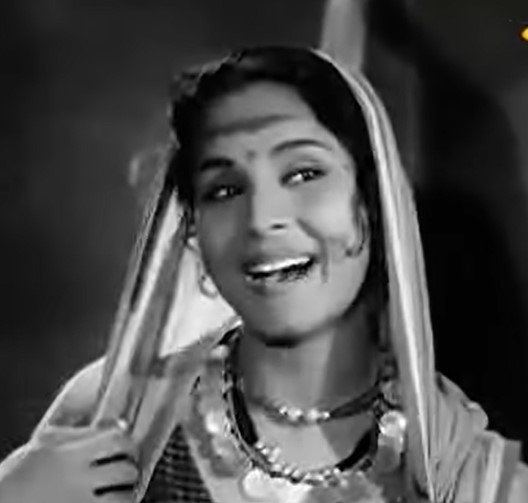
Sadhi Manasa maintains its simple tone throughout. It is said that none of the actors applied makeup while shooting for the film. The characters are shown to be quite practical. They accept what is in front of them and decide how to deal with the circumstances. Surprisingly, the melodrama is kept to the minimum and there are no over the top weepy ham scenes. Kudos to Bhalji Pendharkar! In a way, the film also reflects the impact when a simple villager moves to a big city. The transition can be life changing.
Suryakant, Chandrakant Gokhale, Sulochana, Rajshekhar and Master Vitthal are all adequate in their roles. The show stealer is Jayshree Gadkar who performs brilliantly. Her equation with different characters like her husband, brother and his wife, with the villain are presented convincingly. She is not merely the helpless heroine but handles the matters in her feisty manner. Sometimes, things don’t need to be flashy and glamorous to make a point and Sadhi Manasa underlines this effectively.
 Cine Gaurav