The land of Rajasthan brings into mind the vast expanse of the desert, where for miles you can only see sand. It brings into mind the significance of greenery, the source of which is precious water. Written, produced and directed by K. A. Abbas, Do Boond Paani is focused on the scarcity of this valuable resource and how it impacts the characters of the movie.

The Plot
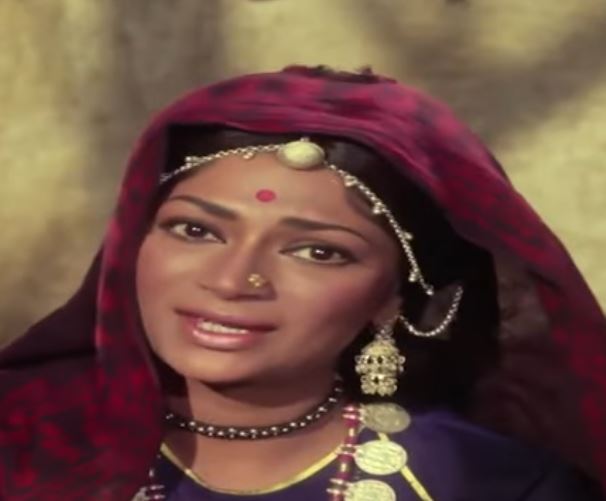
The setting of Do Boond Paani is a village in Rajasthan called Bhartiya. Ganga Singh (Jalal Agha) is bringing his newly wedded wife Gauri (Simi Garewal) to the village. Gauri is an educated girl who can speak her mind and think practically. Ganga is pleasantly surprised to know that she can read and write as well. Education does make a lot of difference! They are welcomed with great fanfare and a song (Baani teri bindiya) by Ganga’s sister Sonki (Madhu Chanda). The new couple is blessed by Ganga’s father Hari Singh (Sajjan).

Unfortunately, things are not hunky dory in the village. It has not rained since 7 years. The water sources have dried up. The village women spend a lot of time walking long distances to fetch a pot of water. The new bride Gauri joins Sonki and the other women as they begin their daily journey in search of water. To pass the time, they sing a song Peetal Ki Mori Gagari. Gauri and Sonki develop a mother – daughter bond. Gauri starts teaching her to read and write.
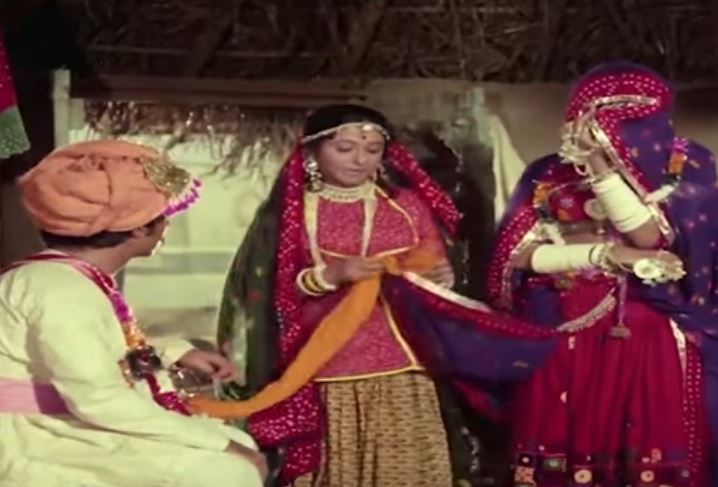
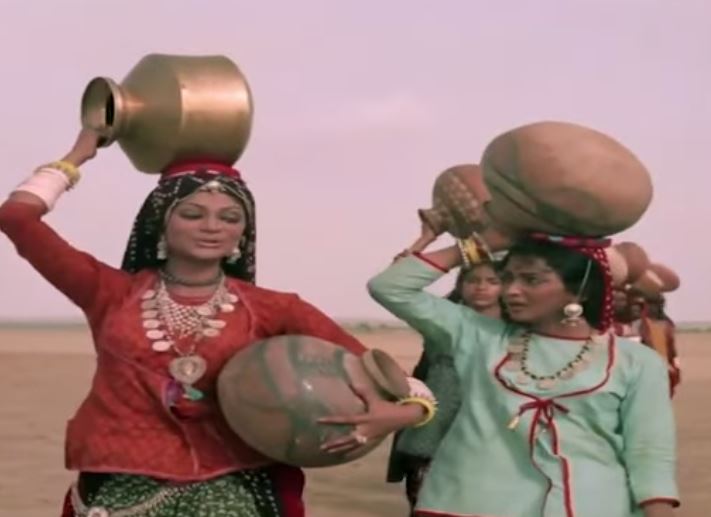
Apparently, Ganga’s family occupation is farming. But the fields are dry. Ganga and his father have started working as blacksmiths as a temporary(?) occupation. They are waiting for the rains to return, so they can resume cultivation of the land. A frustrated Hari Singh tries to grow crops in a mini patch.
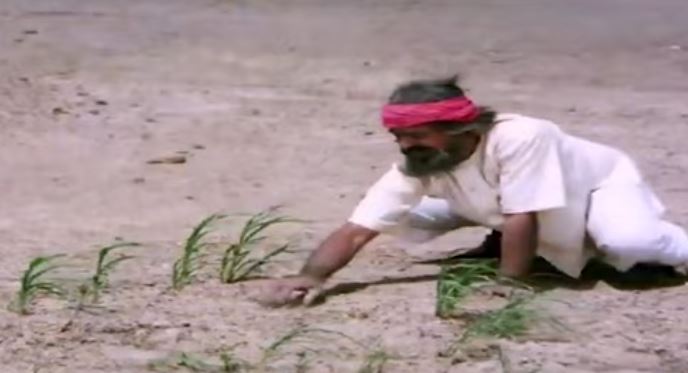
Ganga has a friend called Mangal Singh (Prakash Thapa?). Mangal Singh is a shady character who wants to earn easy money. He has his sights on Sonki and wants to marry her but she knows his true character and rejects his advances.

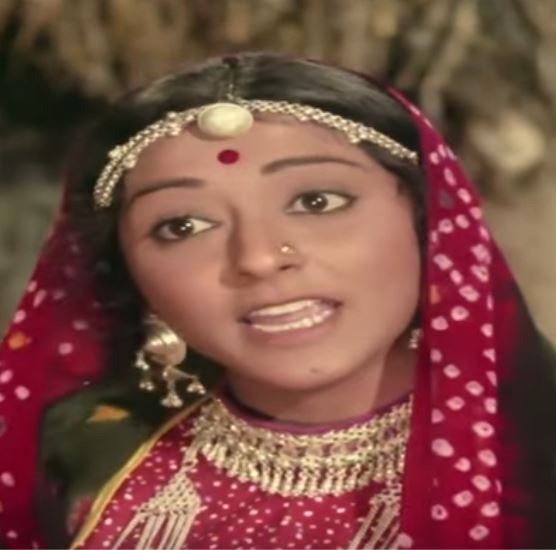
The villagers’ life takes an unexpected turn when a “sarkari” man arrives in the village. His job is to travel from village to village and show government films/ documentaries on the bioscope. Night comes and the whole village gathers to see the show. They see visuals of the Republic day parade in New Delhi followed by a segment on the Government’s efforts to build a canal in rain parched Rajasthan. There is a young engineer Mohan Kaul (Kiran Kumar) appealing to the audience to come in large numbers and join him in his efforts to construct the canal. He awaits the day when the canal will be ready and reach the dry parts of the state.
The audience is mesmerised. Sonki is taken in by the young and tall (lambu) engineer. Ganga makes a quick decision to leave the village and join the engineer at the project site. He wants to contribute to the Government’s efforts and bring water to his village. Hari Singh and Gauri are supportive.
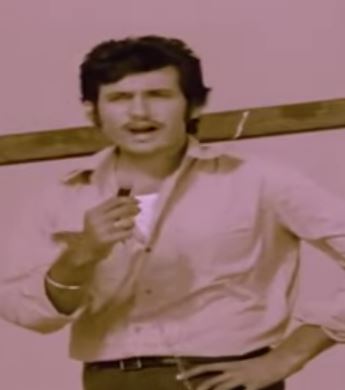
So Ganga leaves after sharing goodbyes with everyone in the village. He is expected to be away for 2 or 3 years by when the canal is expected to get completed. However, in the journey, he keeps thinking of Gauri and returns home the same night. Gauri is furious. Through a story involving a Rajput couple, she indicates that she will kill herself if he returns without completing his mission. The Rajput pride is at stake. A shaken Ganga promises he will return only when his undertaking is a success.
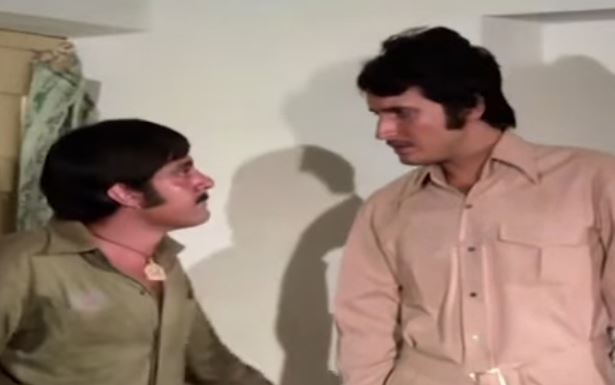
Ganga reaches the project site to meet Mohan Kaul. Mohan is impressed and surprised by Ganga’s arrival. He explains the documentary shown was created 4 years ago and it is only now that it has reached Ganga’s village. And Ganga is the first person to come responding to the engineer’s appeal. So much so for the Government’s marketing efforts!

As Ganga does not have any specific skill, he is given the job to handle the donkeys used in the construction. However with his own efforts and Mohan’s encouragement, he learns how to operate the tractor and manages it efficiently. He also makes effort to become literate, so he can write to his family himself and does not have to rely on Mohan or anyone else. After all, its personal! Mohan is impressed and treats Ganga as his brother. Ganga receives news that he is going to become a father soon.

While the canal is getting ready, things are deteriorating in the village. The drought continues and villagers decide to leave the village. Hari Singh and his family are not convinced. They have faith in Ganga’s mission and are willing to wait for his return. Through a song (Do Boond Paani), we see the villagers moving out, literally in search of greener pastures. So, only Ganga’s family stays back. It is getting difficult to obtain potable water, most of the times it is more mud and less water.
Hari Singh falls sick. In a state of delirium, he dreams of the water reaching the village, and the lush green fields signalling the end of their woes. His condition worsens and he passes away. Later, Sonki is pursued and raped by Mangal Singh and she runs away from the village.
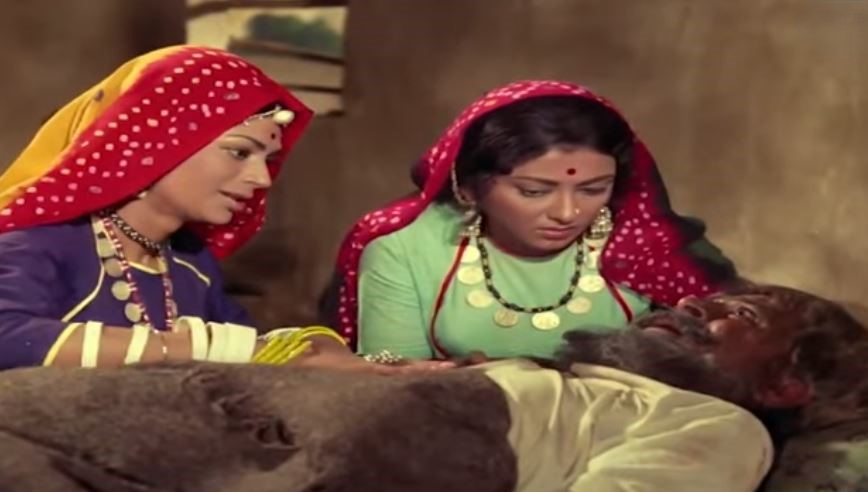
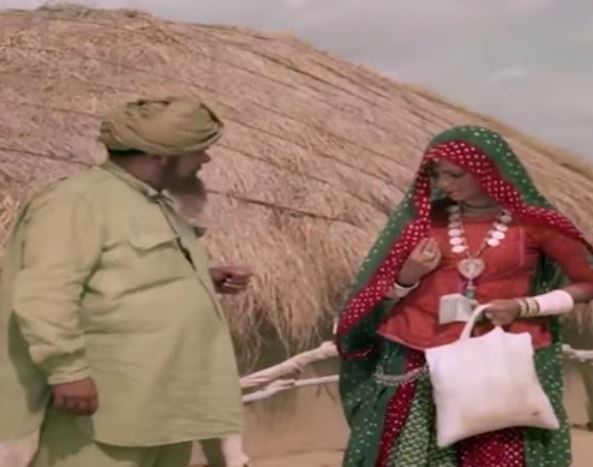
Gauri is left alone and sings a song of loneliness (Jaa ri pawaniya piya ke des jaa). She delivers Ganga’s child, a son (Jamuna Singh) and continues to live in the village. The local postman is the only visitor in the village. He delivers Ganga’s money orders to Gauri and helps her by bringing daily necessities to keep the house running. Needless to say, she is desperately waiting for Ganga to come back.
Will Ganga come home? What happens to Sonki and Mangal Singh? And the million dollar question – will the canal project get completed?
The Music

The film songs are written by Kaifi Azmi and Balkavi Bairagi with music by Jaidev. They are voiced by Asha Bhosle, Mukesh, Laxmi Shankar, Minu Purushottam and Parveen Sultana. While the first two songs are placed in happier times, the remaining 2 are aligned to the darker part of the story. The songs serve to balance the dry proceedings and provide relief.
My Thoughts

The subject is different. The film is totally based in Rajasthan. We see the desert landscape throughout the movie. Though made more than 50 years earlier, It is successful in highlighting the importance of water and remains relevant in the present times. There are no loud dialogues, lecturing or over the top performances. It is a simple story told in a simple way. Overall, K. A. Abbas manages to deliver an engaging film. Considering the subject, the film may feel a bit sluggish at times. There is a sub theme about the slowness of the Government machinery, time taken in decision making and its impact on the common people.
Acting wise, Simi Garewal shines in the role of the farmer’s wife. She makes practical decisions for her family’s benefit and gets their support. Jalal Agha is charming and convincing as the simple farmer who undertakes a difficult mission and aims for the betterment of his family. Madhu Chanda and Sajjan are adequate. This was Kiran Kumar’s debut movie and he performs confidently.
 Cine Gaurav