Films focusing on the mother-child relationship are fairly common. There is a self sacrificing hard working mother who wants to have her child (normally, a son) grow up, become rich and famous, and make her happy. She has no other wish. Whether, and how the son fulfils her expectation makes up for rest of the story. Putra Whava Aisa (loosely: the ideal son) is based on the same plot. Directed by Raja Thakur, the film manages to leave its impact without following a preachy approach on its subject.
The Plot
The opening scene shows a school function depicting its 12th anniversary celebrations. Dadasaheb (Dada Salvi), a well known businessman from Mumbai is the chief guest. A student Avinash Kulkarni (Ashok Senjit) is called to recite a poem of B B Borkar. He sings Tethe kar majhe julati. Dadasaheb is moved by the performance and gifts him a gold medal.

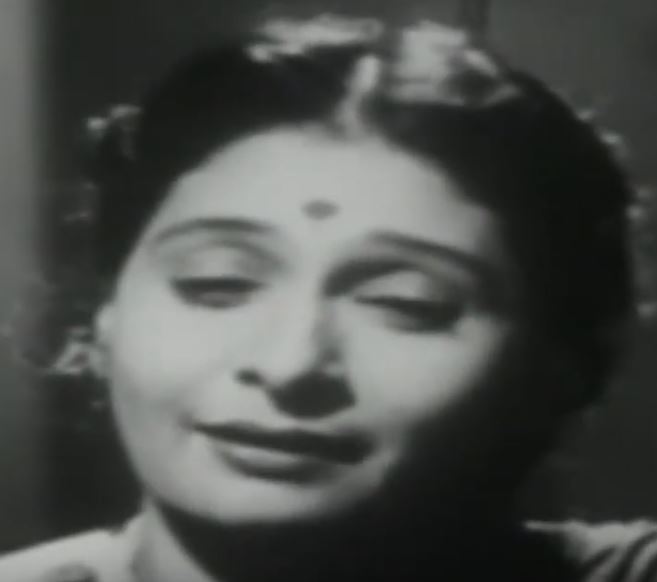
An overjoyed Avinash rushes home to share his achievement with his parents. His mother (played by Ratnamala) is impressed and blesses him to continue his hard work. She has only one dream to see him grow up and become a successful man. She has endured a life of hardships and seeks a better future for her son.
His father, unfortunately is not a worthy man and doesn’t share his mother’s thoughts. He sells the hard earned medal and returns home drunk. Avinash’s mother is angry and lectures him. He starts beating her. Avinash reacts and hits him with a water pot. Sadly, his father collapses and dies. Avinash and his mother are shocked by the event. But his mother calms down and warns him to never speak about this matter to anyone. She asks him to go and stay with his uncle (mama) till further notice.
Avinash rushes to his uncle’s house. He explains his father has passed away and mother is alone. His uncle decides to visit his mother and look into the matter. Meanwhile, his mother confesses the crime and is taken into police custody.

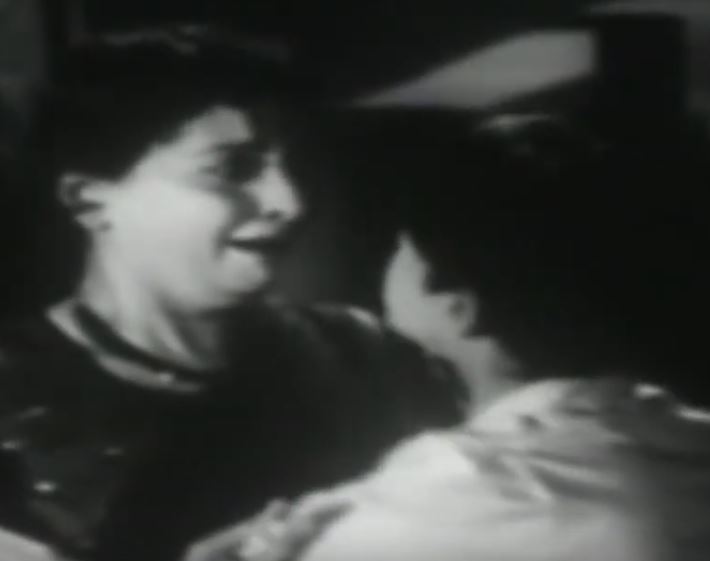
His uncle has a daughter named Shaku who gets on very well with Avinash. She is excited to have Avinash staying with them. Few days later his uncle asks him to get ready. He takes him to the court where his mother will be brought for sentencing. He asks Avinash to wait outside and not call or talk to his mother unless he is called for. That is the moment of truth for Avinash. He comes to know his mother has confessed the crime she did not commit. She has been sentenced to 12 years of imprisonment. Uncontrolled by emotion, he rushes to meet her before she is taken to prison. His mother realizes he might blurt out the truth in his hyper state. She slaps him and warns him to remain quiet. His aim should be to become successful in life. She will await that golden day when she can point towards him proudly and tell people that he is her son. But for now, separation is inevitable.
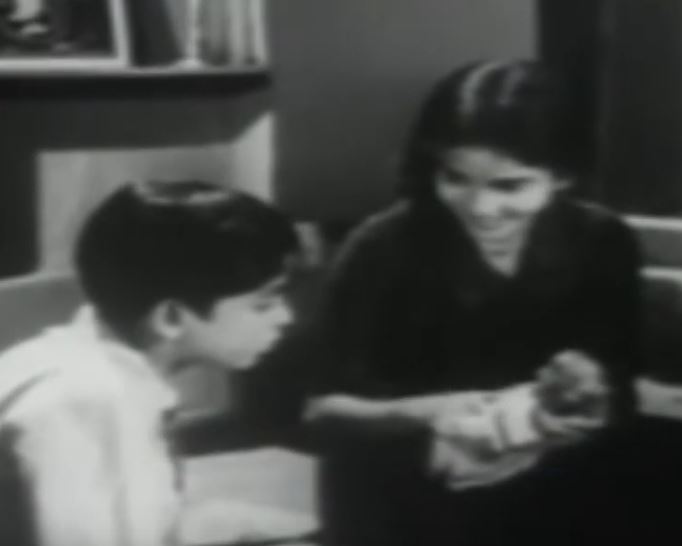
So, Avinash returns to his uncle’s house but his aunt has other plans. Being a practical woman she makes it clear they have an additional mouth to feed. They are unable to afford his education expenses. He will be expected to drop out from school and do household chores if he wants to continue staying with them. Shaku offers to drop out from school and let Avinash continue his studies, but her mother shuts her up.

Avinash knows he has to continue his studies to live up to his mother’s expectation. He decides to leave or rather run away from his uncle’s house. He boards the steamer and reaches Mumbai. There he enters a bungalow and is attacked by the pet Alsation. A girl called Nalini rushes to save him. She takes him inside the house and asks her aunty to treat him immediately. Her father arrives who is none other than Dadasaheb. Dadasaheb recognizes Avinash as the deserving school student who had been gifted the gold medal. Avinash informs he is now an orphan and he is ready to do any work to continue his education in Mumbai.

Dadasaheb is impressed and offers him a helping hand. He makes all arrangements to take care of Avinash. He is accommodated in the bungalow’s outhouse. Dadasaheb tells him that he deserves to be successful. He only worships two things in life – virtues or merits and truthfulness. He cannot stand people who lie to him.
Thus Avinash settles down. He develops a close bond with Dadasaheb and Nalini. As expected he performs brilliantly in academics and becomes an engineer. The grown up Avinash is played by Vivek. Nalini has grown up into a charming woman (played by Jeevankala). Dadasaheb invites him to join his construction firm and hands him charge of the office. It is all smooth sailing.

Avinash settles down in his new role. He loves his work. Another important character is introduced at this point. There is a young typist (played by Ratna) working in the office. She is a widow who lives with her mother. In their first meeting, Avinash scolds her for coming late. She explains later that her mother is not keeping well and he mellows down.
Amidst his progress, Avinash has not forgotten his mother. He goes to meet her and inform about his achievements. He explains how he came to Mumbai and Dadasaheb helped him to become the person he is today. She is gratified after hearing all this. He has fulfilled her expectations as an ideal son would do. She will be released soon and they look forward to reunite and lead a happy life.

Dadasaheb proposes that Nalini and Avinash should get married. Avinash is happy but worried. He has lied to Dadasaheb of being an orphan. Dadasaheb, being a man of principles will never accept this. Avinash is in a dilemma. On one hand is all his success, Dadasaheb and Nalini outweighed by his mother on the other side. What path will he choose?
The Music
Vasant Prabhu delivers melodious tunes to the lyrics of B B Borkar, P Savlaram and Dr Avasare. B B Borkar’s poem Tethe kar majhe julati is voiced by Asha Bhosle.
P Savlaram has written 4 songs. Aai kuna mhanu mee is a soulful rendition by Asha Bhosle. There are 2 Suman Kalyanpur solos – the beautiful Yaman composition Jithe sagara dharani milte and Baghata hasuni tu mala. And surprise, the fourth song Yash he amrut zaale is sung by none other than Talat Mahmood. This was the first time he was singing in Marathi and won the Maharashtra State Award for best playback singer.
The last song Swapne Manatali by Dr Avasare (Shanta Shelke used this pen name due to some compulsions) is a sad duet by Talat Mahmood and Suman Kalyanpur.
My Thoughts

The film avoids going in the melodramatic mode which is commonly seen in these mother-son relationship movies. This is a simple story and there is no villain or vamp in the plot. The hero’s dilemma is handled effectively leading to a satisfactory ending. The actors perform to their abilities. The music is memorable going with the times.
 Cine Gaurav