Parichay (meaning introduction or acquaintance) is a Hindi movie heralded by Gulzar (writer, director, screenplay, lyricist, and the intro voice-over). Heavily inspired from the English classic The Sound of Music (1965), it is nevertheless a good and entertaining movie in its own right.


The Plot
We are introduced to Pran (Rai Saheb), a retired colonel. Rai Saheb is a strict disciplinarian and a principled man and expects others to follow the same line. Rai Saheb’s only son Nilesh (Sanjeev Kumar) had left his house 17 years ago. He was a worthy singer who wanted to pursue music as his life’s passion much to Rai Saheb’s chagrin.
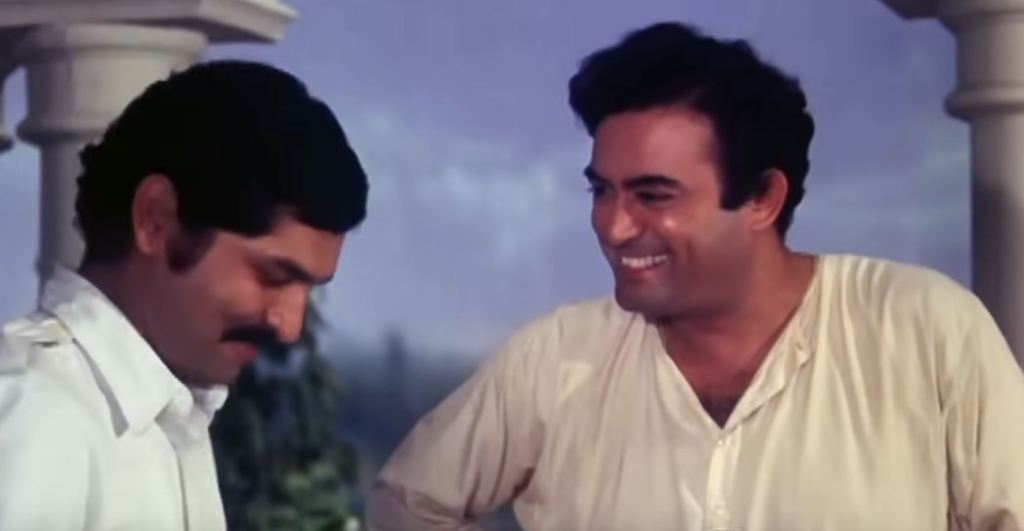
Circumstances force Nilesh to marry his guru’s daughter Sujata (Gita Siddharth). Upon coming home to meet his father, Rai Saheb makes it clear there is no place for him, his wife and their music in his mansion. He is free to take as much money as he wants and settle down in his “own” house.


Being the son of his principled father, Nilesh leaves empty handed and never to return.
The years that follow have been hard on Nilesh and his family. His wife has passed away leaving behind 5 children namely Rama (Jaya Bhaduri) and Ajay, Vijay, Meeta and Sanjay. Nilesh himself is terminally ill.
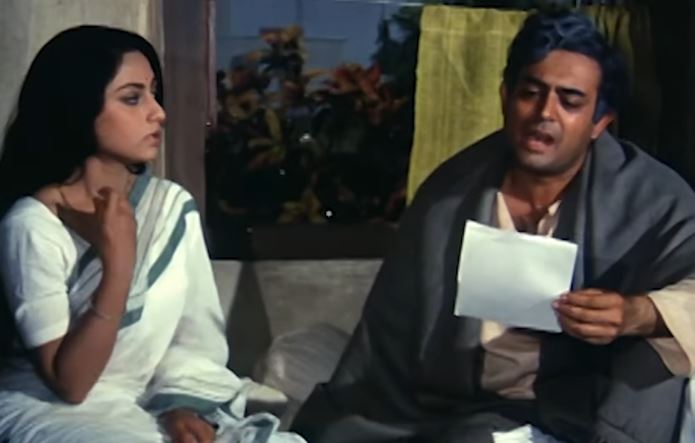
As a last resort before dying, he writes to Rai Saheb to come and take the children with him. This will help in securing their future. Unfortunately, Nilesh dies before Rai Saheb arrives. After much pleading by Rai Saheb, the children agree and come to stay with him.
The children detest their grandfather and it is their constant endeavour to be non-cooperative. Their top priority is to ensure that none of the “masters” (tutors) employed by their grandfather are successful in their attempt to teach and discipline the children. They will use every trick in the trade to make the master flee from his job (to hilarious consequences). Needless to say, Rai Saheb is fed up with this attitude and has to keep looking for replacements.

We are now introduced to Ravi (Jeetendra), an unemployed man staying with his roommate Amit (Vinod Khanna) in the city. Ravi’s maternal uncle (A.K. Hangal) writes to him informing him of the teaching job vacancy at Rai Saheb’s mansion. Seeing no option, Ravi agrees to try his luck at this opportunity (he has had some experience in teaching previously).
After he arrives at his uncle’s place, his mamiji (Leela Mishra) warns him the children are “rakshas” and “yamdoot” and it’s better for him to decline the opportunity. Such is the widespread notoriety of the children!
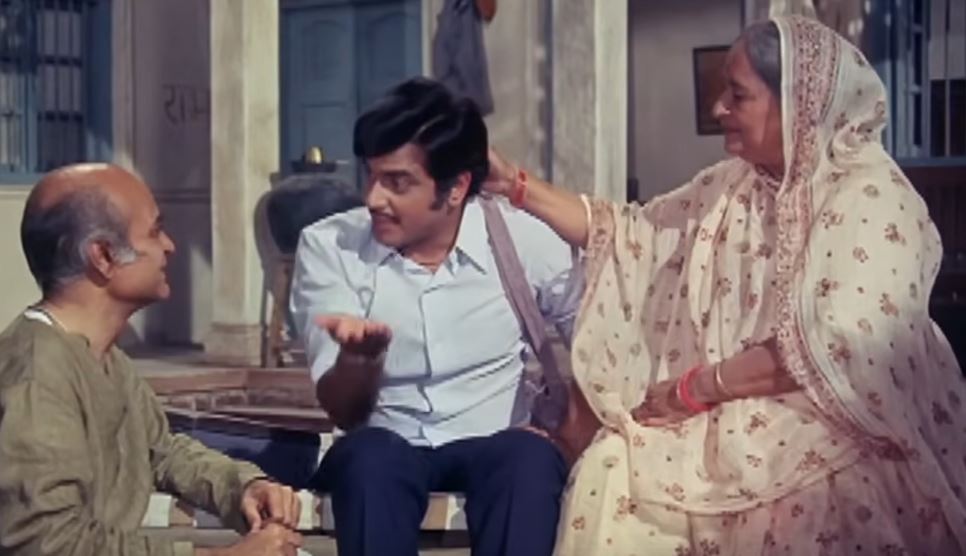
After a tense “interview” scene with Rai Saheb, Ravi gets the job. However, he is soon introduced to his students’ pranks who will spare no effort to make his life hell and force him to run away. But Ravi is a tough nut to crack and handles each situation calmly.
Other characters in the mansion are Rai Saheb’s sister Sati (Veena) and an old servant Narayan (Asrani).

Through Rai Saheb and Narayan, Ravi comes to know the background of Rai Saheb’s relationship with Nilesh and the negative impact it has had on the children. It is upon Ravi to attempt bridging the emotional gap, making it a win-win situation for all the parties. Will he succeed?

The Music
There aren’t many songs but Gulzar and R.D. Burman deliver a memorable score. The sentimental Musafir hoon yaaron sets the tone for the unemployed Ravi seeking an unknown path.
Then there is Beeti na beetai raina, ably sung by Lata Mangeshkar and Bhupinder. Lata Mangeshkar won her first National award for this song.
Bhupinder also gets to sing a short version of Mitwa bole meethe bain.
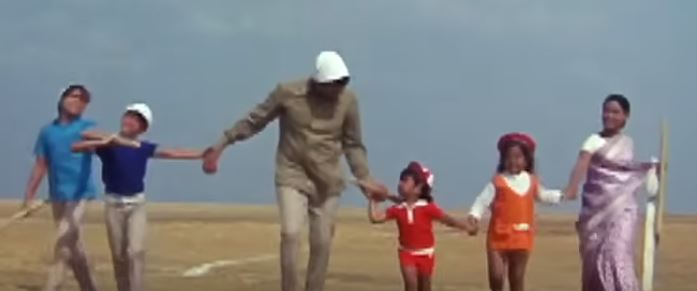
And finally, a tribute to Do re me from The Sound Of Music – the chirpy Sa re ke sa re, Gulzar’s playful lyrics describing the 7 musical notes.
My Thoughts
There are multiple conflict scenarios in the movie. The first being Rai Saheb and Nilesh. Unfortunately, this conflict ends on a sour note.
The second one is between the grandfather and the children. And the third between Ravi and the children. It’s Ravi’s deft handling and effort that endears him to the children and Rama (romantically, this being a Hindi movie!). And in parallel helps to open a dialogue between Rai Saheb and the children. The gradual transition doesn’t seem forced and Gulzar achieves it convincingly.
Jeetendra is adequate. Jaya Bhaduri is impactful as she plays multiple roles as the daughter of a wronged father, her protectiveness for her siblings and perceptions concerning her grandfather.
Pran shines and he is at his villainous best in some scenes and the misunderstood patriarch and grandfather in others. Sanjeev Kumar is memorable in a special appearance but shows why he went on to have a long association with Gulzar. The supporting cast are equally good.
On a funny note, the movie seems to be shot in and around Panchgani and Mahabaleshwar hill stations in Maharashtra and none of them are connected by railway. However we get to see a railway station in the film’s climax. So much for cinematic liberties! So entertaining!
 Cine Gaurav
Parichay is one of my fav feel-good movies that I never skip a chance to talk watch.
Talking about creative liberties, this movie shows all the easily available mode of transport throughout the movie either via various songs or an impactful scene.
E.g. Jeetendra singing musafir hoon yaaro in a tanga/ buggi and it’s the same vehicle shown when he moves away from Rai saheb’s mansion. As if his job was done and now back to where he belongs.
LikeLike
Thanks for the comment. What would movies be without creative liberties!
LikeLike
You analysed the movie Parichay very well. It’s the only movie, where I felt some warmth regarding the otherwise jumping Jack’s, Jeetendra’s acting prowess.
I didn’t realise it was Mahabaleshwar and Panchgani …will watch it again for that. You noticed that there aren’t railway routes to the areas. Kudos for that.
Sanjeev Kumar was Gulzar’s what we call हुकुमाचे पान in Marathi. My favourite song used to be Beeti na bitayi Raina in the past when what mattered was notes alone. Today I’m middle aged elder daughter of a music man and this specific song hurts … can’t bear to listen to it. Period.
It’s so nice of you to bring these Gems of movies once again in the limelight. Have been a quintessential fan of Gulzar and Hrishikesh Mukherjee since childhood.
LikeLike
Yes, agree on Jeetendra’s acting prowess in this movie! Thanks for the comment.
LikeLike
Very nice. U have given a nice “parichay” of the movie Parichay. Also described the characters so well.
LikeLike
Thank you!
LikeLike