The 1960s was a period when Marathi cinema saw a wave of tamasha oriented movies. Sangtye Aika (directed by Anant Mane) was probably the trendsetter of this wave. Tamasha movies make use of the lavani dance form (from the state of Maharashtra). Typically, the story revolves around the lavani dancer character, in a village set up. And of course, propped up by some catchy music compositions. Ek Gaon Bara Bhangadi (literally one village and 12 affairs) belongs to this genre. It was also directed by Anant Mane.

The Plot
The movie begins with a lavani performance. The village chief “sarpanch” Patil (Dada Salvi) and his two associates Jhele Anna (Nilu Phule) and Gavde Anna (Bhalchandra Kulkarni) attend the show of a renowned lavani dancer Phulawati / Phula (Jayshree Gadkar). Phula presents an intoxicating lavani (Ashi mee khidkit rahate ubhi) and the three are impressed. Jhele Anna requests her to sing a westernised lavani. She immediately complies by singing Raya aata rickshaw hou de suru.

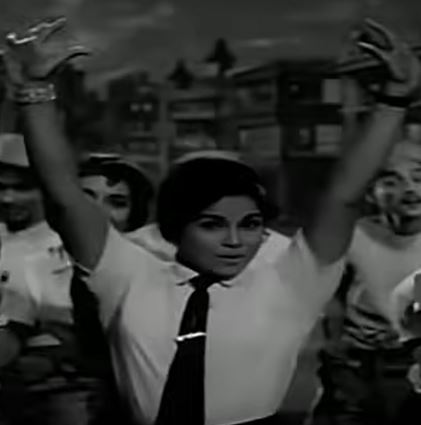
After the performance, the trio meet her and offer her supari (invitation) to visit their village “Mauje Thakwadi” on 15 August. Thak means thug. Phula is first scared by the name but they assure her that its a beautiful village and so are its inhabitants. A convinced Phula accepts the invitation.
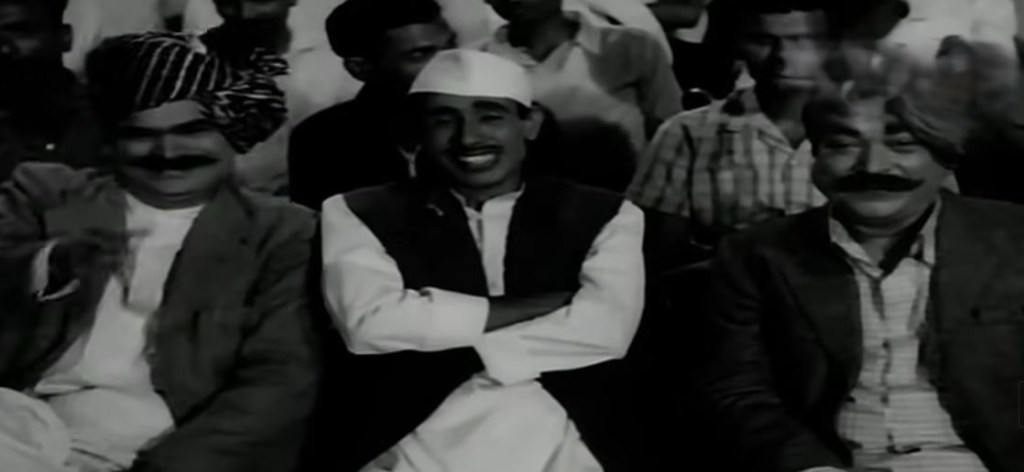
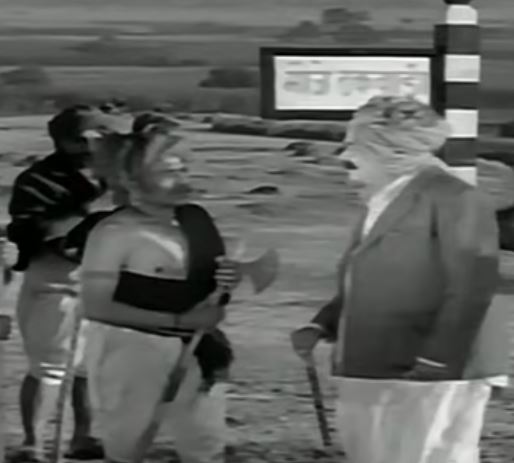
The trio return to their village Thakwadi. On the outskirts of the village, they are met by a group of men looking like thugs (or bandits). Apparently there have been some dealings between Patil and these people. Patil warns them not to show their faces until they are called for. When the trio enter the village, they are met by a mad man. This seems to be a typical character in old movies, who normally has a back story relevant to the plot and is revealed later!

There is a new (young and beautiful) school teacher in the village. Unfortunately, she is being pestered by the men of the village, who follow her, pass comments, make funny drawings on the school wall and in general be a nuisance. Frustrated, she approaches the sarpanch Patil for help. However on the pretext of being sympathetic, he tries to take advantage of her. His wife arrives suddenly and the teacher manages to flee from the scene.
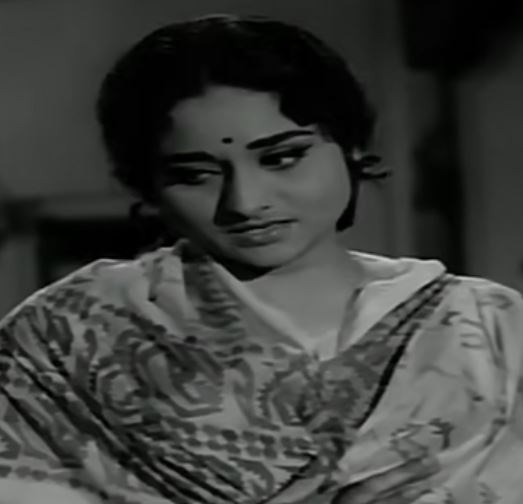
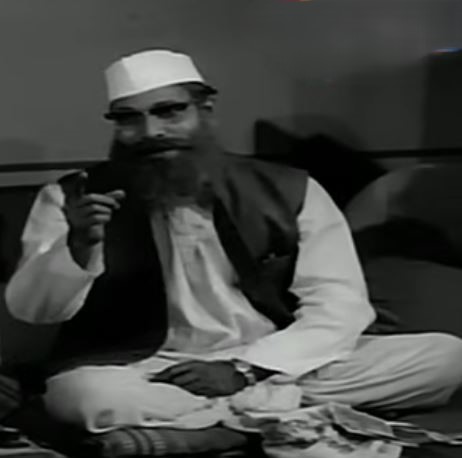
She then goes to the school principal (Govind Kulkarni) with a transfer application. He is a good man. He advises to rethink her decision and go to the sarpanch for help. She narrates her embarrassing “experience” at the sarpanch’s house and realises she is helpless. Nevertheless, he tries to pacify her when a man called Gopal arrives. Gopal is one of Patil’s men. He taunts the Principal and the teacher and apologises for “disturbing” their private matter. She leaves hurriedly.

The school Principal is also the secretary cum treasurer of the village cooperative society and manages its finances. Gopal has come with a request of Rs 500 from the society. The society chairman (none other than sarpanch Patil) has recommended / approved the request. The Principal refuses to give the money. Then Patil arrives, lectures the Principal and forcibly hands over the money to Gopal. The Principal explains that these are the society’s funds and should be distributed in a justified manner. He cannot keep working on the sarpanch’s recommendations and waste the money. He quotes a few examples to the furious sarpanch. In total Rs 25,000 have been “utilized” for the welfare of the villagers till date. A servant comes to call Patil as his sister Rajakka (Shanta Tambe) is waiting at his house. Patil leaves but he knows the matter is not over.
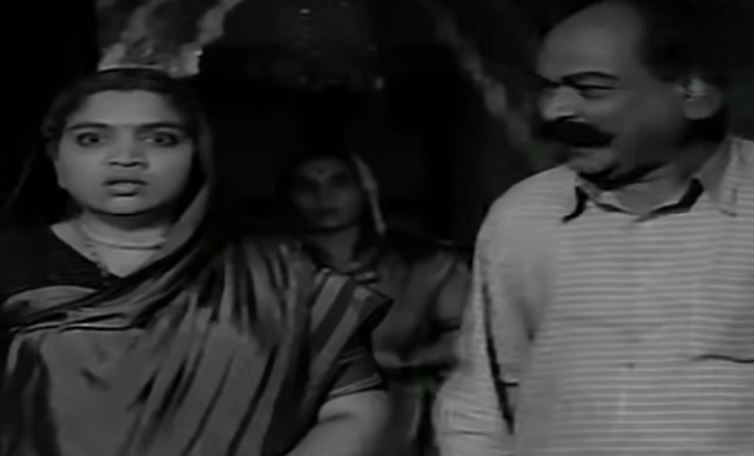
Rajakka is a widow and Patil is helping her to manage her farm land. But again, her best interests are not on his mind. She accuses him of stealing her rightful claim to the crop yield and threatens to adopt her nephew, so that there will be no further dealing required with Patil. Patil cannot digest this as it will mean a loss of one of his sources of income. Looking for an opportunity, he pushes his sister from the roof and silences her permanently.
Unfortunately for Patil, the Principal witnesses the murder. There is no option but to silence the witness. Patil kills the Principal the same night. He kidnaps the school teacher and imprisons her in the basement of his house. Word is spread that the Principal ran away with the teacher and had mismanaged the society’s finances. The villages are shocked but have no option but to believe and accept the news.
Thus we come to know the true character of Patil and his cronies. They can go to any extremes to make money and retain authority in the village. Those who oppose them will be dealt with a rough hand.
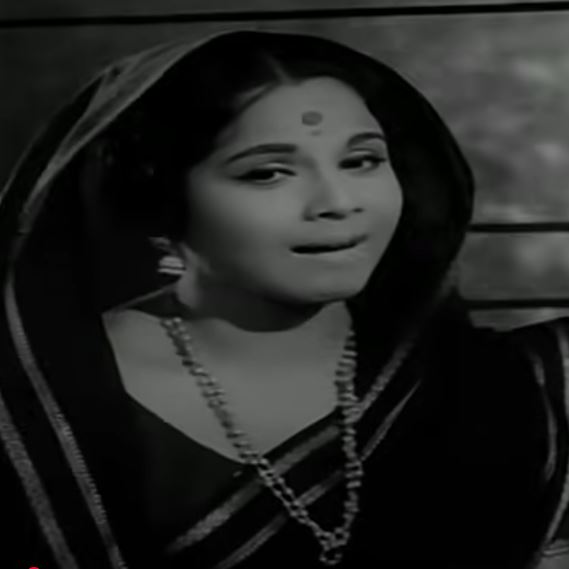
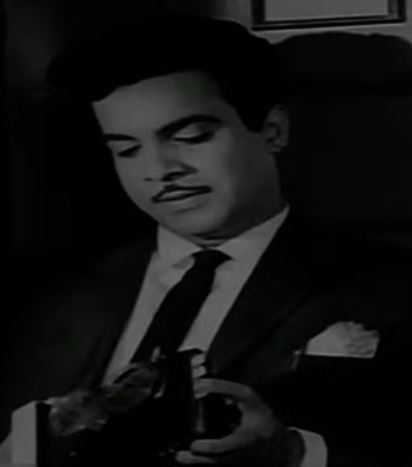
But all this is about to change. Enter the hero and heroine. The police receive an anonymous letter and an officer Shirke (Arun Sarnaik) is sent to Thakwadi for investigation. At the station, Phula is boarding the train along with Ganpya (Ganpat Patil). As happens in movies, the hero and heroine board the same compartment (conveniently first class). Shirke plays a prank and records the conversation between Phula and Ganpya. He explains he has a tape recorder which is used to record voices, songs etc. This helps to break the ice. He requests Phula to sing a song. She obliges and sings a devotional song “Kashi gavalan Radha bawarli”.
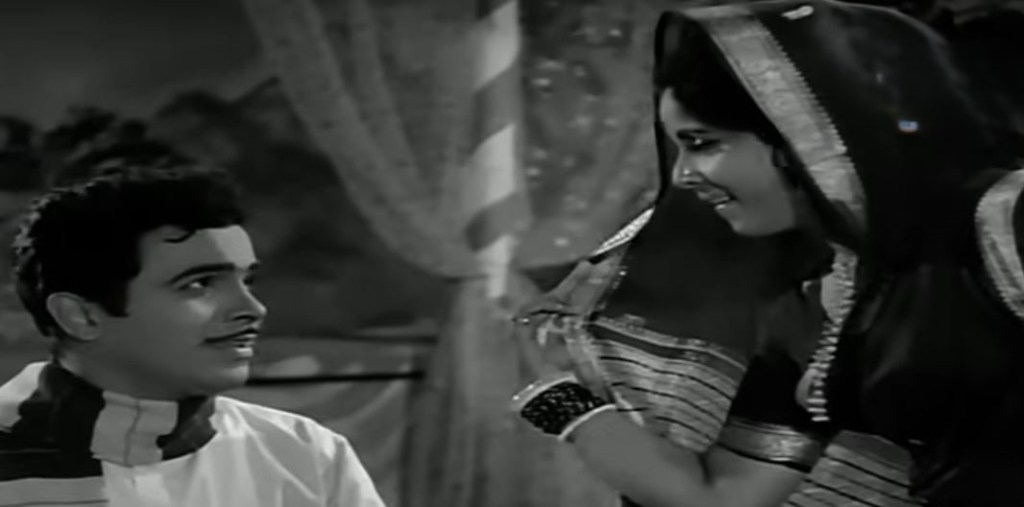
Later in the night, a robber enters the compartment. Being the policeman, Shirke saves Phulawati and she expresses her gratitude. Shirke hatches a plan. He will join Phula’s troupe as a musician so he can enter Thakwadi easily without any suspicion. The plan is carried out. They settle down in the village. There are more lavanis on the way (Ata lagnacha way maza zhala ga and Thawa nahi ishqacha inga).

So we have lots of investigation work by Shirke with support from Phula leading to some interesting developments. Patil is a wily character. He is suspicious about Shirke and his intentions. There is another murder – Jhele Anna is eliminated when he tries to go against Patil. Shirke moves closer to the truth leading to a rather unexpected climax.
The Music
Veterans Jagdish Khebudkar (lyricist) and Ram Kadam (music director) have collaborated in multiple movies and their lavanis are a delight for the audience. It is a difficult task to write the appropriate song for every situation which has to be in a lavani format. And equally difficult to compose a matching tune. For example, the western lavani in this movie which has to sound western but have the structure of a lavani! As expected, they are successful in their task.
Krishna Kalle has sung most of the songs, while one by Suman Kalyanpur and one by Balakram. The standout song is the title song (Ek gaav an bara bhangadi aika sangte kahani ) where all the wrongdoings are revealed in a lavani performance much to the shock of the villagers.
My Thoughts

The storyline is predictable as we know the villain and the outcome. But the director’s treatment makes it an interesting watch with the help of good songs. Arun Sarnaik and Jayshree Gadkar share good chemistry. Thankfully, there is no long drawn romantic plot with unnecessary songs. The heroine excels in the acting and the dance performances. Dada Salvi is a bit monotonous as the villainous sarpanch who has only one mission – his own welfare. But he enacts the evil character convincingly. This was Nilu Phule’s debut movie. Strangely his Jhele Anna character talks in a Belgavi accent instead of his trademark voice that achieved legendary status. The actor playing Gopal is impressive.
Overall, a predictable affair which is worth a watch.
 Cine Gaurav
Bhari
LikeLike
Good elaborationg touching every aspect of the story
LikeLike
nicely elaborated
LikeLike