Suman Kalyanpur – Marathi Movie Songs

28 January is the birthday of Suman Kalyanpur, one of the living legends of the golden era of Hindi cine music. But apart from Hindi, the singer par excellence sang in many other languages leaving her impression. It is sad that somehow she did not achieve the popularity and respect as her peers. Blame it on competition, politics or pure bad luck. But her songs remain fresh in the minds of her fans and the music listener.

This is a small tribute by remembering her contribution to Marathi cinema through 10 songs for different music directors. Most of them are stalwarts and it is interesting to see Suman K adapting different styles and delivering her best through her sweet and expressive voice. Here’s wishing Suman K a happy birthday and a healthy life ahead.


1) Song: Jithe Sagara Dharani Milate
Film: Putra Whawa Aisa (1961)
Credits: P. Sawalaram | Vasant Prabhu | Suman Kalyanpur

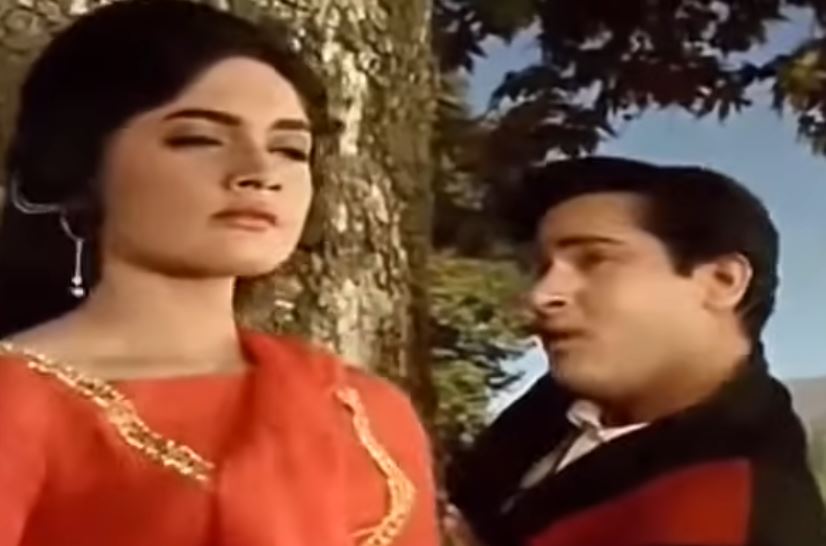
This can be termed as one of the trademark songs of Suman K. The heroine sings the song leisurely, strolling by the sea and waiting for the workaholic hero’s arrival. Set in Yaman, the song begins with a delightful humming and the honeyed vocals take it forward as if gliding on the water waves. The lyrics, music and of course, the singing do full justice.


2) Song: Are Sansar Sansar
Film: Manini (1961)
Credits: Bahinabai Chaudhari | Vasant Pawar | Suman Kalyanpur

One of the heroine oriented movies of that era. An evergreen song describing the reality of life in simplified terms. Penned by Bahinabai and aptly composed by Vasant Pawar in Pilu. Suman K adds the finishing touch by the poignant rendering.


3) Song: Deva Daya Tujhi Ki
Film: Bolki Bahuli (1961)
Credits: G D Madgulkar | Shriniwas Khale | Suman Kalyanpur

Bolki Bahuli is termed as a sequel to Devbappa (1953). Probably the first such instance in Marathi cinema. Suman K sounds sweet as always in a song which describes the character’s happy state of mind. Must say that Suman K was in her prime in the early 60s.


4) Song: Jaag Re Yadava
Film: Prem Andhala Asta (1962)
Credits: G D Madgulkar | Ram Kadam | Suman Kalyanpur

Ga Di Ma describes the sunrise and happenings of the morning scene through his writing and Ram Kadam complements with the music. Suman K voice meanders through the composition and the listener can easily visualize the scene being described. Unfortunately the picturization on screen is not up to the mark and could have been better. Indeed, some songs are meant to be heard and not seen!


5) Song: Aai Sarkhe Daiwat
Film: Vaishakh Vanva (1964)
Credits: G D Madgulkar | Datta Dawjekar | Suman Kalyanpur

Like Manini, this is a heroine oriented movie. She goes through hardships in her marital life and has to leave her husband’s house. This is a situational “teaching” song. The heroine is teaching the basics of the alphabet and sings a song in praise of the “mother” who is equivalent to God. Needless to say, the song sounds sweeter in the voice of Suman K.


6) Song: Tujhiya Botala
Film: Iye Marathichiye Nagari (1965)
Credits: Vasant Kanetkar | Vasant Desai | Suman Kalyanpur

This is a forgettable V. Shantaram directed movie but with good music like most of his offerings. I don’t recall if the song is included in the movie. Its structured like a natya sangeet composition and Suman K is the surprise package. The fast taans in natya sangeet style is a revelation and brings out the versatility of the singer.


7) Song: Anand Mani Maina
Film: Raigadacha Rajabandi (1965)
Credits: Raja Badhe | D. P. Korgaonkar | Suman Kalyanpur

I recall watching this movie on Doordarshan ages ago but has since got lost in time somewhere! Haven’t heard much about the music director but Suman K sings the song effortlessly and is impactful in the high pitch portion.


8) Song: Tujhya Kantisam Raktapataka
Film: Annapurna / Anna Hi Anna (1968)
Credits: G D Madgulkar | Snehal Bhatkar | Suman Kalyanpur

This is an early morning devotional song dedicated to Lord Ganesha. Suman K displays her command in different genres by easily handling the composition. The lyrics talk all about the lord’s features, his liking and virtues. Trivia: The movie was earlier titled Anna Hi Anna and later re-censored as Annapurna by which it is better known today.


9) Song: Limbalona Utaru Kashi
Film: Ekati (1968)
Credits: G D Madgulkar | Sudhir Phadke | Suman Kalyanpur

A mother singing for her son who is away in a different city. A typical filmy mother who has brought up her son single handedly. Her sacrifices and his hard work have paid off. He is now grown up and standing on his feet. She is contented and wishes for his success through the song. Suman K’s rendition brings out the character’s emotions effectively.


10) Song: Nimbonichya Zaadamage
Film: Bala Gaau Kashi Angai (1977)
Credits: Madhusudan Kalelkar | N. Datta | Suman Kalyanpur

One of the memorable and enduring lullabies of Marathi cinema. This was probably one of the last hits of Suman K and has retained its charm for many years. There is a sad version of the song later in the movie. Both versions are equally compelling in Suman K’s voice.

Kalicharan (1976)

Today’s post is dedicated to Subhash Ghai (born: 24th January, 1945), often called as the (second?) showman after Raj Kapoor. I remember watching Aradhana (1969) and noticing a young Subhash Ghai in a scene. Starting as an actor, he moved to direction and launched his own banner Mukta Arts. It would be safe to say he left his mark on the 1980s and 90s with a slew of movies like Hero, Meri Jung, Karma, Ram Lakhan, Saudagar, Khalnayak, Pardes and Taal. And most of them can be termed as “grand” movies for their big budgets, star power, hit music and blockbuster status.

Kalicharan was the directorial debut of Subhash Ghai. While the movie may not be perfect, it shows his craft, perhaps indicating the grander scheme of things to come.


The Plot

Kalicharan has a simple plot. We are introduced to the villain at the very beginning. Meet Seth Deendayal (Ajit). He is fondly called as Lion (also pronounced Loin) by the whole city. The country is reeling with inflation and foodgrain prices have hit the roof. Lion has managed to hoard huge quantities of wheat through is “baniya” friends. The Government is importing wheat and the ship is expected to arrive soon. Lion assures his cronies that the ship will never reach the country. Next, a blast occurs, the ship is destroyed and the grain is gone. The titles start rolling.

Prabhakar Srivastav (Shatrughan Sinha) is a capable and non-corrupt police officer. He has managed to capture a truck driver Raghu who works for Lion’s organization. But Raghu is not ready to reveal his real boss’s / owner’s name. Raghu has a sister Sapna Mathur, who studies in Simla. Sapna thinks Raghu is a hardworking and rich man but does not know the reality and the kind of work he is associated with. Upon some emotional blackmail by Prabhakar, a desperate Raghu reveals the name of the villain as Lion. Prabhakar is aghast as Lion is Seth Deendayal , a respected big shot in the city. Later, Raghu gets shot by Lion’s men and dies in the jail.

A disturbed Prabhakar prepares his report for submitting to the Inspector General (IG) P. N. Khanna (Premnath). Prabhakar is like a foster son for Khanna. Prabhakar’s 2 children (Chinky, Pinky) are like his grandchildren. Khanna has a daughter Anju (Alka) who treats Prabhakar as her brother and is attached to the children. The children are traveling to Simla (where they study) and Anju is accompanying them on the train journey.

A confused Prabhakar goes to Khanna’s cabin but Khanna is on the phone talking to none other than Lion, who is his best friend. He considers Lion and Prabhakar as the people closest to him. Prabhakar is unable to speak and reveal his suspicions about Lion. Khanna reminds him to reach the station on time to see off his children.

In a wrong move, Prabhakar goes and directly confronts Lion, who obviously refutes all allegations. Prabhakar threatens him with some wonderful dialogue delivery. Lion counters with one of the most iconic dialogues of Hindi cinema… Saara sheher mujhe Lion ke naam se jaanta hai. He holds the same status in the city as a lion in the jungle. Prabhakar warns that a man-eater lion also gets killed and to be ready for his fate.

Prabhakar leaves for the railway station. As fate would have it, Lion arranges a hit and run accident. Prabhakar is seriously injured. Khanna receives the news at the railway station. He is unable to share the news with Anju or the children. He sees them off with a heavy heart and rushes to the hospital as soon as the train departs.

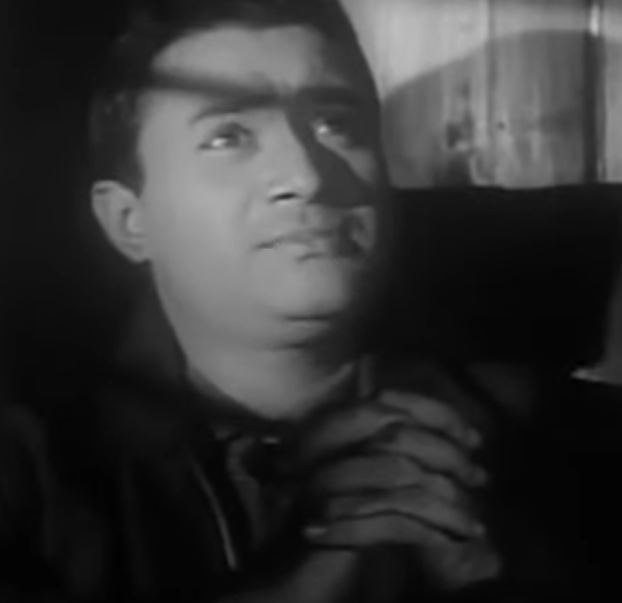
Khanna is at the hospital hoping for some positive news about Prabhakar, who may not survive the accident. He meets an old friend, retired jailor (David) at the hospital. Prabhakar dies. (But before dying, he manages to write “LION” on the hospital chart by his bedside. As it is written in reverse on the paper, it is wrongly misinterpreted as “No. 17”).

David is shocked when he looks at Prabhakar. Apparently, there is a prisoner in the New Delhi prison whose face resembles Prabhakar – a carbon copy. This is Qaidi number 511 – Kalicharan (also Shatrughan Sinha). Khanna makes some quick plans. Prabhakar’s death is kept secret. Khanna goes to New Delhi and meets Kalicharan. After lot of convincing, he manages to bring Kalicharan with him to Simla.

Kalicharan is accommodated in a guest house. Khanna tells the truth to Alka. She supports him on his mission to transform Kalicharan into DSP Prabhakar to take on the people who had killed Prabhakar. But it is not going to be easy as Kalicharan has only one mission – to escape at the earliest.

Its time for the heroine’s entry. Sapna (Reena Roy) has reached Simla for participating in a youth festival. Kalicharan manages to escape and takes a ride on top of Sapna’s bus. Through some funny scenes, Sapna manages to “capture” him and hand over to the police. Sapna is Anju’s friend and comes to meet her and Khanna. She informs Khanna about the thief she caught who calls himself Kalicharan and insists that he is a friend of Khanna. Upon hearing this, Khanna rushes to get Kalicharan released and confines him to the guesthouse. Sapna is apologetic when she comes to know this is DSP Prabhakar who Anju considers as her brother and so on.

Sapna performs a song “Jaa re jaa o harjai” in the youth festival. The lyrics seem as if she is singing for Prabhakar. Kalicharan is entertained and joins her in the dancing.

Next day, Kalicharan manages to run away again on a horse but Khanna chases and nabs him. So its back to the house and confinement. Kalicharan is frustrated. Now its time for Anju to deal with Kalicharan and make him change his ways. In filmy style, she tries to tie a rakhi to him as his sister. Kalicharan is moved and narrates his life story involving his sister. We come to know that his sister was raped and committed suicide. The culprit was Shetty (Shetty) and his friends. Kalicharan kills the friends but Shetty escapes. Anju tells him about Prabhakar’s tragic story. Finally, Kalicharan melts and agrees to be DSP Prabhakar. Khanna is relieved at the news.

But its not an easy job. Kalicharan has to meet Prabhakar’s children and behave as if he is their father. The children sing the song “Ek batta do, do batte chaar” in school and are overjoyed to see him after so many days.

Then there are other obstacles like Shaaka (superbly performed by Danny Denzongpa). He is lame in one leg and fights with a trishul (trident). And we come to know Sapna is none other than Raghu’s sister, who plans to avenge his death.

All this leading to the revelation about the No. 17 puzzle. But will Khanna be convinced that his best friend Lion is the main villain responsible for Prabhakar’s death? And will Lion remain silent? He is arranging to get rid of Prabhakar with the help of some bad men like Madan Puri, Manik Irani and last but not the least Shetty, with whom Kalicharan has old scores to settle.

The Music

The songs are written by Ravindra Jain and Inderjeet Singh Tulsi, music by Kayanji Anandji. There are only 4 songs but Jaa re jaa o harjai and Ek batta do are more famous. They were heard often on radio and TV.

My Thoughts

As mentioned, Kalicharan is a simple story but Subhash Ghai manages to make an entertaining movie primarily with a combination of the acting and dialogues. The director focuses on the story avoiding diversions like unnecessary songs and a long romantic track.

The biggest credit is perhaps to Shatrughan Sinha, who shines in the brief role of Prabhakar and then the lengthier character of Kalicharan. He is good in the emotional and action scenes, and is convincing in the comedy scenes as well. His dialogue delivery is phenomenal. He was normally associated with multi starrers and negative characters. This was his first hit as a solo hero movie.

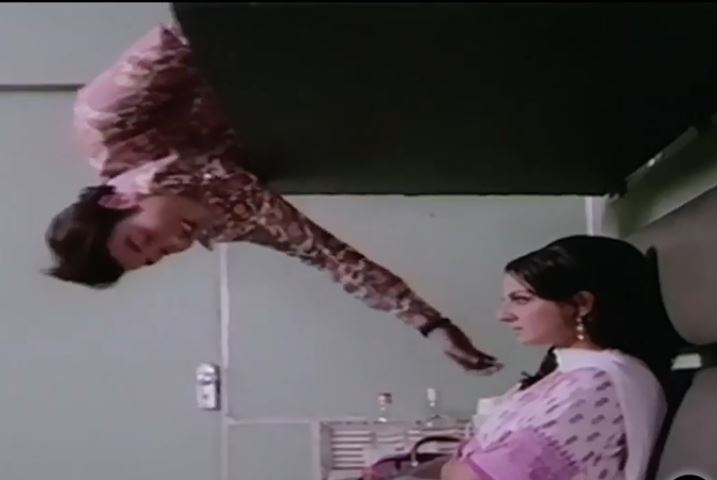
Ajit nails it as as Lion. He portrays the menacing villain by his convincing dialogue delivery, expressions and body language. Danny Denzongpa impresses in a small but effective role. The rest of the cast pales in comparison. Reena Roy plays the typical heroine and appears in some weird costumes. Premnath talks loudly with exaggerating actions and keeps on swearing for no reason.

Pran Jaye Par Vachan Na Jaye (1974)

O.P. Nayyar (full name Omkar Prasad Nayyar), was a class apart from his peers in the music industry. His distinct compositions helped him to carve a separate identity. And the biggest distinguishing factor was his non-utilization of Lata Mangeshkar. This was a time when not only music directors but producers, directors and even actresses would insist to have their songs graced by this incomparable voice. But not O.P. Nayyar. He made use of the talents of Shamshad Begum, Geeta Dutt and Asha Bhosle’s to enhance his musical offering. And success did not elude him. The reason for remembering O.P is his birth and death anniversaries fall in January (16th January, 1926 and 28 January, 2007 respectively).

Today’s theme is not a song list but a movie whose music was contributed by O.P Nayyar. Pran Jaye Par Vachan Na Jaye, a dacoit drama and otherwise forgettable movie. The movie is significant because it marked the end of the long association between O.P. Nayyar and Asha Bhosle. Yes, this was the last time this voice was heard under the O.P. baton.

Another bit of trivia. Asha Bhosle was awarded the best playback singer for the song Chain Se Humko Kabhi, but it did not feature in the movie! Strange are the ways of cinema!


The Plot

Where there is a dacoit drama, there is a dacoit (daaku). Raja Thakur (Sunil Dutt) is a daaku revered by the villagers and hated by the wealthy. The movie starts with Raja Thakur arriving at Thakur Bhanwar Singh’s (Rajan Haskar’s) house. Bhanwar Singh has exploited a Harijan girl and her helpless parents have approached Raja Thakur for justice. Raja Thakur threatens Bhanwar Singh and makes him marry the girl forcibly. He warns his own men not to loot the house as it is now the house of his “sister.”

Also introduced is Janniya (Rekha), a dancer. She had come to entertain Bhanwar Singh but ends up entertaining the daaku with a mujra item. Raja Thakur is impressed and asks her to demand anything (he is in a good mood!). She insults him saying he doesn’t earn a decent dime, what can he give her? He is further impressed by her attitude and states that she has pure blood and should leave dancing and get married soon.

Later, he meets his mother (Veena) and informs her of the good deed he has performed that day. She is happy and hopes he will marry soon as well. He tells her that is not possible and reminds her of the injustice done to their family. There is a flashback. The local zamindar (Tiwari) was exploiting Raja Thakur’s family for the loan taken by his ancestors. He comes to take away the family’s cattle as repayment. There is a fight and Raja Thakur’s father gets killed. It was Raja Thakur’s dream to study and become a big man but his dreams are shattered. The pen in his hand is replaced by a rifle.

The local police are making plans to catch Raja Thakur. They plan to nab him during the annual fair when Raja Thakur will be making his customary visit to the temple. There is a song sequence involving policemen posing as dancers. They surround Raja Thakur but he outwits them and manages to escape.

Another shady character is Dharamdas (Jeevan). He helps Raja Thakur by supplying him resources including ammunition in return of gold. This is win-win situation for both, so the barter arrangement continues successfully. Dharamdas tells him about Janniya. Their is gossip in the village about the relationship between Raja Thakur and Janniya.

The police put Janniya in lock up in order to make Raja Thakur come and rescue her. We come to know that Janniya is actually the abducted daughter of a crorepati Seth Dhanraj (Iftekhar). His brother in law Jagmohan (Madan Puri) had done a deal with Mangal Singh (Premnath) to abduct /kill her when she was a child. But she ends up with Chandabai (Indira Bansal) and becomes a dancer. Jagmohan is after Dhanraj’s money.

Through clever planning, Raja Thakur attacks the police station and rescues Janniya. He takes her to his hideout. He declares Janniya should get married soon to end all speculation regarding their alleged relationship.

He wants to ensure a decent future for Janniya and “arranges” 3 prospective grooms (Keshto Mukherjee, Birbal and Polson). They try to add a comedic touch to the proceedings. Janniya needs to select one of them as her husband.

Meanwhile the police have contacted Dhanraj. He reaches the police station and identifies that Janniya is indeed his long lost daughter Sheetal. (The police show him the dress that Sheetal was wearing at the time of her abduction). Dhanraj and Jagmohan meet Raja Thakur’s mother requesting her to intervene and ensure his daughter’s safe return. Money is offered, which she refuses. She promises to pass on the message to Raja Thakur. She does so and Raja Thakur agrees with his mother’s wishes.

Its marriage day and Janniya is all decked to marry one of her 3 suitors. In her mind, she is secretly fancying Raja Thakur. Unfortunately he is strictly professional and miles away from any romantic overtures. The police reach and attack the hideout before the marriage celebrations can begin. Raja Thakur manages to get hold of Janniya and run away. He leaves her with his mother, who will hand her over to her father. But hardly has he turned his back that Janniya is kidnapped by Mangal Singh’s men. His mother falls down and dies.

This is just the first half. The rest of the movie is all about Raja Thakur v/s Mangal Singh. Mangal Singh is a sadistic type of villain. He sits on a throne like chair playing a harp in a very flashy den. He is surrounded by a bevy of foreign looking (firangi) girls.

Mangal Singh demands Rs 25 lakhs as ransom from Janniya’s father. In parallel, Raja Thakur makes the decision to leave the village and come to the city to face Mangal Singh and rescue Janniya. He teams up with Seth Dhanraj and hatches the rescue plan, eventually taking the movie towards closure.

The Music

All songs carry the O.P. Nayyar trademark. However it is true that his music had starting sounding repetitive and jaded by now. The staleness of the musical arrangement and rhythm is evident. The songs appear randomly and seem a wasted effort.

There is no male singer and all songs are sung by Asha Bhosle. While the dropped song Chain Se Humko Kabhi is easily the best song, others like Bikaner Ki Chunari (picturised on Jayshree T) and Aake Dard Jawan Hai (on Bindu) are not bad too.

My Thoughts

I would say times had changed by 1974 when the movie was released. The subject may be more relevant in the 1960s. Sunil Dutt has played the daaku role in a number of movies and appears confident. This was one of Rekha’s earlier movies but she acts really well. Unfortunately, there is no chemistry between the two leads and they make an odd pair. Normally, a romantic angle will be expected but that doesn’t happen.

The movie goes downhill in the 2nd half where the focus is more on Premnath’s character. The character is too loud (similar to his den and the flashy set we get to see) and highly irritable. And the actor plays it in that way, irritating the audience. Same for Jeevan, who plays a predictable role. We get to see many familiar supporting actors but sadly, they do not leave much impact.