Sachin Kundalkar is a well-known director in Marathi cinema, recognised for exploring a wide range of subjects. Human relationships, emotional yearning, and questions of identity are recurring themes in his films, and Rajwade and Sons (2015) is no exception.
As the title suggests, the film revolves around the Rajwade family, a well-established business family spanning three generations. It explores how these generations interact with one another, navigate conflicts, and respond to changing times and perspectives. Beneath the family drama lie some thought-provoking questions. Can financial security and material comfort truly guarantee happiness? What happens when the life we have grown accustomed to begins to feel restrictive? And, perhaps most importantly, do we have the courage to step out of our comfort zone and question the choices we have always taken for granted?

The Plot
The Rajwade family owns a prestigious jewellery business in Pune, and the name commands considerable respect across the city.
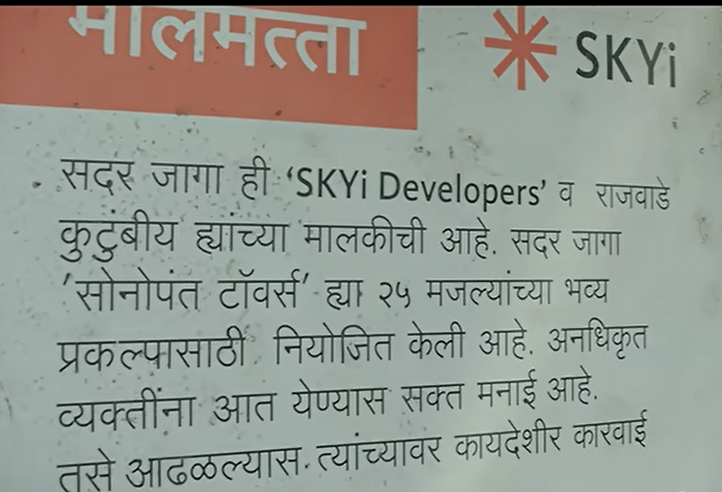
The film opens with the entire family moving out of their old bungalow in the heart of Pune. As part of a redevelopment project, the property is set to make way for a high-rise tower. In the meantime, the family relocates to another residence until the new building is ready.
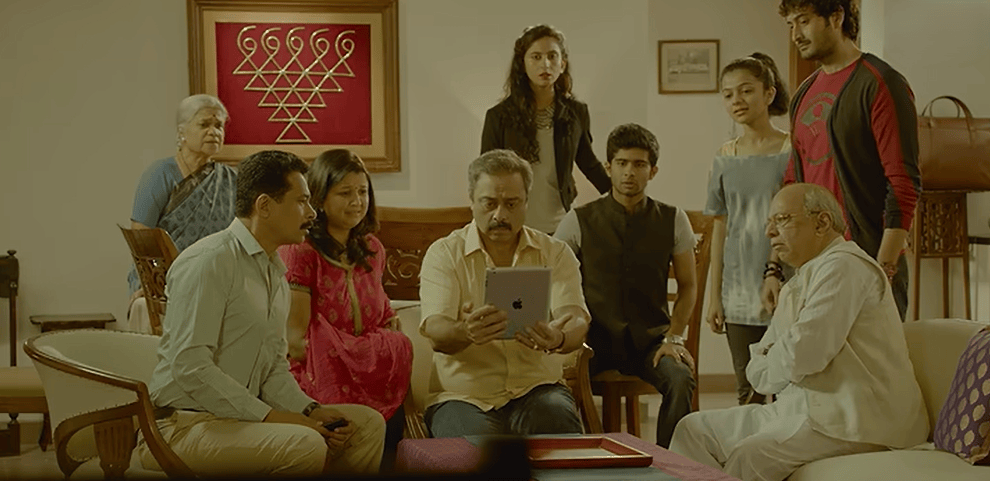
At the helm of the Rajwade family is Rameshrao Rajwade (Satish Alekar), a staunch traditionalist who firmly believes in upholding age-old values and customs. He exercises tight control over the family business, with his two sons and son-in-law expected to follow his orders without question. In the Rajwade household, joining the family business is not a choice but an expectation passed down from one generation to the next. Pursuing an alternative career is simply out of the question. Even following one’s personal passions is discouraged, as anything that might affect the reputation and image of the family’s jewellery business is considered unacceptable.
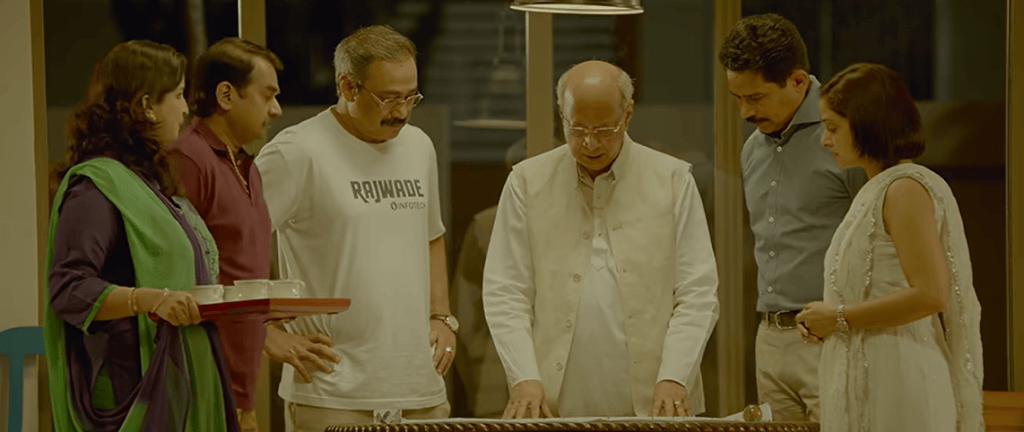
Even when it comes to the redevelopment project, Rameshrao presents his design to the family members, who accept his decision without question. His authority within the family is such that his choices are rarely challenged.
His wife, Susheela (Jyoti Subhash), is the matriarch of this affluent household. A sensible and level-headed woman, she has spent years following her husband’s wishes, accepting his decisions as a way of life.

Rameshrao’s two sons are Vidyadhar (Sachin Khedekar) and Shubhankar (Atul Kulkarni). Vidyadhar’s wife is Sarita (Poornima Manohar) while Shubhankar’s wife has passed away and he has a school going daughter Tanmaya. Rameshrao’s daughter, Laxmi Joshi, is married to Vaibhav (Rahul Mehendale), who lives with the Rajwade family as their ghar jamai (a son-in-law who resides in his wife’s parental home). Vaibhav also works alongside his father-in-law in the family business.
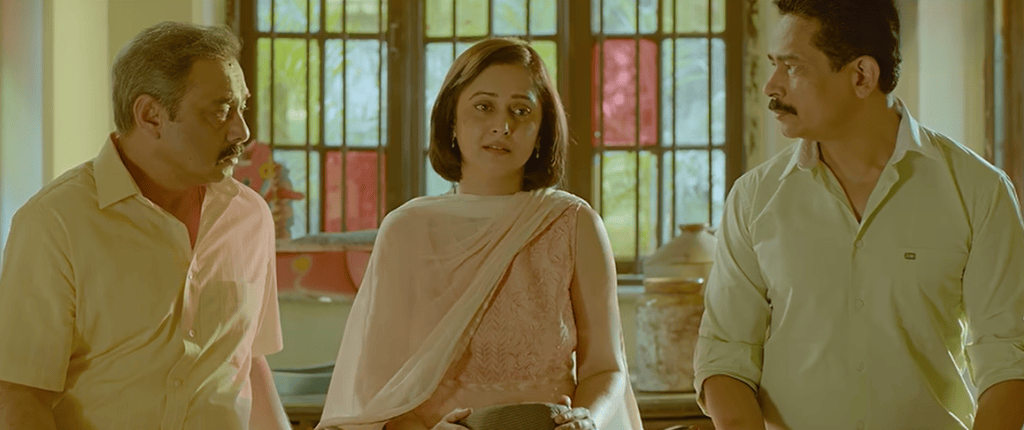
Interestingly, the women in the family have little say in business matters. Although Laxmi is a director in the company, her involvement appears to be limited to signing documents as instructed by her father, without necessarily understanding the business decisions behind them.
Laxmi once dreamt of becoming an actor. During her college days, she had even performed in the acclaimed Marathi play Wada Chirebandi, which, incidentally, also revolves around a joint family. However, her aspirations were firmly dismissed by her father. As a Rajwade daughter, she was expected to uphold the family’s standing and remain rooted in Pune. The idea of leaving the city to pursue a career in the film industry was unacceptable to him. Instead, she was married off at a young age to a wealthy man.

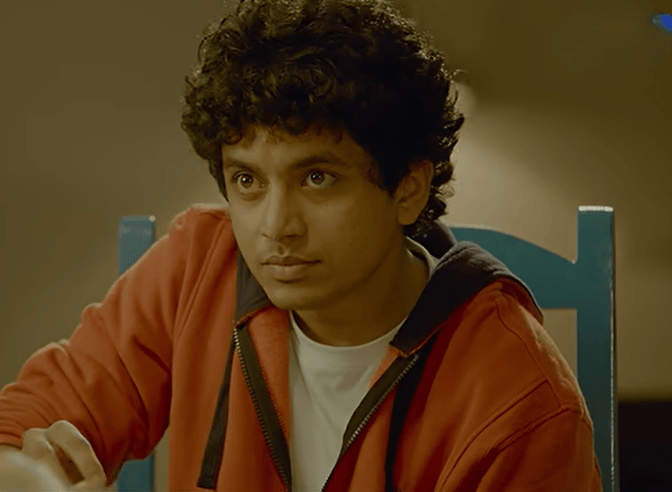
It is evident that all three of Rameshrao’s children have grown accustomed to accepting their father’s decisions without question. The same expectations are likely to be imposed on the next generation. But will the younger members of the family submit to these conventions just as readily? Anay (Alok Rajwade), Virajas (Siddharth Menon), Shweta (Krutika Deo), and Ananya (Mrunmayee Godbole) represent the future of the Rajwade family. Through them, the film explores whether deeply entrenched family traditions can survive when confronted with a younger generation’s aspirations and desire for independence.
The younger generation of the Rajwade family has, in many ways, been born with a silver spoon in its mouth. Accustomed to a life of privilege, comfort, and financial security, they have enjoyed opportunities that many can only dream of. Yet, not everyone is willing to accept the future their parents and grandfather have mapped out for them.


The simmering discontent comes to the fore through an incident involving Ananya, Laxmi’s daughter. Ananya aspires to enter the modelling world by participating in the Miss Pune contest. She is also aware that Rajwade and Sons is looking for a model to showcase its jewellery collection. However, despite her interest, she is not even considered for the role.
When Ananya goes ahead with a photo shoot, the family convenes a meeting to address what they perceive as her unacceptable behaviour. The message is unambiguous: she cannot pursue her dreams because she belongs to the Rajwade family and must protect its reputation. Ananya challenges this reasoning, pointing out that their family’s reputation hardly extends beyond Pune.
Frustrated by the elders’ refusal to understand her aspirations, Ananya storms out of the meeting, with Anay following her. For the first time, the younger generation’s dissent becomes unmistakable. What was once simmering beneath the surface now begins to emerge as an open challenge to the family’s deeply entrenched values and expectations.

The elders often complain that the younger generation has received everything on a platter. But this raises an obvious question: whose fault is it? Aren’t the parents and grandfather equally responsible for bringing up their children in an environment where privilege comes with little freedom to make independent choices?
The younger members of the family carry on their carefree ways. They visit their old bungalow before it is demolished, having secretly arranged duplicate keys without informing the elders. During one such visit, they stumble upon a trunk and other belongings of Vikram Rajwade, Rameshrao’s son, who had left home many years ago after an “incident” that is never spoken about by the elders. Apparently, Vikram had also “stolen” some money when he left. His whereabouts remain unknown, and Rameshrao has made it clear that his estranged son will have no place in the redeveloped family residence or inheritance.

Then comes an unexpected turn of events. While the family is enjoying lunch, Vikram (Amit Riyaan) suddenly walks in. Having spent years away from home, he has built a life on his own terms, doing things that a Rajwade is traditionally not expected to do. He has worked independently, travelled abroad, settled down, and married. By all appearances, he has done well for himself without relying on the family or its business.

Vikram’s arrival affects every member of the household in some way, but it is the younger generation that is most deeply influenced. Here, at last, is someone from their own family who has dared to break away from its rigid conventions and chart his own course. His very existence challenges the belief that the Rajwades’ prescribed way of life is the only path to success and respectability.

Vikram is more than just an unexpected guest who gatecrashes the family’s comfortable existence. He is the rebel, the disruptor, and, above all, the catalyst who sets in motion a process of change within the Rajwade household.

Whether the younger generation will find the courage to take that leap is revealed as the film progresses. Along the way, there are some startling revelations about various family members which make things complicated as everyone struggles to come to terms with the reality and the way forward.
The Music

The film has only 2 songs (Tagmag and Mokale) which can be termed more as poetry set to tune. Tejas Modak is the poet and Debarpito Saha the composer.
My Thoughts
Sachin Kundalkar explores several themes in Rajwade and Sons. At one level, it is a family drama, but beneath the surface, it examines the patriarchal mindset prevalent in affluent business families, the position of women in family-run enterprises, and the struggle for independent thinking. The assumption that women are incapable of handling business affairs, or that younger family members must automatically follow in the footsteps of their elders, comes under scrutiny.
The bond between the siblings, both old and young, feels genuine. The older generation has largely accepted its circumstances and settled into the life laid out for them. The younger generation, on the other hand, appears carefree but carries an underlying sense of dissatisfaction. They have everything they could ask for in terms of material comfort, yet something seems to be missing. This contrast is one of the film’s more interesting aspects.
As far as the performances are concerned, most of the cast members leave a mark. However, Rameshrao’s character comes across as excessively rigid, almost incapable of understanding the changing aspirations and expectations of the younger generation. His assessment of Vikram, his intentions, and the approach e proposes lack the maturity and wisdom one would expect from an elderly family patriarch. Vikram’s character, too, feels somewhat vague at times, leaving certain aspects of his personality and motivations insufficiently explored.
The film’s resolution is another area that disappoints. The eventual outcome does not feel entirely convincing, and the narrative could have benefited from exploring the younger generation’s struggles in greater depth. What happens when they finally step outside the protective confines of the family business? Do they succeed in carving out independent identities, or do they discover that life beyond their privileged world is far more challenging than they imagined? Such an exploration would have lent greater weight to the film’s central questions.
Does the film serve as an eye-opener? The answer remains ambiguous. More importantly, does Rameshrao undergo any meaningful change of heart? This is a question the resolution could have addressed more convincingly.
One of the film’s strengths lies in the way the director plants seemingly small and incidental details from the very beginning and gradually connects many of them as the story unfolds. These subtle directorial touches add depth to the narrative and demonstrate his attention to detail. The film also benefits from its clean, glossy visual presentation, which complements the affluent world it portrays.
Ultimately, Rajwade and Sons raises relevant questions about privilege, family expectations, and the freedom to make one’s own choices. While its themes are compelling and its treatment often engaging, the film’s somewhat unconvincing resolution prevents it from reaching its full potential.

