All posts by GGaurav

Unknown's avatar

About GGaurav

I am passionate about old movies, songs and trivia.

Pran Jaye Par Vachan Na Jaye (1974)

O.P. Nayyar (full name Omkar Prasad Nayyar), was a class apart from his peers in the music industry. His distinct compositions helped him to carve a separate identity. And the biggest distinguishing factor was his non-utilization of Lata Mangeshkar. This was a time when not only music directors but producers, directors and even actresses would insist to have their songs graced by this incomparable voice. But not O.P. Nayyar. He made use of the talents of Shamshad Begum, Geeta Dutt and Asha Bhosle’s to enhance his musical offering. And success did not elude him. The reason for remembering O.P is his birth and death anniversaries fall in January (16th January, 1926 and 28 January, 2007 respectively).

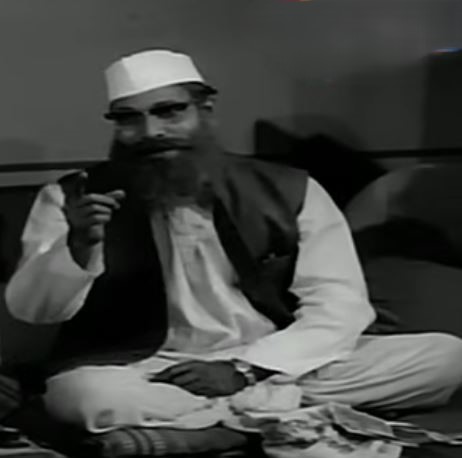
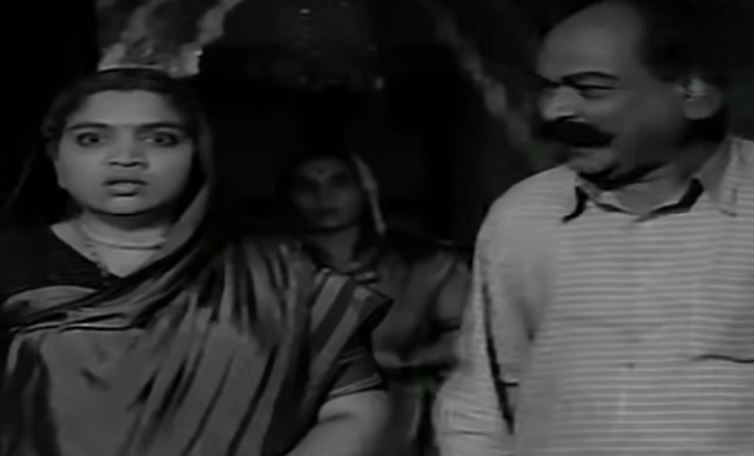
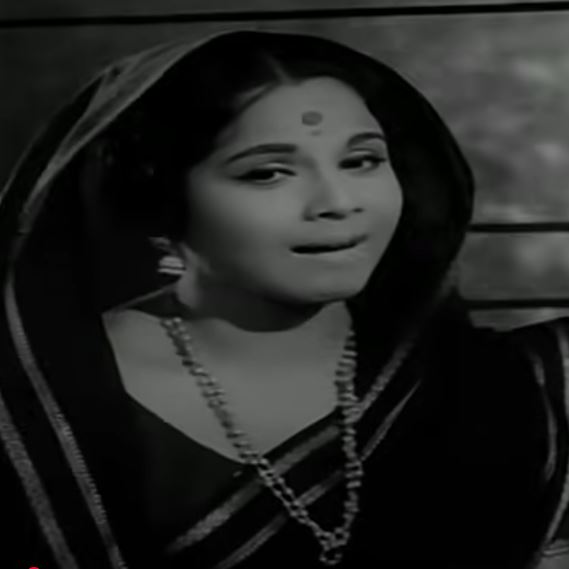
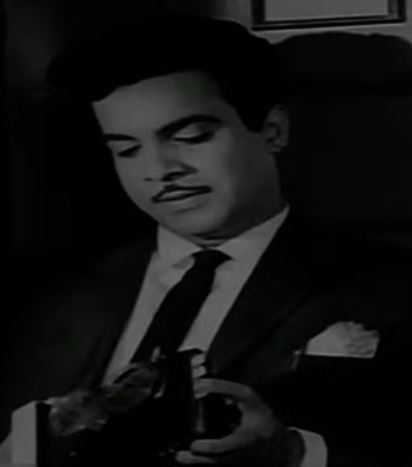
Today’s theme is not a song list but a movie whose music was contributed by O.P Nayyar. Pran Jaye Par Vachan Na Jaye, a dacoit drama and otherwise forgettable movie. The movie is significant because it marked the end of the long association between O.P. Nayyar and Asha Bhosle. Yes, this was the last time this voice was heard under the O.P. baton.

Another bit of trivia. Asha Bhosle was awarded the best playback singer for the song Chain Se Humko Kabhi, but it did not feature in the movie! Strange are the ways of cinema!


The Plot

Where there is a dacoit drama, there is a dacoit (daaku). Raja Thakur (Sunil Dutt) is a daaku revered by the villagers and hated by the wealthy. The movie starts with Raja Thakur arriving at Thakur Bhanwar Singh’s (Rajan Haskar’s) house. Bhanwar Singh has exploited a Harijan girl and her helpless parents have approached Raja Thakur for justice. Raja Thakur threatens Bhanwar Singh and makes him marry the girl forcibly. He warns his own men not to loot the house as it is now the house of his “sister.”

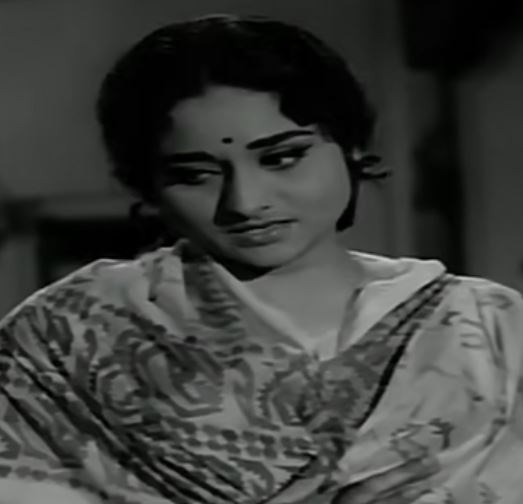
Also introduced is Janniya (Rekha), a dancer. She had come to entertain Bhanwar Singh but ends up entertaining the daaku with a mujra item. Raja Thakur is impressed and asks her to demand anything (he is in a good mood!). She insults him saying he doesn’t earn a decent dime, what can he give her? He is further impressed by her attitude and states that she has pure blood and should leave dancing and get married soon.

Later, he meets his mother (Veena) and informs her of the good deed he has performed that day. She is happy and hopes he will marry soon as well. He tells her that is not possible and reminds her of the injustice done to their family. There is a flashback. The local zamindar (Tiwari) was exploiting Raja Thakur’s family for the loan taken by his ancestors. He comes to take away the family’s cattle as repayment. There is a fight and Raja Thakur’s father gets killed. It was Raja Thakur’s dream to study and become a big man but his dreams are shattered. The pen in his hand is replaced by a rifle.

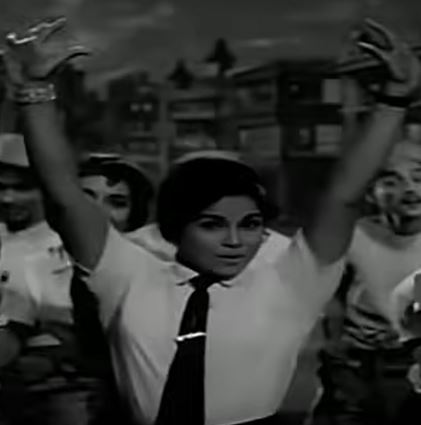
The local police are making plans to catch Raja Thakur. They plan to nab him during the annual fair when Raja Thakur will be making his customary visit to the temple. There is a song sequence involving policemen posing as dancers. They surround Raja Thakur but he outwits them and manages to escape.

Another shady character is Dharamdas (Jeevan). He helps Raja Thakur by supplying him resources including ammunition in return of gold. This is win-win situation for both, so the barter arrangement continues successfully. Dharamdas tells him about Janniya. Their is gossip in the village about the relationship between Raja Thakur and Janniya.

The police put Janniya in lock up in order to make Raja Thakur come and rescue her. We come to know that Janniya is actually the abducted daughter of a crorepati Seth Dhanraj (Iftekhar). His brother in law Jagmohan (Madan Puri) had done a deal with Mangal Singh (Premnath) to abduct /kill her when she was a child. But she ends up with Chandabai (Indira Bansal) and becomes a dancer. Jagmohan is after Dhanraj’s money.

Through clever planning, Raja Thakur attacks the police station and rescues Janniya. He takes her to his hideout. He declares Janniya should get married soon to end all speculation regarding their alleged relationship.

He wants to ensure a decent future for Janniya and “arranges” 3 prospective grooms (Keshto Mukherjee, Birbal and Polson). They try to add a comedic touch to the proceedings. Janniya needs to select one of them as her husband.

Meanwhile the police have contacted Dhanraj. He reaches the police station and identifies that Janniya is indeed his long lost daughter Sheetal. (The police show him the dress that Sheetal was wearing at the time of her abduction). Dhanraj and Jagmohan meet Raja Thakur’s mother requesting her to intervene and ensure his daughter’s safe return. Money is offered, which she refuses. She promises to pass on the message to Raja Thakur. She does so and Raja Thakur agrees with his mother’s wishes.

Its marriage day and Janniya is all decked to marry one of her 3 suitors. In her mind, she is secretly fancying Raja Thakur. Unfortunately he is strictly professional and miles away from any romantic overtures. The police reach and attack the hideout before the marriage celebrations can begin. Raja Thakur manages to get hold of Janniya and run away. He leaves her with his mother, who will hand her over to her father. But hardly has he turned his back that Janniya is kidnapped by Mangal Singh’s men. His mother falls down and dies.

This is just the first half. The rest of the movie is all about Raja Thakur v/s Mangal Singh. Mangal Singh is a sadistic type of villain. He sits on a throne like chair playing a harp in a very flashy den. He is surrounded by a bevy of foreign looking (firangi) girls.

Mangal Singh demands Rs 25 lakhs as ransom from Janniya’s father. In parallel, Raja Thakur makes the decision to leave the village and come to the city to face Mangal Singh and rescue Janniya. He teams up with Seth Dhanraj and hatches the rescue plan, eventually taking the movie towards closure.

The Music

All songs carry the O.P. Nayyar trademark. However it is true that his music had starting sounding repetitive and jaded by now. The staleness of the musical arrangement and rhythm is evident. The songs appear randomly and seem a wasted effort.

There is no male singer and all songs are sung by Asha Bhosle. While the dropped song Chain Se Humko Kabhi is easily the best song, others like Bikaner Ki Chunari (picturised on Jayshree T) and Aake Dard Jawan Hai (on Bindu) are not bad too.

My Thoughts

I would say times had changed by 1974 when the movie was released. The subject may be more relevant in the 1960s. Sunil Dutt has played the daaku role in a number of movies and appears confident. This was one of Rekha’s earlier movies but she acts really well. Unfortunately, there is no chemistry between the two leads and they make an odd pair. Normally, a romantic angle will be expected but that doesn’t happen.

The movie goes downhill in the 2nd half where the focus is more on Premnath’s character. The character is too loud (similar to his den and the flashy set we get to see) and highly irritable. And the actor plays it in that way, irritating the audience. Same for Jeevan, who plays a predictable role. We get to see many familiar supporting actors but sadly, they do not leave much impact.

R.D. Burman – Multiple Version/ Tandem Songs

Rahul Dev Burman or R.D. or Pancham was one of the most talented and prolific music directors in Hindi cinema. Its been more than 30 years since he passed away on 4th January 1994. Arguably, he is the most well known of the composers of a bygone era for today’s generation. He is widely known for his musical “experiments” and attempts to create the desired sounds and effects in his songs.

Coming to the theme based on R.D. songs. We find there are different versions of one song used in the same movie. Sometimes, one version is happy and the other one is sung in sadder times. Both versions may be solos, sung by the same or different singer(s). Or can be a solo and later a duet. There are multiple variations to the theme itself! In today’s post, we will be visiting some multiple version or tandem songs, all composed by R.D. Burman. Which similar songs do you remember?


1) Song: Wadiyaan Mera Daaman
Film: Abhilasha (1968)
Credits: Majrooh Sultanpuri | R.D. Burman | Mohammed Rafi | Lata Mangeshkar

Abhilasha is probably remembered only for its two famous songs. The catchy Pyar hua hai jabse and this multiple version song. The first version is a Mohammed Rafi solo. Sanjay Khan is romancing Nanda and crooning the song. Later, Nanda is remembering him and singing this song. But this time she is accompanied by his brother (played by Kashinath Ghanekar). He misinterprets her thoughts for him, leading to misunderstandings.


2) Song: Tum Bin Jaoon Kahaan
Film: Pyar Ka Mausam (1969)
Credits: Majrooh Sultanpuri | R.D. Burman | Kishore Kumar | Mohammed Rafi

Another memorable song and R.D. excels. The song first appears as a Kishore Kumar solo when Bharat Bhushan is singing for his wife (Nirupa Roy) and young son. Then tragedy strikes and they get separated. The song appears again with an older and impoverished Bharat Bhushan singing on the roadside (Kishore Kumar again). Coincidentally, his long lost son, grown up as Shashi Kapoor is (conveniently) sitting nearby to hear, like and memorize the song. Shashi Kapoor later sings it for Asha Parekh as a romantic solo (this time voiced by Mohammed Rafi). While both the versions are famous, it sounds odd to think of Kishore Kumar as Bharat Bhushan’s voice in place of Mohammed Rafi who has sung so many hit songs for him in films like Baiju Bawra, Barsaat Ki Raat, Phagun etc.


3) Song: Chanda O Chanda
Film: Lakhon Mein Ek (1971)
Credits: Anand Bakshi | R. D. Burman | Lata Mangeshkar | Kishore Kumar & Lata Mangeshkar

Lakhin Mein Ek is a remake of a Tamil movie “Edhir Neechal” (1968). The movie is centered around an orphan, played by Mehmood. The first version is a female solo. A sad Radha Saluja is unable to sleep. She addresses the moon and compares their plight. Later, in a filmy contrived situation, Mehmood is forced to take care of a neighbour’s child and make him sleep. He sings the same song as a lullaby. The song is melodious and R.D. manages to impart a sorrowful layer to it, suitable for the situation.


4) Song: Phoolon Ka Taaron Ka
Film: Hare Rama Hare Krishna (1972)
Credits: Anand Bakshi | R. D. Burman | Lata Mangeshkar | Kishore Kumar

This is one of the famous brother-sister songs in Hindi movies. The first version is a childhood song. The brother is singing for his sister in happier times (featuring Master Satyajeet and Baby Guddi). But their life changes when the parents separate and so do the children. A grown up Dev Anand searches for his sister Zeenat Aman who has joined a band of hippies in Nepal. He sings the song in an attempt to remind her of the younger days. The song appears at a crucial point in the movie. A simple but impactful composition.


5) Song: Yaadon Ki Baaraat
Film: Yaadon Ki Baaraat (1973)
Credits: Majrooh Sultanpuri | R.D. Burman | Lata Mangeshkar , Padmini Kolhapure & Shivangi Kolhapure | Kishore Kumar & Mohammed Rafi

Another song where the two versions are set years apart. The first version is sung together by a family comprising of 3 sons. Their parents get killed. Circumstances lead the brothers to get separated and meet after 15 years. By coincidence, all 3 of them are in the same location, a hotel. The youngest brother (Tariq), sings the song and is soon joined by Vijay Arora. The eldest brother Dharmendra is unable to join the singing but is happy to see his brothers reunite after so many years.


6) Song: Tera Mujhse Hai Pehle Ka
Film: Aa Gale Lag Jaa (1973)
Credits: Sahir | R. D. Burman | Kishore Kumar | Kishore Kumar & Sushma Shreshtha

Aa Gale Lag Jaa was a rich heroine & poor hero story where the 2 lovers are separated by the cunning father of the heroine. They meet again a few years later.

The hero Shashi Kapoor sings this song for Sharmila Tagore initially as a romantic solo. Years later, his son sings this song in a party and is also joined by his father. The heroine is unaware of the bitter truth that the boy is actually her own son.


7) Song: Kahi Karti Hogi
Film: Phir Kab Milogi (1974)
Credits: Majrooh Sultanpuri | R.D. Burman | Mukesh | Mukesh & Lata Mangeshkar

A highly forgettable movie directed by Hrishikesh Mukherjee. And featuring the rare combination of Mukesh with R.D. Burman. Biswajeet sings the male version thinking of the girl who will be entering his life as his beloved. Later, the same song is sung as a duet with the heroine Mala Sinha.


8) Song: Mere Naina Saawan Bhado
Film: Mehbooba (1976)
Credits: Anand Bakshi | R.D. Burman | Lata Mangeshkar | Kishore Kumar

Mehbooba was a flop movie but its songs remain popular. The movie is based on the reincarnation theme where the lovers separate in one life and meet again in another life. Rajesh Khanna, a singer is reminded of his previous life through this song. A ghostly Hema Malini walks around the palace and its grounds. He follows her through the palace as she makes him recall his earlier life. And later he is destined to meet the present day Hema Malini. He sings the same song reminding her of the connection of their past lives. Set in raag Shivaranjani, this is a haunting composition by R.D. Burman.


9) Song: Rijhim Gire Saawan
Film: Manzil (1979)
Credits: Yogesh | R. D. Burman | Kishore Kumar | Lata Mangeshkar

This can be termed as an iconic song, and Kishore Kumar’s version is heard more often. The male version occurs at the beginning of the movie. Amitabh Bachchan is singing in his friend’s house. The singing is subdued but effective. The second version is slightly faster paced but musically rich in Lata Mangeshkar’s voice. Its a background song. The leads Amitabh and Moushumi are walking and running around Mumbai, in the rains. Highly enjoyable. Again, R.D. does a great job in both the versions!


10) Song: Hume Tumse Pyar Kitna
Film: Kudrat (1981)
Credits: Majrooh Sultanpuri | R.D. Burman | Parween Sultana | Kishore Kumar

And the last song from a movie based on reincarnation. The first version is a classical inclined composition picturised primarily on Aruna Irani with the main leads watching her performance. She meets Rajesh Khanna before the show and remembers this old song which she has not sung for 30 years. Parween Sultana won the Filmfare award for this song.

The second version occurs in a flashback. Rajesh Khanna sings for Hema Malini in their previous life. Kishore Kumar’s version is subtle and romantic. Both songs are equally impactful as per their situations, courtesy R.D. Burman.

Swarg (1990)

Rajesh Khanna, fondly known as the first superstar of Hindi cinema was born on 29 December 1942. He saw unprecedented success followed by an unfortunate bad phase, accompanied with fading stardom. But he continued to act in movies irrespective of their fate at the box office. Today’s movie is perhaps his last hit where he plays a central character. Swarg is directed by David Dhawan This was before his entry into the comedy genre for which he is more famously known.


The Plot

Swarg means heaven and here it is the name of a mansion like house owned by Kumar (Rajesh Khanna). Kumar lives with his wife Janki (Madhavi). The other occupants are his 3 step siblings – Ravi (Dilip Dhawan), Vicky (Raja Bundela), and Jyoti (Juhi Chawla). Ravi’s wife is Naina (Neena Gupta). Kumar had promised his dying stepmother (Shammi) that he and Janki will shower all their love and care on the 3 siblings. In order to avoid complications(!), they decide not to have children. Kumar sells the old house they were living in and sets up a garment business with the money. He achieves success through his hard work and becomes a rich and respected businessman.

Their is one more occupant in Swarg – Krishna (Govinda), an orphan. Kumar had met the young boy Krishna is a temple and brought him home. Krishna grows up as a servant in the house but he is a servant only in name. He worships Kumar and can go to any extent to ensure his happiness and well being. Krishna also has some light hearted moments with the college going Jyoti. Krishna is a movie buff and crazy about acting. He likes to sing songs and mimic well known actors. His dream is to become a successful hero.

Kumar has received a substantial business order and needs a loan of Rs 50 lakhs. He has approached Chowdhary (Vikas Anand) for the loan. It is agreed that Swarg will be kept as mortgage and the loan is sanctioned. All is going well.

But where there is heaven, there is bound to be hell. In the Mill Owners Association’s election, Kumar defeats his rival Dhanraj (Paresh Rawal), who was the president for many years. Dhanraj is the opposite of Kumar. He is a corrupt businessman and is afraid that his misdeeds in running the association will be exposed by Kumar. He tries to bribe Kumar, who slaps him in public, warning him not to try such antics.

Kumar and Janki arrange Jyoti’s engagement with Choudhary’s son. The engagement day arrives, celebrations are in full swing. Then disaster strikes. Kumar gets a call that his factory has caught fire. The whole factory is gutted and life takes a turn for all.

Money lenders arrive at Kumar’s house requesting him to pay their debts. Kumar seeks money to rebuild his business and requests his siblings to act as guarantors. Apparently, they have their own businesses. They blatantly refuse his request. Kumar manages to use his savings and satisfy the debtors. Jyoti’s engagement is broken.

Ravi, Vicky and Naina start showing their true colours. Kumar asks them to not indulge in avoidable expenditures like arranging a grand party for Naina’s birthday but he gets insulted. Vicky goes to the extent of stealing Jyoti’s wedding jewellery and put the blame on Krishna. Surprisingly, Kumar believes Krishna is the culprit and asks him to leave the house. Krishna is shocked and has no option but to leave.

Janki admonishes Kumar, who explains to her that he did not want Krishna to live in this polluted atmosphere and had to send him away with a heavy heart.

Krishna heads to Mumbai. After a dramatic encounter with a local goonda, he befriends a film production manager with a funny name Airport/ Adda (Satish Kaushik). Airport offers him accommodation and the job of a spot boy in the film studio. Krishna is a hard worker and one day luck shines upon him unexpectedly. He gets a chance to perform a movie scene when the actor performing it keeps on bumbling leading to multiple retakes. Krishna accepts the challenge and performs the scene brilliantly. He gets cast in the role. He gradually becomes a celebrated actor.

And Kumar? Life is hell. His step brothers are against him. Dhanraj arranges for Swarg to be auctioned to further humiliate Kumar. Janki can’t bear this and commits suicide. Ultimately Kumar leaves with Jyoti and start leading a poverty driven life.

A rich and successful Krishna arrives in Swarg to find it locked. He comes to know the shocking events and changes that have taken place since he left and plots revenge from Dhanraj, Ravi and Vicky. He hatches a plan with Airport to destroy them financially and teach them a lesson. Will he succeed? Will he be able to reunite with Kumar and take him back to his “Swarg”?

The Music

The lyrics are by Sameer and music by Anand Milind. The songs have the typical late 1980s and early 90s vibes. Govinda gets to dance in most of them like Filmon ke saare hero, Bam bam bam bam Bambai, Tum sajana ke ghar and the love duet Kaise kate din. One song is a sad song Ae Mere Dost picturised on Rajesh Khanna after Govinda leaves the house.

My Thoughts

Swarg’s plot is stale and can be seen in many multi starrer movies made during this period. A well to do family falling on bad times, there is separation, sacrifice and ultimately time for reunion. Rajesh Khanna hams at times but performs well in the emotional scenes. Govinda shows his acting mettle in the initial scenes where there are light hearted moments and later when he becomes a star and starts planning revenge. There is the inevitable love angle between Krishna and Jyoti which thankfully is very short and portrayed through a song. Paresh Rawal is effective as the scheming Dhanraj. So is Satish Kaushik as Krishna’s friend and co-plotter.

Overall, though predictable, David Dhawan succeeds in weaving a cohesive and entertaining story. Its strange he stopped making such movies eventually and stuck to the comedy genre.